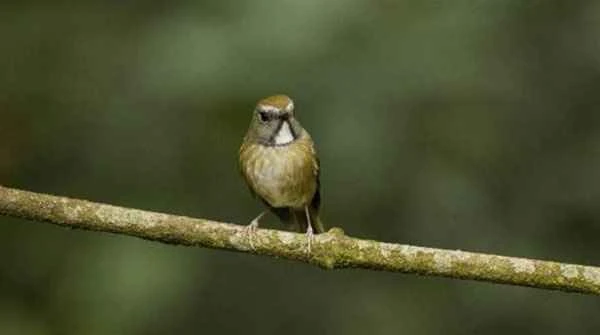
1. White-throated buzzard (scientific name: Buteoalbigula): The white-throated buzzard is a species of bird in the order Falconiformes and family Accipitridae. It is distributed in South America, including Colombia, Venezuela, Guyana, Suriname, Ecuador, Peru, Bolivia, Paraguay, Brazil, Chile, Argentina, Uruguay, and the Falkland Islands (also known as the Malvinas Islands).
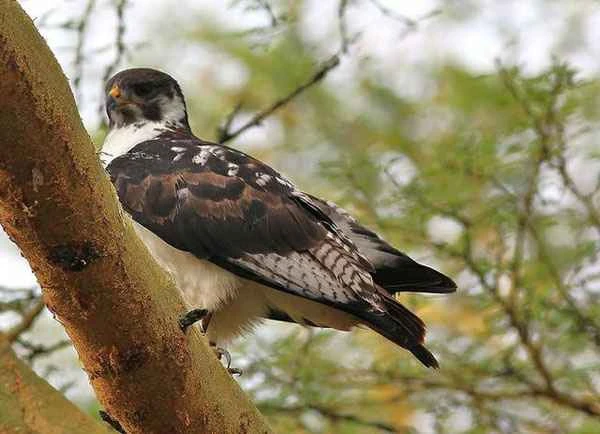
2. African Buzzard (scientific name: *Buteo augur*): Body length 55-60 cm, wingspan 132 cm, weight 11-13 kg. A large vulture with a very broad wingspan. This species has two distinct color morphs: a light morph and a dark morph. The adult dark morph is dark grey, with the upperparts almost entirely black. The flight feathers are black, with light grey stripes on the secondary flight feathers. The tail is reddish-brown with faint dark grey stripes. The underparts are white, including the wing coverts, but with black patches at the angular shoulder angles. It inhabits hilly and mountainous areas, ranging from sea level to altitudes above 1000 meters. Its diet consists mainly of reptiles such as lizards and snakes, rodents and moles, small birds, insects, and carrion.
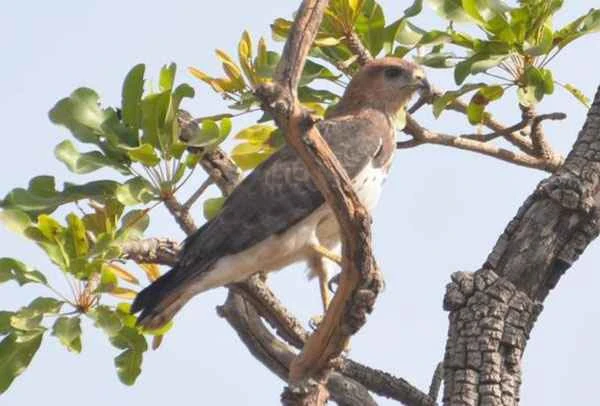
3. Red-necked Buzzard (scientific name: *Buteo auguralis*): Body length 42-50 cm, weight 525-890 g. As its name suggests, the most distinctive feature of this medium-sized raptor is the prominent reddish-brown patch on its neck, extending from the crown to the upper back. The rest of its upper body feathers are mainly black, except for the tail feathers, which are also reddish-brown, marked with black stripes at the tail tip. It is found in plantations, agricultural areas, and grasslands, inhabiting altitudes up to 2500 meters. Its prey consists of various small animals, including rodents, birds, lizards, snakes, and arthropods.
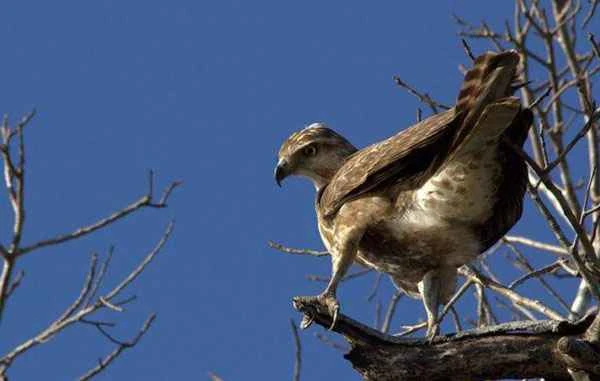
4. Madagascar Buzzard: A medium-sized raptor, 51 cm in length and with a wingspan of 93-110 cm. Its upper beak has an arched droop at the tip, adapted for tearing prey; the base has a cere or whisker-like feathers; its wings are strong, broad, rounded, and blunt, used for flapping and soaring flight, with a slower flapping rhythm than falcons; its tarsi are mostly relatively long, approximately equal to the length of its tibia. It inhabits the edges of forests and secondary forests. Its diet consists mainly of small to medium-sized vertebrates.
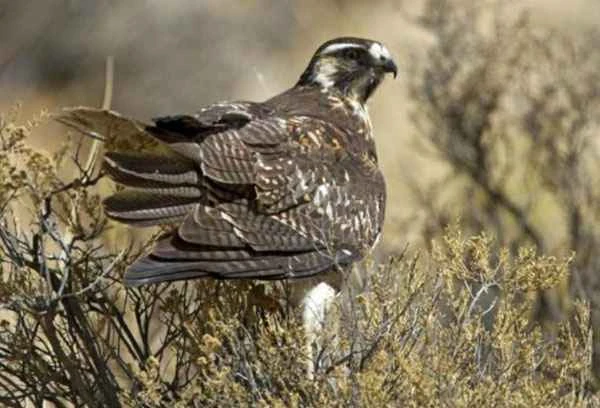
5. Short-tailed Buzzard (scientific name: *Buteo brachyurus*): A small buzzard. Body length 39-44 cm, wingspan 83-103 cm. Tail length 13.2-34 cm. Weight 392-515 g, females are larger than males, but the sexes are similar in appearance. When perched, wings reach the tail tip. Named for its very short tail. Beak black, legs and feet pale yellow to lemon yellow, while claws are black. There are two morphologies of the short-tailed buzzard: a light-colored morph and a dark-colored morph. It has broad wings and a short, rounded tail. Primarily preys on smaller birds, but also eats lizards, snakes, rodents, and occasionally insects, including wasps and grasshoppers. Distributed in the New North and Neotropical regions.
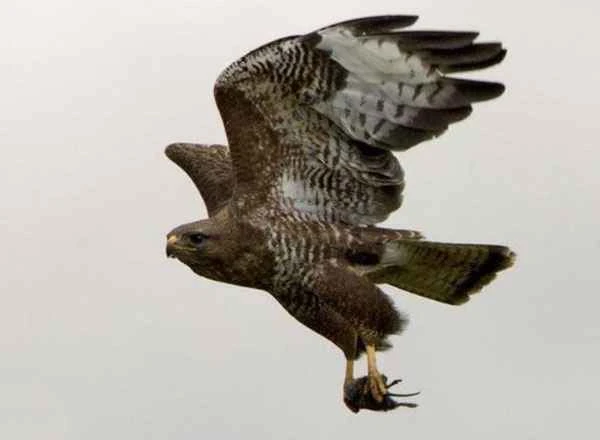
6. The Common Buzzard (scientific name: *Buteo buteo*) is a medium-sized raptor, measuring 50-59 cm in length. Its plumage varies considerably; the upperparts are primarily dark brown, while the underparts are mainly dark brown or light brown with dark brown horizontal bars or stripes. The tail is light grayish-brown with multiple dark horizontal bars. In flight, its wings are broad, with distinct white spots at the base of the primary flight feathers. The underwings are white, with only the wingtips, wing angles, and outer edges of the flight feathers being black (pale morph) or entirely blackish-brown (dark morph). The tail spreads out in a fan shape. When soaring, the wings are slightly raised, forming a shallow 'V' shape. It mainly inhabits mountain forests and forest edges, ranging from broad-leaved forests at the foot of mountains at altitudes of 400 meters to mixed and coniferous forests at altitudes of 2000 meters. It is commonly seen circling and soaring over open plains, deserts, wilderness, cultivated areas, forest edges, grasslands, and villages. It feeds on forest rodents.
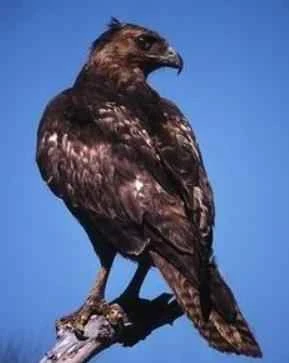
7. The Galapagos Buzzard (scientific name: *Buteo galapagoensis*) is a large bird of prey in the genus *Buteo*. It measures approximately 55 cm in length and has a wingspan of up to 120 cm. It exhibits sexual dimorphism, with females being significantly larger than males. Adult plumage is black. The head is slightly darker. The chest is pale, while the sides and abdomen are reddish. Dark brown spots are present on the body, with white spots frequently appearing on the back. It has strong legs and a long, slender tail that is brownish-white with slight stripes on the tail feathers. Like other buzzards in its genus, the Galapagos Buzzard has excellent eyesight. The iris is brown, and the soft skin on the legs, cere, and base of the beak is yellow.
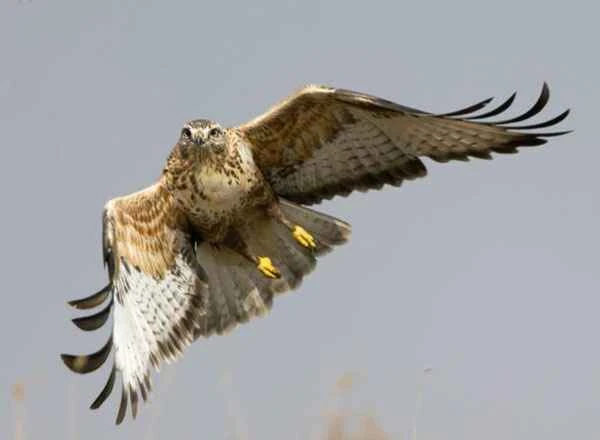
8. The Great Upland Buzzard (scientific name: *Buteo hemilasius*) is a large bird of prey belonging to the genus *Buteo* in the family Accipitridae, measuring 570-760 mm in length. It has a white crown and nape, with each feather adorned with brown longitudinal stripes. The sides of the head are white, with brown mustache stripes. The upperparts are pale brown with 3-9 dark transverse bars, and the feather shafts are white. The underparts are mostly brownish-white; the front of the tarsus is usually feathered, and there are white spots under the wings during flight. The iris is yellowish-brown, the bill is black, the cere is yellowish-green, the tarsus and toes are yellow, and the claws are black. It is vertically distributed to plateaus and mountainous areas at altitudes exceeding 4000 meters. It prefers to perch on tall trees or high protrusions. Its diet consists mainly of rodents, frogs, lizards, hares, snakes, ground squirrels, pikas, marmots, pheasants, partridges, insects, and other animal prey.
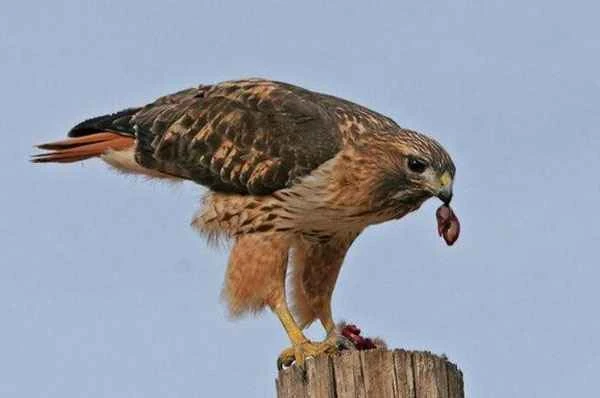
9. Red-tailed Buzzard (scientific name: *Buteo jamaicensis*): The red-tailed buzzard has a wingspan of 114-133 cm and a lifespan of 22 years. Males weigh 690-1300 grams and are 45-56 cm long, while females weigh 900-2000 grams and are 50-65 cm long; therefore, females are usually larger than males. The upper beak has an arched droop at the tip, adapted for tearing prey for swallowing; the base has a cere or whisker-like feathers; the wings are strong, broad, rounded, and blunt, used for flapping and soaring flight, with a slower flapping rhythm than falcons; the tarsi are mostly relatively long, approximately equal to the length of the tibia. Their diet mainly includes various small mammals, birds, and reptiles, such as rodents, grouse, quail, waterfowl, bats, shrews, snakes, lizards, crustaceans, insects, etc. They can be found in most parts of North America, except for the Arctic region.
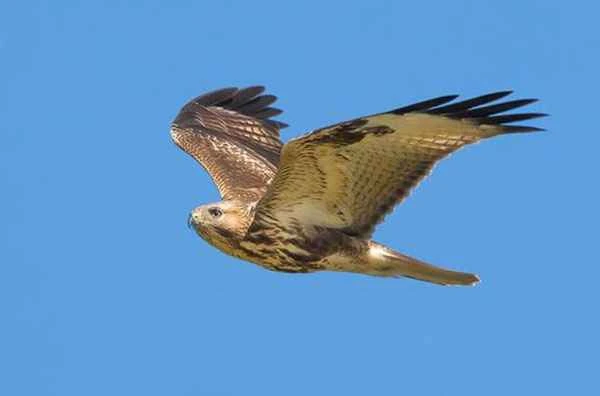
10. Japanese Buzzard (scientific name: *Buteo japonicus*): A medium-sized raptor, measuring 42–54 cm in length and with a wingspan of 122–137 cm. Males weigh 630–810 g, and females weigh 515–970 g. The upperparts are deep reddish-brown; the sides of the face are buff with fine reddish streaks, and the chestnut-colored mustache stripes are prominent. The underparts are mainly dark brown or light brown with dark brown horizontal bars or stripes. The tail feathers are light grayish-brown with multiple dark horizontal bars. In flight, the wings are broad, with distinct white spots at the base of the primary flight feathers. The underwings are flesh-colored, with only the wingtips, wing angles, and outer edges of the flight feathers being black (pale morph) or entirely blackish-brown (dark morph). The tail feathers spread out in a fan shape. When soaring at high altitudes, the wings are slightly 'V' shaped. It is distributed from broad-leaved forests at the foot of mountains at an altitude of 400 meters to mixed forests and coniferous forests at an altitude of 2000 meters. It is commonly seen soaring over open plains, deserts, wilderness, cultivated areas, forest edges, grasslands, and villages. It feeds on forest rodents.
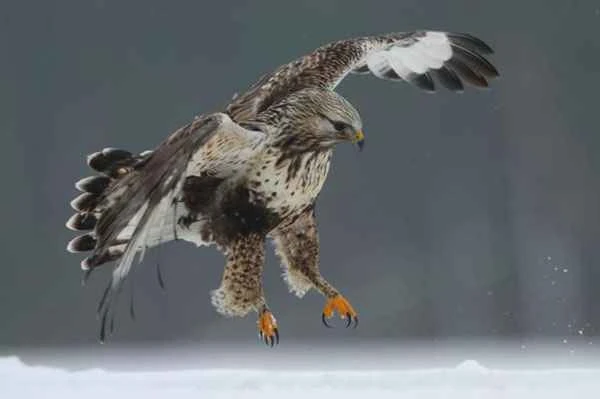
11. Rough-legged Buzzard (scientific name: *Buteo lagopus*): Also known as the Snow Leopard or Rough-footed Buzzard, it gets its name from its thick plumage covering its toes. It is a rare winter visitor and migratory bird. Weight: 650-1100 grams. Similar to the Common Buzzard. Upperparts are dark brown, with irregular, nearly white horizontal bands often adorning the lower back and shoulders. Tail coverts often have white horizontal bars, rounded and unforked. During the breeding season, the Rough-legged Buzzard mainly inhabits areas near the Arctic Circle and is a relatively cold-hardy tundra coniferous forest bird. It primarily feeds on small rodents such as voles and small birds, but also preys on larger animals such as hares, pheasants, and rock partridges, including females and juveniles. Distributed throughout the Holarctic region.
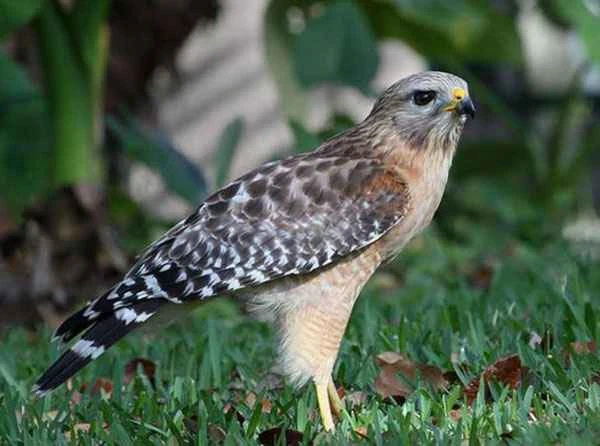
12. Red-shouldered Buzzard (scientific name: *Buteo lineatus*): A medium-sized raptor, measuring 47 cm in length, with a wingspan of 90-114 cm, and weighing 500-700 grams. Its upperparts are typically dark brown, white, or grey; the shoulders are chestnut-red with slightly reddish wing linings; the underparts are red on the chest and abdomen with pale red stripes; the feathers on the lower abdomen and legs are pale yellow to grey; the tail feathers are brownish-gray, usually with 4-6 distinct white horizontal bars. The Red-shouldered Buzzard inhabits a variety of North American forests, preying on small mammals, birds, reptiles, and amphibians. Its main diet consists of hares, rodents, frogs, lizards, snakes, pheasants, and other birds and their eggs; it also sometimes eats dead fish and other animal carcasses.
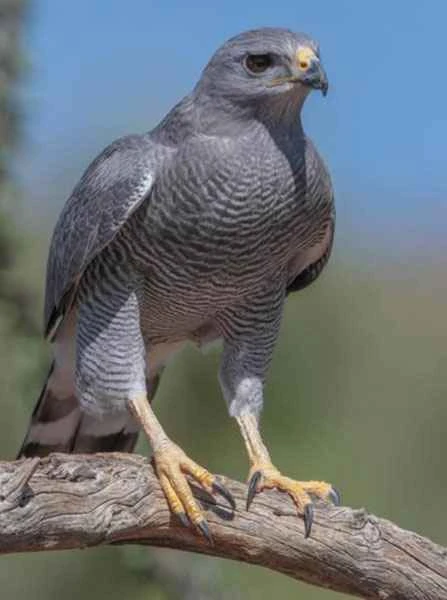
13. Grey-striped Buzzard (scientific name: *Buteo nitidus*): A medium-sized bird of prey, 46-61 cm in length and weighing 475 grams. It possesses a powerful body and broad wings. The wings are broad, and the tail is wide. The plumage is typically light grey, with fine stripes on the upperparts, and a black tail with three white stripes. When soaring, the wings are slightly raised in a shallow 'V' shape. It has a white rump, dark brown eyes, and yellow claws with a cere. Juveniles have dark brown upperparts, a pale brown tail, a white belly with brown spots, and brown stripes on the head and neck. It mainly inhabits mountain forests, sparsely wooded areas, riverbank forests, forest edges, and semi-arid regions. Besides rodents, it also eats frogs, lizards, snakes, hares, small birds, and large insects, and sometimes preys on poultry such as chickens in villages.
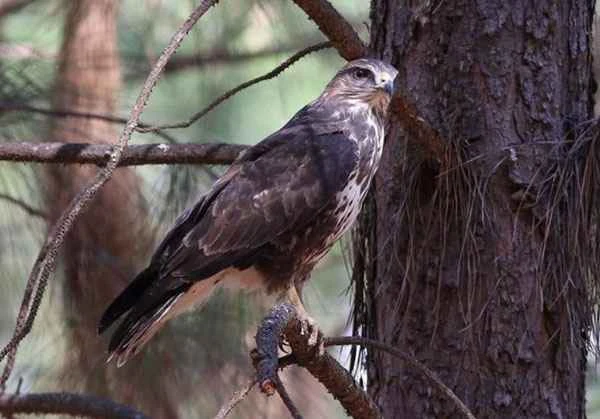
14. Mountain Buzzard (scientific name: *Buteo oreophilus*): The mountain buzzard is 45 cm in length and weighs 700 g. Its appearance is very similar to the Central Asian subspecies of the common buzzard, typically with a brown upper body; buff cheeks with reddish fine streaks, and prominent chestnut-colored whisker markings; black markings are much less pronounced. However, its underparts are whiter, with numerous brown spots evenly covering the chest, abdomen, and flanks. The flanks and thighs are tinged with brown. It mainly inhabits mountain forests, forest edges, and patch forests, including plantations of introduced trees such as eucalyptus. Its diet consists primarily of small mammals, including rodents, frogs, lizards, snakes, hares, small birds, and large insects.
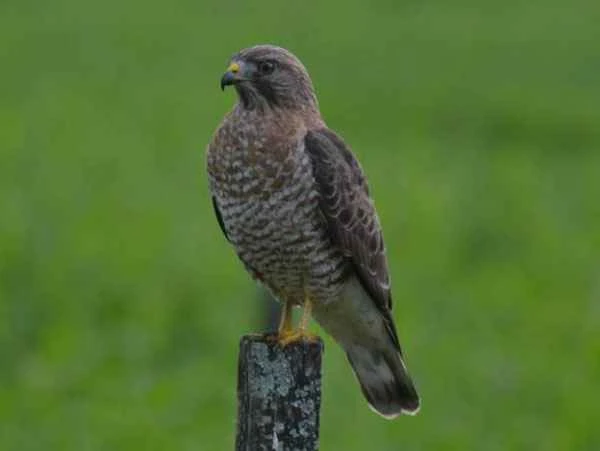
15. Great-winged Buzzard (scientific name: *Buteo platypterus*): The Great-winged Buzzard is a small, stout eagle. It measures 34-44 cm in length, has a wingspan of 81-100 cm, and weighs 265-560 grams. Adults have a dark brown upper back and pale underparts with transverse cinnamon or chestnut-colored markings. The tail is dark gray to black with a prominent, broad white stripe down the middle. When perched, the wingtips do not reach the tip of the tail. Its diet consists mainly of chipmunks, shrews, voles, frogs, and lizards. In winter, its diet consists mostly of insects, lizards, frogs, snakes, crabs, and small mammals. Mammals are eaten whole. Frogs and snakes are skinned, and birds are plucked.
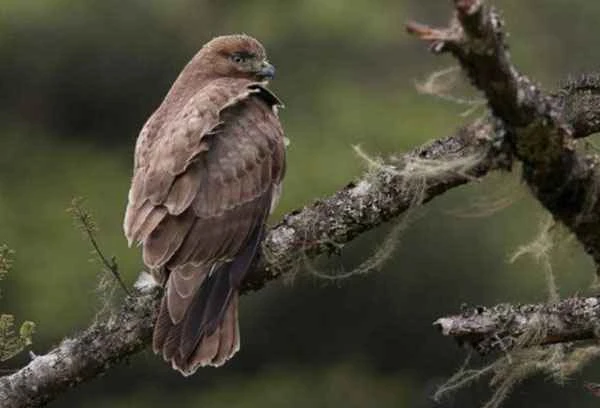
16. Himalayan Buzzard (scientific name: *Buteo refectus*): The Himalayan Buzzard is a medium-sized raptor, measuring 45-53 cm in length and with a wingspan of 112-118 cm. It weighs 575-1073 grams. The upperparts are dark reddish-brown; the sides of the face are buff with fine reddish streaks, and the chestnut-colored mustache stripes are prominent; the underparts are mainly dark brown or light brown with dark brown horizontal or vertical bars; the tail feathers are light grayish-brown with multiple dark horizontal bars. In flight, the wings are broad, with distinct white spots at the base of the primary flight feathers. The underwings are flesh-colored, with only the wingtips, wing angles, and outer edges of the flight feathers being black (pale morph) or entirely blackish-brown (dark morph). The tail feathers spread out in a fan shape. When soaring at high altitudes, the wings are slightly 'V' shaped. It mainly inhabits mountain forests and forest edges, ranging from broad-leaved forests at the foot of mountains at an altitude of 400 meters to mixed forests and coniferous forests at an altitude of 2000 meters. It is commonly seen soaring over open plains, deserts, wilderness, cultivated areas, forest edges, grasslands, and villages. It feeds on forest rodents.
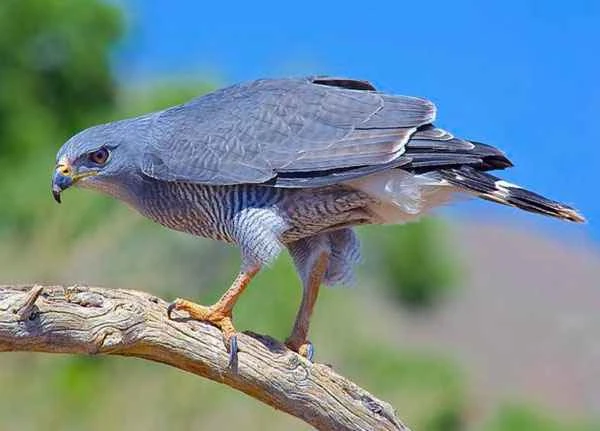
17. Grey Buzzard (scientific name: Buteo plagiatus): The Grey Buzzard is a medium-sized bird of prey, 41-44 cm long, with males weighing 391-470 g and females weighing 552-688 g, with a wingspan of 89 cm. [2] It has a powerful body and broad wings. Broad wings and a broad tail. Adults have light grey plumage, with no patterns on the upper body and light grey underparts with fine stripes. The tail is black with three white stripes. When soaring, the wings are slightly raised into a shallow 'V' shape. White rump, dark brown eyes, orange legs, and cere on the feet. It is often found alone or in pairs in open, rocky, and dry barren land. It mainly feeds on forest rodents, and has a large appetite. In addition to rodents, it also eats frogs, lizards, snakes, hares, small birds and large insects, and sometimes hunts poultry such as chickens in villages.
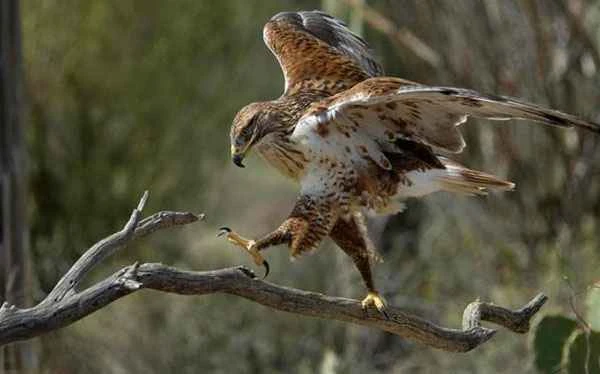
18. Royal Buzzard (scientific name: *Buteo regalis*): Body length 50-66 cm, wingspan 134-152 cm, weight 980-2030 g. It is the largest eagle in North America. Adults have a rust-red hue on their back and shoulders extending down to their legs. The underparts are white with some reddish-brown markings. In flight, the bird will show its leg feathers forming a V-shape with its belly. Royal Buzzards are carnivorous. They typically fly low over open fields, soaring high, hovering, or swooping down from their roosts. They use their excellent eyesight to spot prey on the ground and then attack with their talons. Their diet consists of ground squirrels, long-haired hares, mice, birds, reptiles, and amphibians.
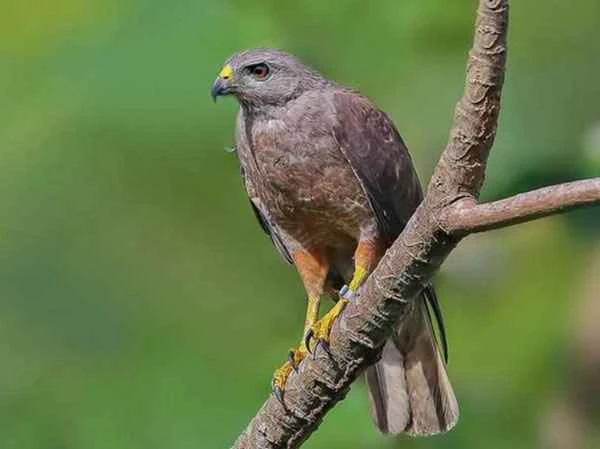
19. Ridgway's Buzzard (scientific name: *Buteo ridgwayi*): A small to medium-sized buzzard, measuring 36-41 cm in length and with a wingspan of 69-81 cm. The male has a greyish-brown crown and bright red shoulders. The head and neck are grey, and the throat is white. Adults have a greyish-black upper body and a grey lower body with white stripes and fine reddish-brown spots. The thighs are pale reddish-brown, and the tail feathers are black and white striped. The wings are dark brown with mottled patterns, the claws are golden yellow, the upper part of the beak is yellow at the base and black at the tip; the lower part of the beak is grey. The iris is amber with a white eye ring. It primarily inhabits damp, limestone-covered forests. Its diet consists mainly of small mammals, birds, lizards, and snakes.
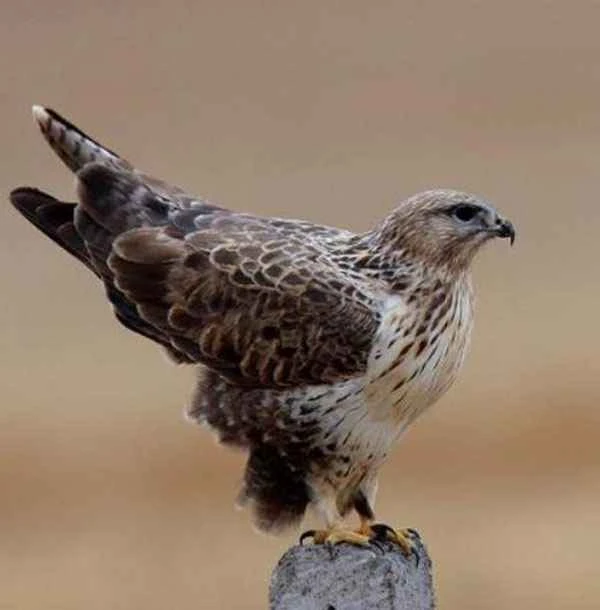
20. Brown-tailed Buzzard (scientific name: *Buteo rufinus*): A medium to large raptor belonging to the genus *Buteo* in the family Accipitridae, measuring 50-65 cm in length and weighing 1280 grams. Adults have a brownish-brown head and neck, and brown upperparts; the outer webs of the 2nd-5th primary flight feathers have horizontal bars; the underparts are brownish-white; the tail is brownish-brown, unlike other buzzard species. In flight, the wings are raised in a "V" shape, with black wingtips. It primarily feeds on hares, rodents, frogs, lizards, snakes, pheasants, and other birds and their eggs, and sometimes also eats dead fish and other animal carcasses. It is usually solitary. It often stands on rocks and mounds, waiting to hunt prey on the ground.
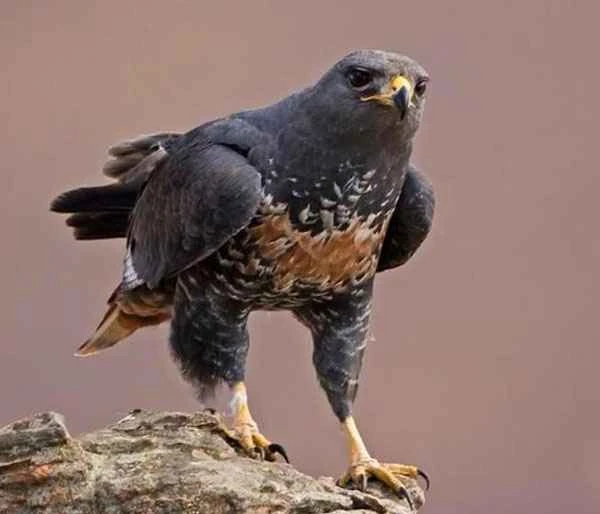
21. Dark Brown Buzzard (scientific name: *Buteo rufofuscus*): Body length 55 cm, wingspan 127-143 cm, weight 790-1370 g. A large, crouching buzzard with black and red plumage. The crown, head, and throat are slate black, while the rump and tail are bright red. The remaining flight feathers display a pale area. The hind feathers have red or white demarcations. A coarse, irregular white line adorns the base of the black throat. The abdomen is black with white stripes. The vent area is reddish. Habitat includes mountainous areas, hills, rugged valleys, steep rocks, alpine meadows, and desert scrubland. Carnivorous, feeding on mammals, especially rodents, but also reptiles such as lizards and snakes. Occasionally, it also eats birds, insects (flying termites and grasshoppers), and carrion.
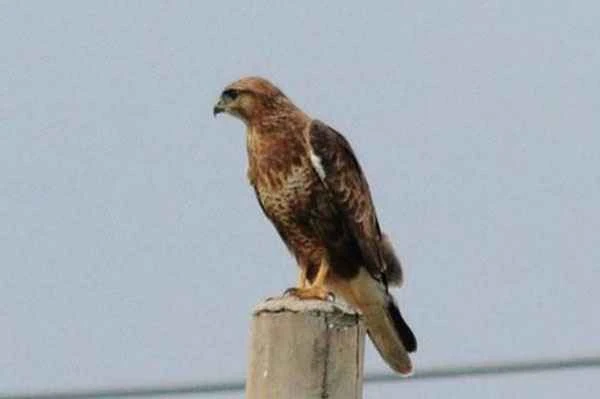
22. Socotra Buzzard (scientific name: *Buteo socotraensis*): A medium-sized raptor, 43-49 cm in length and weighing 500-1000 grams. Its upper beak has an arched droop at the tip, adapted for tearing prey; the base has a cere or whisker-like feathers; its wings are strong, broad, rounded, and blunt, used for flapping and soaring flight, with a slower flapping rhythm than falcons; its tarsi are mostly relatively long, approximately equal to the length of its tibia. It inhabits forest edges. It primarily feeds on small to medium-sized vertebrates, mainly forest rodents, but also eats frogs, lizards, snakes, hares, small birds, and large insects, and sometimes preys on poultry such as chickens in villages.
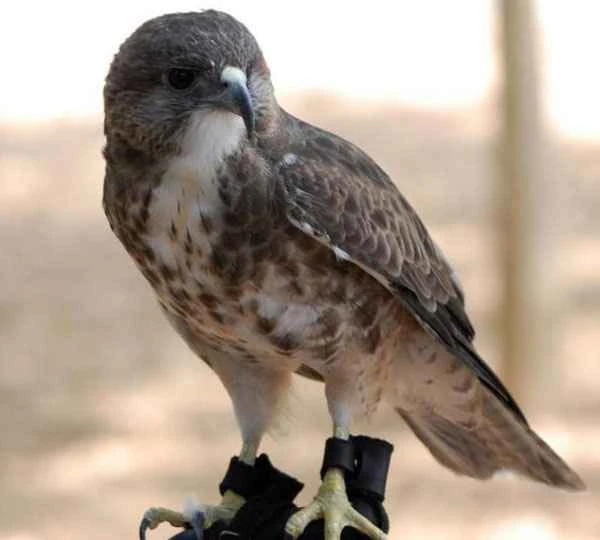
23. Hawaiian Buzzard (scientific name: *Buteo solitarius*): Body length 46 cm, wingspan 87-101 cm, weight 441 g. A small, broad-winged raptor with two color morphs: a dark morph and a light morph, as well as numerous intermediate plumage colors and individual variation. Body coloration is quite varied; the upperparts are mainly dark brown, and the underparts are dark brown or light brown. The cere is blue, and the legs are greenish-yellow. It is seen circling and soaring over open plains, deserts, wilderness, cultivated areas, forest edges, and villages. Mostly solitary, but sometimes 2-4 individuals can be seen circling in the sky. Alert and with keen eyesight, it inhabits mountain forests and forest edges, feeding on various rodents, as well as frogs, lizards, snakes, hares, small birds, and large insects.
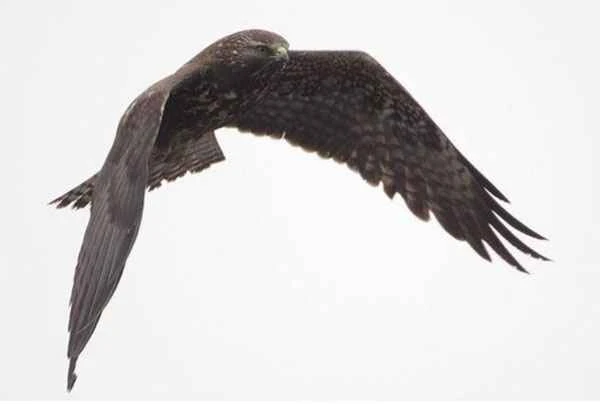
24. The Swainsoni Buzzard (scientific name: *Buteo swainsoni*) is a large buzzard. It measures 50-56 cm in length, has a wingspan of 117-137 cm, weighs 820-1130 grams, and has a lifespan of 16 years. It is slightly smaller than the Red-tailed Buzzard. Compared to other buzzards, its wingspan is slightly longer, and its wings are more slender. In flight, its wings form two planes, and when raised high, the wingtips sway slightly forward and backward. The upper beak has an arched droop at the edge, adapted for tearing prey for swallowing; the base has a cere or whisker-like feathers; the wings are strong, broad, rounded, and blunt, used for flapping and soaring flight, with a slower flapping rhythm than falcons; the tarsi are mostly relatively long, approximately equal to the length of the tibia. The Swainsoni Buzzard inhabits the grasslands and arid grasslands of western North America. It feeds on insects, particularly grasshoppers. It also eats small mammals, birds, reptiles, and amphibians.
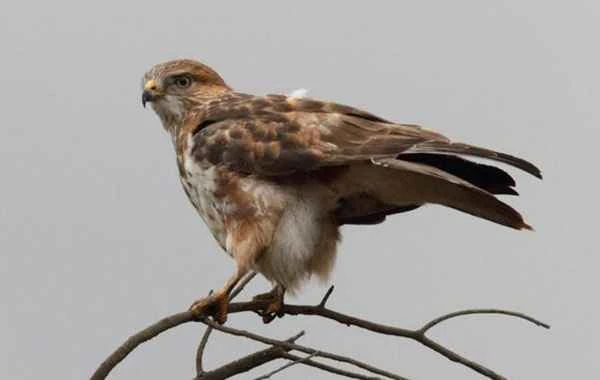
25. Forest Buzzard (scientific name: *Buteo trizonatus*): Body length 45 cm, weight 700 g. Formerly a subspecies of the Mountain Buzzard, it was reclassified as a separate species in 2014. It is very similar in appearance to the Central Asian subspecies of the Common Buzzard, typically with brown upperparts; however, its underparts are whiter, with numerous brown spots evenly covering the chest, abdomen, and flanks. The flanks and thighs are tinged with brown. In flight, its wings are broad and rounded. The uppertail coverts are brown, the undertail coverts are pale grey, and the tail tip has narrow black stripes. When soaring at high altitudes, the wings are slightly 'V' shaped. The iris is greyish-brown; the bill is grey with a black tip, the cere is yellow; the legs are yellow. It mainly inhabits mountain forests and forest edges, patchy forests, including plantations of introduced trees such as eucalyptus. Its diet consists mainly of small mammals, including rodents, frogs, lizards, snakes, hares, small birds, and large insects. It is distributed in South Africa.
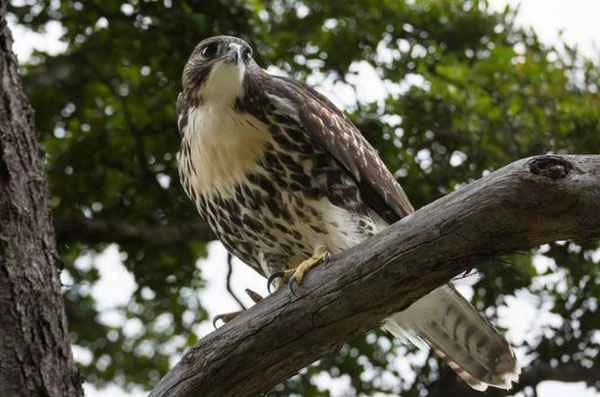
26. American Brown-tailed Buzzard (scientific name: *Buteo ventralis*): Body length 54-60 cm, wingspan 119-139 cm, weight 950 g. A relatively large bird of prey with long, slender, square-pointed wings and very powerful claws. The back is dark brown, the throat white, and the belly ochre with dark brown stripes and spots, these black spots being more prominent on the sides. The wings are long and broad. The tail is white with slight gray tinges. The thighs are cinnamon and deep yellow. There are two distinct color morphs, the lighter one being more common and the darker one less so. It perches on branches or fence posts, swooping down to catch prey. Its diet consists mainly of birds, but it also eats small mammals, reptiles, and beetles.