To date, there is no conclusive evidence to prove the existence of the "Over-the-Mountain Yellow," and scientists have neither visual evidence nor specimens of it. Reasonable speculation suggests that the "Over-the-Mountain Yellow" is neither a relative of prehistoric species such as the giant-headed tiger nor the saber-toothed tiger. So what exactly is the legendary "Over-the-Mountain Yellow"?
Shennongjia in Hubei Province, with its towering peaks and sparsely populated areas, is one of China's most mysterious primeval forests. It is also mentioned in the Classic of Mountains and Seas, where a nine-headed monster hastily swept across the pine forests and a Kui ox galloped across the lakes.
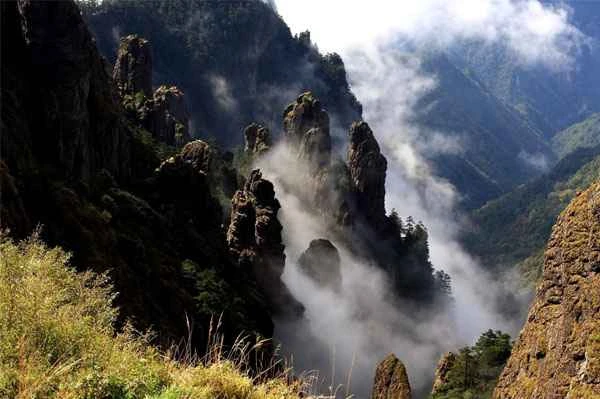
The depths of Shennongjia have always been designated as restricted areas, keeping tourists out and prohibiting them from venturing deep into the region, which only adds to Shennongjia's mystique.
Why are tourists prohibited from venturing deep into the primeval forest? Is there some wild animal lurking there?
1. Besides the wild man and the donkey-headed wolf, a mysterious creature called "Over-the-Mountain Yellow" has also appeared in Shennongjia.
Many mysterious creatures are said to live in Shennongjia, the most famous of which is the mystery of the Shennongjia Wild Man. There is also a legend that a rare nine-headed bird lives in Shennongjia with a bright red beak, and blood drips down whenever it cries out.
In addition, in the deep forests of Shennongjia, herbalists have also seen donkey-headed wolves. This monster has the body of a wolf but the head of a donkey, and its loud call sounds like a donkey's bray.
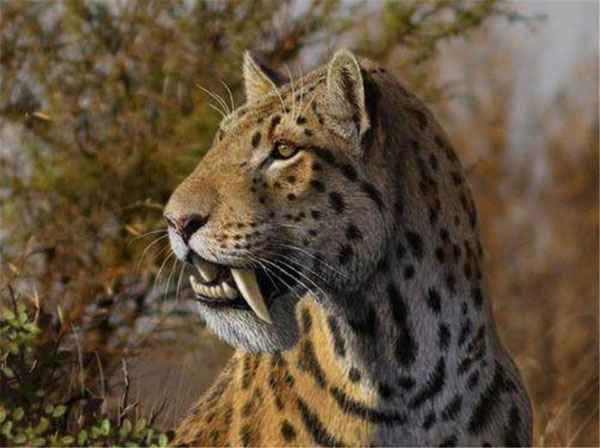
The most interesting creature here is the "Over-the-Mountain Yellow". According to local villagers, the "Over-the-Mountain Yellow" lives deep in the Shennongjia Mountains all year round and never harms people. It is deeply loved by the local villagers, and some people even worship the "Over-the-Mountain Yellow" as a divine beast that protects the peace of the area.
In recent years, animal lovers have witnessed the true appearance of the "Over-the-Mountain Yellow" on several occasions in Laojun Mountain, Shennongjia. On a mountain path about 200 meters from the summit, a monster resembling a tiger was spotted staring at him menacingly from 5 meters away, before disappearing in the blink of an eye.

2. Resembling both a tiger and a leopard, it measures 5 meters in length and weighs 600 kilograms, twice the size and four times the weight of a South China tiger.
As everyone knows, the "King Cobra" is a type of snake, while the "King Cobra" is a giant, unidentified beast in the Shennongjia Forest. Its roar sounds like a tiger, and locals call it the Mountain King Bodhisattva or Laobazi.
The "Over-the-Mountain Yellow" looks like both a tiger and a leopard, but it is neither a tiger nor a leopard; it is a separate species.
According to "China Shennongjia," the "Guoshanhuang" had a massive head, two long fangs, and particularly prominent upper canines that were 23 centimeters long. Its body was enormous, reaching 4-5 meters in length, with a tail over 1 meter long, and its heaviest specimen weighed up to 600 kilograms. In comparison, the South China tiger's head and tail are only about 2.5 meters long, and its weight is about 150 kilograms. Therefore, the "Guoshanhuang" was twice the size of a South China tiger and four times its weight.
Generally speaking, tigers have horizontal stripes with darker patterns and an orange-yellow or reddish-orange base color. The "Over-the-Mountain Yellow" has straw-yellow fur all over its body, and its stripes are lighter in color than those of a tiger, consisting of alternating yellow and white vertical stripes that resemble shoulder stripes. The yellow and white vertical stripes are about 150 centimeters long and 7 centimeters wide, making them very beautiful.
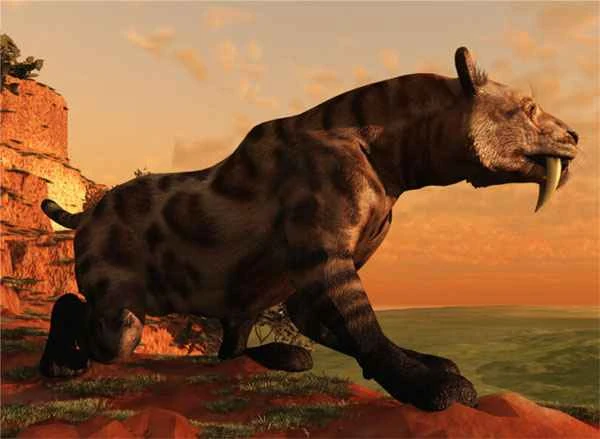
Strangely, the "Over-the-Mountain Yellow" does not have the "king" pattern on its forehead like a tiger, nor does it have the black horizontal stripes and black rings on its body and tail like a tiger.
As a benevolent beast, the "Guoshanhuang" often lives in the wild grass of high mountains. It is kind by nature and, although it looks fierce, it is not as ferocious as a tiger. It never harms people, nor does it eat live prey. In many eyewitness accounts, the "Guoshanhuang" walks by slowly and often ignores people.
Despite its bulky nature, the "Over-the-Mountain Yellow" runs as fast as a cheetah through the mountains, like a yellow gust of wind. The Classic of Mountains and Seas records that it can "travel a thousand miles a day."
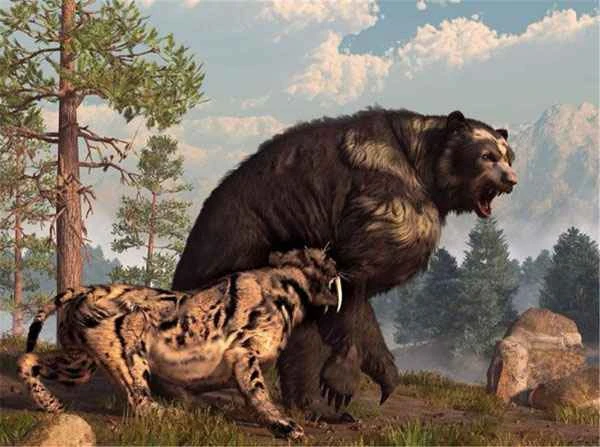
3. Chinese scholars: It might be a subspecies of Siberian tiger, possibly a giant tiger.
Professor Liu Minzhuang of East China Normal University believes that this could be a creature like the giant-headed tiger, perhaps a subspecies of the Siberian tiger. Although the giant-headed tiger was a prehistoric creature that lived 6 million years ago and is now extinct, the "Guoshanhuang" in Shennongjia is very likely to be this extinct creature.
Because the giant-chinned tiger and the "over-the-mountain yellow tiger" look strikingly similar: they also have extra-long canines, and most importantly, their stripes are vertical, while the stripes of existing tigers are horizontal.
Professor Liu explained that Shennongjia is a rare paradise for wildlife due to its unique geographical environment. During the Quaternary Ice Age, many plants and animals survived here, making Shennongjia home to a variety of rare species that are uncommon in the world. Therefore, it is not surprising that "over-mountain yellow" appears in Shennongjia.
Opponents, however, argue that the giant-headed tiger was not 4-5 meters long; the average giant-headed tiger was only 1.5 meters long, indicating a significant difference between them.
Moreover, with a size like that of the giant tiger, hunting would be extremely difficult. It would be hard to catch up with modern herbivores such as deer, muntjacs, and wild boars. Without a food source, could it still survive?
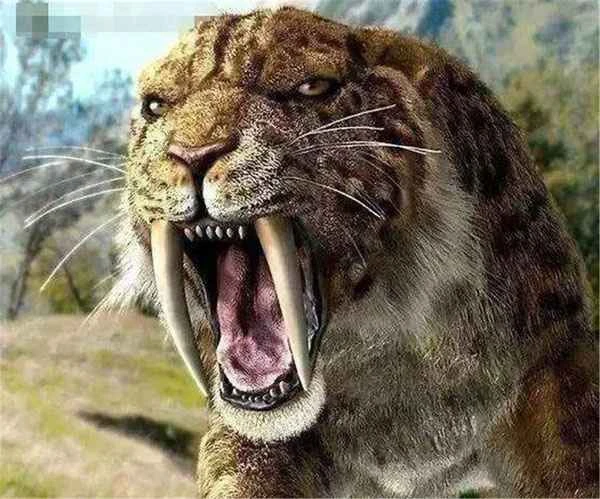
4. British experts: An animal similar to the saber-toothed tiger
British zoologist Dr. Carl Schuk analyzed that the "Guoshanhuang" may be an animal similar to the saber-toothed tiger. He gave three reasons: first, the "Guoshanhuang" and the saber-toothed tiger have very similar physical characteristics; second, the "Guoshanhuang" and the saber-toothed tiger have basically the same living habits; and third, their reproductive and lactation habits are also the same.
However, saber-toothed tigers lived approximately 3 million to 10,000 years ago. They were social animals and did not inhabit dense forests. A saber-toothed tiger could reach a maximum length of 2.7 meters, with teeth approximately 12 centimeters long. This is significantly different from the descriptions given by those who witnessed the "Guoshanhuang," which stated it was approximately 4-5 meters long with teeth 23 centimeters long—a difference of more than half. Furthermore, saber-toothed tigers were ferocious predators, while the "Guoshanhuang" did not harm humans and did not eat live prey. Clearly, they were not the same species in terms of either size or temperament.
Moreover, the reproduction of large species requires a certain population base. In other words, if the number is below a certain level, the population will degenerate after several generations of inbreeding, and the species will gradually die out.
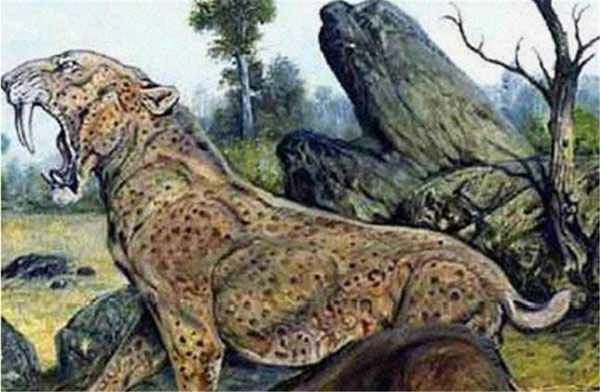
5. The truth: The yellow catfish may be a Siberian tiger.
To date, there is no conclusive evidence to prove the existence of "Guoshanhuang" (a type of wild jasmine), and scientists do not have any video or photographic data of "Guoshanhuang," nor do they have any specimens of "Guoshanhuang."
Reasonable speculation suggests that the "Guoshanhuang" is neither a relative of the giant-chinned tiger nor a saber-toothed tiger or other prehistoric species. So what exactly is the legendary "Guoshanhuang"?
The term "Guoshanhuang" is likely just a figment of people's imagination, or it could be some other large creature that was mistaken for "Guoshanhuang".
The "Guoshanhuang" (过山黄) might be a misidentification, just like the Yeren (野人), perhaps a giant beast mistaken for a "Guoshanhuang." Or it could be a ferocious beast imagined by people.
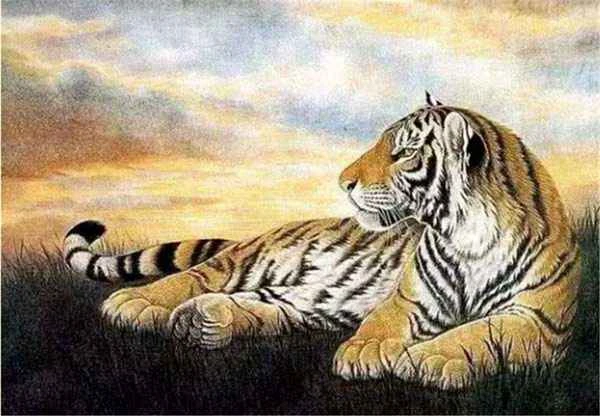
A more plausible explanation is that the "Yellow Tiger" seen by the villagers is likely a wild tiger, possibly a Siberian tiger.
As for the difference between what the eyewitness saw and what the eye saw, that's easy to understand. It's because when a person sees a tiger in the wild, they are naturally very scared. When recalling what happened, they unconsciously magnify what they saw several times over, which is only human nature.