There are about 20 species of penguins in the world, all distributed in the Southern Hemisphere, centered on Antarctica, extending north to the southern tip of Africa, South America, and Oceania, mainly along continental coasts and on some islands. There are seven species of Antarctic penguins: Emperor penguins, Adelie penguins, Gentoo penguins, Chinstrap penguins, King penguins, Rockhopper penguins, and Floating penguins. All seven species breed within the Antarctic Convergence.
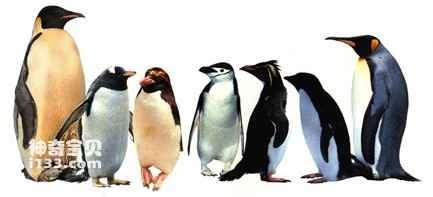
Outside of Antarctica, there are more than 10 species of penguins, including the Gaddafi penguin, Humboldt penguin, Maddex penguin, Spot-billed penguin, Thick-beaked penguin, Crested penguin, Yellow-eyed penguin, White-winged flipper penguin, and Little flipper penguin. These are temperate and subtropical species, and their individuals are smaller than Antarctic penguins. Some of them have white spots on their backs.
The common morphological characteristics of Antarctic penguins are: streamlined body, black feathers on the back, white feathers on the belly, vestigial wings resembling flippers, feathers with a fine tubular structure arranged in a lanceolate pattern, slender legs with webbed toes, a short tail, a plump body, a large belly, and a waddling gait. Different penguin species have distinct features and are easily identifiable. The main characteristics of the seven Antarctic penguin species are as follows.
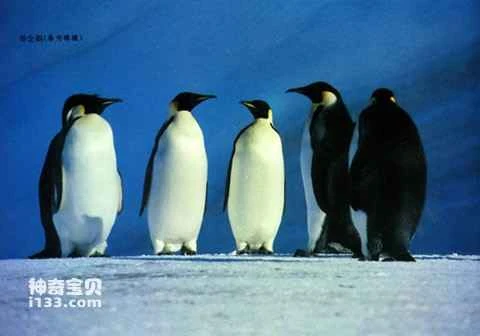
1. Emperor Penguin
The Emperor Penguin, typically standing 1.22 meters tall and weighing 41 kilograms, is the largest penguin in Antarctica and the king of penguins. Its distinctive feature is a patch of orange-yellow feathers under its neck that gradually fades downwards, becoming darkest behind its ears. Its overall coloration is harmonious, giving it a dignified and elegant appearance. Emperor penguins breed on the ice during the harsh Antarctic winter. The female lays one egg at a time, which the male incubates.
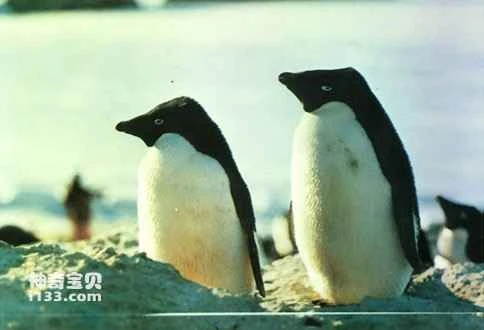
2. Adelie Penguins
Standing 45-55 cm tall and weighing 4.5 kg, the Adélie penguin has white eye rings, a blue-green head, a black beak with long, fine feathers at the corners of its mouth, short legs, and black claws. Its name comes from Adélie Land in Antarctica, named in 1840 by the French explorer Duval after his wife. Adélie penguins are the most widespread and numerous penguin species. Their breeding season is in the summer. Females lay two eggs at a time, incubating them for about two months. Usually, only one chick survives, and the chicks can swim at about two months old.
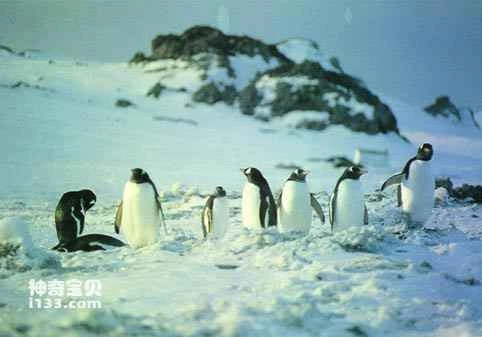
3. Gentoo Penguin
Standing 56-66 cm tall and weighing 5.5 kg, the Gentoo penguin has recently been identified as having two subspecies: a northern species and a southern species, with slight differences in height, weight, and morphology. The Gentoo penguin has a long, slender beak with red corners and a red triangle at the corner of its eye, giving it a refined and elegant appearance. Female penguins lay two eggs at a time during the Antarctic winter. Both male and female penguins take turns incubating the eggs, with the male incubating first and then the female, changing shifts every 1-3 days. The incubation period is relatively long, lasting seven to eight months. The chicks develop slowly, only being able to enter the water after three months.

4. Chinstrap Penguin
Standing 43-53 cm tall and weighing 4 kg, their most distinctive feature is a black stripe under their neck, resembling a naval officer's cap band, giving them a majestic and resolute appearance. The Soviets called them "Officer Penguins." Their breeding season is in winter. Female penguins lay two eggs at a time, and incubation is shared by both male and female penguins, with the female incubating for the first 10 days. Afterward, the male and female penguins take turns incubating every two to three days. The chicks can swim after two months.
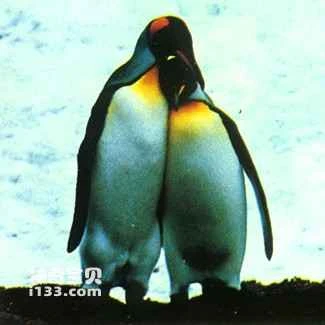
5. King Penguin
Standing about 90 centimeters tall and weighing 12 kilograms, it is second only to the emperor penguin in size. While belonging to the same genus but different species from the emperor penguin, they are generally similar in appearance. The main differences are its slender body, long beak, and more vibrant red feathers under its neck, extending downwards and backwards over a larger area, making it one of the most brightly colored penguin species.
6. Rock-loving penguins
Standing 44-49 cm tall and weighing 2.5 kg, it is the smallest of the Antarctic penguins. It prefers to inhabit rocky, pebble-strewn hillsides, highlands, and beaches. Carrying, pecking, and playing with stones seems to be its instinct and habit, and building nests with stones is one of its specialties. The Rock-loving Penguin is a type of crested penguin.
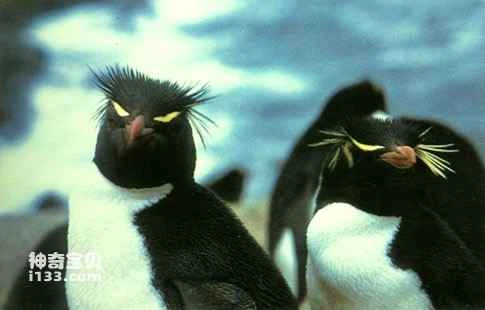
7. The Extravagant Penguin
Standing 45-55 cm tall and weighing 4.6 kg, its distinctive features include two tufts of golden feathers above its eyes, a short, thick, ochre-colored beak, and orange-red eyes. It is the most luxurious of the penguins, resembling a warrior from an ancient drama: clad in a black open-fronted coat over a white battle suit, adorned with golden pheasant feathers, and poised to ride a horse with a sword at its side. The Crested Penguin is also a type of penguin.
While there aren't many species of penguins in Antarctica, their numbers are considerable. According to long-term observations and estimates by ornithologists, there are nearly 120 million penguins in Antarctica, accounting for 87% of the world's total penguin population and 90% of the total number of Antarctic seabirds. The most numerous are Adelie penguins, with approximately 50 million, followed by chinstrap penguins with about 3 million, and the fewest are emperor penguins with about 570,000.