The Southern Ocean is home to over 100 species of fish, while the world's other oceans boast more than 2,000 species. In comparison, the Southern Ocean's fish population is relatively small, especially its near-surface fish. In the past, Antarctic fish received insufficient attention, were not studied in depth, and were poorly understood. However, with a deeper understanding of the Southern Ocean, its fish resources are increasingly valued. The discovery of antifreeze proteins in Antarctic cod has further fueled widespread interest, promoting research into the functions of Antarctic fish.
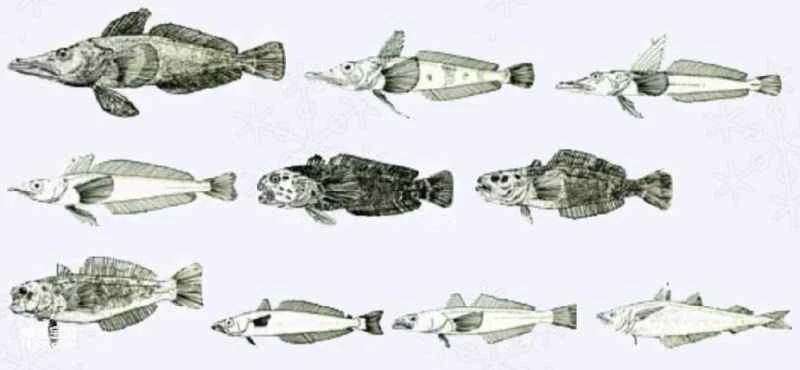
Antarctic fish illustrations
Among the fish of the Southern Ocean, the dominant species are those of the Antarctic order, accounting for 75% of nearshore fish. Those with potential economic value include five major groups: Antarctic ray, stingray, cod, barbel, and icefish, comprising nearly 20 species.
Antarctic fish share a common habit of inhabiting deep waters, and there seem to be no densely packed schools of surface fish, which contrasts sharply with other oceans.
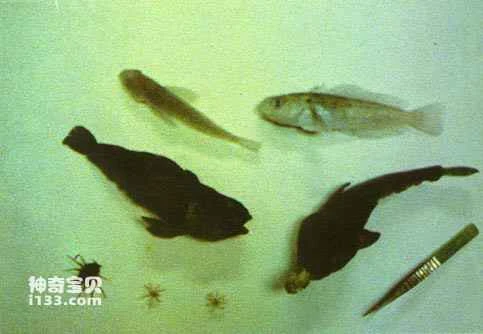
Antarctic fish
Antarctic fish are generally small, with most species measuring less than 25 centimeters in length. Very few exceed 50 centimeters; only the toothed wrasse (Goblinidae) can reach 1.8 meters in length and weigh 70 kilograms. Most fish grow slowly, typically increasing in length by 2-3 centimeters per year, except for the large toothed wrasse, which can grow about 7 centimeters per year, reaching 50 centimeters in 7 years. The spawning season for Antarctic fish is late autumn and early winter in the Southern Hemisphere. The eggs are large, generally 2-4 millimeters in diameter, with the largest reaching 8 millimeters. The eggs are round, filled with yolk, and rich in nutrients. The eggs hatch into fry in spring. This coincides with the peak season for phytoplankton growth in the Southern Ocean, providing direct or indirect nutrition for the fry. Most fish feed on marine zooplankton, while some also consume phytoplankton.
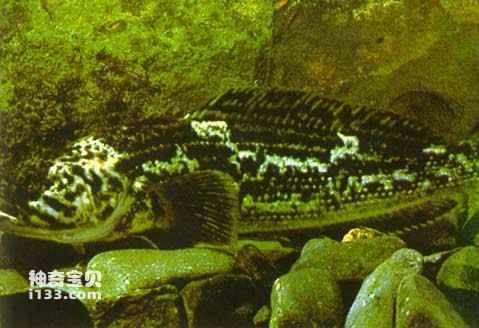
Antarctic mackerel
Most Antarctic fish have grayish-white blood, not red, due to the lack of hemoglobin. Fish in the Southern Ocean are mainly distributed in certain waters south of the Antarctic Convergence, particularly abundant in the waters near islands.
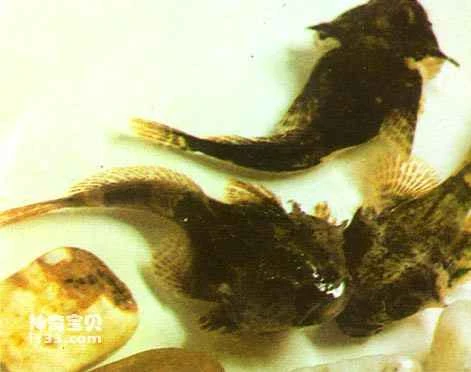
Antarctic benthic fish
Because Antarctic fish grow slowly, are small in size, and have low yields, their resources are easily damaged by overfishing, even leading to the depletion of resources in some areas. For example, the South Georgian Sea, which was once rich in fish resources, has seen its population reduced to only 20% after several years of continuous fishing. Currently, the international community has implemented protective measures in this sea area and the Kergellen Sea to address the problem of the rapid decline in fish resources in these localized areas.
Although it is generally believed that the development value of fish in the Southern Ocean is not as great as that of other biological resources such as krill and whales, as the investigation of Antarctic marine biological resources continues to deepen, the living habits and population distribution of Antarctic fish will gradually become clear, and their potential value will also emerge.