The giant ichneumon wasp is a fascinating example of the complexity and beauty of parasitic and predatory relationships in nature. This insect, known for its enormous size, long ovipositor, and unique life cycle, belongs to the family Ichneumonidae, which contains a variety of parasitic wasps. Its distinctive appearance and reproductive methods have sparked not only scientific interest but also widespread curiosity. This article will explore the biology, behavior, and ecological significance of this remarkable insect, clarifying common misconceptions about it.
Appearance and physical characteristics
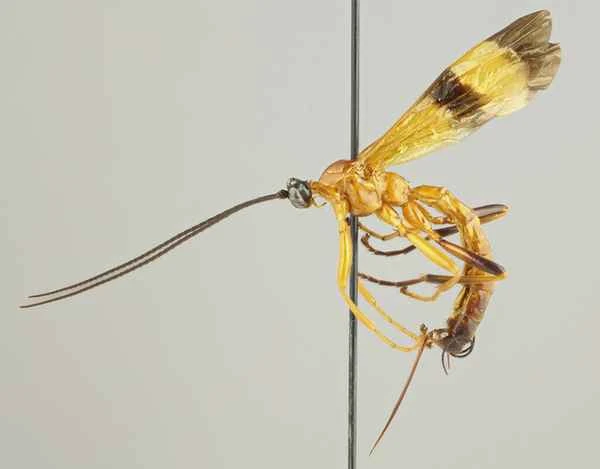
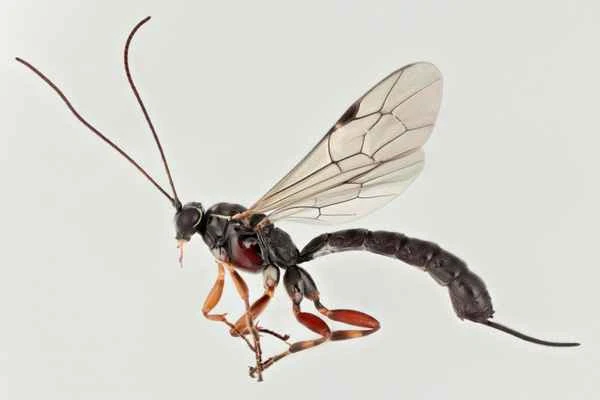
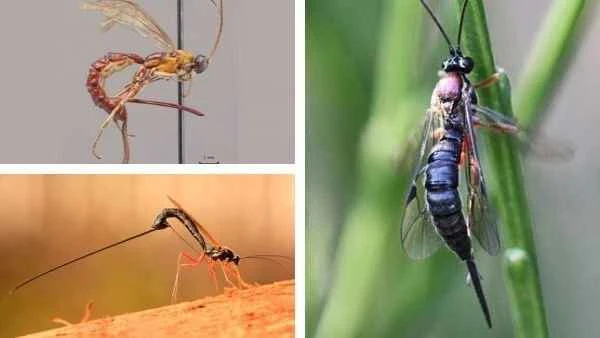
The giant slender wasp (belonging to the genus *Megarhyssa*) is notable for its striking appearance. The female, in particular, possesses an ovipositor that can reach 5 inches in length, even longer than the wasp's body. This specialized organ is used to lay eggs deep within wood, especially in the hiding places of their preferred host—the larvae of another insect, the horntail wasp. While the giant slender wasp's appearance may inspire fear due to its enormous size and the needle-like appearance of its ovipositor, it is worth noting that it is completely harmless to humans and will not sting or bite.
Giant slender wasps typically range in length from 1.5 to 2 inches, with females usually slightly larger than males. Their bodies are usually black or brown with yellow or orange markings on their torso and legs. Their wings are transparent with a faint brown tinge, and their long antennae are also a distinctive feature. Giant slender wasps often appear on the surface of decaying wood, searching for host larvae.
Life cycle and parasitic behavior
The life cycle of the giant slender wasp is closely linked to that of another insect, the wood-boring wasp (Urocerus). The female giant slender wasp uses her long ovipositor to burrow into the wood and locate the wood-boring wasp larvae hidden deep within. She then lays her eggs directly on these larvae. This process can take several hours, as the female wasp needs to skillfully penetrate the wood fibers with her ovipositor.
Once hatched, the larvae of the lean wasp begin their lives as parasites. They slowly begin to consume the host larvae from the inside out. Unlike predators that kill their prey immediately, parasitic wasps allow their hosts to live for a period of time to ensure the freshness of their food source. The larvae eventually complete their development in the wood and emerge as adults.
This unique life cycle demonstrates the specialization and evolutionary adaptability of the giant lean wasp. The relationship between the giant lean wasp and the wood-boring wasp is parasitic; the lean wasp gains a survival advantage through parasitism, while the host is affected. However, this behavior also maintains the natural balance of the forest ecosystem, helping to control the population of wood-boring insects that could potentially damage trees.
Ovipositor: Nature's ingenious tool
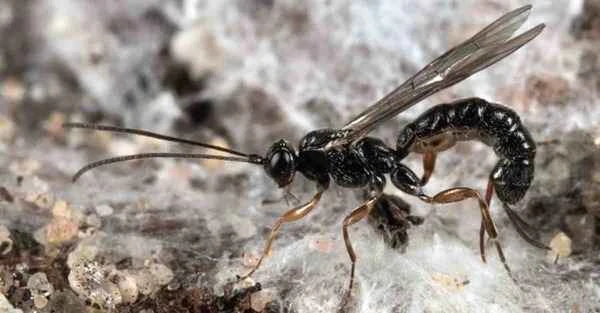
The most striking feature of the giant lean wasp is its complex and intricate ovipositor, an organ that serves as both a drill and a source of eggs. The ovipositor consists of three thin tubes, two of which are protected by outer sheaths. The central ovipositor, however, is responsible for the actual drilling. The lean wasp uses specialized muscles and mechanical pressure to propel the ovipositor several inches deep into the wood. Small teeth at the end of the ovipositor help cut through the wood fibers, ensuring it can penetrate even the hardest wood.
Even more remarkably, female giant slender wasps can sense the presence of wood-boring wasp larvae inside wood, typically locating them by the vibrations produced when the larvae move or chew on the wood. This extraordinary ability allows the giant slender wasp to precisely target its hosts, ensuring its offspring have access to sufficient resources to survive.
Research shows that the ovipositor of the lean wasp also possesses a special secretion that softens wood, making it easier to penetrate. This natural "drill," combining mechanical and chemical means, demonstrates a masterpiece of evolution, enabling the lean wasp to access larvae buried deep within the tree trunk.
Ecological role and benefits
While the giant lean wasp may appear to be a terrifying predator, it plays a vital role in maintaining ecological balance. By parasitizing wood-boring wasps and other wood-boring insects, the giant lean wasp helps control their populations, preventing them from causing significant damage to trees. This natural pest control is particularly important for forested areas, as the overpopulation of wood-boring insects can weaken or even kill trees, leading to broader ecological impacts such as habitat loss or increased fire risk.
Therefore, the presence of lean wasps is a sign of a healthy, well-functioning ecosystem. They are part of a complex network of interactions between plants, herbivores, and predators, ensuring biodiversity and the sustainability of forest habitats.
Common Misconceptions
Due to their large size and long ovipositor, giant slender wasps are often mistaken for dangerous insects. Some people believe they sting with their ovipositor, but this is a misconception. The ovipositor is only used for laying eggs and is not a stinger. Giant slender wasps are completely harmless to humans and pets, and unlike some other bees (such as wasps or hornets), they are not aggressive and do not initiate defensive attacks.
Another common misconception is that all slender wasps are as large and conspicuous as giant slender wasps. In fact, the slender wasp family is extremely diverse, with over 100,000 species worldwide, many of which are very small and difficult to spot. They also play important roles in various ecosystems.
Protection and Threats
Like many insect species, the giant leptomeninger wasp faces threats such as habitat destruction, pesticide use, and climate change. As forests are cleared for agriculture or urban development, the habitat of the leptomeninger wasp and its hosts is decreasing. Furthermore, pesticides used in agriculture and forestry can disrupt natural predator-parasite relationships, leading to population imbalances.
Protecting forest habitats and promoting sustainable forestry practices are crucial for maintaining the populations of these beneficial insects. Public education is also essential to dispel misconceptions about these harmless and ecosystem-beneficial insects.
The giant slender wasp is a fascinating example of the complexity and beauty of parasitic relationships in nature. Its unique life cycle, remarkable ovipositor, and role as a natural pest controller give it a vital place in forest ecosystems. While its size and appearance may be frightening, the giant slender wasp is a harmless and beneficial insect that helps maintain the health of our natural world. Understanding and appreciating this insect helps us recognize the intricate balance of life across global ecosystems.