On August 30th, a research team comprised of Professor Xu Guanghui from the Institute of Vertebrate Paleontology and Paleoanthropology, Chinese Academy of Sciences, and researchers from several institutions in the UK and the US, published their latest research findings on the Triassic Scanianichthys fukans from Xinjiang in the journal *Nature*. Using high-resolution computed tomography (CT) technology, the team revealed some anatomical features of the fukans' skull that are similar to those of polypterygians. They also incorporated morphological data from fossil fishes, morphological data from extant ray-finned fishes, and DNA sequence data from 12 nuclear genes into a cladistic analysis, resulting in a new phylogenetic tree reflecting the systematic evolution of ray-finned fishes. Based on this new phylogenetic tree, the researchers re-estimated the origin time of the crown group in ray-finned fishes using molecular clock estimation, suggesting that the origin time of the crown group is 20 to 40 million years later than previously estimated.
Actinopterygii are the most abundant and diverse group in the subphylum Vertebrata, accounting for about half of all extant vertebrate species. They share a common ancestor with primitive lobe-finned fishes and tetrapods (amphibians, reptiles, birds, and mammals), making them crucial for studying early vertebrate evolution and biodiversity. Extant ray-finned fishes include polypterygians, sturgeons, gars, bowfins, and teleosts; among them, polypterygians are considered the most primitive. However, the oldest polypterygian fossils have only been found in the Early Late Cretaceous (about 100 million years ago), which is relatively young compared to the Paleozoic and Early Mesozoic ray-finned fish fossil record. For a long time, almost all Paleozoic ray-finned fishes and some Mesozoic ray-finned fishes have been collectively referred to as "archaeococci." Identifying and establishing the phylogenetic relationships between these early ray-finned fishes and polypterygians and other ray-finned fishes has been extremely difficult.
Xu Guanghui and his collaborators have conducted detailed research on the Scanianichthyales, a group of "ancient cod," over the past decade, achieving a breakthrough in the challenging topic of the early evolution of ray-finned fishes. Scanianichthyales are primitive ray-finned fishes unique to the Triassic period (approximately 252–201 million years ago). Except for one genus found in Late Triassic marine strata in Sweden, the remaining genera and species of this order have been found in terrestrial Triassic strata of Laurasia (including northern China, Siberia, Kazakhstan, and North America). Therefore, Scanianichthyales primarily inhabited freshwater environments. The discovery of *Fukangia longibranchii* in the Middle Triassic of Fukang, Xinjiang, in the 1960s represents the first discovery of Scanianichthyales in China. In recent years, *Beishania short-tailed pedunculata*, discovered in the Lower Triassic of Beishan, Gansu, represents one of the oldest genera and species of Scanianichthyales. Furthermore, *Zhangya Mizhi fish*, discovered in the Upper Triassic of Mizhi, Shaanxi, represents the latest fossil record of Scanianichthyales in China. Among these fossil materials, only *Fanganus* possesses a three-dimensionally preserved skull, facilitating the use of high-resolution computed tomography (CT) to reveal its internal anatomical features. Thanks to this new technique, researchers discovered that the skull of *Fanganus* shares some characteristics with polypterygians, suggesting that Scaniachiformes may be an ancestral type of modern polypterygians.
This study is a multidisciplinary application of paleontology, modern biology, and molecular biology, and it is also a model of the application of high-resolution computed tomography technology in the study of ray-finned fish fossils, providing a reference for the study of other ray-finned fish fossils.
The research project was funded by the National Natural Science Foundation of China. Three-dimensional scanning of the fossils was performed at the High-Precision Computed Tomography (CT) Center of the Key Laboratory of Vertebrate Evolution and Human Origins, Chinese Academy of Sciences.
Links to three papers on Scaniae fishes published by Xu Guanghui and his team in international academic journals in recent years are as follows:
Xu, G.-H. & Gao, K.-Q. 2011. Zoological Journal of the Linnean Society. http://onlinelibrary.wiley.com/doi/10.1111/j.1096-3642.2010.00645.x/pdf
Xu, G.-H., Gao, K.-Q. & Finarelli, JA 2014. Journal of Vertebrate Paleontology. http://www.bioone.org/doi/10.1080/02724634.2014.837053
Giles, S., Xu, G.-H., Near, TJ & Friedman, M. 2017. Nature. http://dx.doi.org/10.1038/nature23654
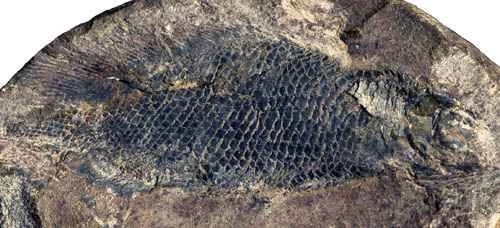
Figure 1. Holotype specimen of *Amanita muscaria* with long dorsal fin (Photo provided by Xu Guanghui)
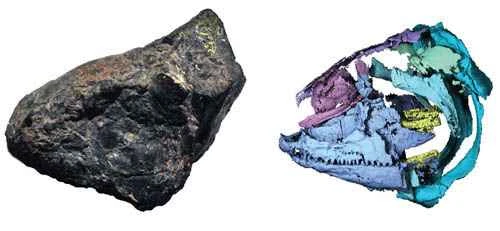
Figure 2. Three-dimensional preservation and CT identification of the skull of the long-dorsal fin anchovy (Image provided by Xu Guanghui)
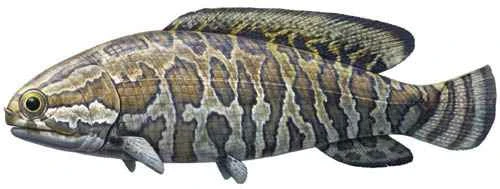
Figure 3. Reconstruction of the life of the long-dorsal-finned anglerfish (painted by Andrey Atuchin based on the reconstruction base provided by Xu Guanghui).