The camel is an ungulate, much larger than cattle and horses, covered in brown fur, with a small head, long neck, stout body, and slender limbs. It has one or two prominent humps on its back, rising high like mountain peaks. Camels may seem clumsy, but upon closer inspection, they are truly exceptional. Strong and robust, they can endure heat, cold, hunger, and thirst, and can carry heavy loads over long distances, making them ideal for traversing the desert. Therefore, they are hailed as the "ships of the desert."
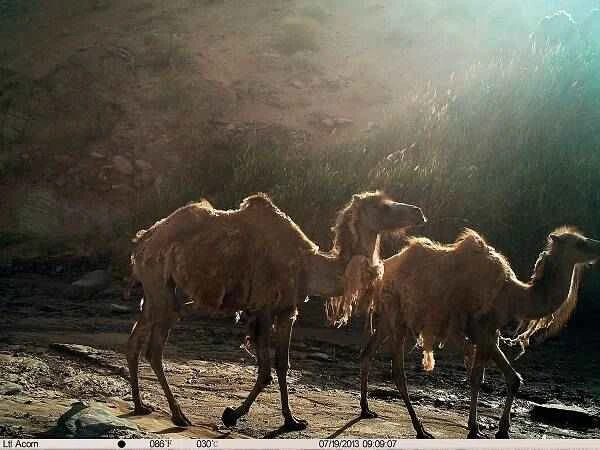
Camels can be classified into two types based on the number of humps: Bactrian camels (two humps on their backs) and Dromedary camels (one hump on their back). Bactrian camels are distributed in Central Asia, and wild populations still inhabit Xinjiang and western Inner Mongolia in my country. Dromedary camels are found in southwestern Asia and the desert regions of North Africa. It is said that there are no wild dromedary camels left. Dromedary camels are faster than Bactrian camels and are considered the "steeds" of the camel herd.
The exact time when camels were domesticated is still unclear. Research suggests that the Bactrian camel was domesticated around 1000 BC by the people living in the desert regions of western my country. The dromedary camel was likely domesticated around the same time in Arabia.