Many marine animals have amazing camouflage abilities, allowing them to blend into their surroundings.
Camouflage helps animals protect themselves from predators because they can blend into their surroundings so that predators can swim by without noticing them.
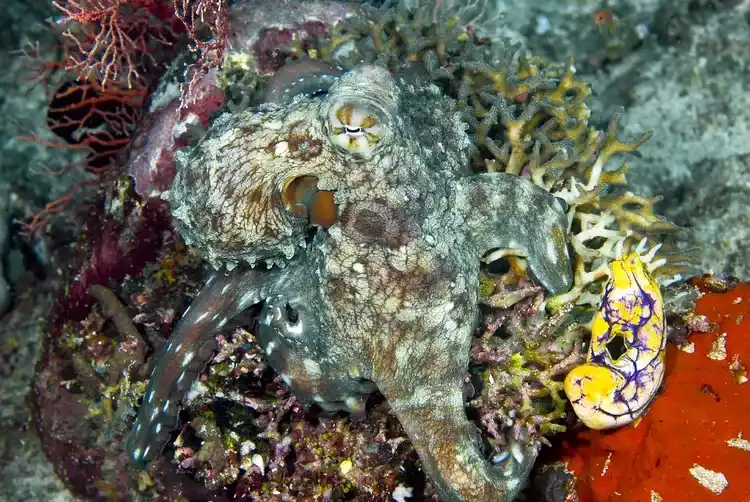
Close-up shot of an octopus on coral
Camouflage can also help animals sneak up on their prey. Sharks, rays, or octopuses may lurk on the seabed, waiting to catch unsuspecting fish that pass by.
Below, we'll look at some amazing examples of marine camouflage and learn about animals that can blend perfectly into their surroundings.
Dwarf seahorses are incorporated into it
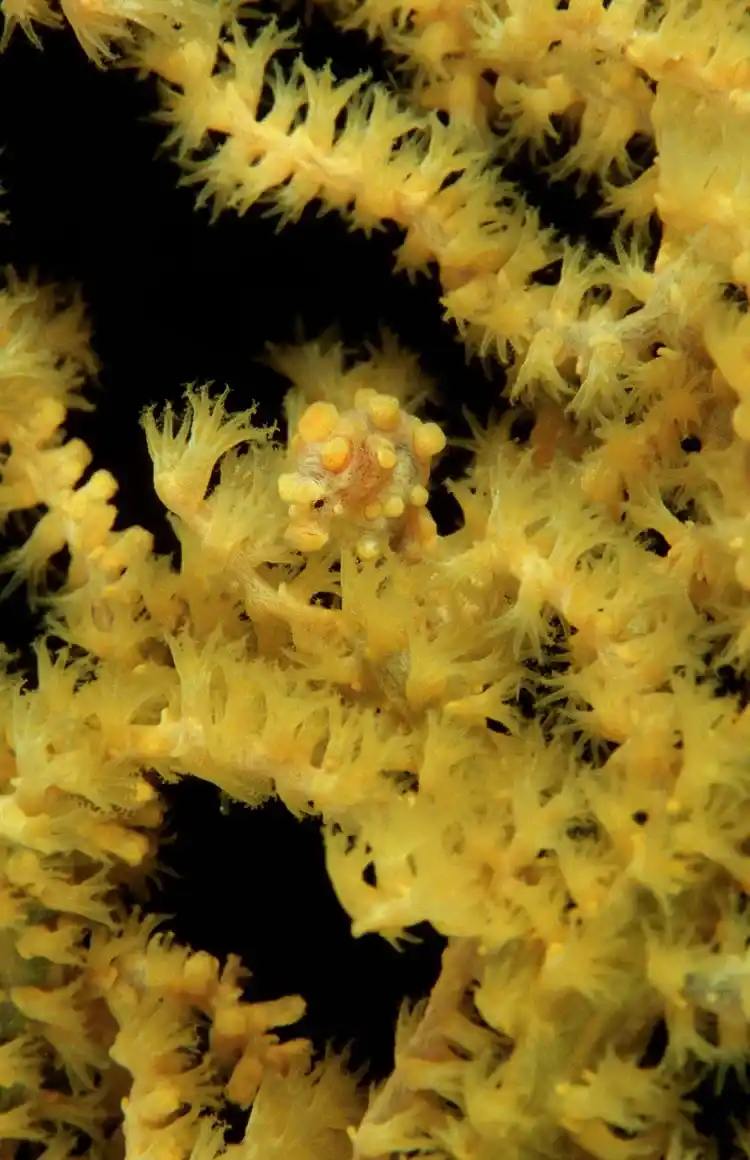
Yellow pygmy seahorse (scientific name: *Hippocampus bargibanti*) on a sea fan off Komodo Island, Indonesia.
Seahorses can change their color and shape depending on their preferred habitat. Many seahorses also don't swim very far in a day. Although they are fish, they are not good swimmers and may stay in the same place for several days.
The pygmy seahorse is a tiny seahorse, less than 3 centimeters in length. There are approximately nine different species of pygmy seahorses.
Sea urchin carrying objects
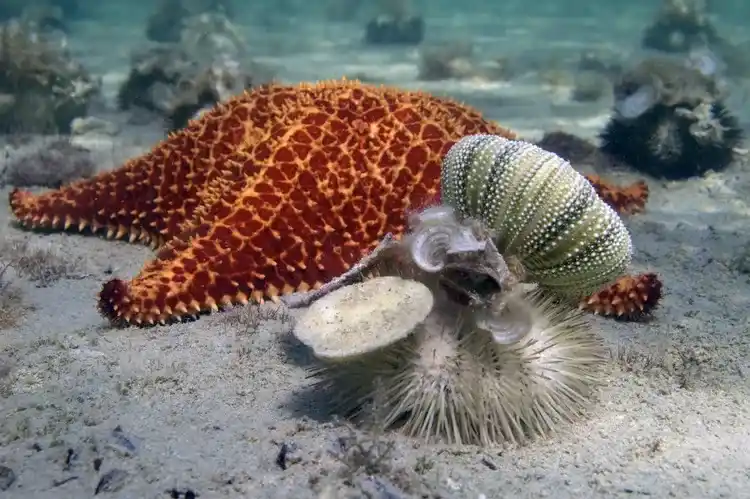
In Curaçao, Netherlands Antilles, a sea urchin carries camouflage, including the skeleton of another sea urchin, against a backdrop of cushion-shaped starfish.
Some animals, like sea urchins, don't change color to blend into their environment; instead, they pick up objects to hide themselves. This sea urchin carries all sorts of things on its body, even the skeleton of another sea urchin (for testing)! A passing predator might mistake it for just another piece of seabed rock and rubble.
Lurking shark
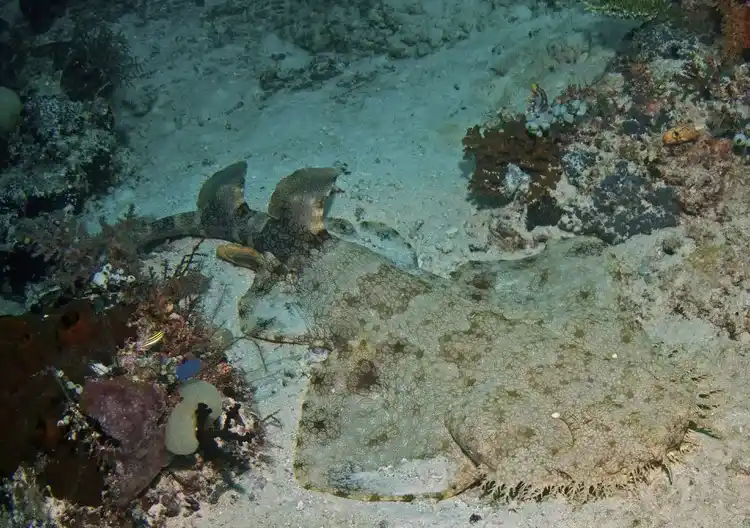
A baleen shark camouflages its habitat in Raja Ampat, Papua New Guinea, Indonesia.
With its mottled body coloration and dermal lobes extending from its head, the wolverine shark blends easily into the seabed. These sharks, which can reach lengths of about 1.2 meters, feed on benthic invertebrates and fish. They inhabit the relatively shallow coral reefs and caves of the western Pacific Ocean.
The baleen shark patiently waits on the seabed. When prey swims by, it may even leap and seize it before the shark gets close. This shark has an enormous mouth, large enough to swallow other sharks whole. Its teeth are incredibly sharp, like needles, used to grip its prey.
Solar-powered nudibranchs
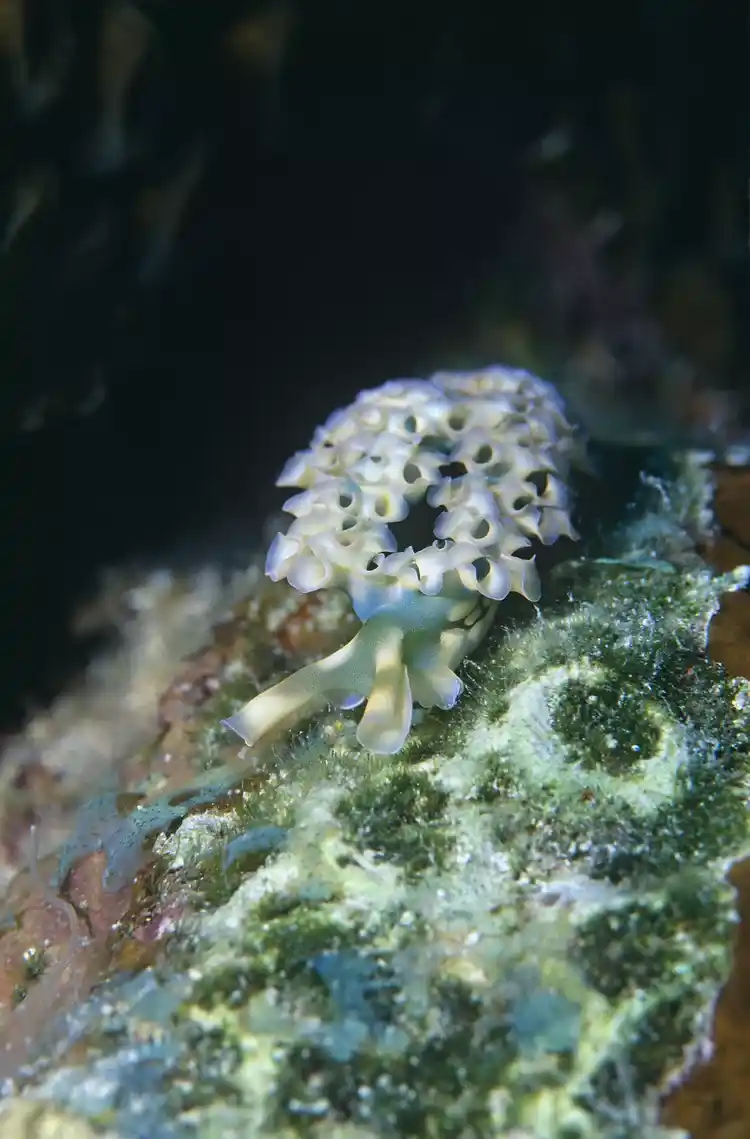
Lettuce leaves nudibranchs
These nudibranchs can reach 6 centimeters in length and 2 centimeters in width. They live in the warm waters of the Caribbean Sea.
This is a sea slug that uses solar energy—like a plant, it has chloroplasts in its body that allow it to photosynthesize, giving it its green color. The sugars produced in this process provide nutrition for this nudibranch.
King Shrimp
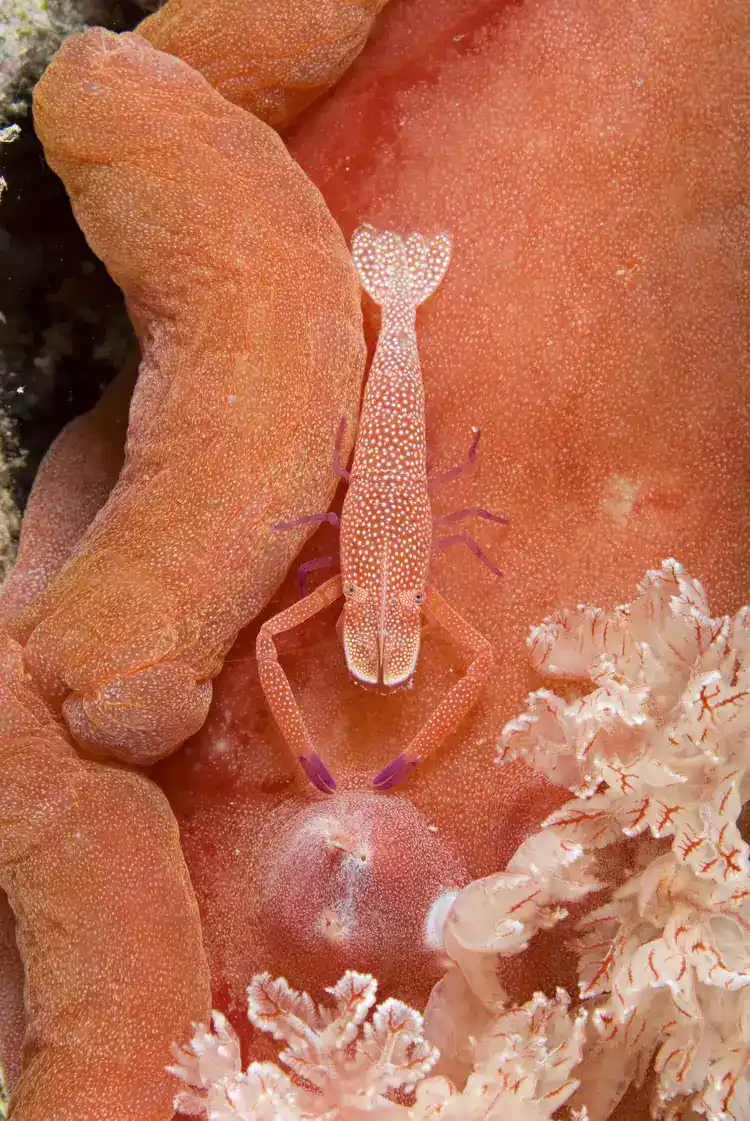
In Indonesia, the king shrimp (Periclimenes imperator) mates with the Spanish nudibranch (Hexabranchus sanguineus).
The king shrimp's coloration allows it to blend perfectly into the bodies of nudibranchs, the Spanish dancers. This shrimp is also known as a cleaner shrimp because it feeds on algae, plankton, and parasites on nudibranchs and sea cucumber hosts.
Sea hare snail
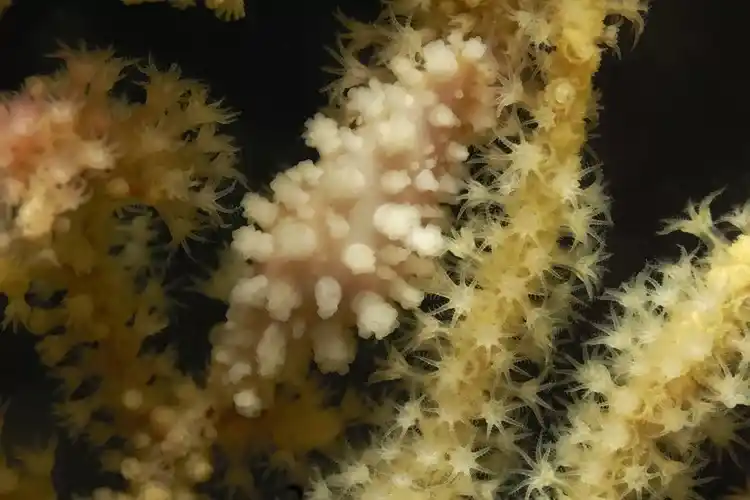
This sea hare snail blends perfectly with the coral polyps of the coral it inhabits.
Sea hares, also known as egg snails, have a baby-shaped shell covered by a snail's mantle. These snails feed on corals and sea fans, cleverly blending into their surroundings (absorbing the color of their prey) to evade predators. What could be better than dodging predators and simultaneously securing food?
Ye Hailong
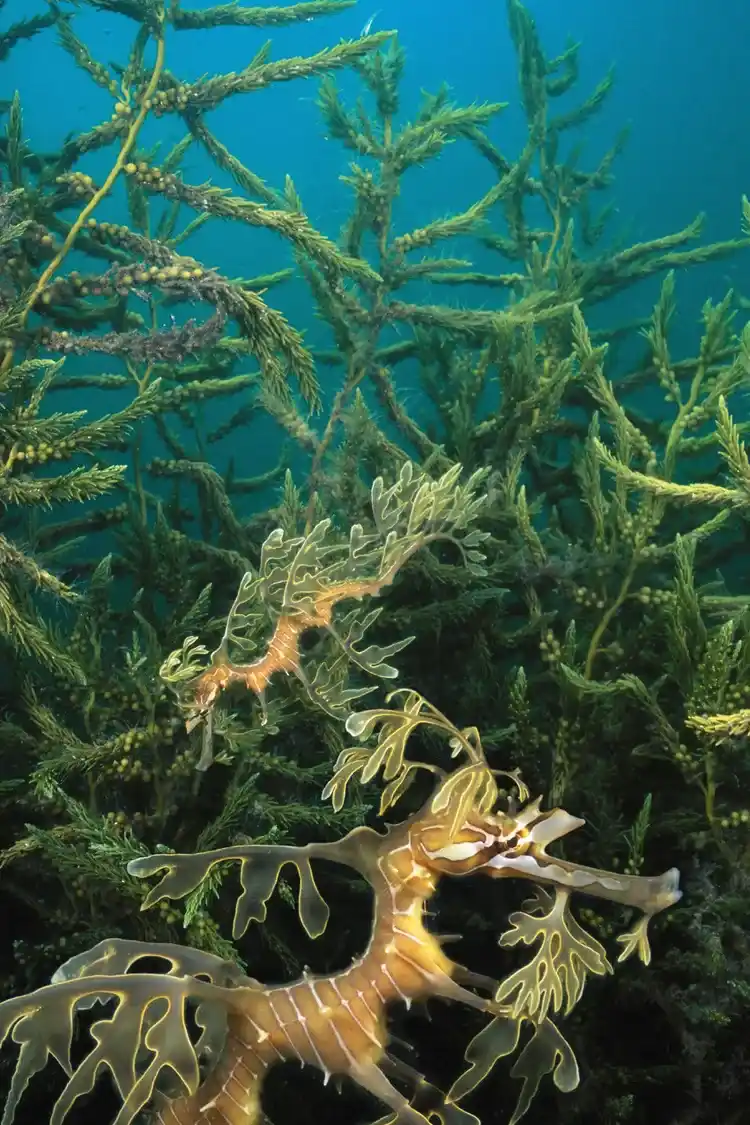
Leafy seadragons are among the most spectacular-looking fish. These "relatives" of seahorses have long, flowing appendages and yellow, green, or brown body colors, which allows them to blend well into the kelp and other seaweed in their shallow-water habitat.
Leafy seadragons can reach a length of about 12 inches (about 30 centimeters). They feed on small crustaceans, sucking them up with their straw-like noses.
Sea urchin crab
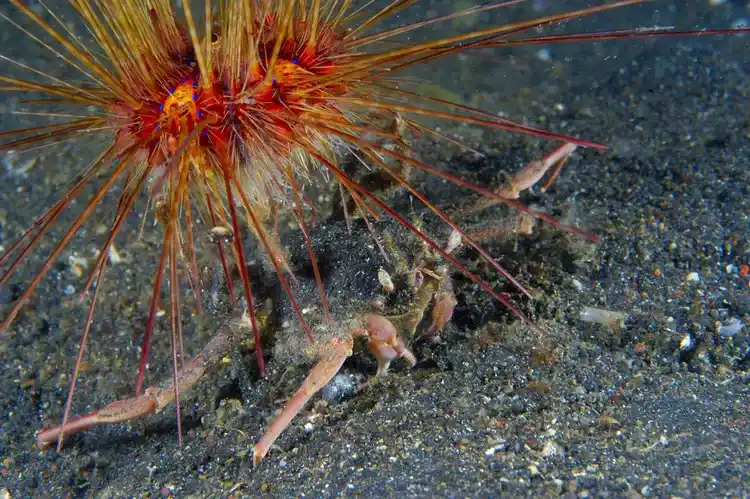
Sea urchin crabs disguise themselves by carrying sea urchins in the Lembeh Strait between Sulawesi and Celebes islands in Indonesia.
Sea urchin crabs have a symbiotic relationship with several types of sea urchins. These crabs carry the sea urchins on their backs using their hind legs to camouflage themselves. The sea urchins' spines also help protect the crabs. In turn, the sea urchins benefit from being carried to areas with more abundant food.
Giant frogfish
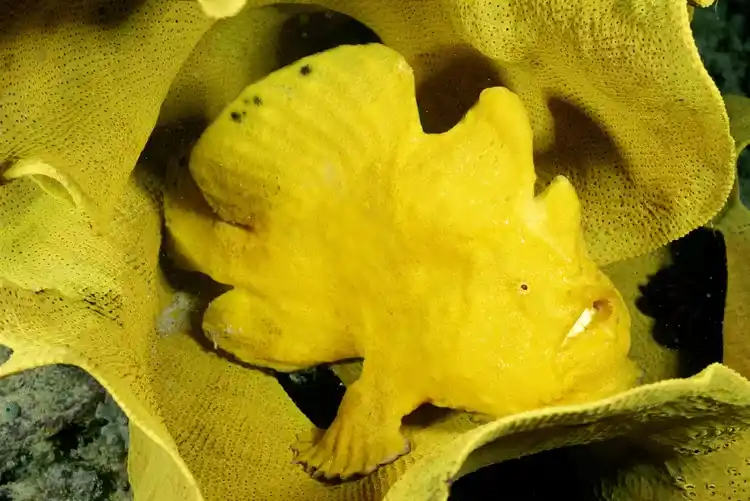
Giant frogfish camouflage themselves in yellow sponges on Mabul Island, Malaysia.
They are bulky and scaleless, yet masters of camouflage. Who are they? Giant frogfish!
They don't look like bony fish, but they do have a bony skeleton, just like some fish we are more familiar with, such as cod, tuna, and haddock. They have rounded bodies and sometimes use their pectoral fins to walk on the seabed.
Giant frogfish may camouflage themselves in sponges or on the seabed. These fish can change their color and even texture to help them blend into their environment. Why do they do this? To deceive prey. Giant frogfish can open their mouths up to 12 times their own size, allowing them to swallow prey whole. If the camouflage strategy fails, frogfish have a second option—like anglerfish, they have an evolved spine that acts as a fleshy "bait" to lure prey. When curious animals, such as small fish, approach, the frogfish will swallow them whole.
Squid disguise
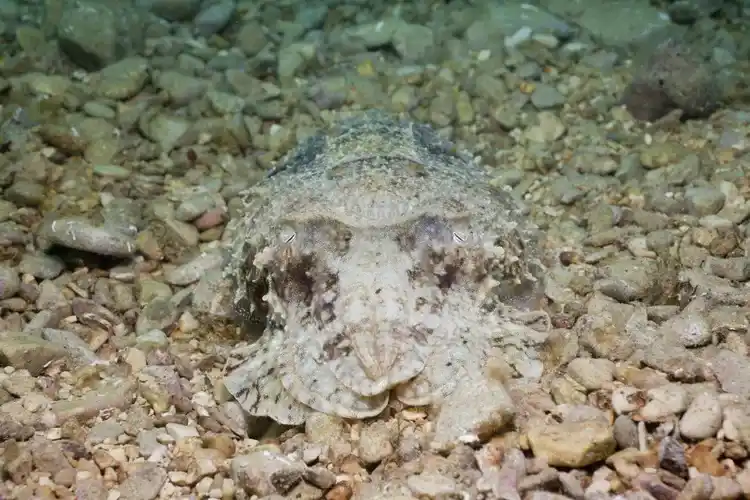
Common squid on the seabed of the Istrian Peninsula in the Adriatic Sea, Croatia.
Cuttlefish possess impressive intelligence and camouflage abilities, but these abilities are almost wasted for such short-lived animals that only live for 1-2 years.
Millions of pigment cells are attached to the muscles of a squid's skin. When a squid contracts its muscles, the pigment is released into its skin, thus changing the squid's color and even its pattern.
Bartholomew's seahorse
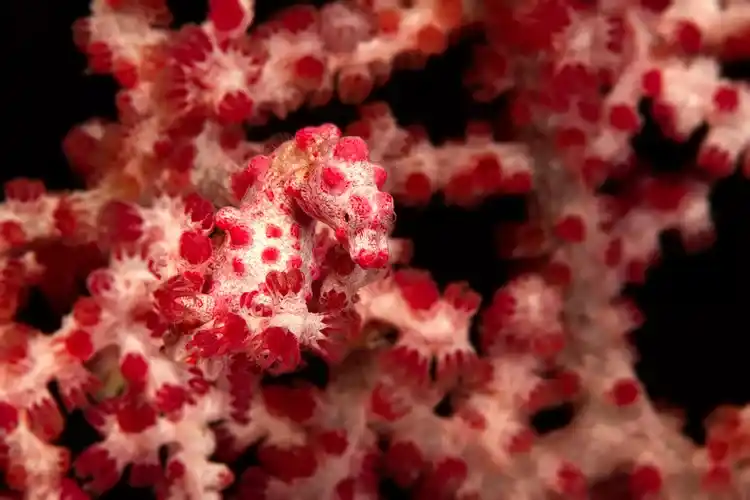
Dwarf seahorses camouflage themselves on soft corals.
The color, shape, and size of Barth's pygmy seahorse allow it to blend perfectly into its surroundings.
Bartholin's seahorses live on a type of soft coral called gorgonian coral, which they grasp with their curled tails. They are believed to feed on tiny organisms such as crustaceans and zooplankton.
Decorated Crab
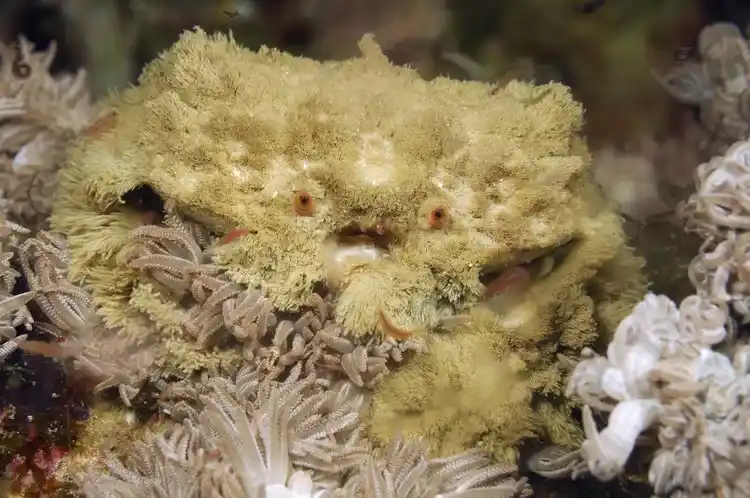
Decorative crab (Dromia dormia), Komodo Island, Indonesia.
The decorative crab shown here looks a bit like an underwater version of Chewbacca.
Decorative crabs use organisms such as sponges (as shown in the picture), bryozoans, anemones, and algae for camouflage. Their carapaces have bristles on the back, which they use to attach to these organisms.
Peacock flounder
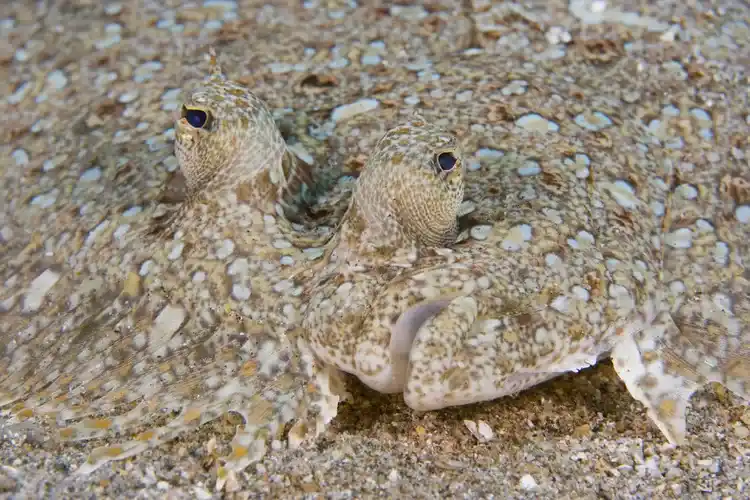
The peacock flounder (scientific name: Bothhus mancus) camouflages itself on the seabed.
The fish displayed here is the peacock flounder, also known as the spotted flounder. Flounders lie flat on the seabed, with their two eyes located on one side of their bodies, giving them a very unique appearance. Furthermore, they possess the ability to change color, which makes them even more interesting.
Guppy flounders have beautiful blue spots on their bodies. They can "walk" on the seabed using their fins, changing colors as they move. They can even create checkerboard patterns. This remarkable ability to change color comes from pigment cells called chromatids.
This species is distributed in tropical waters of the Indo-Pacific and eastern Pacific Oceans, living on sandy seabeds in shallow waters.
Devil Scorpion Fish
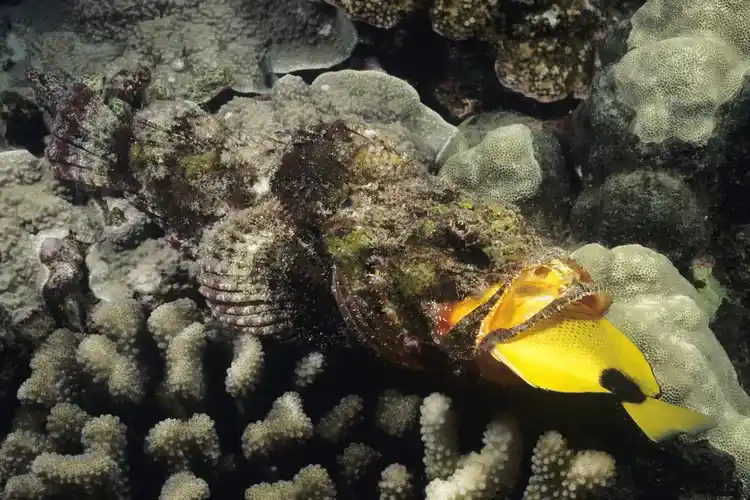
Hawaii, a devil scorpionfish with a butterflyfish in its mouth.
The devil scorpionfish is an ambush predator with a powerful bite. They lurk on the seabed, waiting for small fish and invertebrates to take the bait. When food approaches, the scorpionfish leaps up and swallows its prey whole.
These fish also have venomous spines on their backs, which help them protect themselves from predators. They can also sting humans, causing pain.
In this picture, you can see the scorpionfish blending into the seabed, forming a stark contrast with the bright butterflyfish that become its prey.