Brachiopods are a large group of shelled invertebrates that live on the seabed. Their two shells are different sizes and are made of calcareous or chitinous material. Brachiopods spend a few days to two weeks in a planktonic larval stage, and then grow fleshy stalks to attach to the seabed for a sessile life. However, some species attach to the seabed with secondary cement or shell spines or live freely.
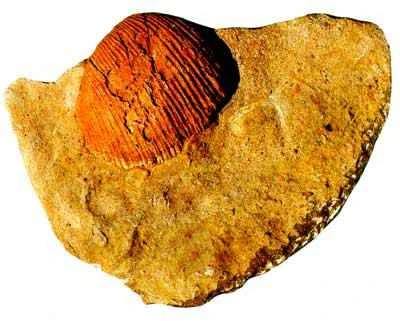
long-bodied clam
Today, brachiopods comprise 7 superfamilies, 84 genera, and nearly 300 species, but they flourished even more during geological history, with fossil records spanning from the Cambrian period 600 million years ago to the Quaternary period 10,000 years ago. By 1979, scientists had described 3,377 genera and over 32,000 species. These diverse brachiopod fossils are of great significance in determining geological time periods.
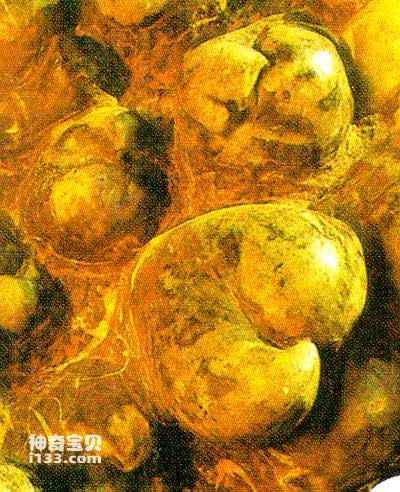
Owlhead Clam - a type of perforated mollusk
Scientists have divided brachiopods into four classes: Hingeformes, Primitive Hingeformes, Hingeformes, and Brachiopodes. Hingeformes include the orders Glossiformes, Mammary Poriferi, Pterygota, and Skullpiformes; Primitive Hingeformes include the orders Trichocarpiformes and Nissuriformes; Hingeformes include the orders Orthomorphiformes, Pentacelliformes, Twistylocarpiformes, and Elongata; and Brachiopodes include the orders Microcephalic, Perforata, Anaporata, Anaporata, and Sparganata.
Modern brachiopods are found in shallow, semi-deep, and deep-sea environments, and are best suited to living in oceans with normal salinity. In desalinated seas, few brachiopods are found besides lingulata; for example, the Baltic Sea and other Nordic seas lack brachiopods due to their low salinity. Modern brachiopods are distributed on sandy, rocky, and clayey seabeds. Burrowing lingulata prefer sandy seabeds, while sessile brachiopods prefer rocky seabeds or seabeds containing gravel and shell fragments. Modern brachiopods also frequently coexist in symbiosis with algae, corals, worms, mollusks, and echinoderms.
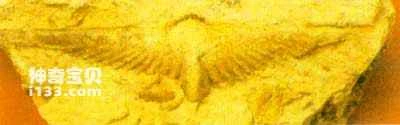
Shi Yan
Fossil brachiopods have been found in various sedimentary rocks, but are most commonly found in limestone, marl, shale, and siltstone, where they are also well-preserved. Paleozoic brachiopod fossils are frequently found in reef strata, coexisting with animals such as corals, foraminifera, bryozoans, and sponges that lived in normal shallow seas. Therefore, it can be inferred that brachiopods at that time also lived in shallow seas with normal salinity. From the Mesozoic era onwards, brachiopods began to exhibit symbiotic relationships with deep-sea organisms. Fossil data also show a process of brachiopods spreading from sunlit shallow seas to semi-deep seas with low light and eventually to the deep sea. It is this process that has resulted in brachiopods inhabiting the oceans today, whether in shallow, semi-deep, or deep seas.