Bryozoans are quite different from mosses! They are a group of tiny, primitive aquatic social animals. However, their body structure is more evolved than that of worms, possessing three germ layers and a true body cavity, and their bodies are unsegmented. They are called "bryozoans" or "bryozoans" simply because their collective morphology resembles that of bryophytes. Because they always live in colonies, they are also called "colony worms."
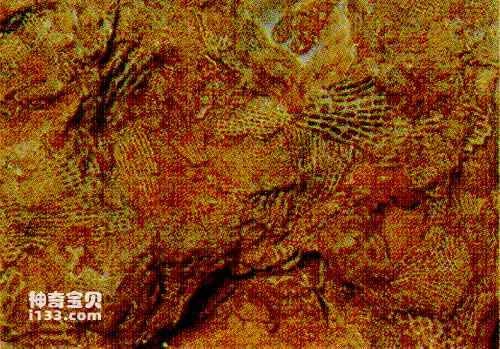
bryozoans
Most bryozoans live in the ocean, with only a very few species living in freshwater. Scientists classify them into three classes: Narrow-lipped, Nudibranchs, and Barodontidae. Narrow-lippedidae includes four orders: Cyclostomata, Pyrostomata, Cryostomata, and Cryptostomata. Nudibranchs only includes two orders: Ctenostomata and Labiostomata. Barodontidae is a very small group that lives entirely in freshwater.
Marine bryozoans are adaptable to environments of varying temperatures and depths. Modern bryozoans are distributed from the intertidal zone in coastal areas to depths of 5500 meters, surviving in waters ranging from warm oceans to cold polar regions, demonstrating their remarkable adaptability. However, most bryozoans thrive in warm, shallow seas with normal salinity and relatively clean water, typically at depths of 25 to 60 meters. These bryozoans are not free-swimming animals in these bodies of water; they are benthic, attached to or epiphytic on other objects. They can adapt to various types of seabed conditions and often attach themselves to the hard shells of brachiopods and mollusks; some can even grow on seaweed.
The earliest bryozoan fossils were discovered in Early Ordovician strata. Among bryozoans, Ctenostomata is a relatively primitive group, existing since the Ordovician and continuing to the present day, but with little evolution and few fossils. The Ordovician, considered the first flourishing period for bryozoans, also saw the emergence of Bryozoa, Porphyrithias, Cryptostomata, Ringostomata, and Ctenostomata. The Devonian to Carboniferous period was the second flourishing period for bryozoans, during which the aforementioned orders still existed, but Cryptostomata were particularly abundant. Bryozoa, Porphyrithias, and Cryptostomata began to decline towards extinction by the end of the Permian, with only some remnants surviving into the Triassic. The third flourishing period for bryozoans was from the Jurassic to the Cretaceous, during which Ringostomata flourished extensively, becoming the dominant bryozoan order, while Chilostomata appeared and also developed significantly. The fourth flourishing period of bryozoans was the Cenozoic Era, which lasted until the modern era. During this period, the order Chlorostomata developed extremely well, surpassing the order Cyclostomata in abundance, and became the most biodiverse and advanced order of bryozoans, dominating the modern oceans.