When we talk about kangaroos, we often picture these adorable mammals hopping forward and carrying their young in a pouch on their bellies for protection. But kangaroos are much more than that. Not only are they the largest marsupials in the world , but they are also a symbol of Australia, possessing many unique physiological and behavioral characteristics.
This article will give you a comprehensive understanding of kangaroos, including their physical and behavioral characteristics, habitat distribution, dietary habits, and whether they face the threat of extinction.
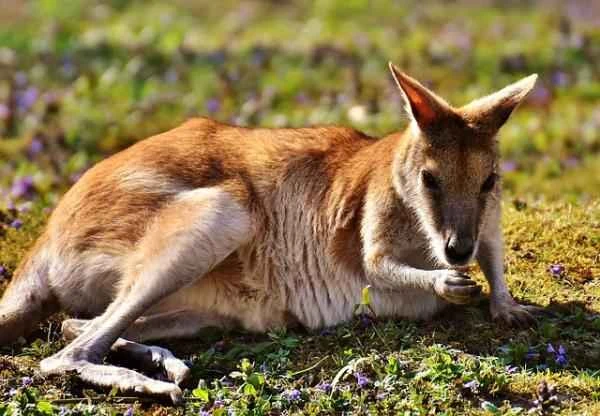
Main characteristics of kangaroos
Taxonomic classification : Kangaroos belong to the order Marsupialia, family Macropodidae .
Size and weight : Adult kangaroos can be over 2 meters tall and weigh about 85 kilograms, with males generally being larger than females.
Limbs and tail : They have powerful hind limbs for jumping and fast movement, and a thick and strong tail that provides support and balance when jumping, while also providing powerful propulsion during the run-up and leap.
Nursery pouch (parenting method) : Female kangaroos have a special brood pouch on their abdomen. The joey is extremely underdeveloped after birth and needs to climb into the pouch to continue growing and developing. The joey usually lives in the pouch for about 8 months, and then gradually comes out to move around, but will still return to the pouch to suckle until it is 12–14 months old and then becomes completely independent.
Reproductive habits :
Red kangaroos ( Macropus rufus ) reproduce only when conditions are suitable, exhibiting opportunistic reproduction.
The grey kangaroo ( Macropus giganteus ) can breed year-round, with its peak breeding season in the summer.
The mating process is often accompanied by prolonged pursuit and courtship behavior by the male. Mating will only take place if the female accepts the male's advances.
The gestation period is short, only 28–36 days, but the pups are extremely small and underdeveloped, requiring the use of a pouch.
Social behavior : Kangaroos typically live in groups known as "mobs," consisting of dozens or even hundreds of individuals. They are mostly shy and will flee when threatened, but if forced, they will defend themselves using their strong hind legs, sharp claws, and great strength.
Daily habits : Kangaroos are mostly nocturnal animals. They often seek refuge from the heat in shady places during the day and are most active at night or in the early morning.
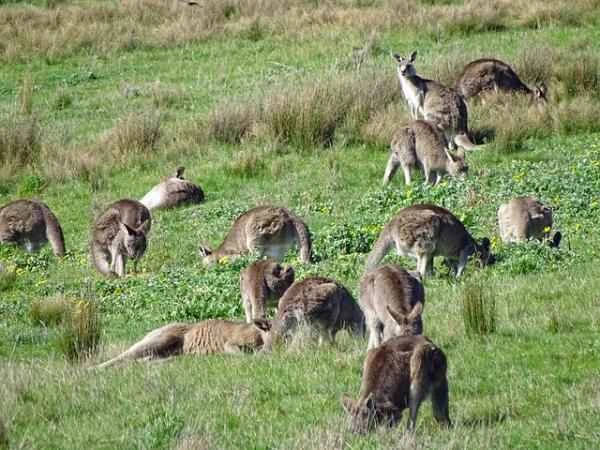
Kangaroo habitat
Kangaroos are mainly distributed in Australia , as well as New Guinea and Tasmania . Different species of kangaroos are adapted to different environments:
Grey kangaroo ( Macropus giganteus )
Other names : Oriental grey kangaroo, giant kangaroo.
Distribution : Mainly inhabits the humid regions of eastern and southern Australia.
Preferred Environment : It prefers areas with alternating grasslands and mountains, and can also be found in subtropical forests, coastal areas, and mountain shrublands.
Habits : They seek refuge from the heat in the woods during the day and are active at night and in the early morning to forage for food.
Methods to cope with high temperatures : lick your own skin, find shady places, and be mainly active at night.
Red Kangaroo ( Macropus rufus )
Distribution : The driest regions of Australia, such as deserts, grasslands and semi-arid scrublands.
Features : They can tolerate extreme heat and drought, have excellent water-saving mechanisms, and their kidneys can efficiently retain body fluids to reduce water loss.
Habits : Compared to grey kangaroos, they are better adapted to survive in extreme conditions.
Overall characteristics
Kangaroos are sedentary animals and usually live in fixed areas.
However, when natural disasters (such as fires and droughts) or human activities destroy their habitats, they may be forced to migrate in search of new habitats.
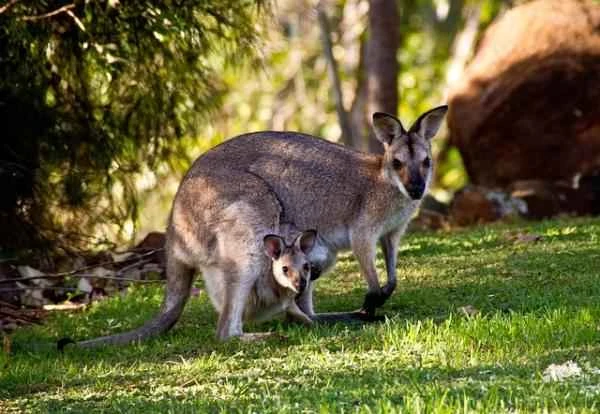
Kangaroo diet
Diet : Kangaroos are typical herbivores , mainly eating grasses, tender leaves, bark, roots and shrubs.
Feeding method : They use their sharp incisors to bite off grass stems and chew them repeatedly through rumination so that their large stomach can digest them better.
Water requirements : Kangaroos living in arid regions need to conserve water as much as possible. They will drink when water is available, but even during periods of water scarcity, they can obtain moisture by eating succulent plants, thus allowing them to go for extended periods without drinking.
Mealtime : Most eating activities take place at night or in the early morning to avoid the daytime heat.
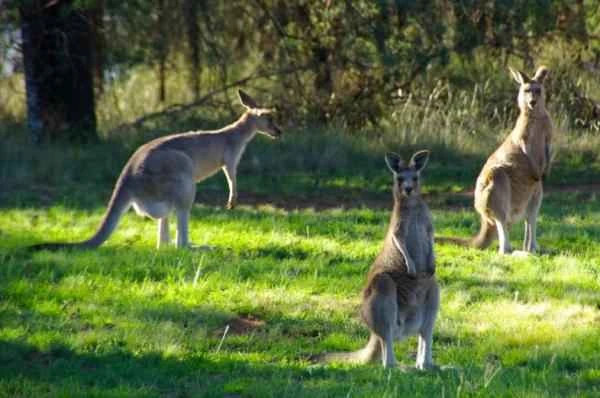
Are kangaroos endangered?
Red kangaroos and grey kangaroos : According to the International Union for Conservation of Nature (IUCN) Red List, they are currently listed as **Least Concern** species, with relatively stable populations.
Potential threats : With climate change, forest fires are becoming more frequent and habitats are being destroyed, potentially leading to a decline in kangaroo numbers in the future. Experts worry that if this trend continues, kangaroos could be added to the list of threatened species in a few decades.
Other endangered kangaroo and closely related species :
Goodfello tree kangaroo ( Dendrolagus goodfellowi )
The kangaroo tree ( Dendrolagus matschiei )
Dorian tree kangaroo ( Dendrolagus dorianus )
Tantalum Tree Kangaroo ( Dendrolagus scottae )
These arboreal kangaroos are critically endangered due to habitat loss, urban expansion, and hunting.
Summarize
Kangaroos are not only a symbol of Australia but also one of the most unique mammals on Earth. With their powerful jumping abilities, distinctive pouches, and gregarious lifestyles, they demonstrate remarkable evolutionary adaptations. While the main species is not currently at risk of extinction, the survival of kangaroos and their close relatives is facing increasing challenges due to climate change and escalating human activity.
Protecting habitats, reducing human-caused damage, and strengthening wildlife management are key to ensuring the continued survival of kangaroos for generations.