In 1973, farmers in Heshui County, Gansu Province, discovered a piece of white ivory while digging in the sand. After 35 days of excavation, the fossil was finally fully revealed: it was the skeleton of an elephant, which was diagonally inserted into the sand, with its feet on stones.
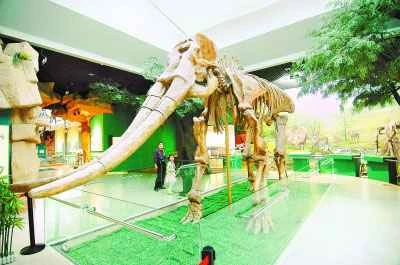
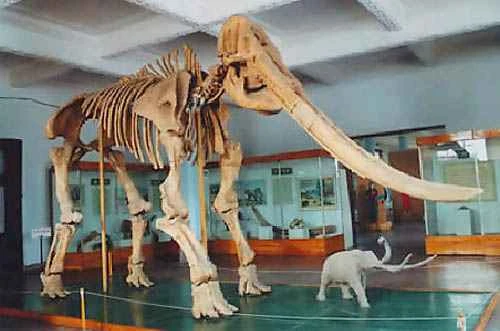
A replica of a Yellow River elephant fossil on display at the Gansu Provincial Museum.
This fossil was named the "Yellow River Elephant." It was 4 meters tall, 8 meters long, and had tusks over 3 meters long, resembling two long swords, hence its other name, the saber-toothed elephant. The Yellow River Elephant's skeletal fossil is the most complete saber-toothed elephant skeleton ever discovered in the world.
It is speculated that 3 million years ago, the Gansu region was dotted with rivers and lakes. One day, a saber-toothed elephant fell into a mud pit while drinking water by the river and was buried by the silt, thus preserving its skeleton intact. Through geological evolution, this region was uplifted into a plateau, allowing the Yellow River elephant to see the light of day again.
The Yellow River Elephant fossil is very famous in China; there is even a lesson titled "The Yellow River Elephant" in Chinese primary school textbooks. Currently, the Yellow River Elephant fossil is on display in the Paleontology Hall of the Beijing Museum of Natural History.
I almost missed the fossil.
In Qingyang City, Gansu Province, the Malian River, known as the "Mother River," is the largest river within Qingyang's borders. It was formerly called Huangjian, then Nishui during the Han Dynasty, and later Maling River after the Northern Wei Dynasty. During the Tang Dynasty, because its two major tributaries, Maling River and Baima River, converged south of Qingcheng, the section of the river downstream of Qingcheng was named the Malian River.
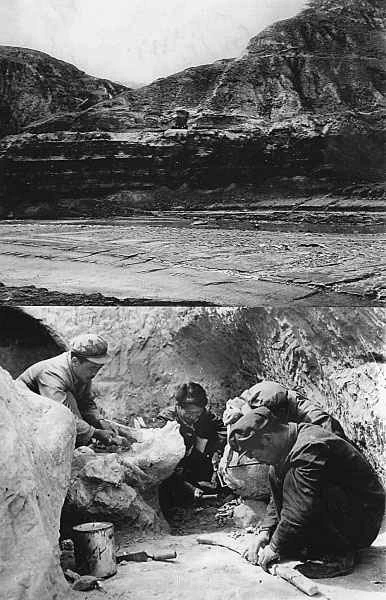
The top image shows the topography of the excavated site, and the bottom image shows the excavation site itself.
The Malian River passes through Hejiapan Township and Banqiao Township in Heshui County.
In late 1972, Heshui County planned to build the Huokou Hydropower Station on the banks of the Malian River in the Muqi Production Team of Banqiao Commune. The project aimed to irrigate several thousand acres of nearby land with water from the Malian River, thereby increasing grain production. This was very good news for the arid Loess Plateau.
Jiang Dengpan, then director of the Grain Bureau of Heshui County, was a veteran revolutionary who joined the Shaanxi-Gansu-Ningxia Guerrilla Force in 1938. He was appointed by the county committee and county government as the chief commander of the project. At that time, there were no modern excavators or bulldozers, and the work was entirely done by hand. Many local farmers carried their own hoes and shovels, baskets, and carts, actively participating in the project.
On January 20, 1973, the construction site was bustling with activity as usual. Around 2 PM that afternoon, on the western slope of the riverbank, a commotion erupted as people rushed to grab something. Someone shouted that they had unearthed "dragon bones," and others carried them towards the village. Jiang Dengpan, who was working with the crowd, immediately rushed over and quickly stopped the commotion. He approached the "dragon bones," picked up a thick, bowl-shaped object that resembled both stone and bone, and appeared very smooth and hard. He noticed the broken piece was still in the sand. What was this thing that was so long? (Later excavation revealed that what Jiang Dengpan had seen was the first ivory tusk unearthed; after restoration, it was found to be 3.04 meters long.) What was buried beneath the loess? Jiang Dengpan didn't know, but with the sense of responsibility of an old revolutionary, he decisively decided: this must be a treasure; it should be handed over to the state, and no one was allowed to dig it up or disturb it.
Jiang Dengpan ordered the production team leader, who had rushed over upon hearing the news, to lead a group to retrieve the "dragon bones" that had been looted by the crowd. He also assigned two militiamen to take a section of the "dragon bones" to the county town, 15 kilometers away, to report to the county cultural center. Jiang Dengpan then organized the crowd to plant markers with dead trees and surround the area.
The next morning, Xu Junchen from the county cultural center arrived at the construction site to inspect it and concluded that it was an unknown ancient fossil. He rushed back to the county seat that day to report to the county leaders. The county leaders instructed Jiang Dengpan to strengthen site protection and completely retrieve the "dragon bones" that the migrant workers had already taken home, while also notifying the provincial cultural authorities. Subsequently, the county sent police officers to protect the site. However, news of the "dragon bones" spread quickly, and more and more people began to dig them up; a small section of the elephant's two incisors was still stolen.
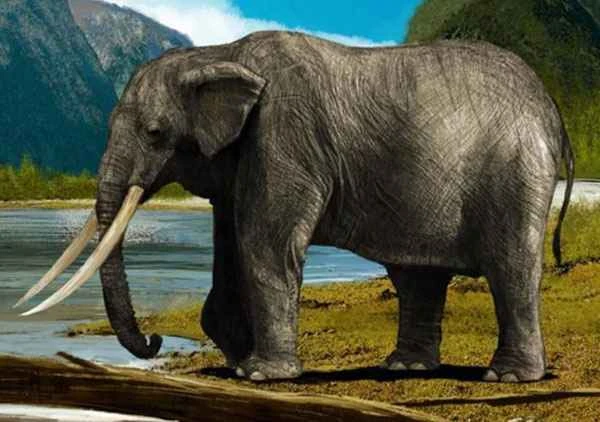
Mysterious and difficult excavation
Twenty days had passed, and it wasn't until March 10th that the province sent Xie Junyi from the Provincial Museum and invited Gu Zugang, a teacher from the Department of Geology and Geography at Lanzhou University, to Heshui County to form a three-person joint survey team with Xu Junchen.
On March 18th and 19th, the survey team conducted an on-site investigation. They dug one meter inward from the exposed cross-section of the elephant tusk and found that the tusk extended 50 centimeters inward before connecting with the maxilla, estimating that there was a well-preserved elephant body inside. Unfortunately, most of the exposed tusks had been lost, but fortunately, the traces of the left tusk being buried in the strata were still well preserved, providing a scientific basis for later restoration.
News of the discovery of the Yellow River elephant fossil quickly reached the petroleum geology department, which was conducting geological exploration work in Heshui. Technical personnel from the Changqing Oilfield Campaign Command also went to the site for investigation. They then telegraphed the news again to the Institute of Vertebrate Paleontology and Paleoanthropology of the Chinese Academy of Sciences.
On March 21, the exploration team received a telegram from the Institute of Vertebrate Paleontology and Paleoanthropology of China stating: "We have received a report from the Changqing Oilfield Command that a large number of fossils have been discovered in the Heshui area. Please protect the site. Our institute will send personnel to the site."
This telegram put the survey team in an awkward position, leaving them unsure whether to continue or withdraw. After discussion, Xie Junyi drafted a telegram for the Institute of Vertebrate Paleontology and Paleoanthropology of the Chinese Academy of Sciences. Upon arriving in Xifeng Town, Xie Junyi reported to the head of the Cultural Group of the Political Department of the Provincial Revolutionary Committee by telephone, and then sent the telegram in the name of the Cultural Group.
The telegram stated that the fossils discovered in Heshui were of an elephant, not a reptile. Xie Junyi would wait at the Qingyang District Guesthouse in Xifeng Town to meet with the delegation from the Chinese Academy of Sciences.
On the evening of April 1, Zhao Jufa, a technician from the Chinese Academy of Sciences, arrived in Xifeng Town. Zhao Jufa said, "After receiving the telegram and learning that it was an elephant, not a reptile, the other four researchers who were supposed to come decided not to come and asked me to come alone to help the province excavate the fossil."
A problem arose: Xie Junyi was still unclear about the province's attitude—whether to excavate or not, whether to keep the fossils or not, and how to cover the costs. It would cost at least five or six hundred yuan. Left with no other option, Xie Junyi and Zhao Jufa went to Heshui County first. On the morning of April 4th, Xie Junyi called Lanzhou, reporting the situation again to the Cultural Group of the Political Department of the Provincial Revolutionary Committee, and requesting that five or six hundred yuan be sent for excavation costs and food coupons.
After purchasing some basic supplies in Heshui County, they entered the construction site. On April 5th, a four-person excavation team, consisting of Zhao Jufa from the Institute of Vertebrate Paleontology and Paleoanthropology of the Chinese Academy of Sciences, Xie Junyi from the Provincial Museum, and Han Tianbao and Xu Junchen from the Qingyang Regional Cultural Center, began formal excavation with the strong support of the Heshui County Party and government leaders and the Huokou Hydropower Station construction site.
At that time, it was the most beautiful season of the year in the Malian River valley. On the hillsides on both sides, there were patches of apricot groves, laden with green apricots; on the flat river terraces, green wheat seedlings swayed in the wind; the crystal-clear waters of the Malian River flowed southeast, and ducks swam across the surface from time to time... However, the excavation team members, encouraged by this great discovery, had no time to appreciate the beautiful scenery.
The excavation work followed the natural environment, employing a top-down approach. Starting from the exposed elephant fossil site, the excavation proceeded layer by layer, extending 2 meters to each side and 4 meters inwards along the hillside. On April 9th, the elephant skull was exposed. As the excavation progressed, the elephant's vertebrae, leg bones, ribs, scapulae, pelvis, and wrist bones were successively unearthed, proving that it was indeed a remarkably well-preserved elephant carcass buried in its original location.
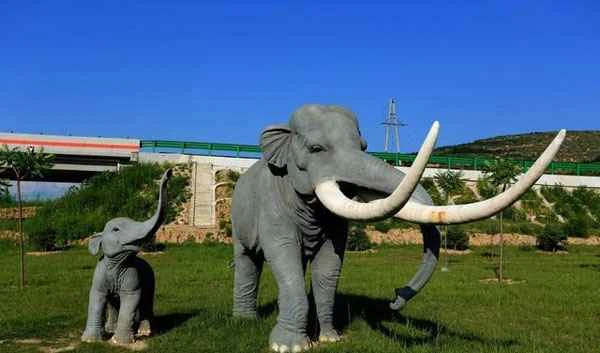
Everyone was overjoyed, and Zhao Jufa was especially excited. He said that their research institute didn't have a complete elephant fossil like this before! It should be the first in the country.
Excavating the elephant's head was an unprecedented challenge for them. The elephant's brain has a honeycomb-like structure; if it were broken open, the head could shatter into pieces. They decided to use a nested method to excavate it as a whole. First, they estimated the size of the elephant's head, then made a wooden box without a bottom cover. Grooves were cut around the elephant's head, the box was inserted, plaster was poured in, and the top cover was sealed. The box was then slowly tilted over, the bottom turned up, and plaster was poured in again to reinforce the bottom cover. In this way, the elephant's head remained a single unit, preventing it from breaking.
The fossils were very porous when first unearthed, and could be easily damaged, making the excavation work extremely meticulous and arduous. While the excavated fossils were being dried, they were also reinforced with a chemical solution to prevent them from weathering and crumbling away. After a series of careful processes, the left scapula was retrieved starting April 16th; the upper part was removed, and then the underlying bones were excavated.
The excavation began on April 5 and ended on May 17, lasting a full 35 days except for rainy days.
During the excavation, the Institute of Vertebrate Paleontology and Paleoanthropology of the Chinese Academy of Sciences telegraphed that the fossils should be transported to Beijing for observation and research, and then returned if needed by Gansu. Wang Yi, who was in charge of cultural relics at the Gansu Provincial Revolutionary Committee, decided that the fossils should be transported to Beijing first, and the issue of ownership should not be discussed. As for where to place them, it should be done according to the central government's opinion; wherever the central government deems them suitable, they should be placed there.
The moving was completed amidst a lively and festive atmosphere.
How could there be elephants on the arid Loess Plateau? Local people considered this discovery a marvel, traveling hundreds of miles in droves to see it. During the more than 40 days of excavation, over 20,000 people came to visit. At its peak, the number exceeded 1,000 per day, and passenger buses from Xifeng to Heshui were extended to the construction site. The county canteen set up makeshift stalls at the site, and countless food vendors lined the roads, making it even more bustling than a temple fair.
On one side, there was the lively celebration of the crowd; on the other, the excavation work proceeded in an orderly manner. After sorting, the various parts of the elephant's skeleton that were unearthed filled 12 large boxes. To ensure the absolute integrity of the various skulls, they used thick wooden boards to fix the sides on the spot, sealed them with plaster, and covered them from top to bottom, making them very secure and stable.
But another unavoidable problem arose: how to transport the enormous, heavy elephant head from the mountain path to the highway? (Later, at the Xi'an Railway Station, it was weighed and revealed that the box weighed 3,000 kilograms.) Initially, 19 people tried to pull it with ropes, but to no avail. The number was increased to 42, but still couldn't move it. Then a 3-ton training vehicle was used. After a whole day, it had only moved 5 meters. The excavation site was 500 meters from the highway; the only solution was to build a simple road and then use a tractor to transport it.
Heshu County quickly mobilized hundreds of people, and starting from May 20th, they built a 3-meter-wide road in just three days. The county's "Dongfanghong" tracked tractor from the tractor station arrived at the excavation site, and the massive elephant skull was finally hauled to the side of the makeshift road.
Transportation became a problem again. There were very few cars at the time; most were small trucks weighing three or four tons. Where could they find larger trucks? Zhao Jufa called Changqing Oilfield and asked them to send vehicles to help. Changqing Oilfield dispatched two trucks, one with a ten-ton load capacity and the other with a six-ton load capacity, and a crane also arrived. However, the crane broke down halfway there.
They were troubled again and had to resort to makeshift methods. First, they dug a trench, drove the truck in, and then hired a Dongfanghong tractor to push it onto the truck. This ordeal took several days, and it wasn't until the 28th that everything was loaded onto the truck, which they then drove overnight to Heshui County. They left Heshui County on the 29th and were handed over to the Xi'an West Railway Station freight yard on the 30th to be loaded onto a train. From then on, the Yellow River Elephant was gone forever.
After the Yellow River elephant fossil arrived in Beijing, the Institute of Vertebrate Paleontology and Paleoanthropology of the Chinese Academy of Sciences deployed more than 30 people to restore, reconstruct, and mount it. The mounted elephant is 4 meters tall, 8 meters long, and has tusks 3.03 meters long. Its size, early age, and excellent preservation make it a unique discovery in the world to date. Because the fossil was unearthed in the Yellow River basin, it was named the Yellow River elephant.
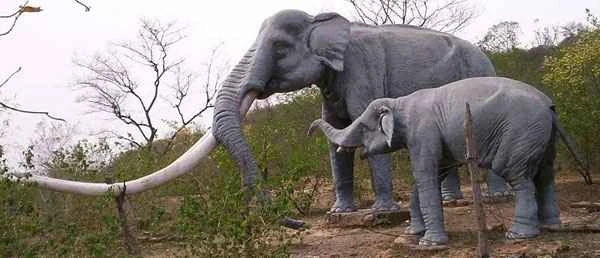
In October 1974, the Yellow River Elephant was exhibited at the Beijing Museum of Natural History. This massive Yellow River Elephant fossil skeleton, except for the tail vertebrae, is entirely composed of fossilized bones. At the front are tusks over 3 meters long, followed by the skull and lower jaw; even the rarely seen hyoid bone is preserved. Among the more than one hundred toe bones, even the three- or four-centimeter-long distal phalanges are intact. The complete preservation of the Yellow River Elephant fossil skeleton is extremely rare in the history of elephant fossil discoveries. The discovery of the Yellow River Elephant fossil not only provides reliable data for paleontological research but also offers invaluable scientific evidence for studying the ecological environment before and after the formation of the Loess Plateau in Qingyang, Gansu. Standing before the towering skeleton of the Yellow River Elephant fossil today, one seems to see an elephant carrying a magnificent scroll depicting the transformation of sea into land, striding proudly towards us.
The Yellow River Elephant fossil caused a sensation worldwide after its exhibition in Beijing. Later, as a friendly envoy of the Chinese people, it traveled overseas to Japan and Singapore, where it was warmly received. Cities such as Shanghai, Tianjin, and Lanzhou also subsequently exhibited replicas of the Yellow River Elephant fossil. Currently, the towering figure of the Yellow River Elephant can also be seen in ancient elephant museums in Henan and Chongqing. Through these museums and the beautiful short story "The Yellow River Elephant" in elementary school textbooks, the Yellow River Elephant has entered the memories of generations. However, for the past 42 years, the farmers who participated in excavating the Yellow River Elephant's skeletal fossils have never had the opportunity to see the magnificent body of the elephant they unearthed, which is undoubtedly a great pity. Fortunately, not long ago, replicas of the Yellow River Elephant's skeletal fossils were also produced in Qingyang City and Heshui County, Gansu Province, allowing the people of Qingyang to see the majestic and imposing figure of the Yellow River Elephant in its homeland.