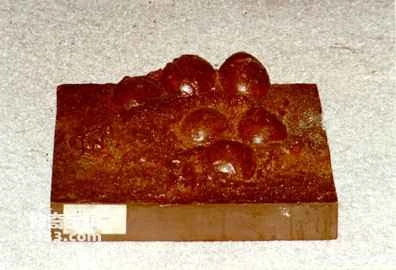
Anomalocaris is an incredibly fascinating ancient creature from the Cambrian period (over 500 million years ago). As one of the first known marine predators of its time, Anomalocaris provides us with important insights into the evolution of life on Earth. This article will explore its characteristics, habitat, and importance in the history of life.
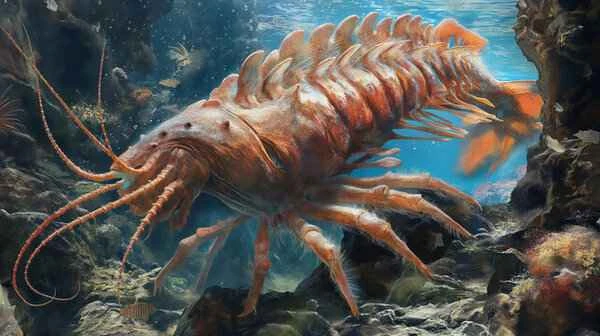
What is Anomalocaris?
Anomalocarids, whose name means "abnormal shrimp" in Latin, were an extinct, giant mollusc-like marine animal. They are usually classified as part of the "anomalocaridids," belonging to one of the earliest complex creatures to swim in the ocean. These creatures were known for their unique appearance and advanced hunting techniques.
What is Anomalocaris known for?
Anomalocaris is a fascinating prehistoric creature that holds an important place in paleontology. Here are some of the most well-known key aspects of Anomalocaris:
1. Early Cambrian predators
Anomalocaris is often considered one of the earliest known large marine predators, living during the Cambrian period, approximately 505 million years ago. This period, known as the "Cambrian Explosion," was a pivotal moment in the history of life, marking the first appearance of many major animal groups.
2. Unique physical characteristics
Anomalocaris is known for its unique morphology, which distinguishes it from other ancient marine creatures:
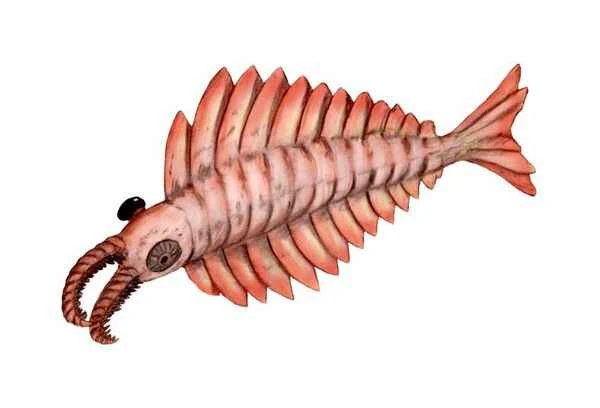
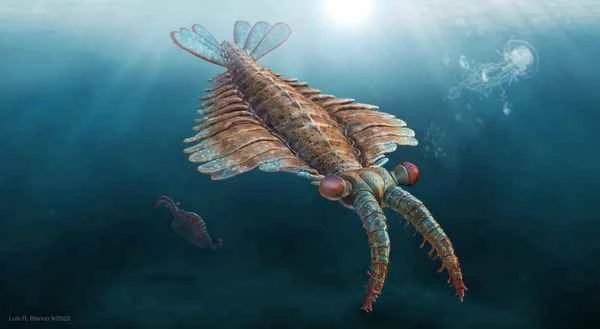
Size : Anomalocaris could reach 3 feet (about 1 meter), making it one of the largest creatures of its time.
Body structure : Anomalocaris has a segmented body, which is flexible and slender.
Head features : Its head has large compound eyes, providing excellent underwater vision.
Appendages : The spiky appendages at the front may have been used to capture prey, similar to modern claws.
Tail : Anomalocaris's fan-shaped tail helps it swim efficiently, allowing it to move flexibly in its environment.
3. Advanced hunting techniques
Anomalocaris is known for its complex hunting behavior. It is believed to use advanced hunting techniques to capture prey, primarily feeding on smaller marine animals, including trilobites and other mollusks. Its speed, agility, and specialized appendages make it a formidable predator in the ecosystem.
4. Evolutionary Insights
The discovery of Anomalocaris provides valuable insights into the evolution of early complex life forms. As one of the first known predators, Anomalocaris helps scientists understand the ecological relationship between predators and prey and the evolutionary race during the Cambrian period.
5. Fossil Discoveries
Anomalocaris fossils have been found in several important locations, such as the Burgess Shale in Canada and the Maotiaoshan Shale in China. These fossils are crucial for revealing the anatomy and lifestyle of this creature. The fossils are well-preserved, allowing paleontologists to study their structure and infer their ecological role.
6. The History of Misclassification
Interestingly, Anomalocaris fossils were initially mistaken for parts of different organisms. As research progressed, scientists realized that these fossils actually represented a complex organism, leading to a better understanding of its anatomy and ecological niche.
Anomalocaris is renowned for its role as an early large marine predator, its unique physical characteristics, and its advanced hunting strategies. Its importance in understanding early marine ecosystems and the evolution of life on Earth cannot be underestimated. Research on Anomalocaris continues to provide us with crucial insights into the Cambrian period and the development of complex life forms.
Habitat and Distribution
Anomalocaris lived in the oceans during the Cambrian period, thriving in shallow marine environments. Its fossils have been found all over the world, including:
Canada : Fossils found in the Burgess Shale have provided important insights into their anatomy and lifestyle.
Important Anomalocaris fossils have also been discovered in the Maotiaoshan Shale in China .
Australia : Other specimens have been discovered, further expanding our understanding of this ancient creature.
Diet and hunting strategies
As a apex predator, Anomalocaris plays a crucial role in the ecosystem. Its diet consists primarily of smaller marine animals, such as trilobites and other mollusks.
Hunting techniques : Anomalocaris may use its spiny appendages to grab and hold its prey before catching it.
Feeding method : It is believed that Anomalocaris has a unique feeding mechanism that allows it to quickly pull food toward its mouth with its limbs, demonstrating its advanced hunting skills.
How does Anomalocaris feed?
As one of the earliest large predators in the Cambrian oceans, Anomalocaris possessed a unique feeding mechanism, demonstrating its important role in the marine ecosystem. The following is a detailed introduction to Anomalocaris's feeding methods:
1. Specialized oral structure
Anomalocaris' unique mouth structure plays a crucial role in its predation process:
Circular mouthparts : Anomalocaris has a circular mouth surrounded by a series of hard, plate-like structures, which may have served as a pair of powerful jaws.
Digestive system : Its mouth leads to a complex digestive system that can efficiently process food.
2. Mechanisms for capturing prey
Anomalocaris uses its specialized appendages to capture prey:
Spiny appendages : Anomalocaris has claw-like spiny appendages on the front of its body, which are used to grasp and hold prey.
Hunting techniques : Scientists believe that Anomalocaris can quickly close these appendages to its mouth to capture small marine animals, such as trilobites or mollusks.
3. Predation strategies
Anomalocaris possesses highly efficient predation strategies, which have enabled it to occupy a top position in the food chain:
Active hunting : Unlike some creatures that passively forage, Anomalocaris actively hunts prey, using its speed and agility to chase smaller creatures.
Rapid feeding : Once it catches its prey, Anomalocaris can quickly pull the food toward its mouth and swallow it.
4. Food processing capacity
After capturing prey, Anomalocaris uses its specialized mouth to process the food.
Crushing mechanism : The hard mouth structure can crush or destroy the exoskeleton of harder prey (such as trilobites) to facilitate digestion.
Digestion : After mechanical processing, food enters the digestive system, where nutrients are absorbed.
5. Ecological Role
Anomalocaris's predatory behavior has a profound impact on its ecosystem:
Top predator : As a top predator, Anomalocaris played a key role in regulating smaller marine populations and influencing the dynamics of the Cambrian marine food chain.
Evolutionary implications : Anomalocaris's predatory habits may have put evolutionary pressure on prey populations, prompting them to develop a more robust exoskeleton or better camouflage abilities.
Anomalocaris was an extremely efficient predator with highly adapted feeding characteristics, enabling it to capture and consume a variety of prey. Its unique mouth structure, specialized appendages, and proactive hunting strategies made it one of the most threatening predators in the Cambrian oceans. By studying Anomalocaris's feeding methods, scientists have gained a deeper understanding of the evolutionary history of early marine ecosystems and predation behavior.
The Importance of Evolution
Anomalocaris is important in several ways:
Evolutionary insights : As one of the earliest known complex predators, Anomalocaris helps scientists understand the evolutionary transition from simple to complex life forms.
Was Anomalocaris the first predator?
Anomalocaris is often considered one of the earliest large predators in Earth's history, but whether it can be called the first predator is a more complex question. The following is a detailed discussion of its predatory role and its significance in early life:
1. Definition of a predator
To understand Anomalocaris' role, we first need to clarify the definition of "predator." A predator is generally defined as an organism that hunts and consumes other organisms (prey). In the Cambrian period, this meant organisms that actively sought out and captured other animals as food.
2. Anomalocaris as a apex predator
Size and Adaptations : Anomalocaris was one of the largest organisms of its time, possessing adaptations that made it an effective predator. Its unique body structure, large compound eyes, and specialized appendages for capturing prey indicate that it was at the top of the food chain in the Cambrian marine ecosystem.
Active hunting : Unlike many organisms at the time that might have relied on passive foraging strategies (such as filter feeding or scavenging), Anomalocaris actively hunted smaller marine animals, including trilobites and mollusks.
3. The earliest evidence of predation
The Cambrian Explosion : The Cambrian period was a time of rapid diversification of life, often referred to as the "Cambrian Explosion." This period witnessed the emergence of many complex life forms, including early predators.
Other possible predators : Although Anomalocaris is one of the most well-known early predators, other organisms may have been involved in predation before or during its time. For example, some smaller mollusks may have engaged in predation, but due to their fragile structures and difficulty in fossilization, there is little evidence of such predation.
4. Fossil evidence
Fossil record : Anomalocaris fossils provide important clues to its morphology and lifestyle. Well-preserved specimens found in sites such as the Burgess Shale suggest that its anatomy was adapted for a predatory lifestyle.
Prey interaction : Fossils of potential prey (such as trilobites with bite marks) suggest that predation was common in Anomalocaris's thriving ecosystem.
Although Anomalocaris is often emphasized as one of the earliest large predators, it may not have been the absolute first predator in the history of life. It represents an important step in the evolution towards more complex predatory behaviors. The exact timeline and identification of the first predator remain complex and may involve multiple organisms with different foraging strategies.
In summary, Anomalocaris was an important and influential predator in the Cambrian oceans, and its adaptations facilitated the development of dynamic ecological interactions during this period. However, as our understanding of early life continues to evolve, the development of predatory behavior clearly involves a variety of organisms and behaviors.
Ecological role : As the top predator in the Cambrian ecosystem, its role provides important insights into early food chains and marine ecology.
Fossil record : The discovery of Anomalocaris fossils has advanced our understanding of the diversity of Cambrian marine life and early animal forms.
Anomalocaris is a remarkable example of biodiversity during the Cambrian period. Its unique physical characteristics, predatory behavior, and ecological importance make it a vital subject of study for paleontologists and anyone interested in the history of life on Earth. Exploring the world of Anomalocaris has provided invaluable insights into the evolution of marine life and the complex ecosystems of hundreds of millions of years ago.
Close relatives of Anomalocaris
Anomalocaris's closest relatives include the following organisms, which are usually classified as anomalocaridids and other related ancient arthropods:
1. Hallucigenia
Description : The phantom worm is a mysterious ancient creature, initially misidentified in the fossil record and later reclassified. It had a slender body and multiple appendages and lived during the Cambrian period.
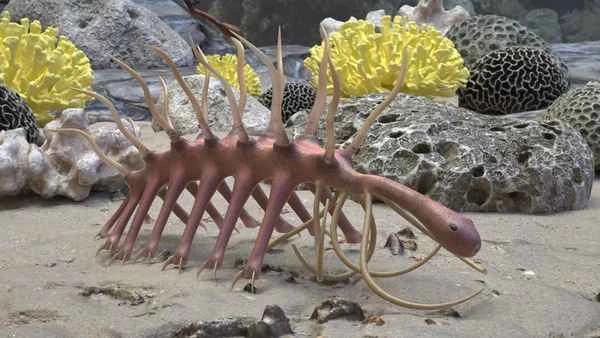
Similarities : Phantom worms and Anomalocaris share some anatomical features, especially in the structure of body segmentation and appendages.
2. Pambdelurion
Description : This is another ancient Anomalocaris species that lived during the Cambrian period and had similar body structure and predatory characteristics.
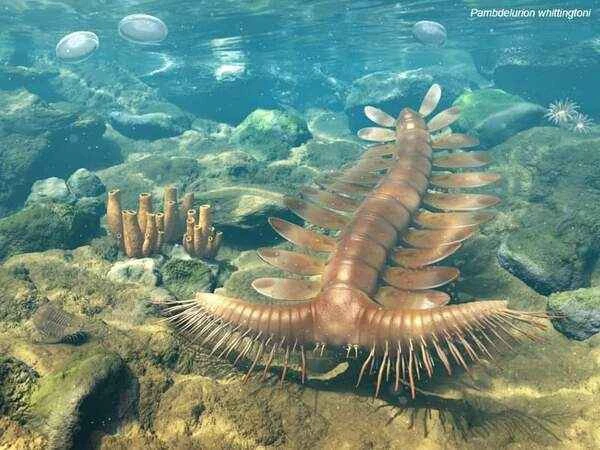
Similarities : Pambdelurion and Anomalocaris share similar ecological functions and morphological characteristics, demonstrating their evolutionary correlation.
3. Opabinia
Description : Opabinia was a Cambrian creature with five unique eyes and a long predatory mandible. It shared a similar lifestyle with Anomalocaris and was likely also a predator.
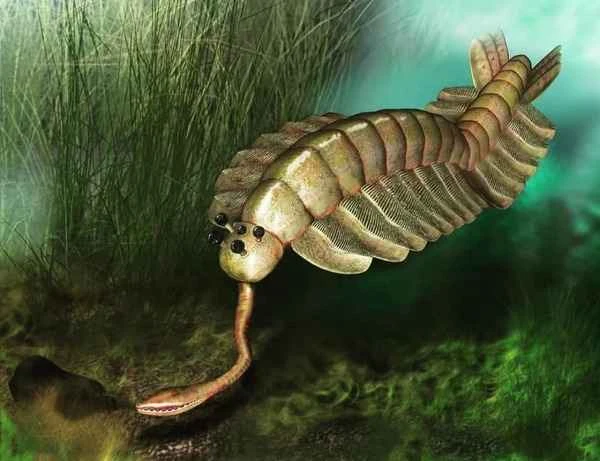
Similarities : Although they are different in form, Opabinia and Anomalocaris share similarities in predation behavior and ecological roles.
4. Marrella
Description : Marella was an early arthropod with a segmented body and multiple pairs of appendages. It is also one of the representative organisms of the Cambrian period.
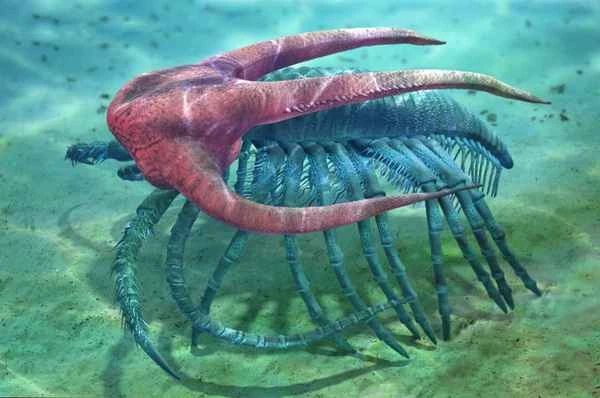
Similarities : Like Anomalocaris, Marella belongs to the early myriapods. Although their feeding methods and ecological niches may differ, they share similarities in anatomical structure.
Anomalocaris and its close relatives together formed part of the Cambrian marine ecosystem. Although they may have differed in appearance and lifestyle, they were evolutionarily closely linked, providing important insights into early diversity and ecological dynamics.
How did Anomalocaris become extinct?
Anomalocaris, one of the iconic creatures of the Cambrian period, ultimately went extinct. The following is a detailed overview of the factors that led to its decline and eventual disappearance:
1. Environmental changes
Environmental changes during the Late Cambrian period : The Late Cambrian period witnessed significant environmental changes, including fluctuations in sea level, temperature variations, and alterations in marine chemistry. These changes likely disrupted the habitats on which Anomalocaris depended for survival.
Oxygen levels : Changes in oxygen levels in the ocean may affect the availability of suitable habitats and prey for Anomalocaris, thus impacting its survival.
2. Ecosystem Dynamics
Prey availability : As ecosystems evolve, the composition of marine life changes. The reduction or disappearance of key prey species (such as trilobites and other small marine organisms) will directly affect the survival of Anomalocaris, as they depend on these animals for food.
Increased competition : The Cambrian period was a time of rapid diversification of life, leading to the emergence of new predators and competitors. Increased competition for food resources likely placed additional pressure on Anomalocaris populations.
3. Predation pressure
The emergence of new predators : As marine ecosystems evolve, new and more efficient predators are emerging. These new predators may compete with Anomalocaris for food or prey on it directly, leading to a decline in its population.
4. Speciation and Evolution
Evolutionary pressures : During this period, the dynamic nature of life meant that species needed to adapt rapidly to changing conditions. If Anomalocaris could not adapt to new ecological pressures or evolve into a new form capable of survival, it may have faced extinction.
Speciation events : The diversification of other marine organisms may lead to speciation events that put Anomalocaris at a disadvantage. If it cannot adapt to the new ecological niches created by these evolutionary changes, its survival will be threatened.
5. The impact of mass extinctions
Mass Extinction Event : Although Anomalocaris thrived during the Cambrian period, it existed before the significant Late Paleozoic mass extinction event. However, the cumulative effects of environmental change and competition likely laid the foundation for its eventual decline. The exact time of Anomalocaris' extinction is not recorded in detail, but it is generally believed that they began their descent into extinction during the Late Cambrian (approximately 480 to 450 million years ago).
The extinction of Anomalocaris was likely the result of a combination of factors, including environmental change, shifts in prey availability, increased competition, and the emergence of new predators. Faced with the evolution and diversification of ecosystems, Anomalocaris encountered insurmountable challenges and ultimately disappeared from the fossil record. Understanding the factors behind its extinction provides valuable insights into the complexity of early marine ecosystems and the evolutionary pressures that shaped them.