When we think of the animal kingdom, we usually picture colorful, vividly patterned creatures. But there's another group of creatures that stands out from the crowd, almost transparent inside: transparent animals . These creatures possess translucent or completely transparent bodies, allowing them to thrive in nature. They can move and hunt almost undetected. From transparent fish to invisible insects , let's explore this fascinating world of transparent creatures together.
Table of contents
What are transparent animals?
Enchanting transparent marine animals
The Wonderful World of Transparent Insects
The mystery of transparent frogs and amphibians
Why do some animals evolve to be transparent?
The role of transparency in the natural ecosystem
Interesting facts about transparent animals
Conclusion: The fascinating world of transparent animals
What are transparent animals?
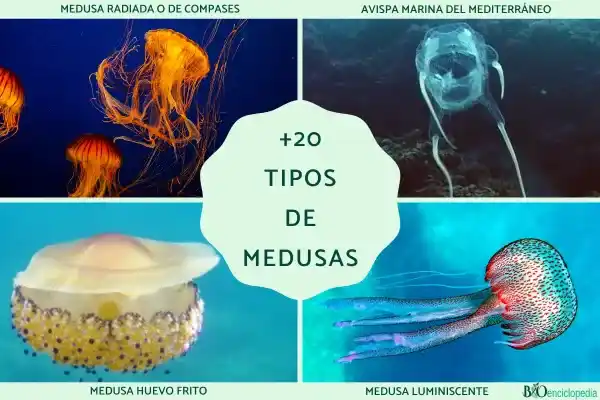
Transparent animals are those organisms that have evolved translucent or completely transparent bodies, allowing them to blend silently into their surroundings. This transparency often helps them camouflage themselves , making them difficult for predators or prey to spot. Transparent animals can survive in a variety of ecosystems, ranging from tiny transparent microorganisms to large transparent marine creatures such as jellyfish .
Enchanting transparent marine animals
Some of the most famous transparent fish include the glass catfish and the glassfish . These fish have mostly transparent bodies, with their internal organs and skeletons clearly visible. This transparency helps them avoid predators in dimly lit waters.
1. Glass Fish
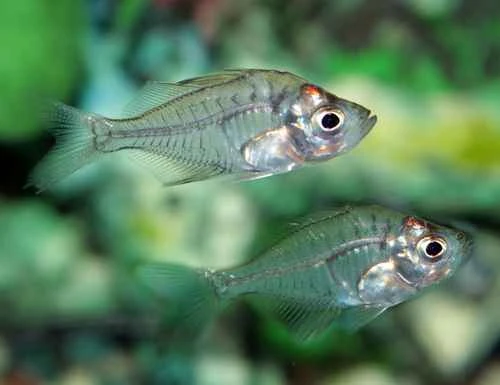
Glassfish are a very typical example of transparent fish. Their bodies are almost completely transparent, making their flesh nearly invisible; only their internal skeleton and organs are visible. They live in tropical rivers, and this transparency helps them hide in the shadows on the seabed, avoiding detection by predators.
2. Glass Catfish
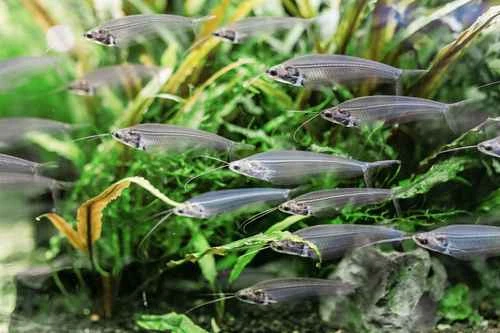
Similar to glassfish, glass catfish have almost completely transparent bodies, allowing their internal organs and skeletons to be clearly seen. They mainly live in freshwater in Southeast Asia, and this transparency helps them better avoid predators. They usually swim in schools, increasing their chances of survival.
3. Barreleye
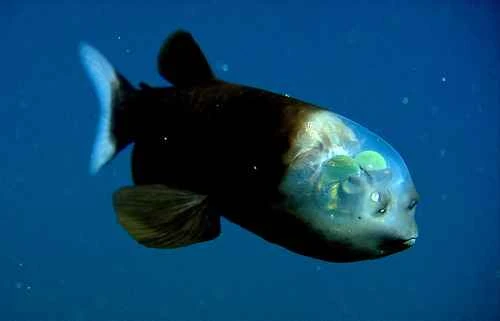
The barreleye fish (also called the transparent-eyed fish ) is a special type of deep-sea fish with transparent outer shells for its eyes, making its head and eye structure almost entirely visible. Its body also has transparent parts, making it virtually invisible in the ocean. By adjusting the angle of its eyes, it can directly observe prey above the water's surface. The barreleye fish utilizes its unique transparency and eye characteristics to avoid predators while searching for food floating on the surface, such as plankton and small fish.
4. Crocodile Icefish
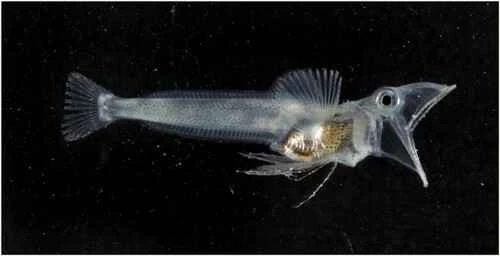
Icefish live in the frigid waters of Antarctica and are a typical example of transparent marine life. Their blood is almost colorless because they lack hemoglobin. The absence of hemoglobin means their bodies need to transport oxygen more efficiently through their transparent blood. This transparency not only helps them survive in the extremely cold environment but also makes them a unique part of the Antarctic food chain.
5. Saltps
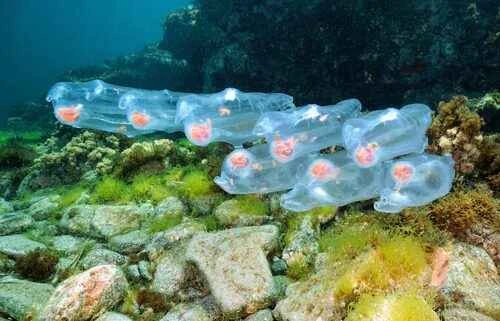
Sea whips are transparent planktonic organisms that live in the ocean. They typically appear as transparent gels, with bodies resembling tiny, transparent tubes, floating on the ocean surface. Sea whips are filter predators, feeding on tiny organic matter and plankton filtered from seawater. Their transparency allows them to easily conceal themselves in their surroundings, reducing the risk of predation. They are also important producers and consumers in the marine ecosystem.
6. Transparent Sea Cucumber
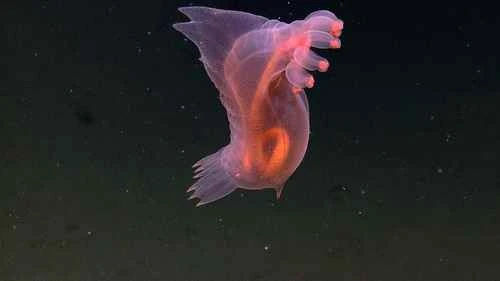
Transparent sea cucumbers are marine creatures that can hide themselves on the seabed to avoid predators. Their bodies are transparent, and they typically live in deep-sea areas. Transparent sea cucumbers primarily feed on organic detritus on the seabed, cleverly blending into their surroundings through their transparent bodies. They not only help maintain the marine ecological balance but also improve the seabed environment through their filtration function.
7. Glass Squid
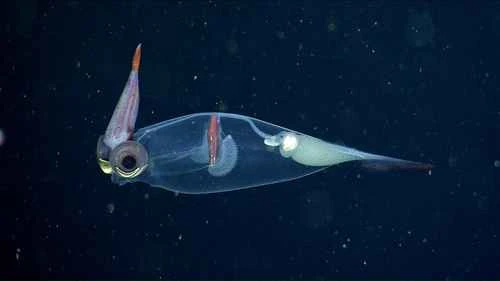
Glass squid are deep-sea squid, typically with transparent bodies. Their shape and transparency make them virtually invisible in the water, allowing them to evade predators. The transparency enables them to move quickly in the dark waters of the ocean floor, preying on plankton and other small organisms. Their transparent bodies not only help them hide but also allow them to confuse enemies by changing color and shape.
8. Glass Shrimp
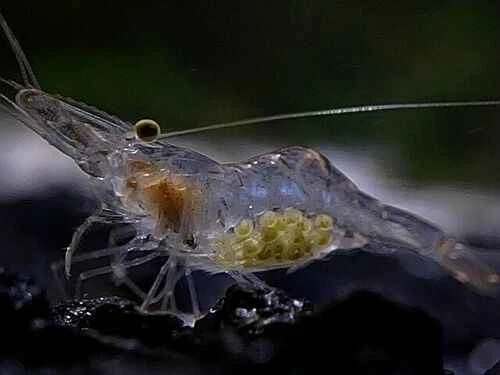
Glass shrimp , also known as transparent shrimp, are small, transparent creatures that live in the ocean. Their bodies are almost completely transparent, with only some internal organs and bones faintly visible in sunlight. Glass shrimp feed on plankton and small marine organic matter. This transparency allows them to blend well into their surroundings and avoid detection by predators. Glass shrimp play a vital role in the marine ecosystem, serving as both predators and a food source for other marine life.
9. Jellyfish
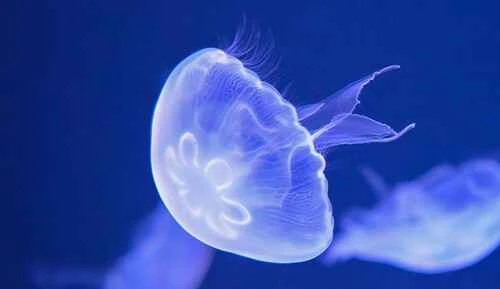
Jellyfish are a prime example. Their bodies are approximately 95% water, and their transparency helps them evade predators in the deep sea. Jellyfish are practically synonymous with transparent animals. Their bodies are composed of a transparent, gelatinous substance, making them almost invisible when floating in the water. Some species of jellyfish, such as the moon jellyfish , may emit a faint fluorescence, but most jellyfish are almost entirely transparent, with only the outlines of their tentacles and bell-shaped structures faintly visible.
10. Transparent Octopus
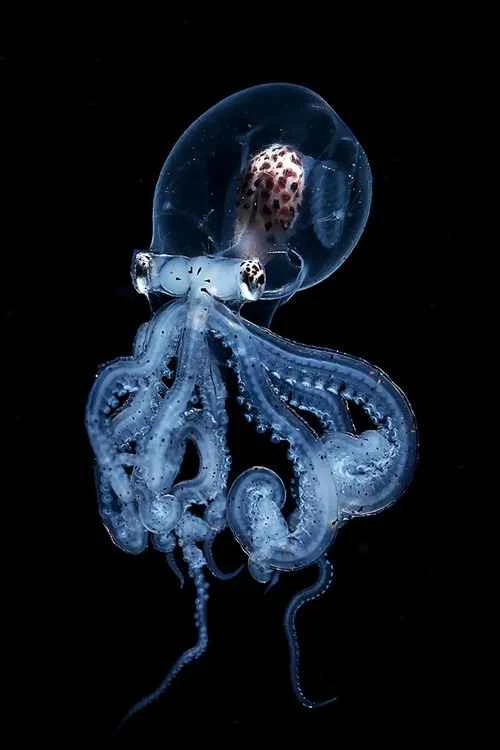
Some octopus species, such as the glass octopus , have transparent bodies. Glass octopuses lack ink sacs; their bodies are completely transparent, allowing them to almost disappear in the ocean. This transparency helps them avoid detection by predators and also allows them to better lurk on the seabed, searching for prey.
The Wonderful World of Transparent Insects
In the insect world, there are also some very interesting transparent insects , the most famous of which is the glasswing butterfly . These butterflies have almost completely transparent wings, giving them an ethereal beauty. Their transparent wings help them blend into their surroundings, reducing their chances of being preyed upon.
1. Glass-Winged Butterfly
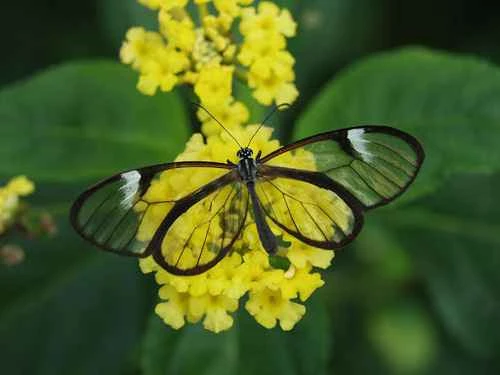
The glasswing butterfly ( Greta oto ) is a small butterfly found in Central and South America. Its wings are almost completely transparent, with only a few veins visible. These transparent wings help them blend into the background of leaves and flowers, thus avoiding attacks from predators. This transparency makes them seem like "ghosts" in nature.
2. Transparent Mantis
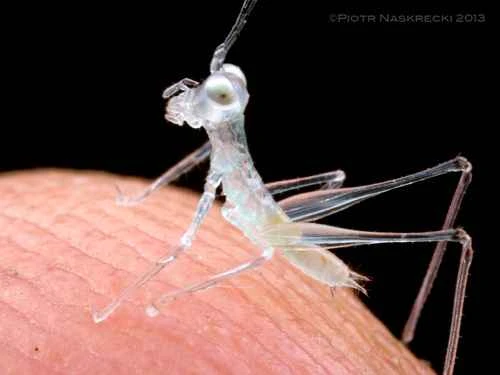
Some species of praying mantises, like the ghost mantis (Phyllocrania paradoxa), are almost transparent. This allows them to blend seamlessly into their surroundings, becoming part of their environment. The transparent mantis relies on this camouflage to hunt stealthily and effectively avoid larger predators.
3. Tortoise Shell Beetle
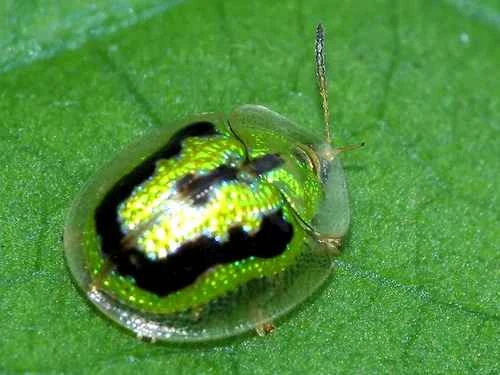
The tortoise beetle is a common transparent insect. Its shell is so transparent that it gets its name from this. The beetle's transparent shell shimmers in sunlight, helping it to cleverly camouflage itself in nature. Despite its fragile appearance, its shell effectively protects it from predators. The tortoise beetle's transparency and unique shell structure allow it to blend into the colors and shapes of its surrounding plants.
The mystery of transparent frogs and amphibians
The glass frog is a prime example of a transparent amphibian. These frogs have transparent abdominal skin, allowing you to see their internal organs, heart, and even digestive system. This transparency may be a defense mechanism, helping them blend into their habitat and avoid predators.
1. Glass Frog
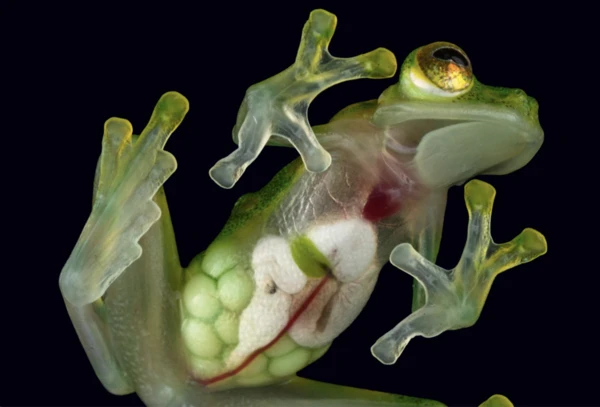
Glass frogs are mainly distributed in Central and South America. Their abdomens are almost completely transparent, allowing their internal organs to be clearly seen. Their backs are bright green, blending in with the surrounding plants and leaves, while the transparency of their abdomens makes it easier for them to hide under the foliage. The transparent abdomen exposes their internal organs, which not only helps them avoid predators but may also contribute to their reproduction and survival.
Why do some animals evolve to be transparent?
The evolution of transparency is often a survival strategy. Through transparency, animals can cleverly camouflage themselves , avoiding detection by predators or more easily approaching prey. For example, transparent shrimp are very difficult to spot in their marine habitat, allowing them to survive more safely. Similarly, transparent fish can effectively evade predators by blending into the light reflected in the water.
The role of transparency in the natural ecosystem
Many transparent marine organisms play important roles in their ecosystems. For example, transparent stars can hide themselves in the sand on the seabed, while transparent shrimp play a vital role in the food chain. Their transparency allows them to survive undetected, thus maintaining ecological balance.
1. Transparent Shrimp
Transparent shrimp typically live on the seabed, and their transparency helps them evade predators, such as larger fish, on the seabed. They play a crucial role in the food chain, feeding on tiny particles in the water and serving as an important food source for many marine organisms.
2. Transparent Starfish
Some species of starfish are also transparent. Transparent starfish can camouflage themselves among sandy or rocky seabeds to avoid detection by predators. They are important predators in the ecosystem, primarily feeding on small invertebrates.
Interesting facts about transparent animals
Invisibility : Many transparent animals achieve invisibility through their transparency, thus avoiding predators.
Microscopic transparency : Even some transparent microorganisms , such as transparent plankton, rely on transparency to survive.
Transparent eyes : Some transparent animals also have transparent eyes, which allows them to better perceive their surroundings without being noticed.
Advanced camouflage : Animals such as glass frogs and transparent mantises rely on their transparency to blend into their surroundings.
Perceiving the environment : Transparency helps animals blend into their surroundings in nature and reduces the risk of exposure.
Conclusion: The fascinating world of transparent animals
Transparent animals are among the most mysterious creatures in nature. They have evolved transparent appearances to survive in a natural environment fraught with threats and competition. They not only provide scientists with invaluable opportunities to study biological evolution and adaptation, but also deepen our awe of the wonders and mysteries of nature. Each transparent animal possesses unique survival wisdom, worthy of our understanding and protection.