The first impression of birds is often one of magnificent sights, soaring through the blue sky and spreading their wings. However, there are indeed some birds in the world that, although they have wings, cannot fly. Below, we will introduce ten flightless birds in the world. Let's learn about them together.
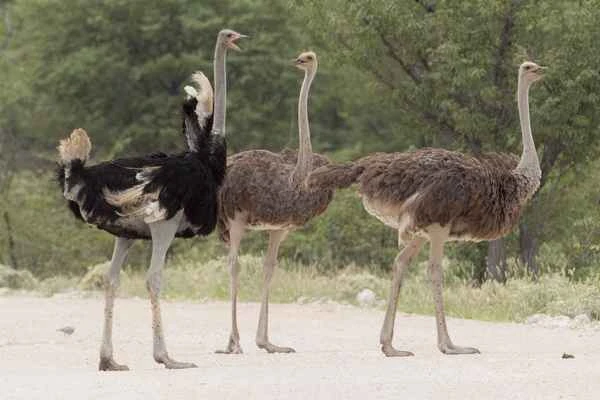
1. African ostrich
The African ostrich (scientific name: *Struthio camelus*) belongs to the order Struthioniformes and the family Struthionidae. It is one of the largest birds on Earth, with adult ostriches reaching a height of 2.5 meters and males weighing an astonishing 150 kilograms. Agile and powerful, they roam freely across the deserts and savannas of Africa.
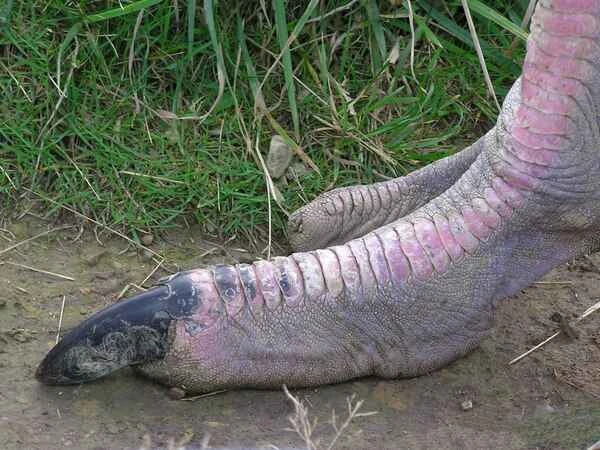
African ostriches have distinctive physical characteristics, with a long, serpentine neck supporting a relatively small head. Head features include a short, flat beak composed of several horny sheaths forming a triangular shape. Their keel is underdeveloped, a major reason why they cannot fly. Furthermore, the African ostrich is the only known bird species with two toes.
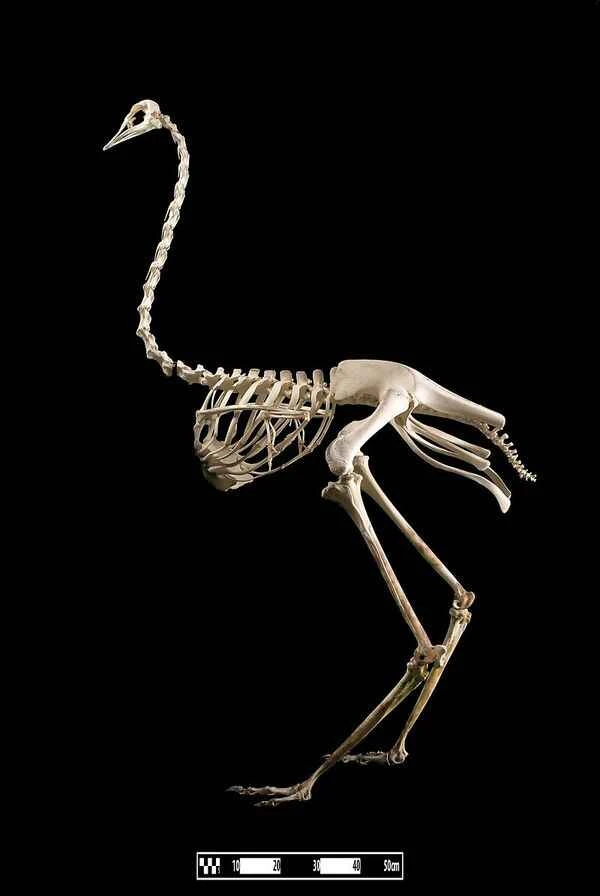
These ostriches typically live in the vast grasslands and savannas of Africa, and their unique appearance and behavior make them a distinctive feature of the local landscape.
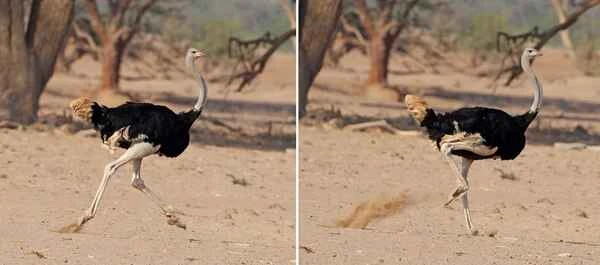
Besides their distinctive appearance, African ostriches also have significant economic value. Their feathers, leather, and meat are highly sought after, leading to their widespread breeding and utilization in many countries.
2. Emu
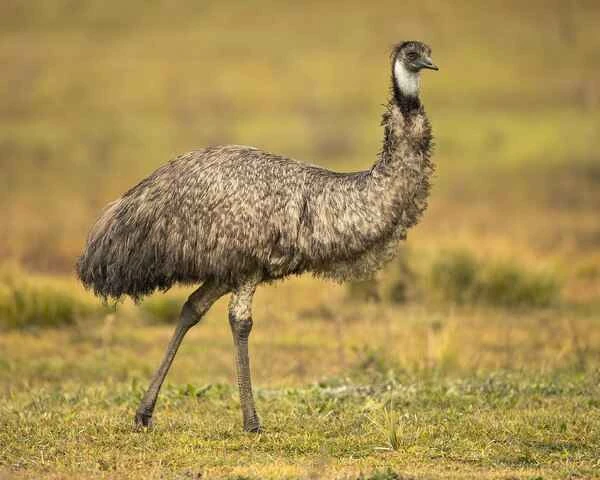
The emu, scientifically known as *Dromaius novaehollandiae*, is a unique species belonging to the family Emuidae. They stand approximately 150 to 185 centimeters tall and weigh between 30 and 45 kilograms. A unique species of Oceania, they are renowned for their exceptional running ability. As the second largest bird in the world, after the African ostrich, they are also commonly referred to as the Australian ostrich.
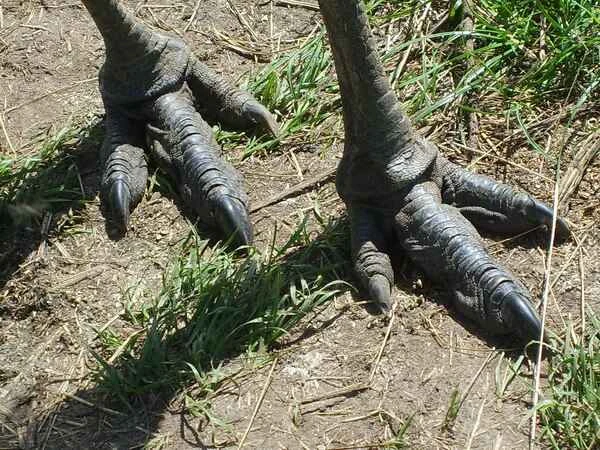
Like other flightless birds, emus have significantly reduced wings, preventing them from flying. Their wings are more simplified compared to those of African ostriches and rheas. Additionally, emus have three toes on their feet, a feature that distinguishes them from other large birds. Furthermore, research indicates that emus are among the oldest birds in the world, boasting a long evolutionary history.

Because emus are easy to raise and highly adaptable, they have been widely introduced to other countries and have established habitats in various places. Visitors can see emus in many zoos in China.
3. Rhino
The great rhea (scientific name: *Rhea americana*) is a bird species belonging to the family Rheaidae in the order Rhea, and it has five subspecies. They stand approximately 1.6 meters tall and can weigh up to 25 kilograms, making them an important large bird species in South America. The great rhea is also known as the three-toed ostrich because it has only three toes on its feet. Although they are flightless, their wings are relatively well-developed.
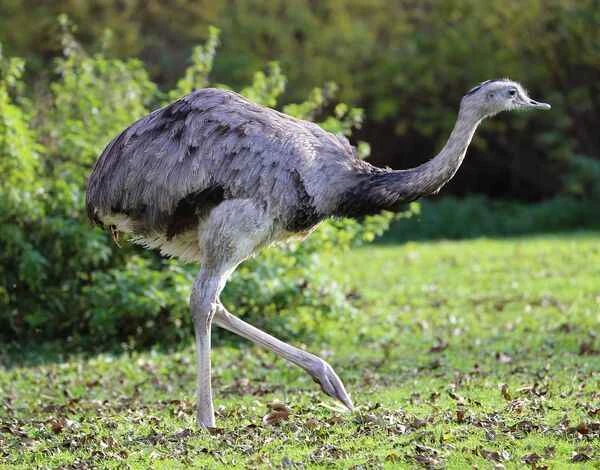
These robust birds are mainly distributed in the sparse forests, scrublands, and grasslands of South America, preferring to live in open areas. When the great ostrich walks, it often closes its wings tightly and sways its neck, which is quite amusing. When it begins to run, its powerful legs can cover a distance of more than 1 meter, at which point its wings spread out on its back, and its head and neck bend down, presenting a spectacular and swift running scene.
4. Cassava
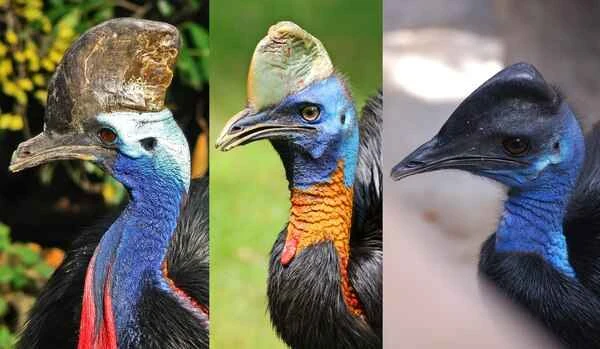
Cassowaries (scientific name: *Casuarius*), also known as cassowaries, are birds belonging to the order Cassowariformes and the family Cassowridae, comprising one genus and three species. As the third largest bird in the world, after ostriches and emus, cassowaries can reach 1.5 to 1.8 meters in length, with some individuals reaching 2 meters in height and weighing up to 60 kilograms. They are renowned for their enormous size and fierce aggression, and are considered one of the most dangerous birds in the world, with virtually no natural predators.
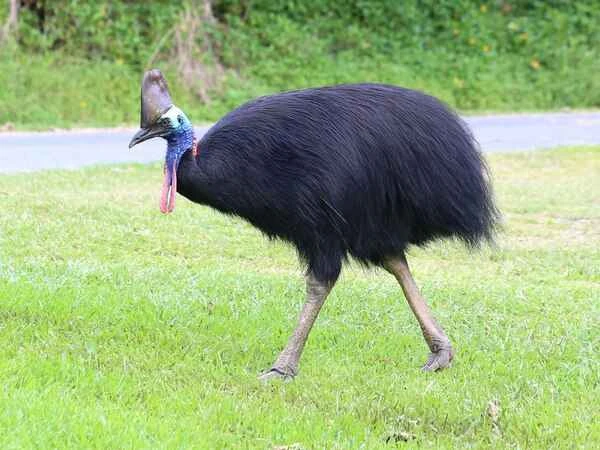
Cassowaries are mainly distributed across various Pacific islands, including New Guinea. Locally, they are known as "devilish" birds due to their aggressiveness and irritability. Cassowaries can run at speeds up to 50 kilometers per hour, and possess three dagger-like toes with powerful gripping abilities, enabling them to leap up to 2 meters high, making them extremely threatening in both hunting and defense.
5. Kakapo

The kakapo (scientific name: *Strigops habroptilus*) is the only flightless parrot in the world and one of the largest parrots. Primarily found in New Zealand, it is famous for its unique courtship rituals.
Kakapoes use a call that can reach up to 132 decibels for courtship, a sound that travels an astonishing distance. Their calls can travel at least 1 kilometer in the dark, and even up to 5 kilometers on windy and clear nights. It is estimated that a kakapo calls for an average of 8 hours, emitting nearly a thousand calls per night.
6. Penguins
Penguins (scientific name: *Spheniscidae*) are known as "ships of the sea" and are among the oldest waterfowl in the world. It is speculated that they may have already established themselves in Antarctica before the Earth was covered in ice. There are 18 species of penguins worldwide, most of which are found in the Southern Hemisphere.

Penguins primarily inhabit the Southern Hemisphere and belong to the order Sphenisciformes and family Sphenisciidae. They possess a range of unique characteristics, including the inability to fly, feet located at the base of their bodies for an upright posture, webbed toes, plantigrade locomotion (unlike other birds that walk on their toes), flipper-like forelimbs, a black back, and a white belly. Different penguin species exhibit variations in head coloration and overall size.
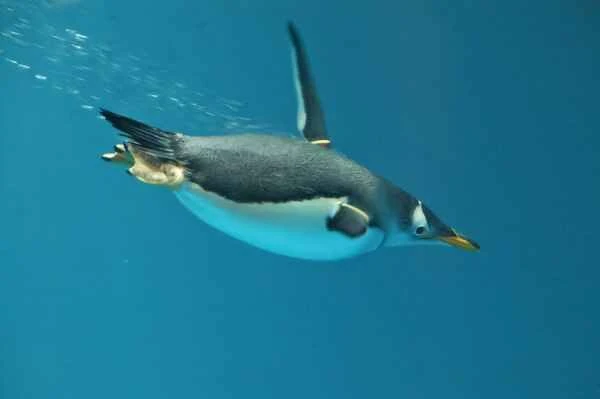
These characteristics make penguins highly distinctive birds, renowned for their unusual appearance and lifestyle. Living in the extreme environment of Antarctica, penguins have adapted to the frigid climate and icy marine environment. They typically feed on fish and other marine life, and are an integral part of the Antarctic ecosystem.
7. Peruvian Grebe
The Peruvian grebe (scientific name: *Podiceps taczanowskii*) is a loon that is flightless and mainly distributed in South America. They are characterized by a black head, white neck, mottled back feathers and wings, and are uniquely distinguished by their bright red eyes.
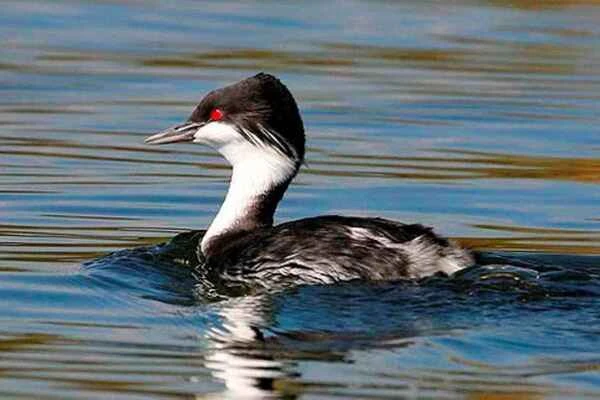
The Peruvian grebe inhabits freshwater lakes and marshes, spending almost its entire lifespan in water and typically living in groups. Not adept at flight, the Peruvian grebe swims primarily on its legs and rarely walks on land. They are skilled divers, typically diving to depths of only 1 to 4 meters.
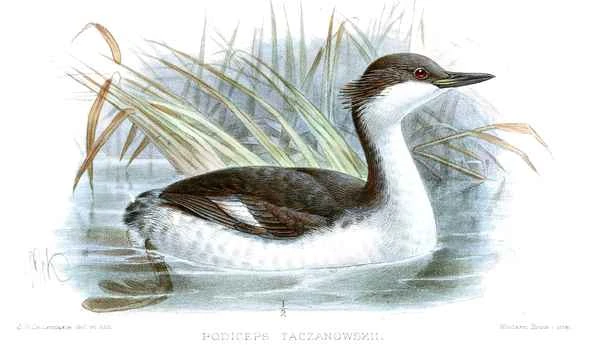
In terms of diet, the Peruvian grebe mainly feeds on aquatic insects and their larvae, crustaceans, mollusks, small fish, and aquatic plants. They are excellent at catching prey underwater.
8. White-headed boat duck
The White-headed Boat Duck (scientific name: *Oxyura leucocephala*) is a gregarious duck belonging to the Anatidae family. They are mainly distributed in South America and share some characteristics with the South American Grass Goose. The White-headed Boat Duck is a highly terrestrial bird, adept at diving, and has largely lost the ability to fly, instead using its wings to aid in underwater navigation.
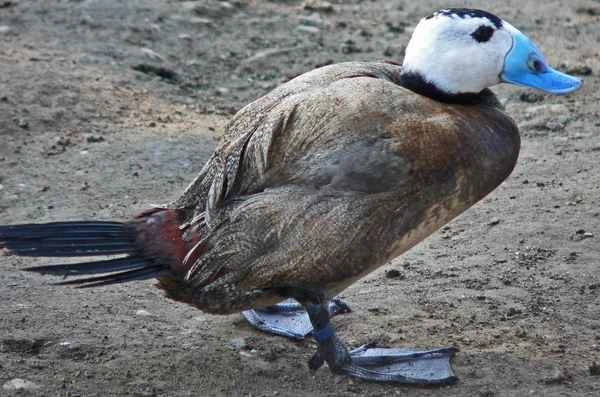
Male white-headed boat ducks have a strong sense of territory and often feed on fish, crustaceans, and mollusks.
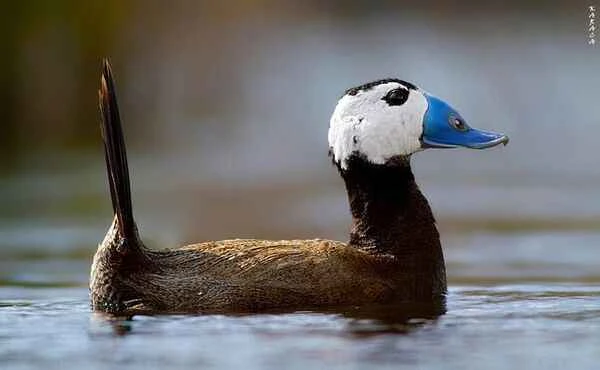
The white-headed boat duck is the only boat duck species endemic to Argentina, mainly distributed along the coastline, but in very small numbers. Their distribution is primarily concentrated in Chubut Province, southern San Jorge, and northern Santa Cruz.
9. Short-winged boat duck
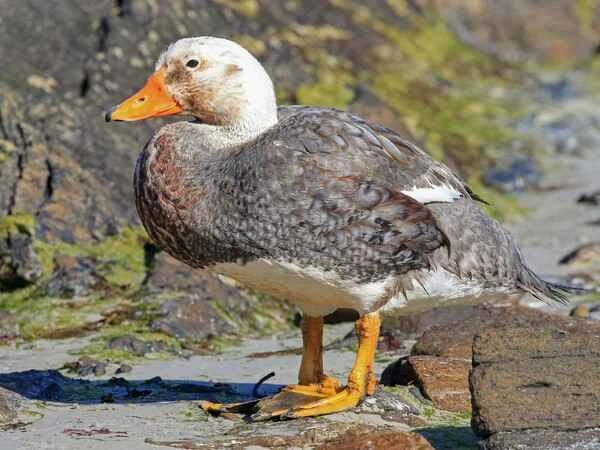
The short-winged boat duck (scientific name: *Tachyeres brachypterus*) is about 65 cm long and is a flightless duck. When they float on the water, their wings are rounded and flap, resembling oars, hence the name "boat duck". Male short-winged boat ducks have white heads and necks with a few brown and tan feathers.
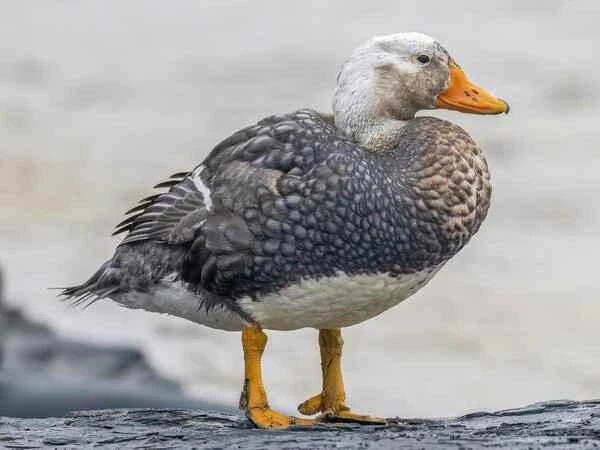
Short-winged boat ducks are mainly distributed in the Falkland Islands, where they inhabit steep cliffs, sandy beaches, and saltwater lakes. Their diet consists primarily of crustaceans, mollusks, shrimp, and small fish. Small groups of a few to more than 20 can usually be seen foraging in shallow water near the water's edge and on the surface.
10. Sandpiper
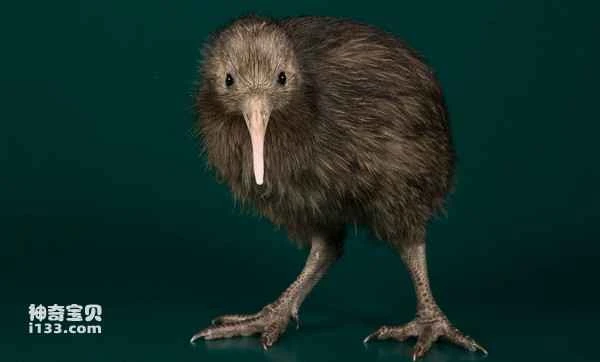
The kiwi, also known as the sandpiper or ostrich, is a species endemic to New Zealand and is the country's national bird and symbol. They are similar in size to a common rooster and, like ostriches, are flightless.
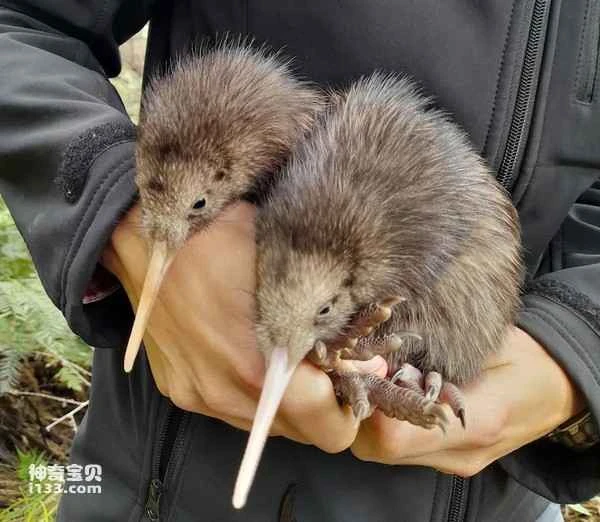
Sandpipers are known for their unique view of mating. Among birds, they are typical examples of monogamy. Their lifespan is approximately 30 years, and barring unforeseen circumstances, they will remain together for life. If one dies unexpectedly, the other will spend the rest of its life alone.