There are many types of piranhas in the world, most of which are carnivorous, highly aggressive, and extremely ferocious. While only a few piranhas are omnivorous, the vast majority are predatory beasts. Some common piranhas include the red-bellied piranha, red diamond piranha, black piranha, red-lipped piranha, giant yellow piranha, yellow diamond piranha, wrasse, golden piranha, and redfin piranha, among others. Some species prefer to live in groups, while others tend to be solitary. Let's take a look.
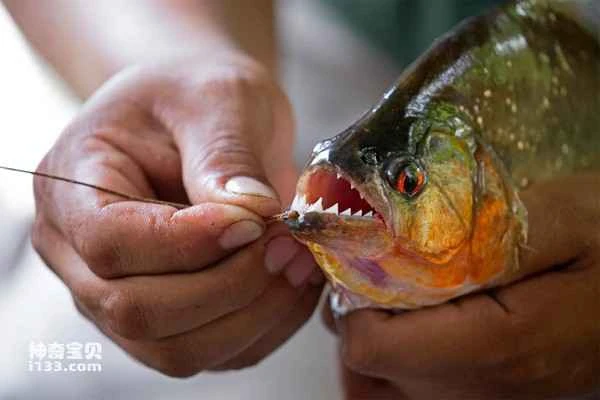
1. Red-bellied piranha
In the slow-flowing areas of the Amazon basin in South America and the surrounding shallow ponds and lakes, there is a species of piranha called the Napier, commonly known as the red-bellied piranha. This species is extremely numerous and is one of the world's most famous piranhas. It is commonly found in its native habitat and is a popular game fish and food fish, as well as a popular ornamental fish.
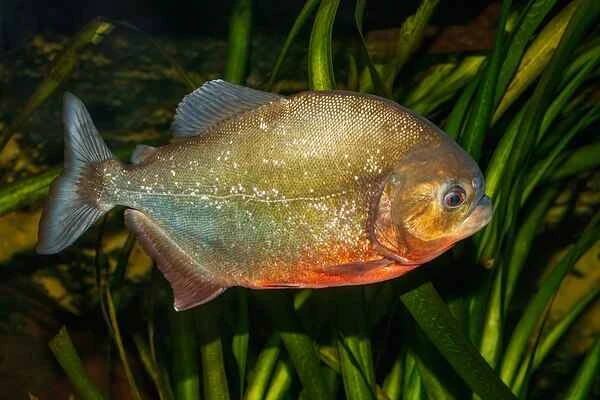
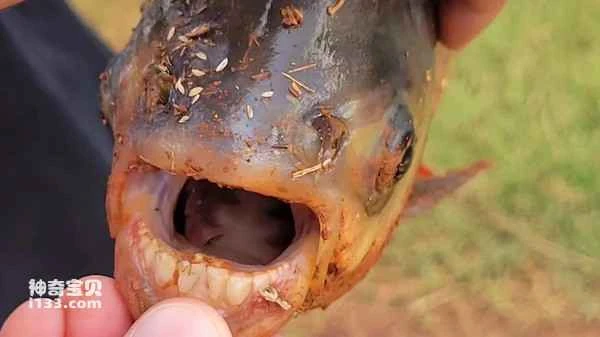
The red-bellied piranha has an oval body, a broad back, a huge head, and powerful, thick jaws with two rows of sharp, dagger-like teeth. Fishermen in the Amazon basin would never dare to remove the hook by hand if they caught a red-bellied piranha, as the slightest mistake could result in the loss of a finger.
2. Red Diamond Piranha
The Sanchez piranha, commonly known as the Red Diamond Piranha, is mainly distributed in the Pacaya and Ucayali River regions of Peru. As a prominent member of the piranha family, the Red Diamond Piranha has attracted widespread attention, and its owner is very large. This piranha is beloved for its striking appearance and unique characteristics.

The Red Diamond Piranha isn't entirely red; its red scales are limited to the posterior half of its gill covers and its abdomen, while the rest of its body is lead-gray, creating a striking contrast. These "red diamonds" appear to be distributed in large, continuous patches. This piranha can reach up to 20 centimeters in length and has a slightly pointed snout, exuding a wild dog-like aura. When people place their fingers on the water's surface and swim around, the diamond-like scales on its body shimmer and reflect light as it chases its prey, making it highly visually appealing.
3. Black piranha
Black piranhas are mainly distributed in South America, living in the Amazon basin, Orinoco River basin, Guyana, Venezuela, Peru, and other places. These piranhas have blood-red eyes and an imposing body shape, making them a popular choice for piranha enthusiasts and one of the essential species for beginners in piranha keeping.
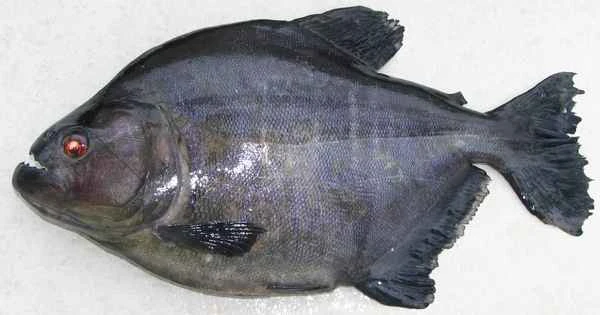
Black piranhas possess an astonishing bite force, capable of exerting pressure equivalent to 30 times their own body weight—a unique "killer move" in nature. Although animals like great white sharks, coyotes, and alligators have even stronger bite forces, considering their overall size and the ratio of weight to bite force, the relative strength of black piranhas remains remarkable.
4. Red-faced Piranha
The Charming Piranha, also known as the Red-faced Piranha, is mainly distributed in the St. Francis River basin. This piranha can grow to about 50 centimeters in length, making it one of the larger piranha species and also one of the most popular piranhas worldwide. The Red-faced Piranha is famous for its bulldog-like face, high, steep forehead, and silvery-grey eyes. Its body resembles an oil painting, with vibrant red, purple, and yellow flame-like stripes.
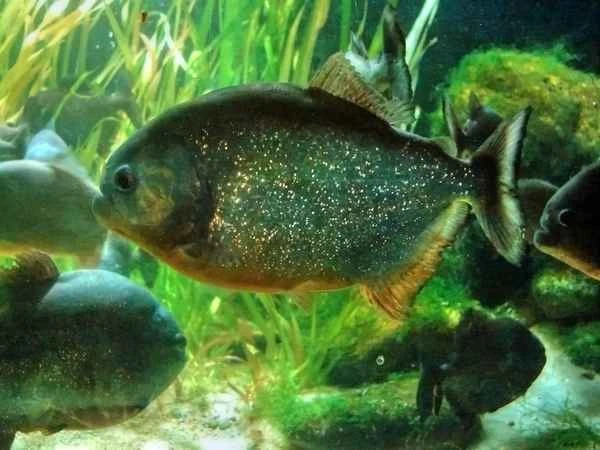
This red piranha possesses powerful jaws and extremely sharp teeth, making it prone to becoming agitated and aggressive. Its unique appearance and vibrant colors make it a favorite among aquarists. Studies have shown that the red piranha exhibits remarkably swift and powerful aggression when hunting, which is truly astonishing.
5. Giant Yellow Piranha
The Venezuelan spotted piranha, commonly known as the giant yellow piranha, is a giant yellow-bellied piranha mainly distributed in the Cuiabá River basin of South America. Compared to the red-bellied piranha, this species has a smaller distribution range and fewer in number, although its habitat largely overlaps with that of the red-bellied piranha.
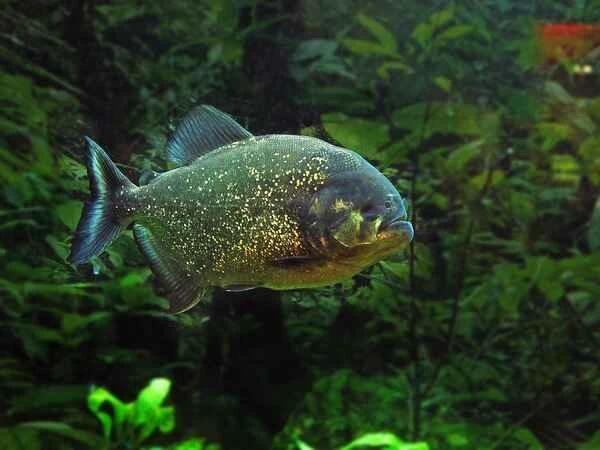
The giant yellow piranha has an orange or golden belly, while the rest of its body is silver-gray and adorned with shimmering metallic diamond spots. As one of the "big guys" in the piranha family, the giant yellow piranha gives the initial impression of a large, golden-bellied piranha.
6. Yellow Diamond Piranha
The Dark-banded Sawtooth Piranha, commonly known as the Yellow Diamond Piranha, is mainly distributed in the Orinoco River, Putumayo River, Amazon River, Madeira River, and Paraguay River basins of South America. As one of the most popular piranha species, the Yellow Diamond Piranha is famous for its dazzling and colorful body. Its back is silvery-grey, gradually transitioning to a bright yellow as it descends, and finally shimmering golden yellow on its belly. The pelvic and anal fins are also bright yellow, showcasing a stylish and gorgeous appearance.
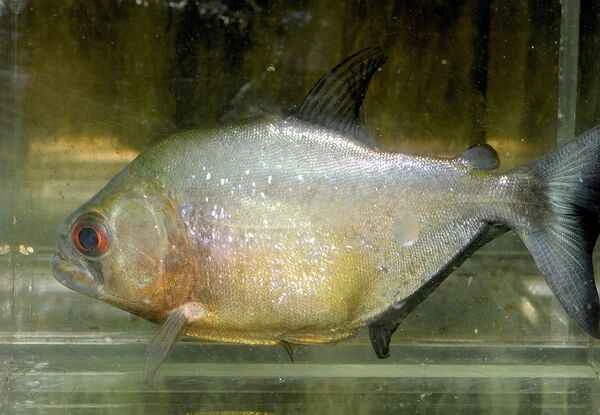
The Yellow Diamond Piranha has a massive head, and its bite force is no less than that of a typical black piranha. When faced with an attack from an unfamiliar force, no matter how powerful the opponent, the Yellow Diamond Piranha will immediately unleash a ferocious attack.
7. Piranha from Baotou
The lower-headed piranha, commonly known as the piranha, is mainly distributed in the Amazon, Orinoco, and Paraguay River basins in Brazil. This piranha is characterized by its extremely long lower jaw, far exceeding its upper jaw, and its elongated dorsal and anal fins, creating a graceful "floating fin" feature. The piranha can reach a maximum length of 15 centimeters. Despite its name, it is actually a scale-eating animal, employing a unique feeding method. It typically swims quickly to other fish and scrapes their scales with its upper and lower jaws, unlike other piranhas that primarily feed on fish flesh.
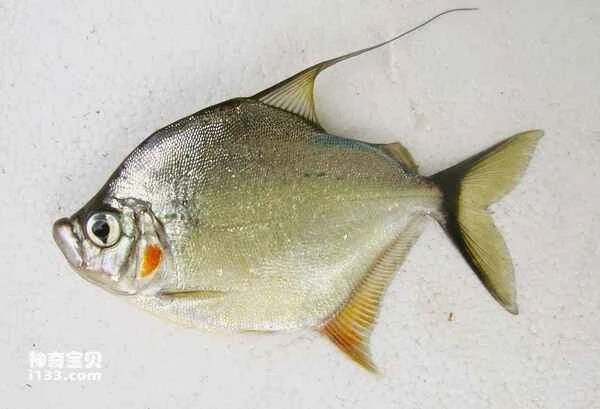
The predatory behavior of the piranha does not directly cause the death of other fish, and therefore it is classified as a parasitic behavior in ecology.
8. Piranha with Money
The piranha, also known as the money piranha, is mainly distributed in the Attabao River basin of the Orinoco River system and in Venezuela. The money piranha is characterized by its large head and blunt snout, as well as its broad adipose fin. Its head is silver-orange, while red is mainly distributed in the lower jaw area. The entire body is greenish-orange, covered with round or oval black spots, and the fins are bright red. It can reach a maximum length of 17 cm.
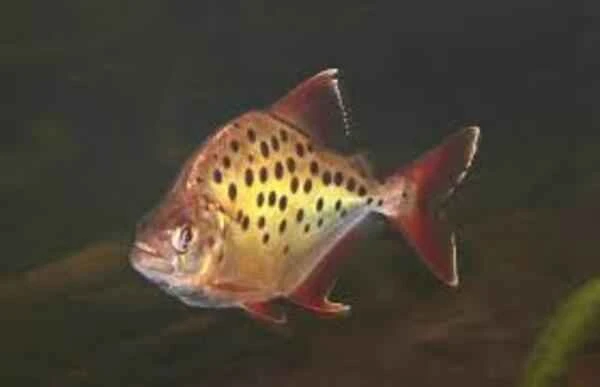
Piranhas are predatory fish that often attack the tails of other fish. Their diet includes aquatic insects and crustaceans (such as shrimp), making them an important part of the ecosystem. Piranhas are typically solitary and exhibit a reclusive lifestyle.
9. Red-finned piranha
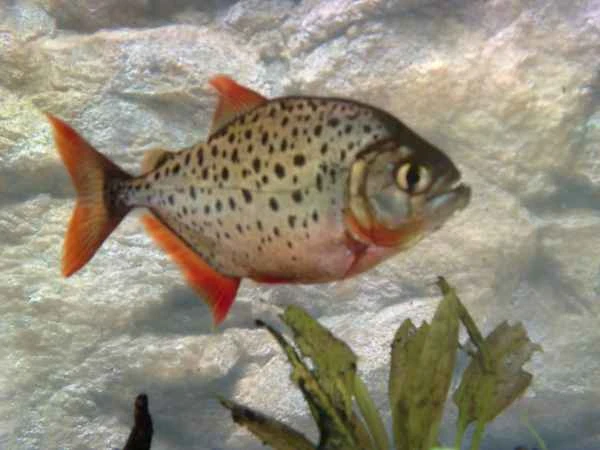
The spotted-fin piranha, commonly known as the red-finned piranha, is mainly distributed in the Atacavi River basin in southern Venezuela. This piranha can reach a maximum length of 30 centimeters and is characterized by its silver body and large black spots, deep red fins, and bright pupils. The red-finned piranha has a relatively low lower jaw, which protrudes more than the upper jaw, exposing its lower teeth. This piranha is extremely sensitive to the smell of blood; although not large in size, once it bites its prey, it will hold on tightly until it tears flesh off.
10. Indian Warrior Piranha
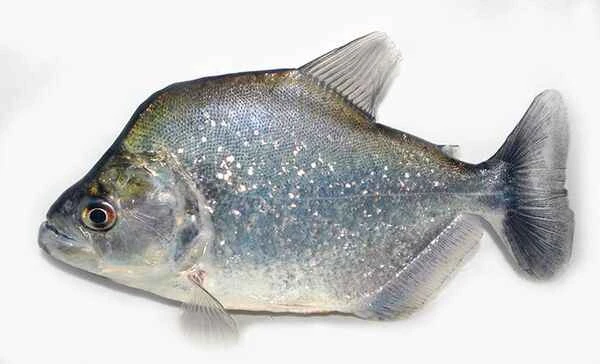
The piranha, commonly known as the Indian warrior piranha, is mainly distributed in the Amazon and Touken River basins of South America, inhabiting the bottom and middle layers of water. This piranha has a high rhomboid body, a large triangular head, red eyes, a slanted mouth, a robust lower jaw, an iron-gray base color, and diamond-like scales that adorn its body, displaying a rugged and ferocious appearance.
The Indian warrior piranha can reach a length of up to 30 centimeters. It is fierce, prefers to live alone, and exhibits a strong sense of territory. They are typically solitary hunters, avoiding group attacks and preferring to hunt and defend their territory alone.