Chinese-American paleontologist Dr. Zhexi Luo recently published a new research finding in the journal *Science*, reporting on a mammal discovered in 1985 in Lufeng, Yunnan, China. This mammal, only the size of a little fingertip, lived 190 million years ago in the Early Jurassic period and was named *Hencephalomys*, meaning "complete head." *Hencephalomys* is currently the smallest known mammal, and its discovery has given paleontologists further insights into early mammals.

We know that dinosaurs went extinct on Earth 65 million years ago, and since then, mammals have become the dominant species, eventually evolving into humans. The most prominent characteristics of mammals are their fur-covered bodies, constant body temperature, and the fact that their young are nursed by their mothers. Furthermore, mammals possess the ability to learn survival skills from older individuals.
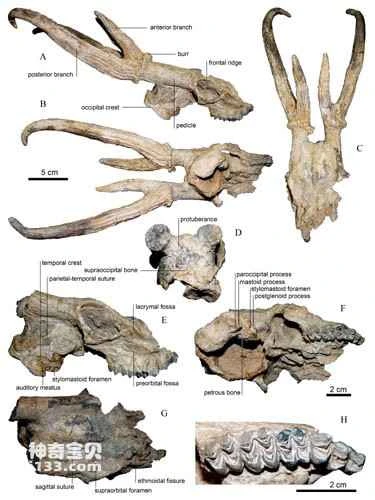
Despite being less than 12 millimeters long and weighing only 2 grams, *Holcephalodon* already possessed the characteristics of these mammals. This hypothesis is based on studies of its skull, which showed that the middle ear and mandible of *Holcephalodon* were separate, a crucial step in the evolution from reptiles to mammals. Furthermore, compared to other animals of its time, *Holcephalodon* had a relatively larger brain capacity, implying a more developed brain, which is significant in terms of animal evolution.
Luo Zhexi believes that the enlargement of the brain was likely a significant factor in the separation of the middle ear bone from the mandible. He points out, "Some changes in the ear and jaw bones of mammals may have been completed before the emergence of Holocervus, and the emergence of Holocervus signifies the final separation of the ear and jaw bones. Holocervus was a primitive mammal that coexisted with the ancestors of modern mammals, and can be considered a distant relative of humans. Of course, Holocervus is not our direct ancestor."
In the early Jurassic period, 190 million years ago, the colossal dinosaurs may not have noticed the existence of the fingertip-sized holocephalus. However, more than 100 million years later, the extinction of the dinosaurs opened the door to explosive evolution for the mammalian family to which the holocephalus belonged.