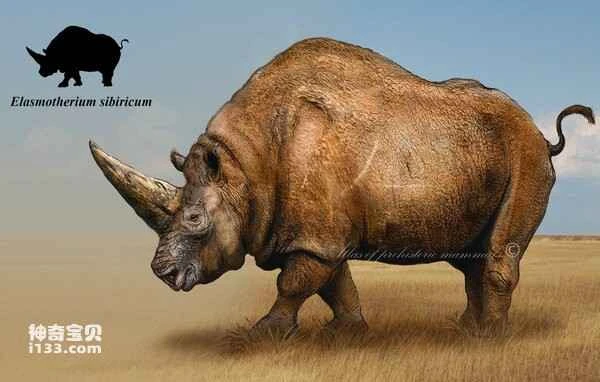
Elasmodontidae was an extinct group of rhinoceroses that lived during the Pleistocene epoch. They belonged to the genus *Coelodonta* and were characterized by their distinctive tooth structure, possessing plate-like teeth. The following is a detailed introduction to Elasmodontidae:
Species characteristics and classification:
Family and Genus :
The plate-toothed rhinoceros belongs to a genus in the family Rhinocerotidae, namely the genus Coelodonta.
Main features :
The main characteristic of the plate-toothed rhinoceros is its unique tooth structure. The teeth are rectangular, flat, and form flat plates, which were used to hunt plants in cold environments.
Habitat and distribution:
Living area :
The Elasmodon is mainly distributed in cold grasslands and deserts, primarily in Asia, such as Siberia, China, and Mongolia.
Ecological adaptation :
Due to its ability to adapt to cold environments, the Elasmodon is often referred to as the "cold-adapted rhinoceros," and its special tooth structure enables it to effectively digest plants in cold environments.
Extinction:
The Elasmodon was an extinct species during the Pleistocene epoch, approximately 14,000 to 12,000 years ago. Its extinction was likely related to climate change, environmental shifts, and the impact of human activities on its habitat.
Research and Fossils:
Scientists have learned about the ecological habits, habitat, and relationships with other animals of this ancient rhinoceros through the study of its fossils. Elasmodon fossils have been widely discovered in Asia.
Although the Elasmodon went extinct during the Pleistocene, it remains of significant value in paleontological and paleoecological research. Studying the Elasmodon allows us to better understand the ecological adaptations and evolutionary processes of ancient large mammals.