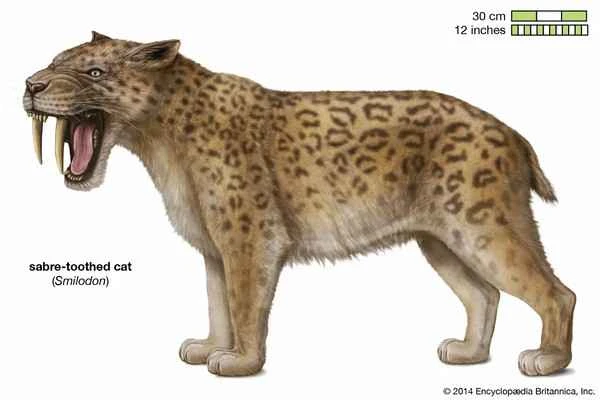
The saber-toothed cat (Smilodon) was an extinct large mammal belonging to the genus *Felidae*. They lived during the Late Pleistocene epoch and went extinct approximately 12,000 years ago. The following is a detailed introduction to the saber-toothed cat:
feature:
teeth :
The most distinctive feature of the saber-toothed tiger is its enormous upper canine teeth, which can reach 30 centimeters in length. These canine teeth are shaped like sword blades and are used to pierce the neck of prey when hunting.
Body type :
Saber-toothed tigers were typically larger than modern large cats, reaching up to 3 meters in length, about 1.2 meters in shoulder height, and weighing approximately 250 to 400 kilograms.
Living environment :
Saber-toothed cats primarily inhabited the Americas, especially the grasslands, deserts, and forests of North and South America. They lived in advantageous hunting positions and mainly preyed on large mammals such as predators and large ungulates.
Behavioral characteristics :
Saber-toothed tigers were carnivorous, and their massive upper canines reveal their hunting skills. They were likely team hunters, capable of cooperating to hunt large prey.
Extinction:
The saber-toothed tiger was a species from the Late Pleistocene, which went extinct approximately 12,000 years ago. The cause of its extinction is still unclear, but it may have been due to a combination of factors, including climate change, a decline in prey populations, and human activity.
Research and fossils:
Scientists have learned about the habits, diet, and behavioral characteristics of saber-toothed tigers through the study of fossils. Fossils of saber-toothed tigers have been found throughout North America, South America, and Europe.
Although the saber-toothed cat went extinct thousands of years ago, its powerful hunting characteristics and enormous upper canines have made it a focus of attention in paleontology. Studying saber-toothed cats helps us better understand the biodiversity and ecosystems of Earth in the past.