The Palawan Peacock-Pheasant (Polyplectron napoleonis) , also known as the Palawan Peacock, is a unique bird species found on Palawan Island in the Philippines. It is not only strikingly beautiful but also possesses profound ecological and cultural significance. This article will explore various aspects of the Palawan Peacock-Pheasant, taking you on a deeper journey into this "treasure of the forest."
type
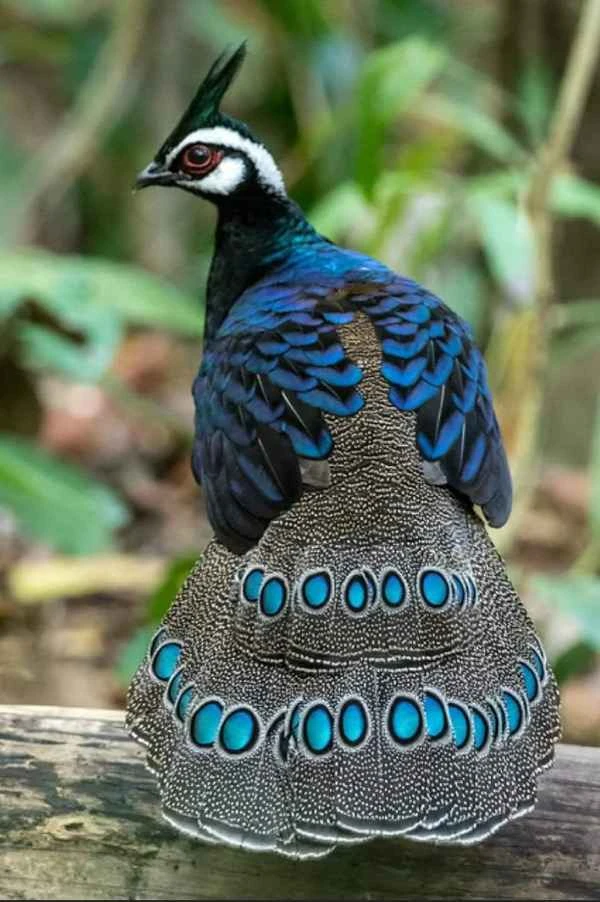
The Palawan Peacock Pheasant (Polyplectron napoleonis) is a bird species belonging to the genus *Polyplectron* and the family Phasianidae. Native to Palawan Island in the Philippines, this species is a very unique and beautiful bird. Its appearance is highly ornamental; the male has vibrant plumage, especially the peacock-like crest on its tail feathers, which attracts the attention of bird enthusiasts and researchers.
Other species of the Palawan Peacock Pheasant include several other species in the genus *Polyplectron*, such as the Bengal Peacock Pheasant (*Polyplectron bicalcaratum*) and the Indian Peacock Pheasant (*Polyplectron chalcurum*). While these species share some similarities, the Palawan Peacock Pheasant stands out within the genus due to its distinctive colors and tail feathers.
Appearance, size, weight, diet and growth cycle of the Palawan Peacock Pheasant
Appearance
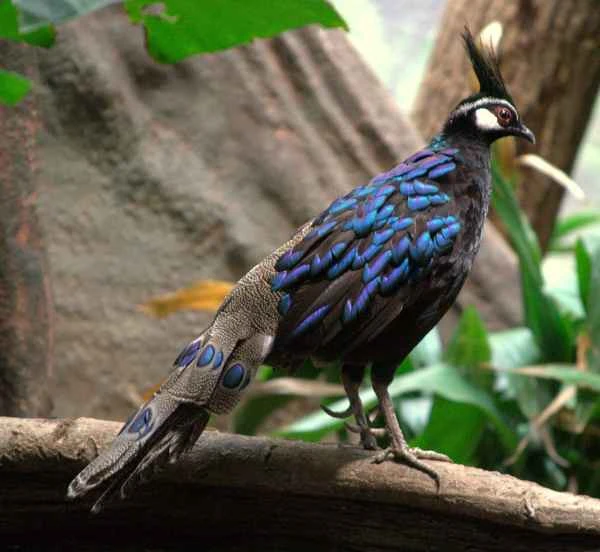
The Palawan Peacock Pheasant is widely recognized for its beauty, with its feathers covered in metallic green and blue eye-like spots. Especially when the male spreads its tail feathers, it is as dazzling and charming as a peacock.
Plumage: The male's plumage is mainly dark green, with blue and purple markings. The female's plumage is more plain, mainly brown.
Tail feathers: The male bird has distinct "eye-like" spots on its tail feathers, which is one of its most unique features.
Size and weight
Body length: Male birds are about 50-70 cm long, while female birds are slightly smaller, about 40-50 cm long.
Weight: Male birds weigh about 700-800 grams, while female birds usually weigh between 500-600 grams.
diet
The Palawan peacock pheasant mainly feeds on insects, seeds, and fruits.
Insects: such as ants, beetles and locusts.
Plants: mainly berries, seeds and tender leaves.
Reproduction and growth cycle
Breeding season: Usually begins at the start of the rainy season each year.
Reproductive characteristics: Males attract females with a complex courtship dance, which includes spreading their tail feathers, singing, and jumping.
Number of eggs: 1-2 eggs are laid each time, and the incubation period is about 20 days.
Chick development: Chicks reach sexual maturity within one year, but it takes 2-3 years for their plumage to fully develop.
Palawan Peacock Pheasant Care and Breeding Guide
Feeding conditions
Keeping Palawan peacock pheasants requires simulating the conditions of their native habitat:
Environment: A spacious, semi-open aviary is required, with the ground covered with fallen leaves or sand for them to forage for.
Temperature: Maintain between 25-30°C, humidity approximately 60%-80%.
Diet: Provide insects (such as live ants or earthworms) and fruit, supplemented with bird-specific pellet feed.
Breeding techniques
Pairing selection: The male-to-female ratio is optimal, and the male bird needs enough space for courtship display.
Egg-laying environment: Provide a secluded grass nest or box-shaped nest to ensure the female bird feels safe.
Brooding management: Young birds need to be raised separately and provided with finely chopped insects and soft feed.
Habitat distribution map and behavioral habits of Palawan Peacock Pheasant
Habitat distribution
The Palawan peacock pheasant is found only on Palawan Island in the Philippines, particularly in the island's lowland and mountain forests.
Altitude distribution: They mainly live in areas with an altitude of 200-800 meters.
Activity range: Mostly active on the forest floor, but occasionally flies up to low branches.
Behavioral Habits
Diurnal: They are active during the day, with peak foraging times at dawn and dusk.
Territoriality: Male birds are very sensitive to their territory and will drive away intruders through calls and dances.
Group-oriented: Usually active in pairs or small family groups.
Five unique characteristics of the Palawan Peacock Pheasant
Distinctive eye-like spots: The blue-green eye-like spots on its tail feathers are its signature feature.
Complex courtship behavior: Male birds attract mates by jumping, singing, and displaying their tail feathers.
Limited to Palawan: It is a bird species endemic to Palawan and has high local significance.
High dependence on habitat: almost entirely dependent on primary forests for survival.
Diverse vocalizations: The calls vary widely, including short "dudu" sounds and long "chirp" sounds.
What are the main threats to the Palawan Peacock Pheasant?
The Palawan peacock pheasant currently faces multiple threats, leading to a decline in its population.
Habitat destruction: Logging and agricultural development have drastically reduced the area of its forest habitat.
Hunting pressure: Illegal hunting due to its feathers and meat.
Climate change: Changes in temperature and rainfall patterns further impact their living environment.
What are the characteristics of the call of the Palawan peacock pheasant?
The calls of the Palawan peacock pheasant are diverse, producing different sounds in different settings:
During courtship: The male bird will make a low "dududu" sound to attract the female bird's attention.
When on alert: it emits a short "caw" sound to warn its companions or intimidate predators.
When communicating: making a soft "cooing" sound indicates friendliness or staying in touch.
A comparison of the Palawan peacock pheasant with other birds.
The Palawan Peacock-Pheasant ( Polyplectron napoleonis ) is a rare bird endemic to the Philippines, attracting considerable attention for its distinctive appearance and behavior. Comparing the Palawan Peacock-Pheasant with other birds in biological and ecological research helps reveal its uniqueness and ecological adaptations. The following comparison focuses on five aspects: appearance, behavior, habitat, reproduction, and ecological role.
1. Appearance: Peacock-like charm
The Palawan peacock pheasant is known for its peacock-like plumage spots, which are mainly distributed on its tail feathers and reflect a metallic sheen in the sunlight.
Comparison with peacocks : Although the Palawan peacock pheasant is called a "small peacock", it is smaller in size, about 40-50 cm in length, while peacocks can reach more than 1 meter.
Compared to other pheasants : Compared to common pheasants (such as the ring-necked pheasant), the Palawan peacock pheasant has more vibrant plumage, more decorative tail feathers, and exhibits obvious sexual selection characteristics.
2. Behavior: Differences in courtship displays
Male Palawan peacock pheasants display their tail feathers and perform a complex dance during courtship to showcase the symmetry and brightness of their eye-like spots.
Compared to peacocks : peacocks display their feathers more dramatically during courtship displays, with their tail feathers making up a larger proportion of their body, while the Palawan peacock pheasant displays its behavior more flexibly, accompanied by rapid, small-range movements.
Compared with other pheasants : other pheasants have relatively simple courtship displays. For example, the ring-necked pheasant mainly attracts females through calls, while the Palawan peacock pheasant attracts mates through a combination of visual and dynamic displays.
3. Habitat: Dependence on habitat
The Palawan Peacock Pheasant lives in the lowland primary forests of Palawan Island in the Philippines, preferring areas with dense vegetation and abundant ground cover.
Comparison with tropical forest birds : Birds of paradise ( Paradiaeidae ) also live in tropical rainforests, but birds of paradise tend to be more arboreal, while Palawan peacock pheasants mainly forage on the ground.
Compared with plateau pheasants : such as the Tibetan eared pheasant ( Crosoptilon crossoptilon ) which lives in high-altitude meadows and shrublands, the Palawan peacock pheasant depends entirely on low-altitude forests, showing a strong difference in ecological niche.
4. Breeding: Different brooding methods
Palawan peacock pheasants breed once a year, laying a small number of eggs per clutch, usually 1-2, which are incubated and raised by the female.
Compared with common pheasants : For example, the ring-necked pheasant can lay more than 10 eggs per clutch, which is much more than the Palawan peacock pheasant. This is related to its living environment and population pressure.
Compared to other tropical birds : Some tropical birds, such as hornbills, nest in tree cavities, while the Palawan peacock pheasant's nests are usually hidden under dead leaves on the ground, making them vulnerable to predators.
5. Ecological Role: Unique Functional Positioning
The Palawan peacock pheasant plays a unique role in its ecosystem.
Compared to other birds in the same genus , such as the Malayan peacock pheasant ( Polyplectron malacense ), which also feeds mainly on insects and seeds, the Palawan peacock pheasant has a broader diet, including fruits and small invertebrates.
Compared with other forest birds : Birds of paradise and others mainly feed on fruit and play a significant role in seed dispersal, while the Palawan peacock pheasant also controls insect populations, making a more diversified contribution to the forest ecological balance.
Comparisons between the Palawan Peacock-Pheasant and other birds highlight its uniqueness in plumage characteristics, behavioral patterns, habitat, and ecological role. As the flagship species of Palawan Island, it is not only an important component of the tropical rainforest ecosystem but also a crucial model for research selection and ecological adaptation. These characteristics make the Palawan Peacock-Pheasant indispensable in conservation biology.
Cultural Symbolism and Significance of the Palawan Peacock Pheasant
In Philippine culture, the Palawan peacock pheasant is considered an auspicious bird, symbolizing the beauty and harmony of nature.
Local symbol: Palawan province has listed it as its official bird, making it an important symbol of local culture.
Art and Legend: Its feathers and image often appear in traditional paintings and crafts.
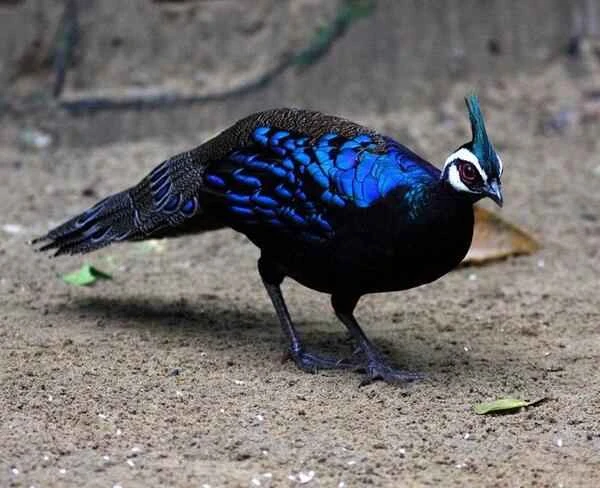
Male Palawan Peacock Pheasant
Scientific research progress on the Palawan peacock pheasant
The Palawan Peacock Pheasant ( Polyplectron napoleonis ) is a bird species endemic to Palawan Island in the Philippines. Its unique ecological habits and endangered status have attracted widespread attention from scientists and conservation organizations. In recent years, in-depth research on this bird has provided important data and guidance for its conservation and ecological restoration.
1. Studies on genetic diversity and population structure
To better understand the population status of the Palawan peacock pheasant, scientists used DNA analysis to reveal its genetic diversity and population structure.
Research has found that :
The Palawan peacock pheasant has low genetic diversity, which may be due to habitat fragmentation and long-term population isolation.
The limited gene flow within their populations and the limited exchange between populations in different regions increase the risk of extinction.
Significance of the study :
It provides a basis for targeted conservation measures, such as increasing gene flow through artificial breeding and cross-regional population introduction.
2. Habitat Preference and Habitat Use
The Palawan peacock pheasant is extremely selective in its habitat selection. Researchers have gained a deeper understanding of its habitat requirements through field observations and habitat modeling.
Research Methods :
GPS tracking and remote sensing technologies were used to record bird range and analyze vegetation cover and environmental factors.Research findings :
Palawan peacocks prefer pristine lowland forests, especially areas with dense shrubbery and abundant ground food resources.
Over-logging and agricultural development are its main threats.
Protection recommendations :
Provide them with greater living space through forest protection and restoration programs.
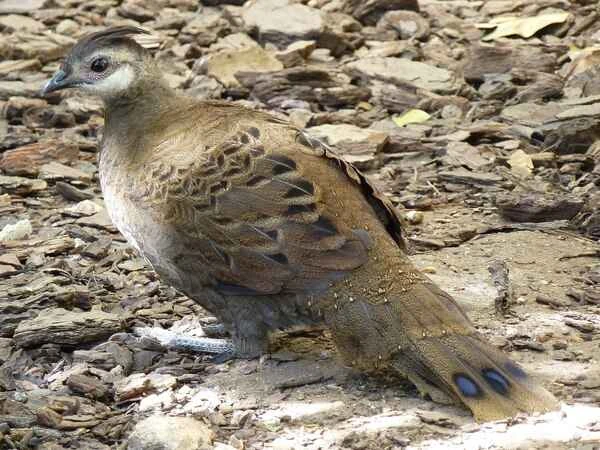
Palawan Peacock Pheasant Female
3. Research on reproductive behavior and mate selection
The breeding behavior of the Palawan peacock pheasant is one of the hot topics of research, especially the complex courtship displays of the males.
Research has found that :
Male birds attract females through eye-like spots on their tail feathers and courtship dances; the brightness and number of these spots are key factors.
Females tend to choose males with larger tail feathers and more vibrant spots, suggesting that sexual selection plays an important role in its evolution.
Application significance :
These behavioral characteristics can serve as a reference for selecting superior individuals in artificial breeding projects.
4. Conservation measures and artificial breeding research
Due to the continuous decline in wild populations, artificial breeding and release research have become the focus of conservation efforts.
Progress :
Significant progress has been made in the artificial breeding of Palawan peacock pheasants at some bird conservation centers in the Philippines.
By controlling environmental temperature and humidity and providing a variety of foods, the breeding rate and chick survival rate were successfully improved.
Release experiment :
Scientists selected suitable nature reserves, released artificially bred individuals into the wild, and monitored their adaptation. The results showed that some individuals were able to successfully integrate into the natural environment.
5. Research on vocalization and behavioral communication
The calls of the Palawan peacock pheasant are an important part of its behavioral research.
Research Methods :
The acoustic recording equipment was used to analyze its calls in different scenarios, including courtship calls, alert calls, and territorial calls.Research findings :
The deep "dududu" sound emitted by the male bird during the breeding season plays an important role in attracting females.
The female bird's call is shorter and is used to respond to the male bird or to warn of danger.
Significance of the study :
These findings contribute to a better understanding of their social behavior and provide a non-invasive tool for population monitoring in protected areas.
6. Analysis of Major Threats and Protection Strategies
Scientific research also focuses on the main threats to the Palawan peacock pheasant and develops corresponding protection strategies.
Threat factors :
Habitat loss: The area of primary forests has decreased dramatically due to illegal logging and agricultural expansion.
Illegal hunting: Its feathers and meat are sought after in the illegal market.
Climate change: altered the temperature and humidity conditions of their living environment.
Protection measures :
Establish more nature reserves and strengthen law enforcement.
Promote community-participatory conservation projects and encourage local residents to participate in forest management.
Through education and outreach, raise public awareness of the Palawan peacock pheasant and its ecological value.
7. The role of the Palawan Peacock Pheasant in the ecosystem
The study also found that the Palawan peacock pheasant plays an important role in the ecosystem:
Seed dispersers : promote plant dispersal and regeneration by consuming fruit and excreting seeds.
Insect controllers : They feed on insects and help maintain the ecological balance of forests.
These features further highlight the importance of protecting the Palawan peacock pheasant.
Significant progress has been made in scientific research on the Palawan peacock-pheasant, providing valuable data support for its conservation. However, further interdisciplinary collaboration is needed, such as combining genetics, ecology, and sociology, to explore more effective conservation strategies. Through the integration of science and practice, humanity can hope to pave a brighter future for the sustainable development of this rare bird.
Protection level
The Palawan Peacock Pheasant (Polyplectron napoleonis) is currently listed as a Vulnerable species by the International Union for Conservation of Nature (IUCN). According to IUCN assessments, the species faces threats such as habitat loss and illegal hunting, and its wild population has declined significantly. Its extremely narrow range, confined to Palawan Island and nearby islets in the Philippines, further weakens its ecosystem.
To protect this rare bird species, conservation measures have been implemented, including habitat protection, banning illegal hunting, and developing ecotourism projects. While these efforts have yielded some progress, the species still faces numerous challenges, particularly the rapid loss of its habitat and overexploitation.
Therefore, the conservation of the Palawan peacock pheasant remains crucial and requires the cooperation and support of international organizations, local governments, and civil society groups.
The Palawan peacock-pheasant is a bird of immense charm and ecological value. Protecting it is not only about maintaining biodiversity but also about preserving the harmonious relationship between nature and culture. Through ecological research and artificial breeding, humanity can do much more for the future of this rare bird.