In the ocean world, speed becomes crucial for survival when cover and light are lost. Many marine creatures exhibit astonishing explosive power, not only reaching incredible speeds quickly but also possessing remarkable endurance to swim for hours. This article introduces ten of the ocean's top swimmers, including sailfish, cuttlefish, swordfish, mako shark, yellowfin tuna, barracuda, bottlenose dolphin, skipjack tuna, mahi-mahi, flying fish, tarpon, killer whale, and blue whale. These marine athletes have all demonstrated amazing swimming talent!
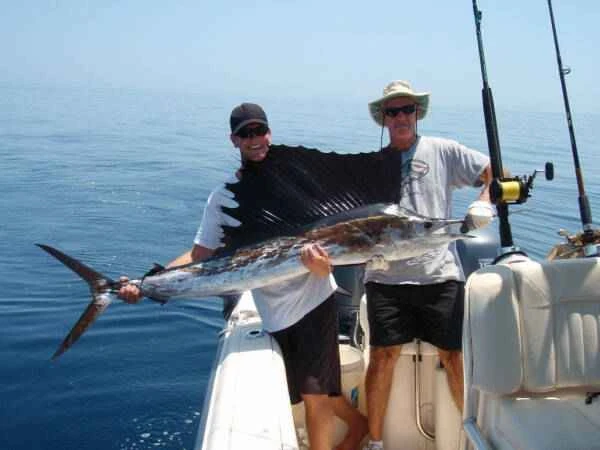
1. Sailfish (190 km/h)
Sailfish, also known as banana fish, are a type of migratory fish. They have a slightly flattened, streamlined shape and well-developed muscles. The largest sailfish can reach several meters in length and weigh hundreds of kilograms, making them one of the fastest swimming fish in the ocean. There are many varieties of sailfish, including true sailfish, eye sailfish, black sailfish, and banana sailfish, which generally share similar habits. Their bodies are elongated and slightly laterally compressed, with the premaxilla and nasal bone extending forward to form a long, pointed, sword-like snout. Their bodies are bluish-brown with grayish-white round spots. The first dorsal fin is long and high, with black spots, resembling a flag fluttering in the wind, hence the name sailfish. Sailfish can be considered swimming champions, with normal speeds reaching 90 kilometers per hour, short-distance speeds of about 110 kilometers per hour, and top speeds reaching up to 190 kilometers per hour!
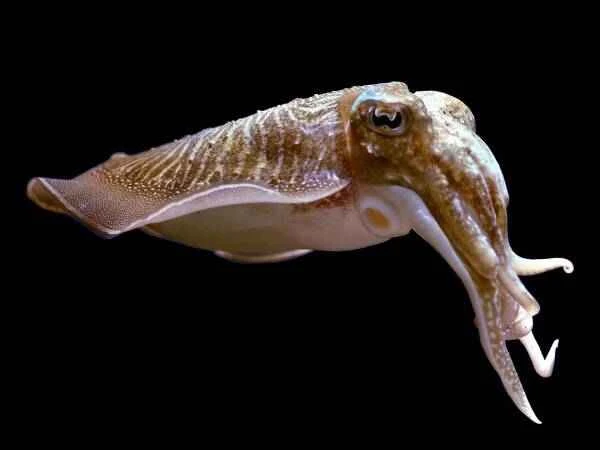
2. Cuttlefish (150 km/h)
Cuttlefish, also known as squid, are invertebrate creatures that, despite being called fish, are actually marine mollusks. They have a pair of large eyes on their heads with excellent eyesight. They also possess eight arms and two long tentacles, with suckers on the arms. Among marine life, squid are the fastest swimmers. Their incredible speed comes from the fact that, unlike other fish, they don't swim using fins, but rather by using the reaction force of water ejected through funnels on their bellies to propel themselves forward, much like a rocket launch. Squid can typically swim at speeds exceeding 15 meters per second in ocean water, and some can even reach top speeds of 150 kilometers per hour!
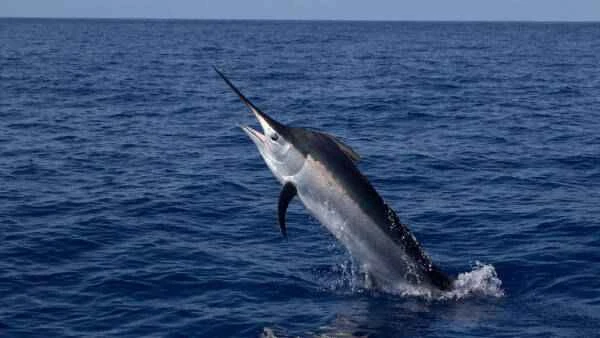
3. Swordfish (130 km/h)
Swordfish, also known as swordtails, are common fish in tropical and subtropical oceans. They get their name from their sword-like upper jaw that extends forward. Swordfish have a typically streamlined body, smooth skin, a long and pointed upper jaw, relatively small dorsal fins, a flattened mouth, and lack gills and pelvic fins. Swordfish come in a variety of colors, but their backs and bodies are generally brown or blackish. When swimming forward, their powerful caudal peduncle generates tremendous propulsion, while their spear-like beaks cleave the water. Reaching speeds of up to 130 kilometers per hour, a swordfish's hard upper jaw can pierce even the thickest part of a ship's hull!
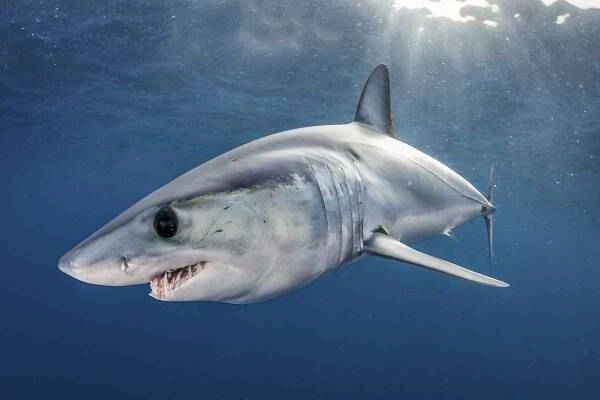
4. Mako Shark (95 km/h)
The mako shark is a species of shark belonging to the genus *Scoharius* in the family Porcupineidae. They have a large, robust, spindle-shaped body that tapers gradually towards the tail, with a protrusion on the caudal peduncle and two depressions at the base of the tail. Mako sharks are warm-water, pelagic swimmers, typically inhabiting depths of around 150 meters. While they are more adapted to colder waters than great white sharks, they can be found in various ocean regions. Mako sharks are deep-sea creatures, preferring to swim freely in the unobstructed depths. They can migrate at speeds of up to 56 kilometers per hour, covering a distance of 1600 kilometers in just one month. However, when hunting or feeling threatened, their swimming speed can exceed 95 kilometers per hour!
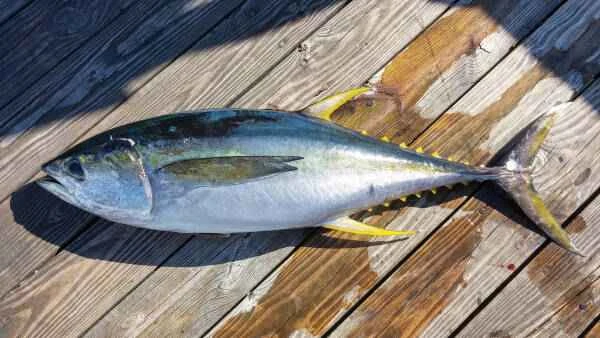
5. Yellowfin tuna (80 km/h)
Yellowfin tuna is a member of the tuna family, a prized warm-water pelagic fish. It gets its name from the bright yellow of its dorsal and anal fins. Yellowfin tuna is one of the most abundant tuna species. Adult yellowfin tuna can reach 3 meters in length and weigh up to 225 kilograms, while larger individuals can reach 2 meters in length and weigh over 100 kilograms. Their bodies are spindle-shaped, and the largest forks can even exceed 2 meters in length! Yellowfin tuna are widely distributed in the tropical and subtropical waters of all the world's oceans, except for the Mediterranean Sea, where they have not yet been recorded. In the ocean, yellowfin tuna can reach astonishing speeds of up to 80 kilometers per hour!
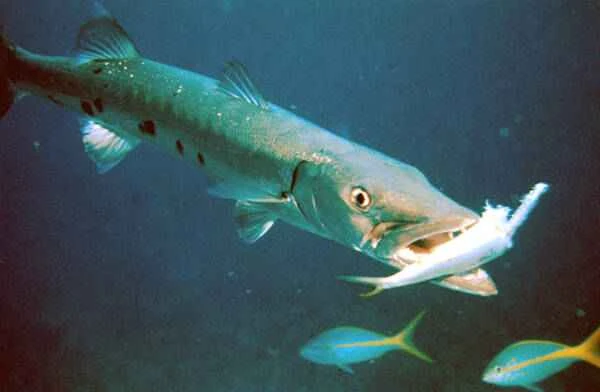
6. Barracuda (75 km/h)
Barracuda, also known as sea wolf fish, roam the oceans. There are as many as 26 known species of barracuda, with slender bodies, some reaching up to 1.8 meters in length. Their most striking features are their broad jaws and long, protruding teeth resembling wolf fangs, hence the local name "sea wolf fish." This is a giant and ferocious fish, belonging to the genus Barracuda. They primarily inhabit tropical and subtropical ocean regions and are among the most skilled marine predators in these areas. It is said that barracudas can reach astonishing speeds of up to 75 kilometers per hour!
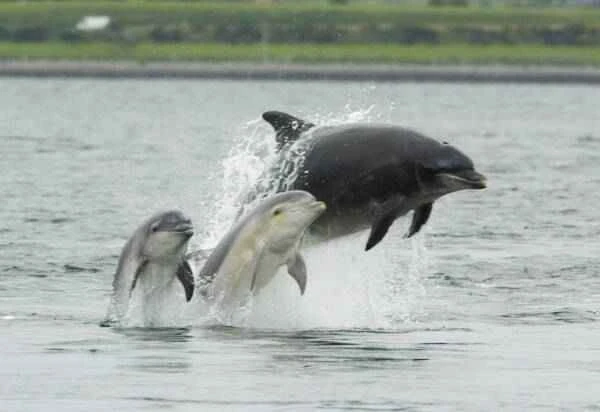
7. Bottlenose dolphin (70 km/h)
Bottlenose dolphins are a species of dolphin belonging to the genus *Dinodon* in the family Delphinidae. They are also known as pointed-nose dolphins or bottlenose dolphins. They are mainly distributed in temperate and tropical oceans, including the Yellow Sea and Bohai Sea in China. Adult female bottlenose dolphins are approximately 1.9–2.1 meters long and weigh 170–200 kilograms, while males are approximately 2.5–3.9 meters long and weigh 300–650 kilograms. Bottlenose dolphins primarily feed on schooling fish such as ribbonfish, mackerel, mullet, and sardines, and occasionally also eat squid, crabs, and other small animals. Their usual swimming speed is 5–11 kilometers per hour, but for short periods, they can reach speeds of up to 70 kilometers per hour!
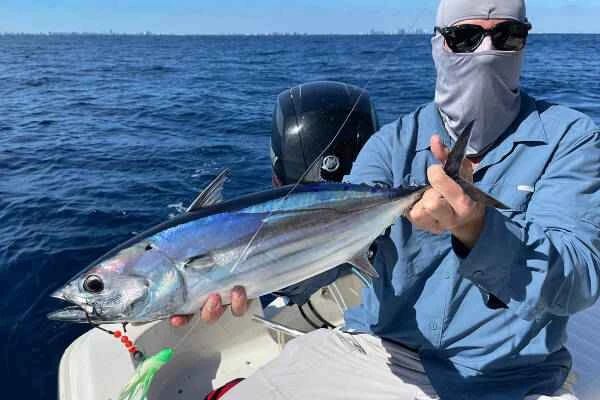
8. Skipjack tuna (64 km/h)
Skipjack tuna, also known as the bomb fish, belongs to the genus *Ketsubogaster* within the family Tunaidae, superorder Perciformes. It has a spindle-shaped body with a bluish appearance, is robust and scaleless, with a smooth surface and a very well-developed tail fin. One of its main characteristics is the presence of several dark longitudinal stripes on its flanks and a striped pattern on its back. Skipjack tuna are widely distributed in warm and tropical waters worldwide and are pelagic, carnivorous, pelagic migratory fish. They prefer to school in areas where warm and cold water masses meet and typically feed on small fish such as sardines, crustaceans, or cephalopods. Skipjack tuna can grow to 76 to 100 centimeters in length, with beautiful stripes on their streamlined bodies. They can swim at speeds up to 64 kilometers per hour!
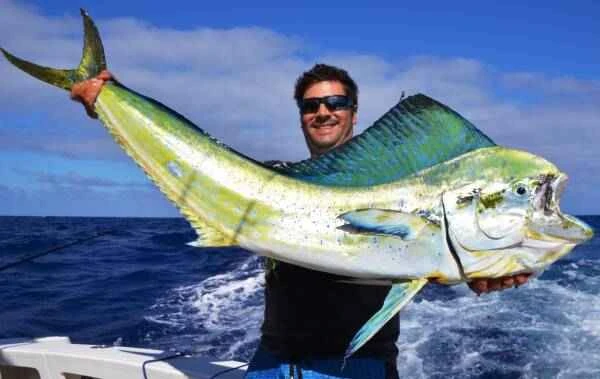
9. Mahi-mahi (59.55 km/h)
Mahi-mahi is a pelagic fish belonging to the genus *Macrodon* in the family Cobitidae. They are relatively large and elongated laterally compressed, with a high anterior portion that tapers towards the posterior. They have a large head and a narrow back; the head and back of adult mahi-mahi are square-shaped. A bony ridge on the forehead becomes more prominent with age, especially in males. Mahi-mahi can reach a maximum length of about two meters. They prefer to swim in groups in the surface of clear, vast waters, making their bright colors easily noticeable. Through long-term natural selection, mahi-mahi have developed the ability to camouflage themselves and avoid predators, and rely on high-speed swimming for hunting and survival. The fastest swimming speed for a mahi-mahi can reach 59.55 km/h!
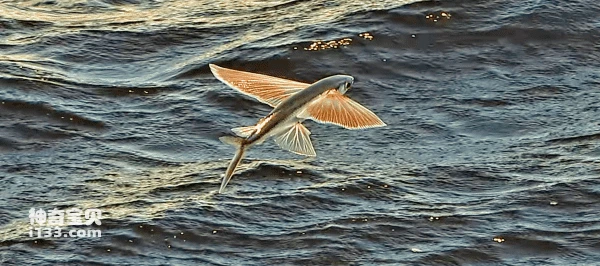
10. Flying Fish (56 km/h)
Flying fish is a collective term for about 40 species of marine fish in the family Exocetidae of the order Agrocypriniformes. They are named for their exceptional ability to fly. Flying fish have a very unique appearance; their pectoral fins extend to their tails, resembling bird wings. They can leap out of the water up to tens of meters high, remain airborne for over 40 seconds, and fly up to 400 meters. When they appear and disappear on the azure sea, weaving through the waves, they create a spectacular sight. This skill evolved to escape predators. Flying fish also possess great speeds, reaching up to 56 kilometers per hour!
The ranking of the top ten fastest swimming marine animals is primarily based on information such as the highest swimming speed of each animal, and also takes into account relevant online rankings/lists. This list is for reference only and aims to help you understand the ten fastest swimming marine animals. If you have any questions, please feel free to comment/criticize at the end.