The ocean always evokes a sense of mystery, teeming with all sorts of enigmatic marine creatures that inhabit the deep sea, largely unknown to humankind. This article will unveil the secrets of ten of the world's most mysterious marine creatures, including the Pompeii worm, sea spider, comb jelly, barreleye fish, glass squid, harp sponge, scaly-foot snail, willow eel, Bobbit worm, blobfish, and pink longhand fish. Let's explore them in detail!
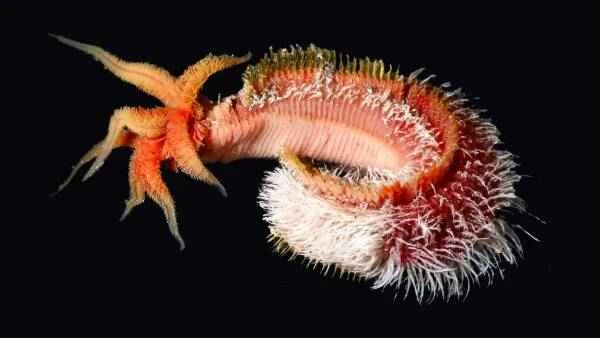
1. Pompeii beetle
Pompeii, also known as the bristle worm, is 10 to 15 centimeters long and is the second most heat-resistant organism in the world, with a particular affinity for temperatures up to 70 degrees Celsius. Pompeii has the ability to lower the surrounding temperature, allowing it to survive even in close contact with bacteria. Amazingly, Pompeii can not only withstand temperatures as high as 81 degrees Celsius, but it can also leave the scorching environment and swim to seawater at only 10 degrees Celsius to forage. Its ability to withstand such drastic temperature changes is truly rare. Previously, it was widely believed that the record for animal heat tolerance was held by an ant species in the Sahara Desert that could find food in temperatures as high as 55 degrees Celsius. However, while the tail of the Pompeii can be submerged in water reaching 81 degrees Celsius, its head remains completely unaffected by this extreme heat and continues to function normally.
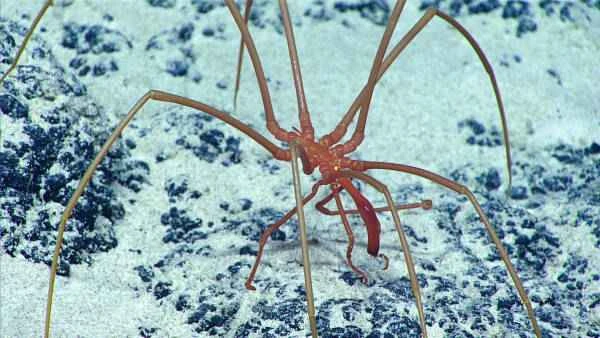
2. Sea spider
Sea spiders, also known as amphipods, resemble spiders in appearance, hence their name. They look like ordinary "harbor spiders," with long, slender legs and compact bodies. Their most striking feature is the lack of specialized respiratory and digestive organs; instead, they resemble several straws tied together. Gas exchange occurs through a cuticle, and their legs, when they move, act as a substitute for a heart to circulate blood. Paleontologist Derek Siveter and his team at the University of Oxford discovered the oldest and most complete sea spider fossil to date in Herefordshire, proving that sea spiders existed as a unique species approximately 450 million years ago.
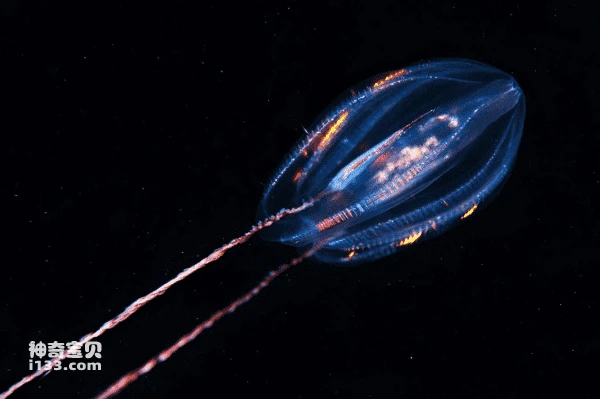
3. Comb jellyfish
Comb jellyfish are a small group of jellyfish-like marine invertebrates, but they are not actually jellyfish. Their structure is very primitive, reminiscent of Earth's earliest multicellular organisms. When they swim, their bioluminescent bands sway gracefully with the waves. They have rows of comb-like plates along their body length, covered with numerous cilia. These cilia beat against the waves, propelling the comb jelly through the water. As they swim, they emit blue light, transforming them into dazzling, colorful spheres. While the voracious comb jelly uses its cilia to propel itself and reach more food, this mysterious light enhances the beauty of the ocean.
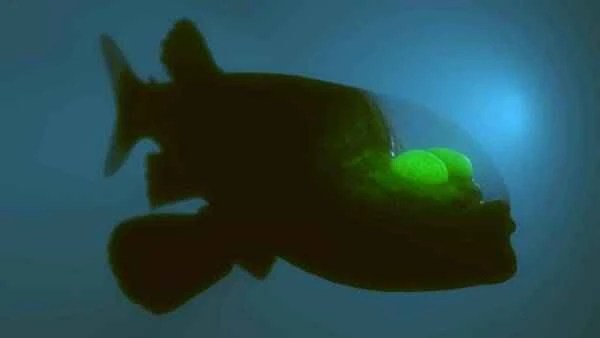
4. Barreleye Fish
The barreleye fish was first discovered by humans in 1939. Because this unusual deep-sea fish suffers damage when in shallow water, it is extremely difficult to spot. The barreleye's eyes constantly move within a transparent, fluid-filled head. From the front, its face appears normal, but its "eyes" are actually its nostrils; the emerald-green structure on its head is where its eyes are located. Barreleye fish often swim beneath siphonophores. When they see the siphonophore's tentacles capture prey, the barreleye swims upwards to seize it, its eyes and body pointing upwards. After the hunt, its body returns to a horizontal position, but its eyes remain upwards as it continues its "patrol."
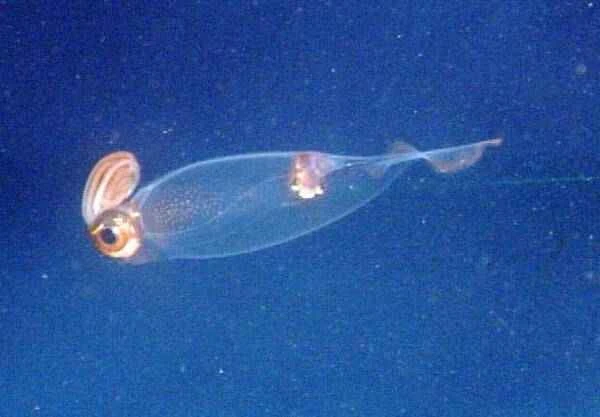
5. Glass squid
The glass squid, primarily found in the Mid-Atlantic Ridge, gets its name from its nearly transparent body. They possess lightweight organs above their eyes and the ability to roll themselves into a ball, much like an aquatic hedgehog. Their heads are relatively round, with their mouths located on top and more than ten arms surrounding them. Their eyes are located on the sides of their heads, and unlike most animals, they not only possess vision but also function as noses, exhibiting a sense of smell due to olfactory glands around their eyes. Notably, they also possess pigment cells on their backs, which regulate their body color, helping them to better camouflage themselves in the ocean.

6. Harp Sponge
The harp sponge is a carnivorous sponge that lives at depths of 3,300 to 3,500 meters off the coast of California. It was first discovered by scientists at the Monterey Bay Aquarium Research Institute. This sponge's branching limbs are covered with barbs that trap small crustaceans, which it then encases in a thin membrane and slowly digests. While sponges typically feed on strain bacteria and filtered organic matter, scientists have discovered several carnivorous sponge species in the last 20 years. The harp sponge is a unique organism that has evolved carnivorous traits to adapt to the harsh conditions of the deep sea.
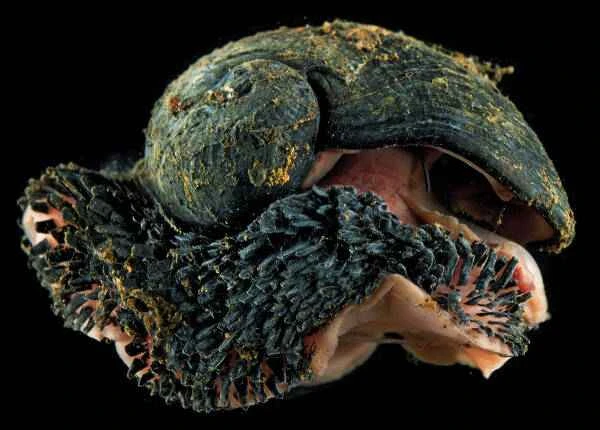
7. Scaled-footed snail
The scaly-foot snail is a unique mollusc that lives near hydrothermal vents on the deep seabed of the Indian Ocean. Its foot is covered with iron scales, and its shell has a remarkable three-layered iron structure. This snail has two smooth, tapering tentacles, but lacks eyes or specialized sensory organs. Its bright red foot is quite large and cannot be fully retracted into its shell. Living near underground geysers, the scaly-foot snail's shell is primarily composed of iron sulfides, making it magnetic. These metallic resources, mainly derived from underground geysers, provide the scaly-foot snail with a robust armor, effectively protecting it from predators.
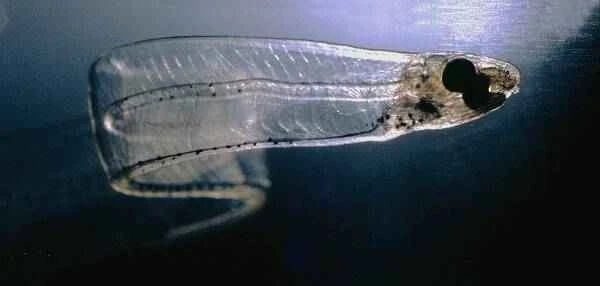
8. Willow leaf eel
The willow eel is a specific stage in the individual development of some fish. Their bodies are flat and transparent, as thin as willow leaves. The most striking feature of the willow eel is not its thinness, but its transparency. In the ocean, they are almost invisible without careful observation. In fact, this is just one stage in the willow eel's growth process. When the willow eel is juvenile or adult, its body turns silvery-white, resembling the appearance of deep-sea fish. At the same time, its eyes enlarge, and its pectoral fins widen. Normally, the sex of an organism or animal is determined in the womb, but in willow eels, the sex is determined by the environment.
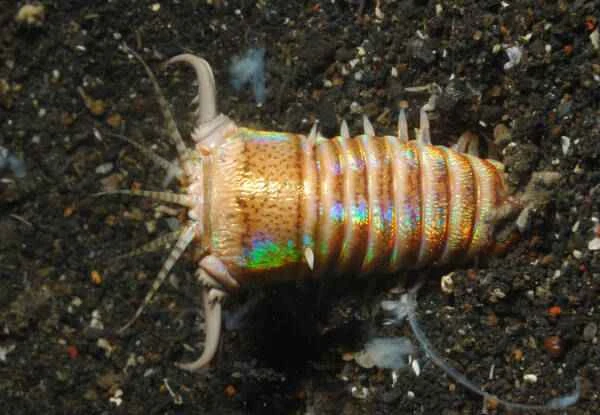
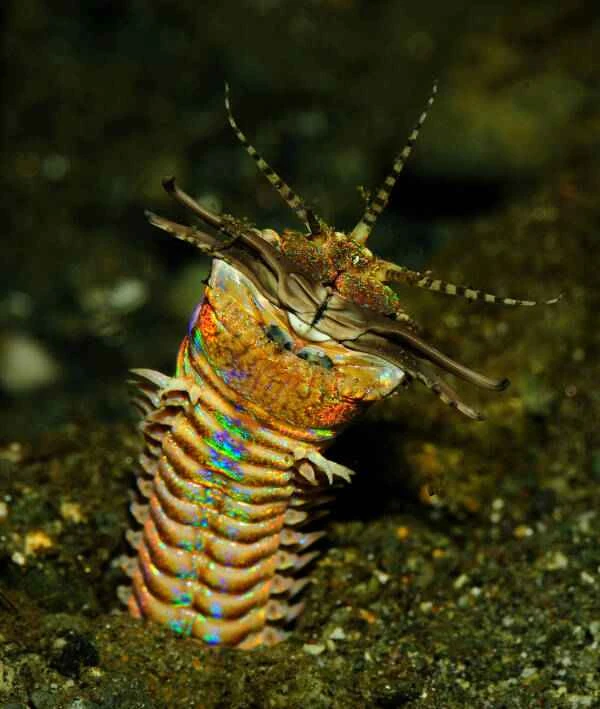
9. Bobbit worm
Twenty years ago, an underwater photographer named this creature the "Bobbit worm." They are found in warm waters around the world. The Bobbit worm's size is truly astonishing, and it is widely known in warm oceans globally. As early as the 19th century, oceanographers began studying these longest polychaete animals. Polychaetes primarily live in marine environments, and their bodies are composed of segmented bodies. On average, a Bobbit worm is about 1 meter long, but the longest recorded reached 3 meters!
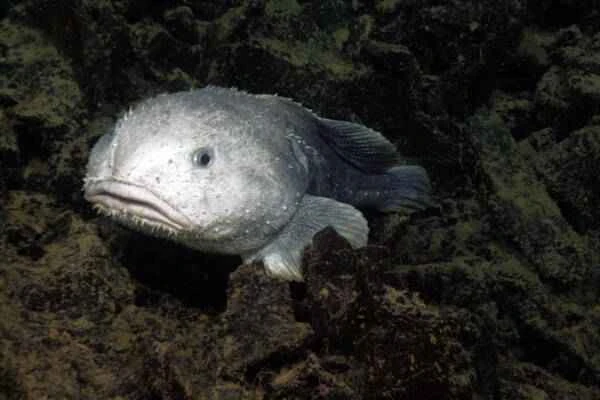
10. Blobfish
The blobfish, also known as the sad fish or the soft-spined sculpin, and even sometimes called the bobo fish, has a perpetually mournful expression on its face, earning it the title of one of the "world's most sorrowful-looking" fish. Belonging to the family Cryptosporidae and the genus Cryptosporidae, the blobfish has a gelatinous body, can grow up to 12 inches (approximately 30.5 cm) long, and lacks a swim bladder, breathing through gills. It inhabits the waters off the coasts of Australia and Tasmania, and can even live at depths of up to 1200 meters. Due to the difficulty in accessing its habitat, it is rarely seen by humans.
The list of the world's ten most mysterious marine animals was compiled based on a selection of lesser-known marine creatures with unique abilities, and also referenced relevant online rankings/lists. This list is for reference only and aims to help you understand the mysterious creatures of the ocean. If you have any questions, please feel free to comment/criticize at the end.