Deep-sea creatures are among the most mysterious organisms on Earth. One type of fish, often exhibited by Russian scientist Roman Fedortsov, lives in the deep sea at depths of 300 to 1000 meters. Unlike most fish, it reproduces by internal fertilization, giving birth directly to free-swimming fry.
Roman Fedorov's background
According to a report in the Daily Mail on May 1st, Roman has become an internet celebrity by posting pictures of various deep-sea creatures on Twitter. Roman comes from a fishing family in Murmansk, Russia; both his father and grandfather were fishermen. Now, he is a marine zoologist, often participating in months-long sea expeditions to explore the mysteries of deep-sea life.
As Roman traveled the world, he began sharing pictures of the strange deep-sea creatures he discovered. Unexpectedly, the unusual appearance of these fish attracted widespread attention on social media.
Roman said, "Many netizens who see these pictures think we catch a lot of these 'strange fish' every time we cast our nets, but in reality, it's very rare." He added, "I think all fish have their own beauty and ugliness. I don't want to say that these fish are particularly ugly or weird."
The deep-sea fish shown by Roman are often black or red, as these colors help them camouflage in the dark. Most of these fish inhabit the so-called "twilight sea" or "mesosphere," which is 200 to 1,000 meters below the surface, an area where very little light reaches throughout the year. The semi-deep sea below this range is completely dark.
Deep-sea species on display
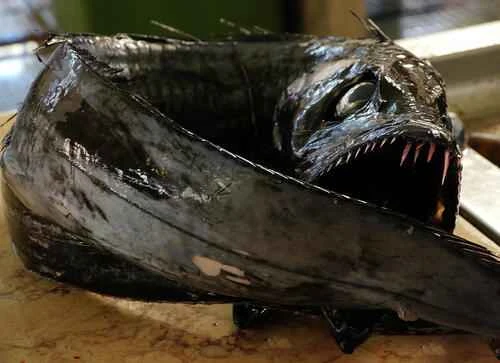
Scabbardfish (scientific name: Black-finned Forktail Ribbonfish)
Habitat depth: 180 to 1700 meters
Features: Its copper-black skin allows it to hide when hunting small fish.
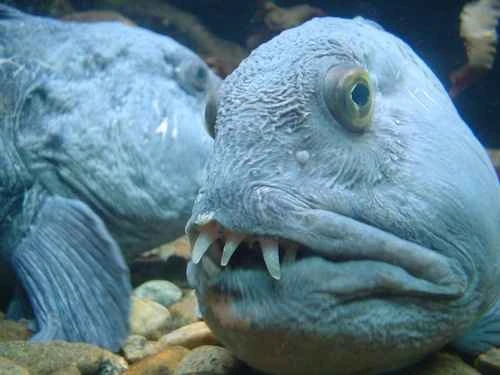
Pacific wolffish
Features: Possesses powerful upper and lower jaws and four to six sharp, long fangs; feeds on shellfish, small fish, and echinoderms.
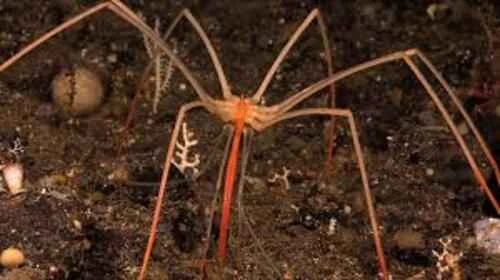
Sea spider
Habitat: Commonly found in the Mediterranean and Caribbean.
Features: This deep-sea arthropod has long legs about the size of a hand and can use its pointed beak to suck out tissues from small mollusks.
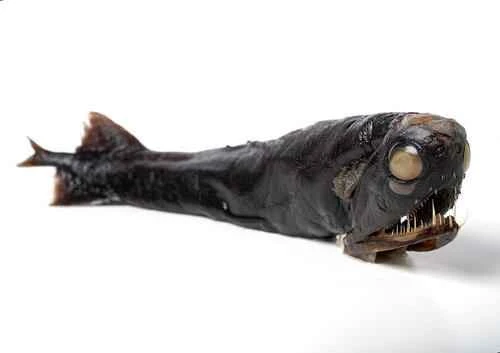
Red-light Pinejad Arowana (commonly known as the rat-trap fish)
Habitat depth: below 500 meters
Features: It usually attracts small fish with three light-emitting organs next to its nostrils, quickly grabs them, and swallows them into its stomach with the help of several rows of teeth.
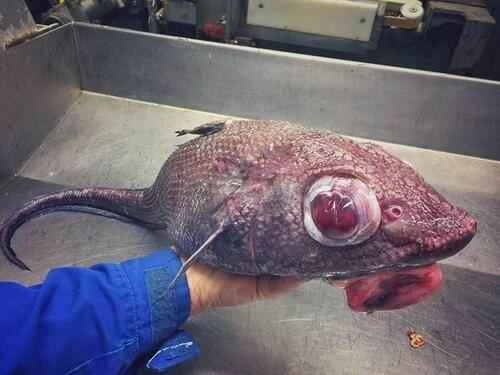
Grenade fish (rat-tailed fish)
Habitat depth: 600 to 900 meters
Characteristics: It is one of the most common deep-sea fish, feeding on small invertebrates.
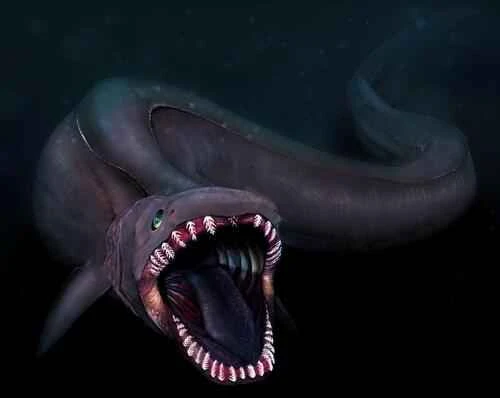
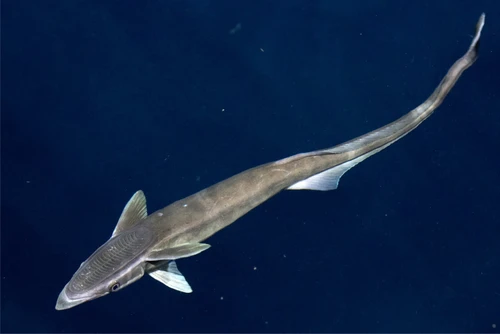
Folded Shark
Habitat depth: 1600 meters
Features: Known as a "living fossil," it hunts with its long, flexible body and uses its needle-like teeth to prevent prey from escaping.
Spiny Ray
Habitat: Commonly found in Europe and the Pacific Ocean.
Characteristics: It feeds on shrimp, crabs, and small fish.
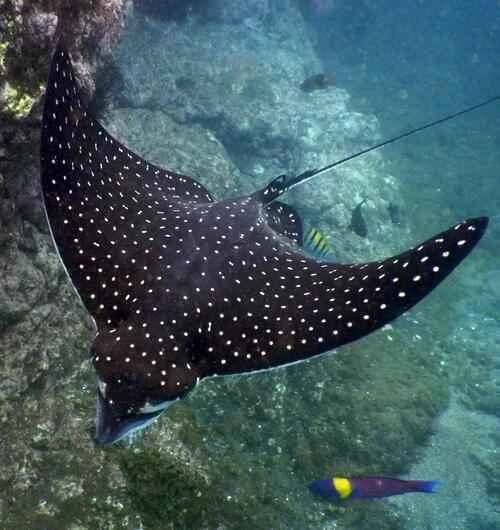
Fangfish
Habitat depth: up to 5000 meters
Features: At night, it uses starlight to ascend to an altitude of 200 to 2000 meters to hunt prey.
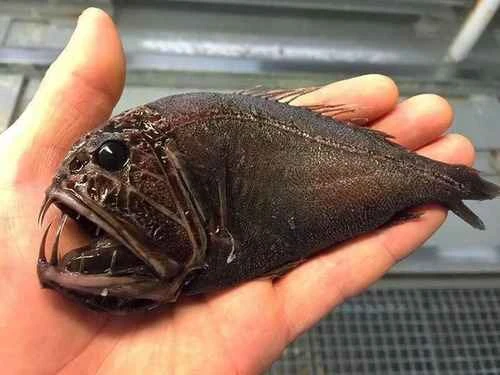
basking shark
Habitat depth: 910 meters
Features: It is the second largest fish after the killer whale, filtering more than 1,800 tons of seawater per hour and preying on a large number of small fish and shrimp.
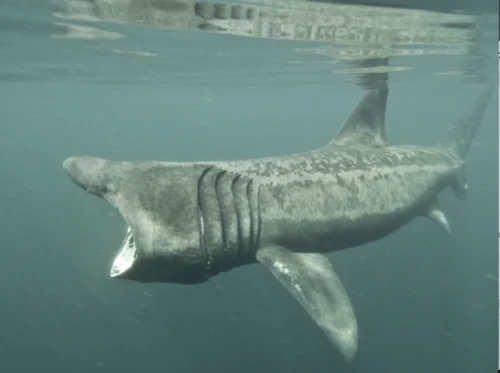
Monkfish
Habitat depth: 800 to 1000 meters
Features: It has an extremely elastic stomach, enabling it to swallow prey that is similar in size to itself.
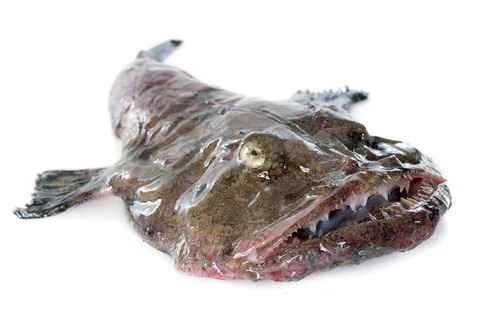
Rabbit Fish
Habitat depth: 40 to 1660 meters
Characteristics: It has a venomous spine that can cause severe pain, and it usually hunts underwater invertebrates in small groups.
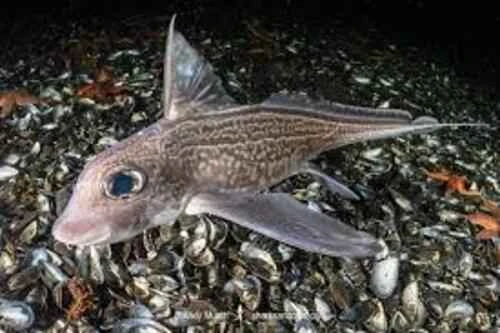
tuna
Features: It has sucker-like organs that allow it to attach to larger deep-sea animals, such as sharks or turtles.
Through these captivating images, Roman Fedetesov not only showcases the unique appearance of these deep-sea fish but also deepens our understanding of deep-sea ecosystems. The diversity and adaptability of these marine creatures are astonishing and worthy of our exploration and protection.