Fireflies (also known as Lightning Bugs) are a group of insects belonging to the order Coleoptera and the family Lampyridae. They are best known for their bioluminescence, a phenomenon that occurs at night. There are over 2,000 different species worldwide. Adult fireflies, larvae, and even eggs possess the ability to emit light, a process caused by the reaction of an enzyme called luciferin with oxygen.
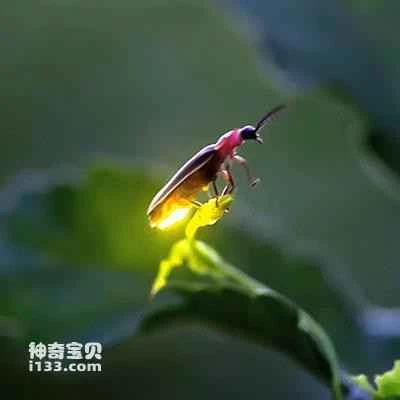
Bioluminescence
Principle of bioluminescence : The bioluminescence of fireflies is the result of a chemical reaction called "bioluminescence," a process that releases light rather than heat. The bioluminescent reaction involves the reaction of luciferase with molecules such as luciferin, oxygen, and ATP. This reaction takes place in the light-emitting organ at the very end of the firefly's abdomen.
Communication : Light emission is primarily used for communication, especially as a mating signal. Different species emit flashes of light of varying frequencies and durations to distinguish themselves from one another.
Lifestyle
Diet : Firefly larvae and adults are generally carnivorous, feeding on snails, slugs, and other mollusks. Some fireflies also prey on other insects or firefly larvae. A few species do not feed as adults.
Habitat : Fireflies typically appear in humid, warm environments and are often found near water sources such as streams, lakes, and wetlands. They are most easily observed at night from late spring to early summer.
Reproduction : During mating, the male insect typically flies and uses its bioluminescence to attract females on the ground or plants. The female responds to the male with her own flashing pattern, allowing them to find each other.
Developmental process
Complete metamorphosis : The development process of fireflies is complete metamorphosis, which includes four stages: egg, larva (sometimes called "firefly larva"), pupa, and adult.
Juvenile stage : Fireflies also glow during their larval and pupa stages, and usually spend this period in the soil or under the bark of trees.
Current situation and protection
Environmental impact : Due to habitat loss, light pollution, and pesticide use, the numbers of some firefly species have begun to decline.
Conservation measures : Efforts to protect fireflies include preserving their habitats, reducing light pollution, and limiting the use of pesticides.
Interaction with humans
Ecotourism : The beautiful glow of fireflies is a popular tourist attraction in many cultures, and firefly watching events are particularly famous in some regions such as Japan and Thailand.
Scientific Research : They are also important in scientific research. Luciferase and luciferin are widely used in molecular biology and medical research to study cell and gene expression and other biochemical processes.
Inspiration : Over the years, the natural beauty and unique bioluminescence of fireflies have inspired poets, musicians and artists.
Fireflies not only provide beautiful natural scenery but also play a vital role in ecosystems, and their declining populations highlight broader issues related to environmental change. Protecting fireflies and their habitats is, in effect, promoting biodiversity and ecosystem health.