Domestic chickens (scientific name: *Gallus gallus domesticus*) are poultry domesticated from the red junglefowl and are one of the most common domesticated animals in the world. Due to long-term selective breeding, modern domestic chickens exhibit great diversity in body size, plumage color, and egg production. Domestic chickens play a very important role in human life, both as a food source and as part of the economic activities of poultry farming.
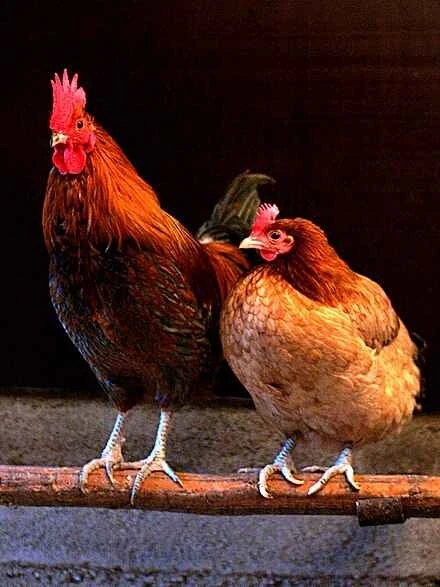
(Left) Rooster and hen (Right)
Basic features
Size and appearance : Domestic chickens come in a wide variety of sizes and plumage colors, from small guinea fowl to large broilers, and their plumage can be white, black, brown, yellow, and so on.
Lifespan : The average lifespan of domestic chickens is about 5 to 10 years, but some domestic chickens can live for more than 10 years under good conditions.
Sex differences : Adult roosters are usually larger than hens, have a distinct crowing sound, longer tail feathers, and brightly colored earlobes and combs (the protruding parts of the head); while hens are smaller and usually do not crow.
Lifestyle
Diet : Domestic chickens are omnivorous, and their natural diet includes seeds, insects, small animals, and even some plant parts. Domesticated chickens primarily feed on corn, barley, wheat, and specially prepared pellets.
Social behavior : In the wild, domestic chickens form groups consisting of multiple hens and one or more roosters. This social structure often exhibits a strict hierarchy known as "pecking order."
Habitat and Activity : Domestic chickens are active during the day and seek safe places to roost at night. They are not suited for flight, but can make short-distance flight behaviors, usually to avoid predators or find roosting grounds.
Reproduction
Egg production : Domestic chickens reproduce by laying eggs. A hen can lay hundreds of eggs per year, depending on the breed and rearing conditions.
Incubation : The incubation process takes about 21 days. Under natural conditions, the hen will incubate the eggs until the chicks hatch; in a farm setting, an incubator may be used.
Aquaculture
Breed improvement : Through selective breeding, humans have developed many domestic chicken breeds suitable for producing meat and eggs.
Farming methods : There are many farming methods, ranging from small-scale family farms that allow free-range chickens to large-scale intensive chicken farms.
Threats and Protection
Although chickens are an extremely successful domesticated animal species, some subspecies of their wild relatives, the red junglefowl, may face threats to their survival in the wild, such as habitat loss and hunting pressure. On the other hand, there are also controversies surrounding animal welfare in the chicken farming industry, such as the possibility that cage or intensive farming may lead to a decline in the quality of life for chickens.
Interaction with humans
Food source : Domestic chickens provide an important food source for humans, including chicken meat and eggs.
Cultural significance : In many cultures, the chicken has symbolic meaning; for example, in Chinese culture, it is a symbol of courage and protection.
Economic activity : Chicken farming is an important part of global agriculture and involves huge economic interests.
As poultry, domestic chickens have always been extremely important livestock throughout human history, not only providing nutrition for humans, but also being an important subject of agricultural production and biodiversity research.