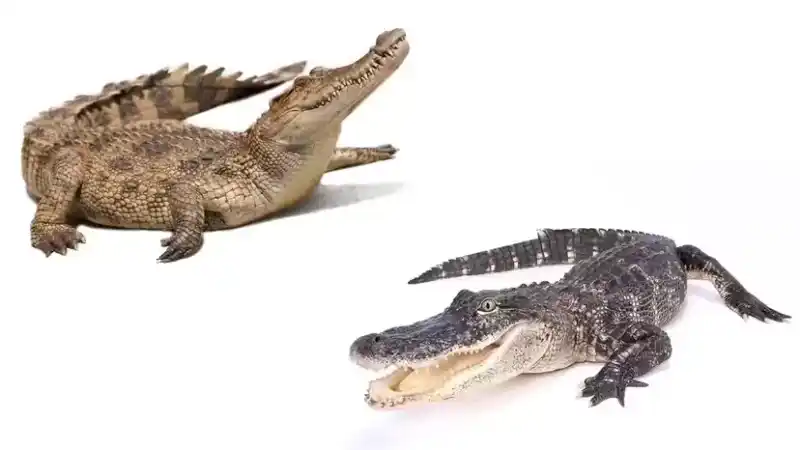
Around 208 million years ago, a global catastrophe wiped out countless species of animals. This marked the end of the Triassic period and the beginning of the Jurassic period.
What caused this catastrophe? Scientists have proposed several explanations. Perhaps a giant asteroid struck Earth; perhaps changes within the Earth triggered a series of volcanic eruptions. These events would have caused drastic climate changes on Earth. Another possibility is that the supercontinent Pangaea, which was unified during the Triassic period, gradually broke apart into smaller continental blocks, thus causing changes in the local environment.
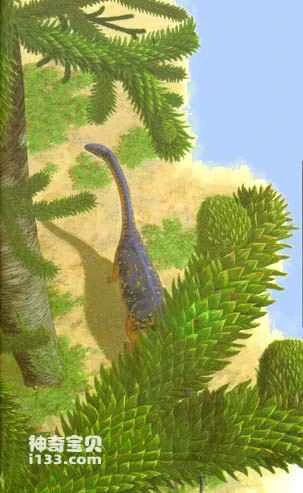
Long-spinosaurus
In any case, while many large reptiles went extinct at this time, smaller dinosaurs, small terrestrial crocodiles, and mammal-like reptiles survived the environmental changes. Dinosaurs were the most important group, as they dominated the Earth for the next 140 million years. Simultaneously, the landscape of vegetation changed, with evergreen shrubs and trees with dense foliage becoming the most common types.
Zimbabwe in southern Africa resembled this landscape from the Early Jurassic period 200 million years ago. At that time, Zimbabwe was almost entirely a barren desert, with bare sand dunes covering many areas. However, a variety of plants—from small ferns to tall conifers—tenaciously thrived in this harsh environment. Of course, various animals also flourished, with dinosaurs of all sizes and types being the main players. The Longinosaurus was one such dinosaur, belonging to the Paleopoda group.
Longinosaurus was a lightly built, medium-sized dinosaur, measuring 4 to 5 meters in length and weighing less than 200 kilograms. Its head was small and narrow, but its eyes and nose were quite large, suggesting highly sensitive vision and smell. Some of its teeth were grooved, while others were flat. Its upper jaw was unique, protruding forward beyond its lower jaw; therefore, it is likely that its lower jaw had a beak-like structure covering its bones.
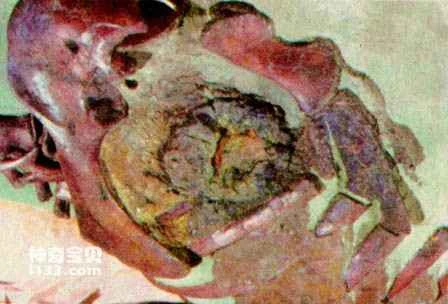
Longinosaurus not only once lived in southern Africa, but its fossils have also been found in Arizona, USA. They are important representatives of Paleopod dinosaurs.