What is the Corvidae family?
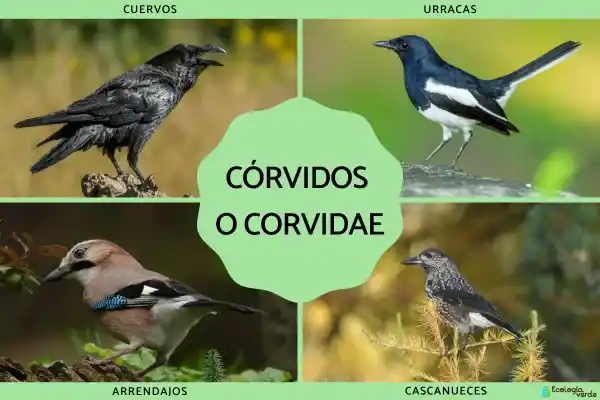
Corvidae are a group of birds belonging to the order Passeriformes, also known as "songbirds" or "song birds".
This large family includes many well-known birds, such as crows, ravens, magpies, jackdaws, jays, and star-billed jays , as well as some uncommon but very special species.
Despite significant differences in appearance and distribution, members of the Corvidae family generally possess the following notable advantages:
Extremely high intelligence (comparable to that of primates)
Flexible and opportunistic omnivorous diet
Highly complex calls and social communication
Highly adaptable and widely distributed
This article will provide a comprehensive overview of the definition and main characteristics of the Corvidae family, as well as the classification of major Corvidae species worldwide.
Main characteristics of Corvidae
1. Exceptional intelligence
Corvidae are considered the most intelligent birds on Earth , even comparable to primates such as chimpanzees.
Scientific research has confirmed that:
They can use tools (for example, New Caledonian crows make their own hook-like tools).
Able to solve complex problems
It can recognize faces and understand social hierarchy.
Possesses long-term memory and future planning abilities
Some species have passed the "mirror self-recognition experiment" —previously only observed in chimpanzees.
They can learn through observation and form a "cultural heritage".
Corvids excelled in the wild, in survival, and even in their interactions with humans due to their highly developed brains.
2. The Dietary Structure of Omnivores and Scavengers
Corvidae are practically omnivorous, being flexible omnivores that include:
Rotten flesh (they have strong, cone-shaped mouths that tear chunks of flesh apart)
Insects, frogs, small animals and eggs
Seeds, grains, fruits, nuts
Human-generated waste and food scraps
Some species have special diets, such as the Nucifraga, which mainly eats pine nuts and stores large quantities of seeds .
3. Widely distributed globally
Corvidae are one of the most widely distributed bird families in the world, and their habitats include:
Arctic tundra
Temperate forest
tropical rainforest
desert area
Rural farmland
large cities
Only South America, New Zealand, and Antarctica lack native corvids.
4. Complex behavior and social skills
As songbirds, corvids have a highly developed communication system:
It can produce a variety of sounds
Some species can mimic human language or other animal sounds.
They will engage in choral singing, warning calls, and social calls.
Social species have stable population structures
Some species even exhibit "funeral behavior" (gathering around a deceased individual).
These characteristics show that their intelligence is used not only for foraging but also for maintaining complex social life.
Classification of main species in the Corvidae family
The Corvidae family comprises 25 genera and a total of 139 species of birds .
Based on common appellations, they can be divided into the following main types:
1. Crows, ravens, and bald ravens ( Corvus genus)
This is the most famous and largest group among the Corvidae.
External features
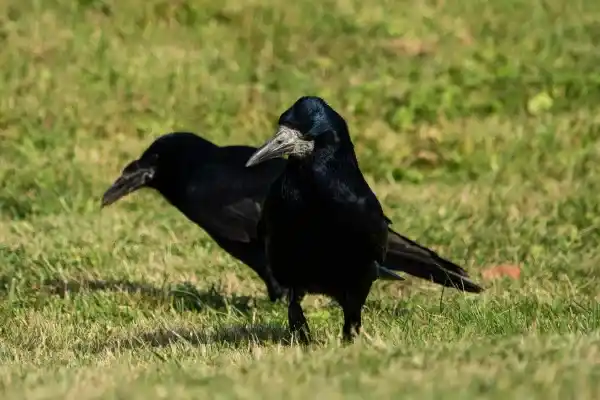
It is predominantly covered in black feathers , occasionally with white spots.
Large size (30–65 cm)
Its thick, cone-shaped mouth is perfect for tearing meat.
Extremely high intelligence and adaptability
Representatives
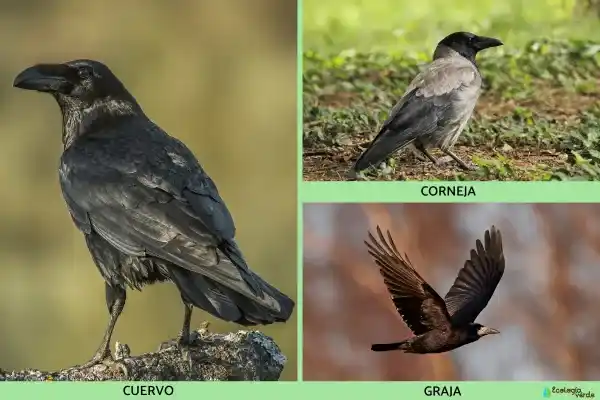
Common raven (Corvus corax)
Black-faced crow (C. cornix)
Crow with bald nose (C. frugilegus)
Crow (C. corone)
Terminology distinction :
"corneja" generally refers to a black or gray raven.
"Graja" specifically refers to C. frugilegus, whose bill base is bare and lighter in color.
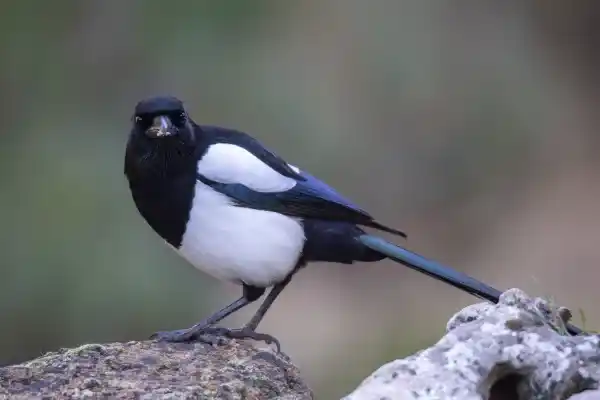
2. Magpies (genus Pica , Urocissa , Cissa , etc.)
Magpies are known for their vocalizations and mimicry.
feature
Short and compact body
Extra-long tail feathers
Black and white are common, but Asian species exhibit an extremely diverse range of colors:
blue
green
Purple
yellow
Magpies are among the most expressive members of the Corvidae family, exhibiting strong sociality and frequent communication.
3. Blue Magpie ( Cyanopica genus)
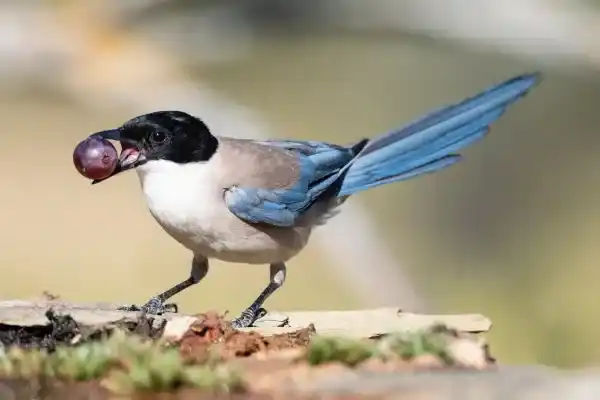
Blue magpies are among the few species with very prominent visual characteristics.
feature
blackheads
Body light brown or light gray
Bright sky-blue wings and a long tail (the tail feathers can be more than 4 times the length of the body).
Smaller beak than a crow
It is distributed in East Asia and the Iberian Peninsula.
4. Jays, blue jays, and other "jay-like" species ( Garrulus , Cyanocitta , Aphelocoma , etc.)
This is the most colorful corvid .
External features
Small to medium size
Vibrant colors: a variety of combinations including blue, green, purple, white, gray, and yellow.
More lively and noisy than crows
Representative species
Jay (Garrulus glandarius)
Blue Jay (Cyanocitta cristata)
Green jay (Cyanocorax yncas)
Jays are also forest "sowers" and play an important role in maintaining forest ecosystems.

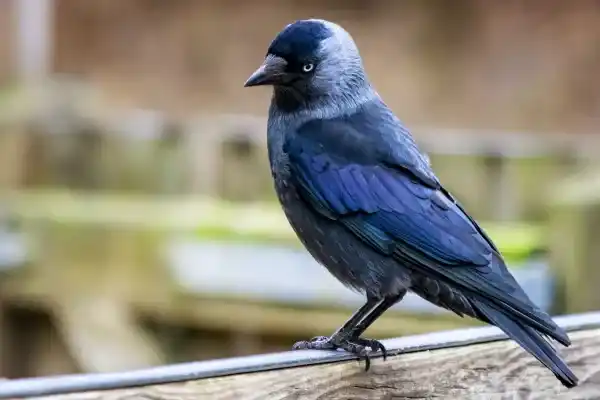
5. Jackdaw ( Colloeus genus)
The jackdaw is the smallest member of the corvid family .
feature
Body length approximately 35 cm
Feathers are mostly gray
Have striking light or blue eyes
Jackdaws are highly adaptable to human environments and can be found in cities, farmlands, and coastlines.
6. St. Crow ( Nucifraga )
It differs significantly in appearance from other corvids.
Main features
Its sharp beak is well-suited for use as a "shell-cracking tool".
Small head
Staple foods: pine nuts, hazelnuts, and other hard-shelled seeds
They will store large quantities of nuts to get through the winter.
They are important seed dispersers in coniferous forest ecosystems.

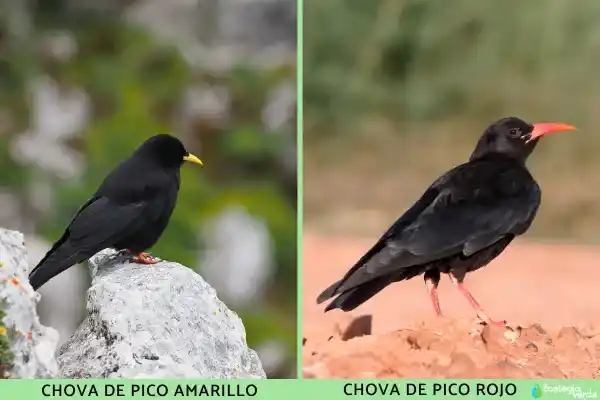
7. Red-billed Chrysanthemum/Yellow-billed Chrysanthemum ( Pyrrhocorax genus)
These corvids are highly recognizable by their brightly colored beaks and feet.
feature
All black
Red or yellow mouth and feet
They typically inhabit high mountain areas, rock walls, and cliffs in Europe, West Asia, and North Africa.
Two representatives
Yellow-billed chough (P. graculus)
Red-billed Chrysanthemum (P. pyrrhocorax)
Summarize
Corvidae are the most successful, intelligent, widely distributed, and adaptable group of birds.
From the all-black, majestic raven to the brightly colored jay, and then to the long-tailed blue magpie and the nut-expert star jay—this family displays astonishing diversity.
Whether you are in a forest, city, mountain, or desert, you are likely to encounter a corvid. They are intelligent, curious, and highly social, and are an important window for studying bird behavior and cognition.
References
Bugnyar T. (2024). Why are ravens so intelligent? Exploring the social intelligence hypothesis. Journal of Ornithology, 165(1), 15–26. URL: https://pmc.ncbi.nlm.nih.gov/articles/PMC10787684/
Winkler, D. & Billerman, S. (2020) Corvidae: Crows, Jays, and Magpies. Cornell Ornithology Laboratory, Birds of the World. URL: https://birdsoftheworld.org/bow/species/corvid1/cur/introduction