1. How many "types" of reindeer are there?
In different regions, people are accustomed to using different names to refer to the same animal:
In Europe and Asia , they are often called "reindeer" ;
In North America , they are more commonly known as "caribou" .
No matter what they are called, they actually belong to the same species:
Scientific name: Rangifer tarandus
The real difference is in the "subspecies" .
During the long process of evolution, due to:
The climates of the regions vary (alpine tundra, coniferous forests, island environments, etc.).
Mountains vs Plains
Wild vs. Semi-domesticated
Intercontinental Quarantine
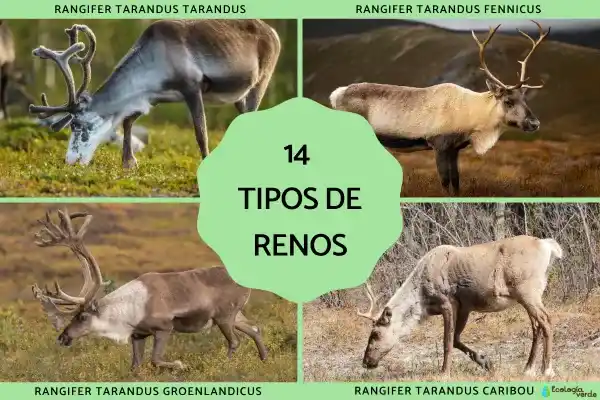
This species gradually diversified into several endemic populations adapted to different environments . Currently, 14 subspecies are generally recognized, typically divided into:
Eurasian subspecies
North American subspecies
One extinct subspecies
Below, we will provide more detailed introductions, tailored to different regions and subspecies, in a manner suitable for animal science websites.
II. Reindeer subspecies in Eurasia
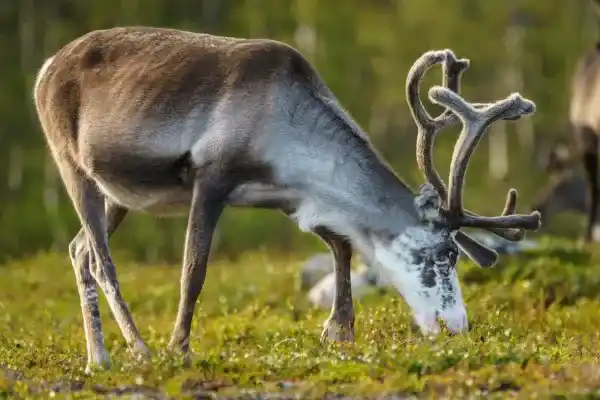
1. Rangifer tarandus tarandus — Norwegian mountain reindeer
Often referred to as the "Norwegian caribou" or "mountain caribou," it is one of the most typical images of wild caribou in Europe.
Distribution area:
They mainly live in the mountainous tundra regions of the Scandinavian Peninsula (Norway and Sweden).
Body type and characteristics:
Medium to large size, with powerful limbs, suitable for long-distance migration;
In Norwegian, they are often called "fjellrein" (mountain reindeer) .
lifestyle:
Wild populations still exist in the area, as well as semi-domesticated populations that are grazed for extended periods.
Many ethnic groups migrate seasonally depending on pasture conditions, moving between mountainous plateaus and lower-altitude areas.
Ecological and cultural significance:
It is a highly representative subspecies of caribou in northern Europe.
It is closely related to the traditional nomadic culture of the local Sami people and others.
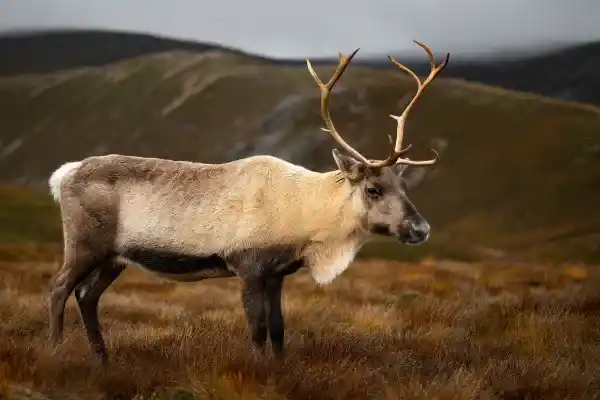
2. Rangifer tarandus fennicus — Eurasian forest caribou
This subspecies is commonly referred to as the "forest caribou" .
Distribution area:
They mainly live in the coniferous forests (taiga) of Finland and northwestern Russia .
Body type and adaptation:
They are generally larger and taller than tundra reindeer ;
They have longer limbs and wider hooves , which makes it easier for them to walk in deep snow and dig for food;
Deer antlers are mostly in a broad "V" shape.
Population status:
The population size is relatively small and the distribution is fragmented ;
Some ethnic groups have migrated across the Finland-Russia border, increasing the difficulty of monitoring and protecting them.
Forest reindeer prefer to hide in dense forests, making them harder to spot than tundra reindeer, which is why they are not as well-known.
3. Rangifer tarandus platyrhynchus — Svalbard caribou
The Svalbard caribou is one of the smallest subspecies of caribou.
Distribution area:
The high-latitude polar islands of Svalbard, Norway.
weight:
Males weigh approximately 65–90 kg ;
Females weigh approximately 53–70 kg .
Appearance and habits:
It has very thick, light-colored fur to protect it from the polar cold and strong winds ;
They migrate less and are more "settled" than other reindeer, with a smaller range of activity.
Protection status:
It was once on the verge of extinction due to overhunting;
With the implementation of conservation measures and hunting bans, the population has recovered significantly , and it is often regarded as a successful case of conservation in high latitudes.
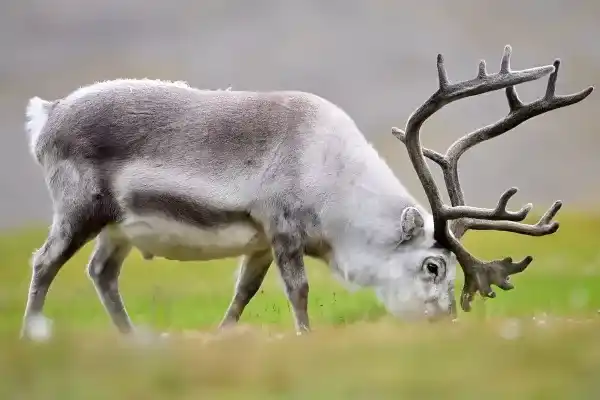
4. Rangifer tarandus sibiricus — Siberian tundra reindeer
This is a typical form of tundra reindeer in Eurasia, and it is very large in scale.
Distribution area:
From the European part of Russia to the northern tundra region of Siberia.
Population size:
It includes approximately 19 major wild herds , which historically numbered close to one million ;
The famous Taimyr reindeer herds belong to this subspecies and are one of the largest reindeer herds in the world.
Lifestyle and Food:
To undertake extremely long-distance seasonal migrations ;
In winter, they mainly feed on lichens, mosses, ground herbs, and shrubs .
Recent changes:
In recent decades, influenced by climate warming, industrial development, and the expansion of transportation routes ,
Many herds have seen a significant decline in numbers.
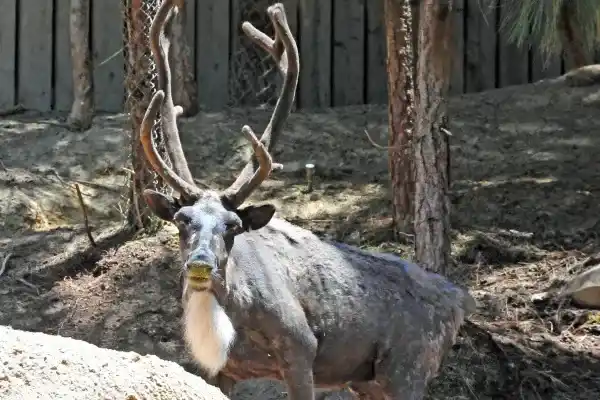
5. Rangifer tarandus buskensis — Altai-Sayan reindeer
Generally known as the "Altai-Sayan reindeer" , they live in inland mountains.
Distribution area:
They are mainly distributed in the Altai-Sayan Mountains , in forested mountains at an altitude of about 400–1,500 meters .
Migration methods:
They mainly migrate vertically : they go up the mountain in summer and down to lower altitudes in winter.
Food and Environment:
They rely heavily on lichens in coniferous forests during winter and are typical "woodland caribou".
Appearance and genetic characteristics:
The fur color is mostly sandy to reddish-brown ;
Mitochondrial genome studies show that its genetic lineage is independent and has not interbred extensively with domesticated caribou , indicating that it has evolved in a relatively isolated environment in mountainous regions for a long time.
6. Rangifer tarandus pearsoni – Caribou from Novaya Zemlya
This subspecies includes the island caribou population of Novaya Zemlya in Russia .
Distribution area:
Mainly on Novaya Zemlya , as well as the Russian Arctic islands such as the New Siberian Islands and Wrangel Island .
Population status:
There are approximately 5,000 of them , including both semi-domesticated groups and groups that have interbred with domesticated reindeer.
Characteristics of migration:
Historically, these reindeer migrated to the mainland via sea ice during the summer;
In recent years, with changes in sea ice conditions, such cross-ice migrations have become increasingly rare .
7. Rangifer tarandus phylarchus — Kamchatka/Okhotsk reindeer
A subspecies of reindeer that lives in the Russian Far East.
Distribution area:
Mainly in the Kamchatka Peninsula and the coastal areas of the Sea of Okhotsk .
Appearance features:
Its body color and antler shape are very similar to the North American "frozen prototype caribou (barren-ground caribou)" ;
Origin and Evolution:
They are an ancient ethnic group believed to have originated from the Beringia land bridge and are an evolutionary lineage unique to the region.
Current status of conservation:
Overhunting and development activities have led to a decline in their numbers;
Currently, some of the herds in Kamchatka are protected within the Kronotsky Nature Reserve , which serves as a crucial refuge for this subspecies.
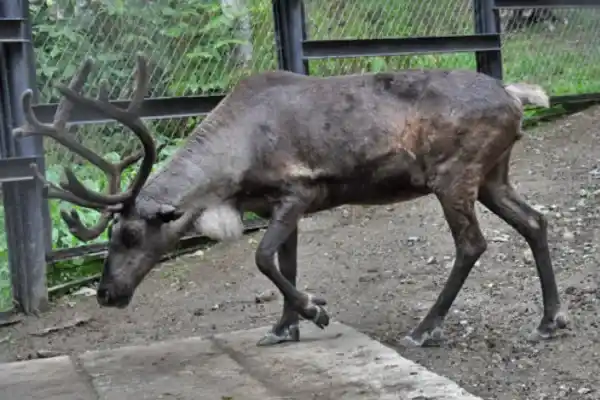
III. Caribou subspecies in North America
8. Rangifer tarandus groenlandicus — Greenland/tundra caribou
This subspecies is a typical plains-type, migratory caribou .
Distribution area:
They are mainly distributed in the tundra region of northern Canada and Greenland .
Migration patterns:
They typically form large migratory groups , moving between vast tundra and more sheltered areas.
Body type and appearance:
Females weigh approximately 85–135 kg ; males weigh approximately 100–140 kg .
In autumn, males grow a very noticeable white mane around their necks .
Food structure:
The main species are grasses, sedges, and lichens , with lichens being particularly important in winter.
These caribou roaming the tundra have immense cultural and ecological value to the local indigenous people and the Arctic ecosystem.
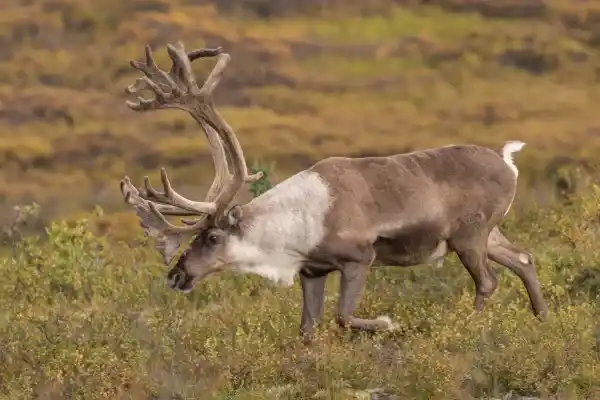
9. Rangifer tarandus caribou — Northern forest caribou / Woodland caribou
They are commonly referred to as "woodland caribou" .
Distribution area:
They mainly live in the coniferous forests and peatlands (muskeg) of Canada and parts of Alaska .
Body type:
Shoulder height approximately 1–1.2 meters ;
Their weight typically ranges from 110 to 210 kilograms , with males usually being heavier and stronger.
Adaptive characteristics:
Its wide, crescent-shaped hooves are well-suited for walking in snow and digging out lichen beneath the snow.
Deer antlers have a complex structure with many dense branches, especially in males.
Coat color:
In summer, it is dark brown ;
In winter, they turn grayish-white , with their necks often being cream or white , providing camouflage in snow and forests.
Many woodland caribou populations have been listed as threatened or endangered due to habitat fragmentation, road development, logging, and increased predation pressures.
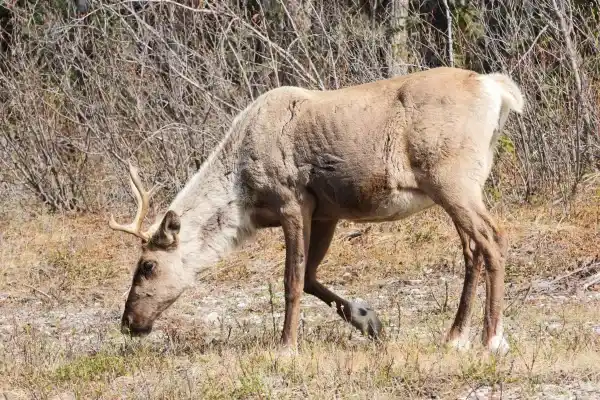
10. Rangifer tarandus caboti — River George/Labrador caribou
This subspecies mainly refers to the George River and Leaf River herds in northern Canada .
Ecosystem type:
In terms of habitat, it belongs to the "forest-type caribou" ;
However, their migration behavior is closer to that of the frozen caribou , migrating thousands of kilometers each year between forests and tundra.
Classification dispute:
Some scholars consider it a separate subspecies;
Some scholars also tend to classify it into other frozen prototype caribou groups.
Conservation needs:
These herds have historically experienced significant fluctuations in size .
Long-term, scientific population monitoring and management are crucial for their future survival.
11. Rangifer tarandus osborni —— Osborn caribou
Osborne caribou is a large mountain subspecies .
Distribution area:
It is mainly distributed in the mountainous areas of northern British Columbia and Yukon Territory , Canada.
Body type:
It is considered one of the largest types of caribou, with some individuals weighing up to 340 kilograms .
Appearance features:
The body color is mostly reddish-brown ;
There are obvious white spots or white areas on the neck;
The antlers are thick and have a semi-palmate structure.
Seasonal behavior:
In winter, they migrate down from the high mountains to lower valleys and river valleys to find food in lichens.
Due to its relatively limited distribution, this subspecies is quite sensitive to forestry development, mining activities, and road construction .
12. Rangifer tarandus pearyi —— Perry caribou
Pericaribou is a small subspecies of caribou found in the high Arctic .
Distribution area:
They live on the various islands of the Canadian Arctic Archipelago .
Body type:
The male is about 1.7 meters long and weighs about 110 kilograms ;
The female weighs approximately 60 kilograms .
Appearance:
In winter, it is almost entirely white , blending into the ice and snow;
Its fur is slightly darker in spring and summer;
With short limbs and a relatively short face, they are adapted to extremely cold and windy conditions.
lifestyle:
Their operational range is relatively limited, with most movements limited to localized areas .
In extremely barren high-latitude environments, they survive on short grasses, sedges, dwarf willows, and mosses .
Peribou is extremely sensitive to climate change, sea ice reduction, and human activities , and is considered an indicator species of high vulnerability in the high Arctic region.
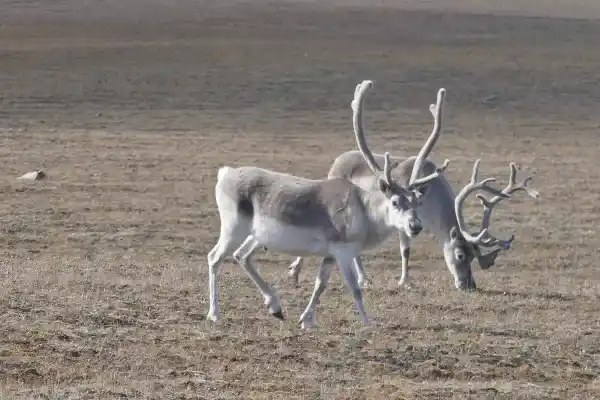
13. Rangifer tarandus terraenovae — Caribou, Newfoundland
This subspecies is completely isolated on Newfoundland Island .
Distribution area:
Newfoundland, off the east coast of Canada.
Natural enemies and ecology:
After wolves were eradicated by humans in the 20th century, lynxes became the primary predators.
Classification and ecological characteristics:
Early studies had grouped it with other caribou species;
However, considering geographical isolation and the characteristics of island ecology ,
Newfoundland caribou have developed their own unique behavioral patterns, migration methods, and ecological adaptations.
It is currently considered a separate subspecies .
IV. Extinct Reindeer Subspecies
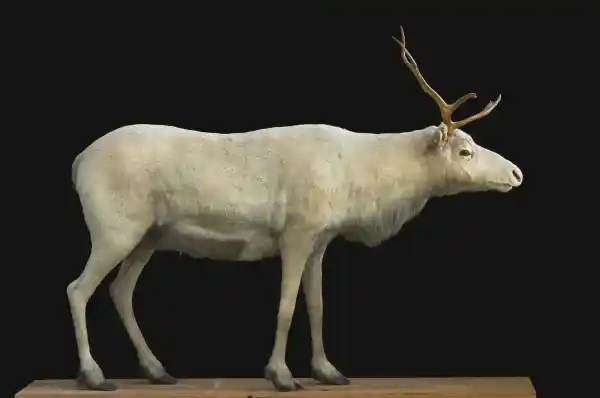
14. Rangifer tarandus dawsoni — Dawson caribou (extinct)
Caribou Dawson once lived in Haida Gwaii (formerly Graham Island), off the west coast of Canada.
Appearance features:
Its fur is grayish , adapted to the cool and humid island environment.
Cause of extinction:
Habitat loss;
Introducing disease;
Overhunting;
The last three individuals were shot in 1908 and preserved as specimens in a museum.
Genetic research:
Later genetic analysis showed that it was not extremely different from the mainland caribou in terms of genetics;
However, its island isolation and unique ecological niche made the disappearance of this subspecies a typical case of island species extinction.
V. Why is understanding the reindeer subspecies so important?
Caribou are keystone herbivores in northern ecosystems.
Large-scale grazing can affect vegetation structure and ecological succession;
It is an important food source for large predators such as wolves and bears;
For many northern Indigenous peoples, it is a comprehensive source of food, clothing, transportation, and cultural symbols .
Identifying and distinguishing these 14 subspecies helps to:
To more accurately monitor population changes and migration routes in different regions;
Develop targeted conservation strategies for each subspecies based on its habitat type and sources of threat ;
Protect those genetically unique, limited-range small, island, or mountain subspecies.
From the small, polar Svalbard caribou to the robust Osborne caribou, these different subspecies collectively demonstrate:
How the same species can successfully adapt to some of the harshest environments on Earth through subtle morphological and behavioral adjustments.
References
U.S. National Park Service. (2025). Caribou and North American Caribou. https://www.nps.gov/articles/000/reinderrvscaribou.htm#:~:text=Caribou%20and%20reindeer%20are%20the,case%20of%20reindeer%2C%20selective%20breeding Thomas, D. and Gray, D. (2002). Woodland Caribou (Rangifer tarandus caribou) COSEWIC Assessment and Status Report: Chapter 6. https://www.canada.ca/en/environment-climate-change/services/species-risk-public-registry/cosewic-assessments-status-reports/woodland-caribou/chapter-6.html
Harding LE. Available names for species and subspecies of the genus *Caribou* (mammals, artiodactyla, cervidae). Zookeys. Aug 26, 2022; 1119:117-151. doi: 10.3897/zookeys.1119.80233. Errata: Zookeys. Sep 28, 2022; 1122:173-174. doi: 10.3897/zookeys.1122.94672. PMID: 36762356; PMCID: PMC9848878.
Yalden, DW 1999. A History of Mammals in Britain. T & AD Poyser (London).
Canadian Geographic Magazine. https://canadiangeographic.ca/
Endangered species. https://www.nwtspeciesatrisk.ca/en