Non-venomous snakes are those that do not possess venom that could be fatal to humans or other animals. While they do not threaten human life, they still require careful handling as they can bite and cause pain and other discomfort. Currently, there are over 3,000 species of snakes worldwide, with over 200 known species in China. Of these, over 50 are venomous, and the rest are non-venomous. This article lists ten of the most common non-venomous snakes in China. These snakes are widely distributed and numerous. Although many are non-venomous or mildly venomous, if you are unfamiliar with snakes, it is best to avoid them if you encounter them and not take any chances.
The following are ten common non-venomous snakes in China:
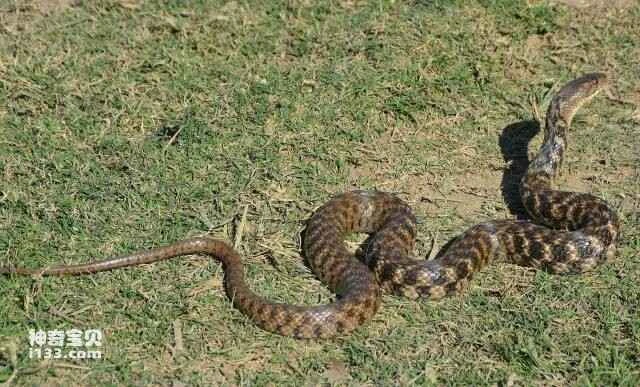
1. Xenochrophis piscator
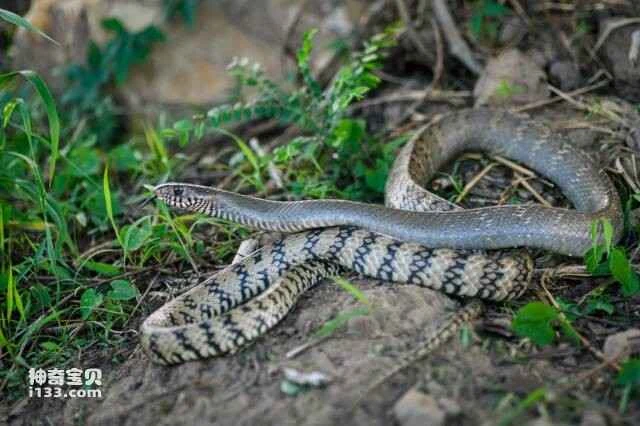
The grass snake (Trachidermus fasciatus) is one of the common non-venomous snakes in China. It inhabits plains, hills, and mountainous cultivated areas, often appearing near streams and creeks in search of prey. It prefers to hunt frogs, fish, insects, and rodents. It is considered a beneficial snake and is a common, non-venomous small to medium-sized venomous snake. It is distributed in Yunnan, southern Guizhou, Guangdong, Guangxi, Hunan, Fujian, Taiwan, Jiangxi, Zhejiang, and Shaanxi provinces in my country. It can reach a length of 1.5 meters. Below and behind each eye, there is a thin black stripe extending to the upper lip. Its body color is mostly olive-brown, covered with many irregular black patterns.
2. Rat Snake (Ptyas mucosus)
The rat snake is a non-venomous snake found in southern China and Southeast Asia. Their bodies are typically brightly colored, such as red, yellow, and orange, sometimes with black or white stripes or spots. Rat snakes primarily inhabit mountainous, hilly, and grassland environments, feeding on rodents, small birds, and other reptiles. They are excellent climbers, often active and resting on tree branches, but are also adapted to crawling on the ground. The rat snake's name comes from its hunting behavior; they often approach rodents stealthily and attack, much like a cat catching a mouse. Although rat snakes are not venomous, their fangs can still cause pain and pierce human skin, so caution is necessary when handling them. Due to their beautiful appearance and relative ease of keeping as pets, rat snakes are commonly found in the pet market. If you wish to keep a rat snake as a pet, you need to understand the relevant care knowledge and techniques, and ensure a suitable habitat and food are provided.
3. Chinese Small-headed Snake (Oligodon chinensis)
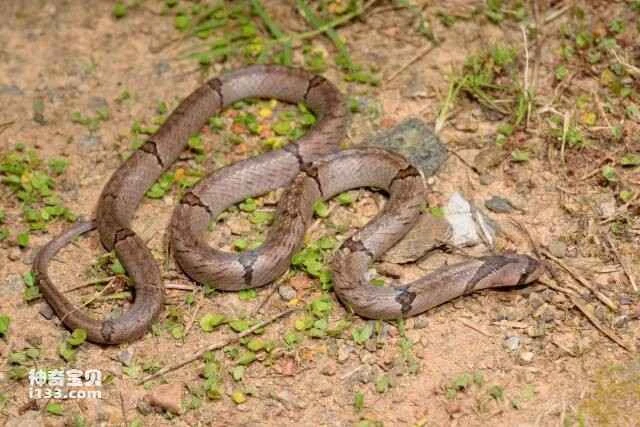
The Chinese small-headed snake, commonly known as the scale snake, belongs to the genus *Symplocos* of the Colubridae family. It is non-venomous, about half a meter in length, and is distributed in both mountainous and plain areas, found in Jiangsu, Anhui, Zhejiang, Jiangxi, Fujian, Henan, Hunan, Guangdong, Hainan, Guangxi, Guizhou, and Yunnan provinces. They have slender bodies, typically between 1 and 1.5 meters in length, but can reach up to 2 meters in size.
4. Black-browed Rat Snake (Elaphe carinata)
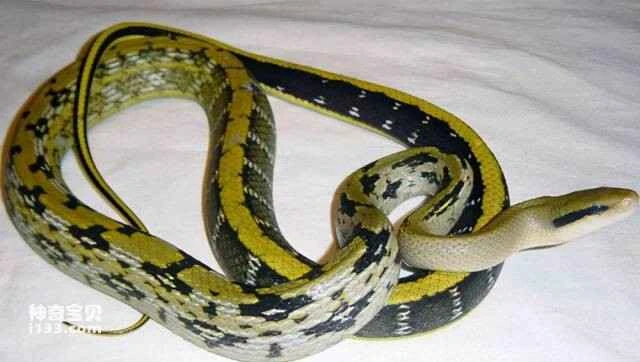
The Black-browed Rat Snake is a large, non-venomous snake found in southern China and Southeast Asia. Their bodies are typically light brown or gray, with black spots and thin black longitudinal stripes on their backs, and distinctive black eyebrow stripes around their eyes. Black-browed Rat Snakes inhabit mountainous, forested, and grassland environments, primarily feeding on rodents, small birds, and other reptiles. They are excellent climbers, often seen moving and resting in tree branches. Because they are non-venomous, they pose little danger to humans. Due to their beautiful appearance, docile temperament, and ease of keeping as pets, they are relatively common in the pet market. If you wish to keep a Black-browed Rat Snake as a pet, you need to understand the relevant care knowledge and techniques, and ensure a suitable habitat and food. It is important to note that the Black-browed Rat Snake is a wild animal and should not be captured or brought home as a pet without authorization. Violations of wildlife protection laws will be subject to legal penalties.
5. Yellow-cheeked water snake (Enhydris subtaeniata)
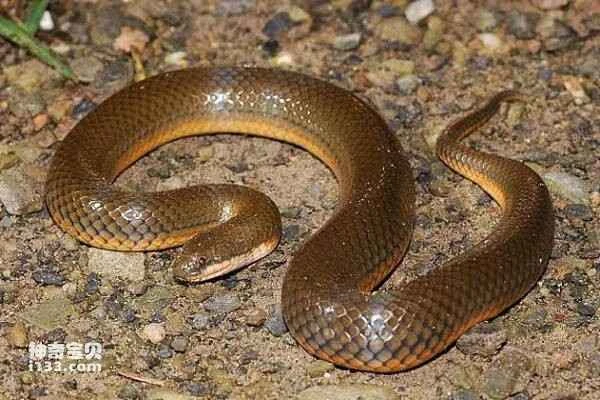
The yellow-cheeked water snake is a non-venomous aquatic snake found in southern China. Their bodies are typically dark brown or gray with distinctive yellow or orange patches on their cheeks. Yellow-cheeked water snakes primarily inhabit aquatic environments such as rivers, lakes, and swamps, feeding on fish, frogs, and small mammals. They are excellent swimmers and divers, frequently active and foraging in the water. It is important to note that although the yellow-cheeked water snake is not venomous, caution should still be exercised to avoid accidental injury. When handling or observing yellow-cheeked water snakes, contact or stimulation should be avoided as much as possible to ensure their safety and your own. Due to their beautiful appearance and lively temperament, the yellow-cheeked water snake has become a popular pet in some countries; however, before considering keeping them as pets, it is necessary to understand the relevant care knowledge and techniques to ensure their health and well-being, and to comply with local wildlife protection regulations.
6. Gray rat snake (Elaphe taeniura)
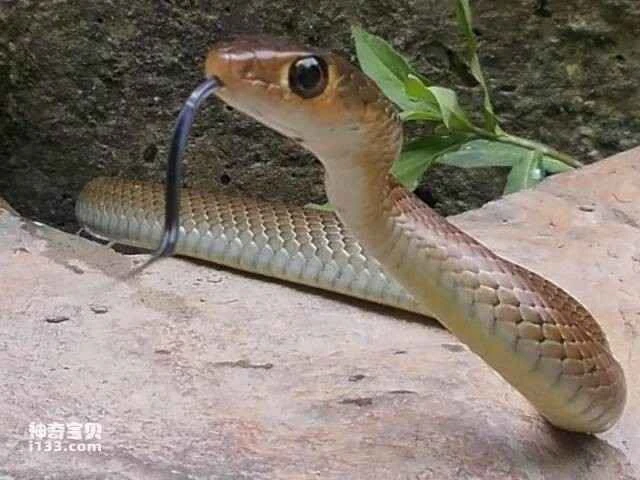
The rat snake is a large, non-venomous snake found in southern China and Southeast Asia. Their bodies are typically light brown or light gray with dark transverse stripes along their backs, sometimes extending to their bellies. Rat snakes primarily inhabit forests, hills, grasslands, and farmlands, feeding on rodents, small birds, and other reptiles. They are excellent climbers, frequently seen moving and resting in tree branches. Because they are non-venomous, rat snakes pose little danger to humans. They are generally docile and easily tamed as pets, and are widely kept internationally. It is important to note that if you wish to keep a rat snake as a pet, you need to understand the relevant care requirements and techniques, ensuring a suitable habitat and food. Furthermore, you should comply with local wildlife protection regulations and refrain from illegal capture or trade.
7. Red-spotted snake
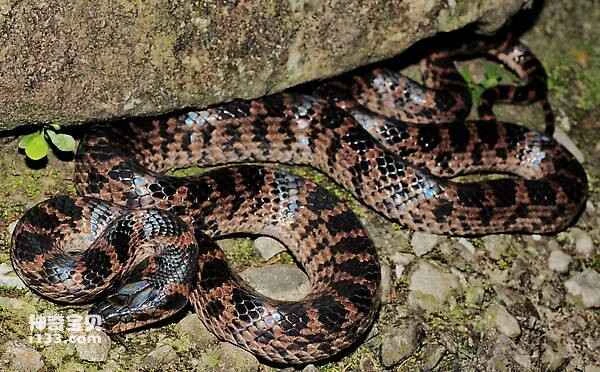
The red-banded snake, scientifically known as *Syngonium rubrum*, belongs to the Colubridae family of the order Serpentes in the class Reptilia. It is widely distributed in China, is non-venomous but relatively aggressive, with a black back and a V-shaped red stripe running from the top of its head to its nape. It mostly inhabits fields, riverbanks, hills, and areas near water, and is also found around residential areas. The venom of the red-banded snake is clinically used to treat chronic tuberculous fistulas. Pharmacologically, it has anti-inflammatory, analgesic, hypnotic, sedative, and anticonvulsant effects, and has high medical research value. It is lethargic and slow-moving, but becomes agile and targeted when startled. Its diet consists mainly of toads, small freshwater fish, loaches, chicks, young birds, and rodents. This snake has a cannibalistic tendency, and will eat its own kind when food is scarce; this should be considered when keeping it in captivity.
8. King Cobra (Elaphe dione)
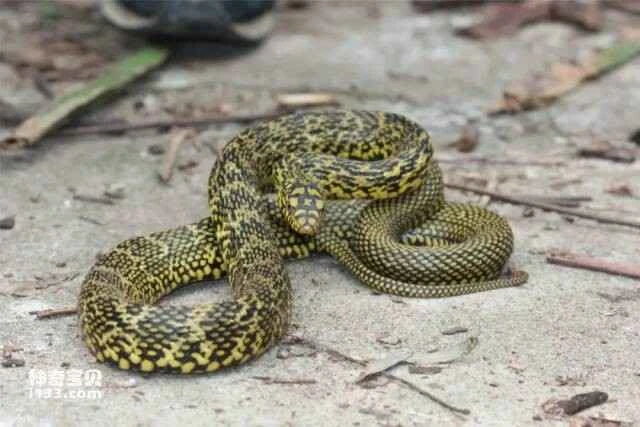
The Chinese king snake, also known as the giant king snake, is a non-venomous snake found in China. Their bodies typically display brown, gray, or black stripes or spots, and they closely resemble the king snake of North America. Common in rural areas of my country, the Chinese king snake gets its name from the "king"-shaped markings on its head. This large, non-venomous snake uses its strong body and powerful constricting ability to hunt. It is a large snake commonly found in temperate zones. Chinese king snakes primarily inhabit mountainous, hilly, and woodland environments, feeding on rodents. They have a docile temperament and are suitable for keeping as pets or for observation. It is important to note that before considering keeping a Chinese king snake as a pet, one should understand the relevant care knowledge and techniques, and ensure a suitable habitat and food are provided. Furthermore, local wildlife protection laws should be followed, and illegal capture or trade should be avoided.
9. Coluber jugularis (belly-turning snake)
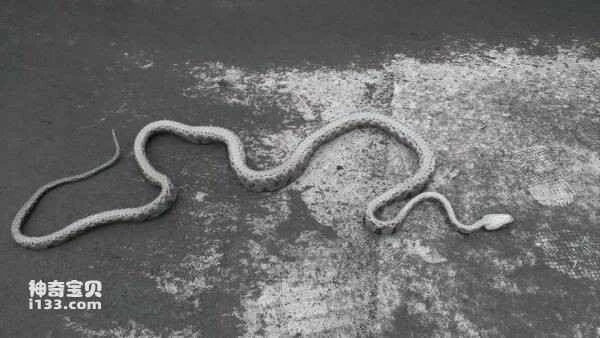
The belly-up snake, also known as the weather snake or bandit snake, is a venomous snake belonging to the pearl snake family in China, distributed in several provinces including Jiangxi, Guangdong, and Fujian. It has a unique appearance, with a low-slung body and a head that flips up forcefully, exposing its belly, hence its name. Belly-up snakes mainly feed on mice, lizards, and frogs, posing little threat to humans. However, do not attempt to hunt or kill them! Although belly-up snakes are not venomous, they possess the ability to quickly escape and attack, and can engage in prolonged pursuits. When startled or provoked, they will adopt a highly intimidating posture to protect themselves.
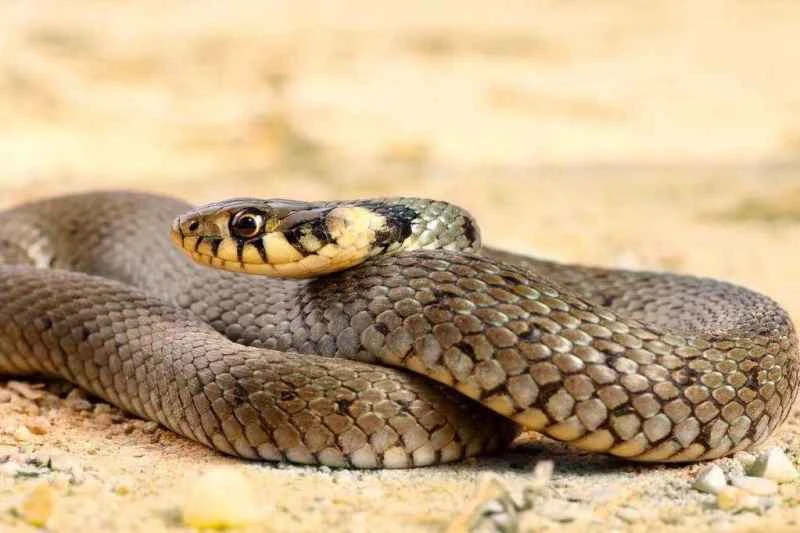
10. Money snake (scientific name: Boiga multomaculata)
The money snake (Pseudococcus pulcherrima) is a medium-sized, non-venomous snake found in Asia, also known as the multi-banded krait or rainbow krait. It typically ranges in length from 1 to 2 meters, with some reaching up to 3 meters. Money snakes are mainly distributed in southern China, Southeast Asia, and the Malay Archipelago, inhabiting forests, bushes, grasslands, farmlands, and urban parks. They have a stout body, brown or yellowish-brown in color, with many irregular black spots or stripes on their backs. Unlike other snakes, they have relatively large eyes, while their heads are much smaller than their bodies. Although money snakes are non-venomous, they are highly aggressive and defensive; if startled or provoked, they will adopt an aggressive posture and bite. Therefore, caution should be exercised when encountering money snakes, and contact or stimulation should be avoided as much as possible. Furthermore, money snakes primarily prey on birds and small mammals, playing a role in the ecosystem. Therefore, we should respect the natural habitat of money snakes and not bring them into our homes as pets.
There are many types of non-venomous snakes in the world. These snakes typically feed on small mammals, birds, reptiles, insects, and other invertebrates. Non-venomous snakes often resemble venomous snakes, so distinguishing them can be difficult. If you encounter a snake and are unsure whether it is venomous, keep your distance and avoid contact with it. It is best to have a professional handle it.