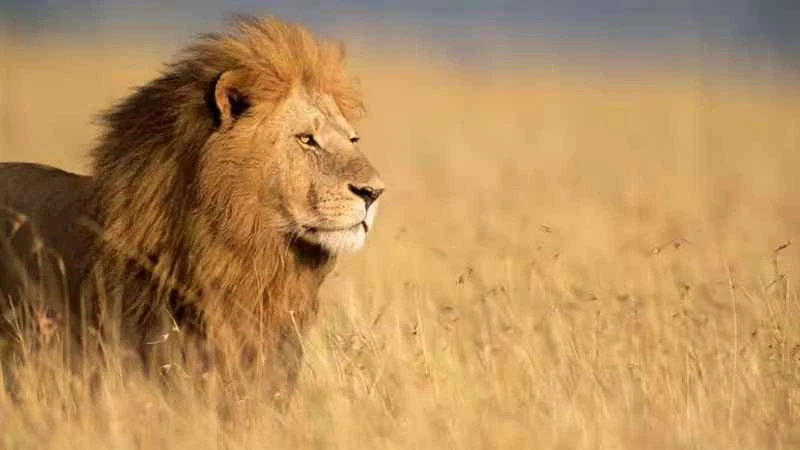
The lion ( Panthera leo ) is one of the most symbolic animals in the world, often seen as an embodiment of strength, courage, and royalty. Despite being called the "King of Beasts," the primary habitat of wild lions is not the jungle, but rather the vast grasslands of Africa and the deciduous forests of India. In these ecosystems, lions play a crucial role as apex predators, maintaining the balance of the food chain and the environment.
However, with the continued expansion of human activities, lion populations are facing severe challenges such as habitat loss, human-wildlife conflict, and poaching. A deeper understanding of lion behavior, morphology, and ecology can help raise awareness of their conservation.
The three main types of lions (population and distribution)
All modern lions belong to the same species, but can be divided into three main groups based on geographical isolation and physical differences.
1. African lion ( Panthera leo leo )
African lions were once widely distributed in Europe, the Middle East and Asia, but now they mainly survive in sub-Saharan Africa and are concentrated in protected areas.
Features include:
Sturdy build, wide distribution
Adapted to grasslands, shrublands and savannas
Listed as Vulnerable by the IUCN
2. Asiatic Lion ( Panthera leo persica )
It now exists only in the Gir Forest in Gujarat, India, and is one of the world's most endangered big cats, with a population of only about 600.
Compared to African lions:
Smaller
Sparse mane
There are obvious skin folds on the abdomen
India's proactive conservation policies have enabled its wildlife populations to recover slowly, making it one of the successful examples of wildlife conservation.
3. Barbary lion (extinct in the wild)
Once living in North Africa, it was known for its dark, thick mane. It was declared extinct in the 20th century, but some historical interviews and genetic studies suggest that some of its lineage may have continued in captive lions.
Physical characteristics of a lion
Lions are the second largest cats, after tigers. Their strength, teeth, and claws make them apex predators on the savanna.
Body size and weight
Male lions : 330–550 pounds (150–250 kg), with a body length up to 2.5 meters.
Lioness : 270–400 pounds (122–181 kg), approximately 1.7 meters in length.
Lions can run at speeds up to 80 km/h. Although not as fast as cheetahs, they rely on strength and strategy to successfully hunt large prey.
The lion's mane
The most distinctive feature of a male lion is its mane, which serves several purposes:
Protect your neck during a fight
Reflects health status and sexual maturity
Dark, thick manes usually indicate a stronger individual.
Lionesses do not have manes, which makes them more agile and helps them dissipate heat better when hunting.
camouflage fur color
Lions have coats ranging from tan to dark brown, providing excellent camouflage in grasslands or jungles.
Lion social structure
Lions are the only truly social large cats. They live in prides, which typically consist of:
Most of the lionesses are only related by blood.
Their offspring
1–4 adult male lions
The duties of a lioness
Responsible for most of the group's hunting work
Raising cubs together
Protect the territory when the male lion is not present.
The duties of a lion
Resisting the invasion of foreign male lions
Protect the pride and cubs
Mating with lionesses and producing offspring
The expulsion of the young lion
When male lion cubs are about 2–3 years old, they are forcibly driven out of the pride and begin the life of “wandering lions” until they are strong enough to challenge other prides.
Lions' food and hunting methods
Lions are typical apex predators, feeding mainly on large herbivores.
Main prey includes
zebra
wildebeest
African buffalo
antelope
Giraffe (occasionally)
Lions can also:
Predating smaller animals
Stealing prey from hyenas and wild dogs
Attacking livestock when prey is scarce can trigger conflicts between humans and lions.
Hunting characteristics
Lionesses work together to hunt prey
Use terrain cover to ambush
Male lions participate in hunting large, dangerous prey.
The order of serving food is usually as follows:
Lion
Lioness
Lion cub
Lion habitat
Lions are adapted to a variety of environments and are mostly found in Africa and India.
African lion habitat
grassland
savanna
shrubland
semi-arid open areas
Asiatic lion habitat
dry deciduous forests of Gir Forest
Denseer vegetation, milder climate
Lions need a wide territory and a constant source of prey to survive, no matter where they are.
Lion life cycle
Reproduction and birth
A lion's gestation period is approximately 110 days , and each litter contains:
1–4 cubs
High mortality rate of cubs
Only about 50% of the offspring survive to adulthood, for reasons including:
Predation by hyenas or leopards
disease
Hunger in the environment
The killing of cubs by invasive male lions
growth stage
Lion cubs start eating meat at 3 months old
Learn hunting skills by imitation
Male lion cubs were driven out of the pride at 2-3 years old.
life
Wild male lions: 10–12 years old
Wild lioness: 12–16 years
Lions can live in captivity for more than 20 years.
Preserve the status quo
The IUCN lists lions as Vulnerable , and their numbers have declined by about 40% over the past 20 years.
Main threats
Habitat loss and fragmentation
Less prey
Retaliatory culling (due to attacks on livestock)
Poaching and illegal trade
Conflicts with human land use
Protective measures
Establishment and expansion of protected areas
Strengthen anti-poaching law enforcement
Conservation projects that promote community participation
Improving the local economy through ecotourism
Promote the importance of coexistence between humans and lions
The future of lions depends on global conservation efforts and continued investment in the natural ecosystem.