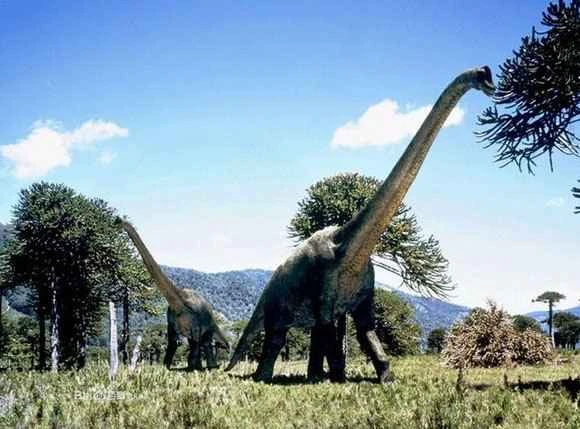
Dinosaurs were the largest and most famous group of reptiles to ever exist on Earth. They are considered prehistoric warm-blooded reptiles, related to modern reptiles and birds, but vastly different in appearance and habits. Dinosaurs lived on Earth for approximately 160 million years , primarily during the Mesozoic Era (divided into the Triassic, Jurassic, and Cretaceous periods). However, they have long since disappeared from the Earth. What happened that led to the extinction of these enormous animals?
To this day, the scientific community continues to research and discuss this mystery. The three most accepted possible reasons are:
Asteroid impact on Earth
Volcanic activity
Climate change
Below, we will explain these main theories in detail and introduce the relevant scientific evidence and research progress.
Overview of the Time and Causes of Dinosaur Extinction
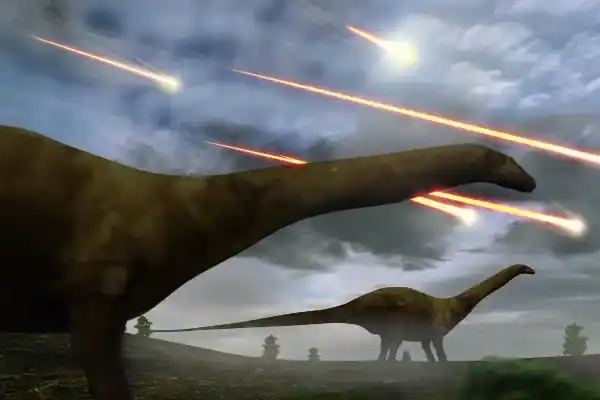
Scientific research generally agrees that dinosaurs went extinct at the end of the Cretaceous period, approximately 65 million years ago . This event is known as the Cretaceous-Paleogene Extinction Event (K-Pg Extinction) . It not only wiped out the dinosaurs but also caused the extinction of about 75% of all life on Earth , making it one of the largest biological catastrophes in the history of life on Earth.
The three main explanations currently accepted are:
Asteroid or meteorite impact
Intense and prolonged volcanic eruptions
Global climate change
These three factors may not have been independent of each other, but rather interacted and ultimately led to the extinction of dinosaurs.
1. Asteroid impact theory
In the late 1970s and early 1980s, American scientists proposed that an asteroid about 10 kilometers in diameter struck the Earth in what is now the Yucatan Peninsula in Mexico.
Key evidence
A geological sedimentary layer containing a large amount of iridium has been discovered globally. Iridium is extremely rare on the Earth's surface but is relatively common in meteorites and deep magma, strongly suggesting an extraterrestrial impact event.
The Chicxulub Crater , with a diameter of 180 kilometers , was discovered in Mexico, and its age coincides with the extinction of the dinosaurs.
Chain reaction of disaster
The impact itself was not the only killer, but it triggered a series of chain reactions:
Impact shockwave : Dinosaurs died instantly in some areas.
The massive explosion and tsunami had a wide-ranging impact, destroying numerous ecosystems.
High-temperature combustion : The energy released by the impact caused the temperature to instantly exceed several times that of the sun's surface, triggering massive fires worldwide.
Release of toxic substances : Sulfates, iridium, and other elements from deep within the Earth's crust are ejected into the atmosphere, causing severe pollution.
The "Dark Earth" effect : Large amounts of dust and sulfate particles block sunlight for months or even years, causing photosynthesis to stop and the food chain to collapse.
Temperatures plummet : Global temperatures will drop by about 10°C, entering an extreme environment similar to a "nuclear winter".
This series of events made it difficult for dinosaurs and many other plants and animals to survive, ultimately leading to mass extinction.

2. Volcanic Activity Theory
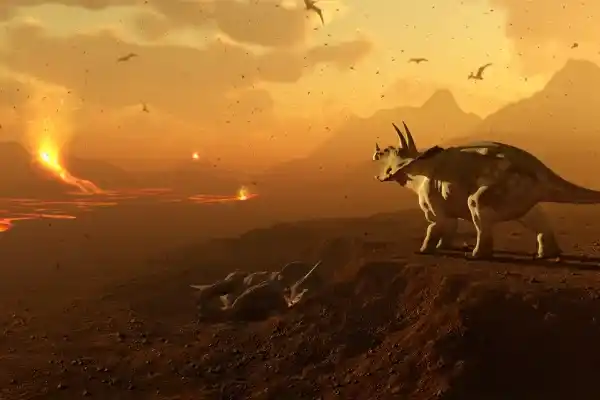
Another theory widely supported by the scientific community is the supervolcanic eruption of the Deccan Traps in India .
Key evidence
Around the same time that the dinosaurs went extinct, a supervolcano erupted in the Indian subcontinent, lasting for millions of years.
The volcanic eruption covered an area of over 2.6 million square kilometers , releasing a massive volume of lava.
The eruption released carbon dioxide, sulfur dioxide, and volcanic ash , altering the atmospheric composition and causing long-term climate deterioration.
Potential impact
Enhanced greenhouse effect : A large increase in carbon dioxide leads to a sustained rise in temperature.
Acid rain and toxic gases : Volcanic ash and sulfates make the environment highly toxic, and many plants and animals cannot adapt to them.
Blocking sunlight : Volcanic ash floats in the air, hindering photosynthesis and disrupting the food chain.
Scientists believe that volcanic eruptions may have interacted with asteroid impacts, together accelerating the extinction of dinosaurs.
3. Climate Change Theories
During the Late Cretaceous period, Earth experienced dramatic climate fluctuations :
Global temperatures have plummeted, sea levels have dropped, and many shallow-sea ecosystems have disappeared.
Frequent crustal movements trigger large-scale earthquakes and tsunamis.
Sudden environmental changes led to a dramatic shrinkage of the habitats on which dinosaurs depended for survival.
As a large group of organisms, dinosaurs needed a large amount of food and a stable ecological environment. However, this rapid change left them unable to adapt, ultimately leading to their extinction.
A simple explanation for children
To explain to children why dinosaurs became extinct, you can use the following concise explanation:
A huge meteorite struck the Earth, causing an explosion and fire. The sky was covered in dust, preventing sunlight from reaching the Earth, and many dinosaurs starved or froze to death.
Many volcanic eruptions released toxic gases and volcanic ash, making the air very dirty, and dinosaurs could not breathe or find food.
The climate changed too rapidly , with temperatures suddenly dropping or rising, and the dinosaurs were unable to adapt to the new environment.
This can help children understand complex scientific principles within a simple framework.
Who survived? — The Rise of the Mammals
Although most dinosaurs went extinct, some small animals survived, especially early mammals . For example:
Small mammals (rice-sized) of the genus Mesodma survived.
These surviving mammals gradually evolved, multiplied, and rapidly expanded after the dinosaurs disappeared, eventually becoming the dominant animals on Earth.
It's fair to say that without that catastrophe, humanity might never have existed.
Summarize
The cause of the dinosaurs' extinction remains a mystery. The most prevalent view is that:
The asteroid impact was the immediate trigger;
Volcanic eruptions and climate change are long-term factors that contribute to this trend.
This extinction event fundamentally altered the biological landscape of Earth, creating opportunities for the rise of mammals and the emergence of humans.