Turkeys, also known as turkeys, common turkeys, seven-faced turkeys, and seven-faced birds, are unique birds that are not only a delicious dish but also hold an important place in ecology, culture, and economy. This article will take you through a comprehensive understanding of turkeys from multiple perspectives, including their appearance, ecological habits, breeding management, festival traditions, and culinary specialties. Let's explore this charming bird that "cooes" together!
Turkey's appearance, size, weight and growth cycle
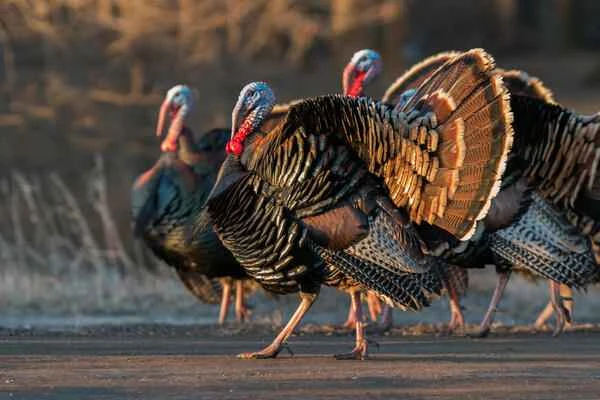
Turkeys have a distinctive appearance, especially male turkeys, which have a striking red wattle on their chest that can change color depending on their mood, turning red, blue, or white. They are relatively large, with richly colored feathers that have a metallic sheen. Wild turkeys are predominantly brownish-black, while domestic turkeys are mostly white.
Size: Adult turkeys are about 85-125 cm long and can have a wingspan of up to 1.5 meters.
Weight: Domestic turkeys are heavier than wild turkeys, with males reaching 10-15 kg and females slightly lighter at about 5-8 kg.
Growth cycle: Turkeys typically take about 16-22 weeks from hatching to slaughter, depending on the feeding conditions.
Turkey's diet and reproductive habits
Turkeys are omnivorous animals with a wide range of diets.
In the wild, they eat natural foods such as seeds, nuts, insects, and berries.
On farms, turkeys are mainly fed formulated feed, supplemented with necessary minerals and proteins.
Regarding reproduction:
A female turkey can lay 10-12 eggs at a time, with an incubation period of about 28 days.
Turkeys typically breed in the spring, and male turkeys will spread their feathers and make a deep cooing sound to attract females. This "showing off" behavior is one of their hallmarks.
Ecological Habits and Survival Challenges of Turkeys
Wild turkeys are mainly distributed in North America. They prefer to inhabit areas where forest edges meet farmland, which provides both shelter and easy access to food.
Activity time: Turkeys are most active at dawn and dusk.
Migratory behavior: Turkeys do not migrate long distances like migratory birds, but they search for food and habitat within a relatively small area as the seasons change.
Survival challenges include:
Natural predator threats: Foxes, eagles, raccoons, etc., will prey on fire eggs or baby birds.
Habitat destruction: Deforestation and urbanization are gradually shrinking the habitat of wild turkeys.
Disease risks: Domestic turkeys are susceptible to diseases such as blackhead disease and avian influenza.
Turkey breed improvement and breeding technology
Turkey farming has seen many technological advancements in recent years. Through breed improvement, turkeys grow faster and have better meat quality.
Modern breeding techniques, such as artificial insemination, can improve reproductive success rates while reducing resource waste.
Sustainable development measures: Some turkey farms have begun to adopt circular agriculture models, such as turning turkey manure into organic fertilizer to reduce environmental pollution.
Different breeds of turkeys have their own characteristics:
White-feathered turkeys: have tender meat and are in high demand in the market.
Bronze Turkey: It looks very similar to a wild turkey, but has a richer flavor.
Types of turkeys
Turkeys are mainly divided into two categories worldwide: wild turkeys and domestic turkeys . Wild turkeys are the ancestors of all turkeys, while domestic turkeys are descendants of those that have undergone long-term domestication and breed improvement. The following are the main types and characteristics of turkeys.
1. Wild Turkey
Scientific name: Meleagris gallopavo
Distribution: North America, mainly concentrated in the United States and Mexico.
subspecies of wild turkey
Wild turkeys are further divided into six main subspecies, which differ in plumage color, body size, and distribution:
(1) Eastern Wild Turkey
Distribution : Forest regions of the eastern United States, where it is the most widespread subspecies.
Characteristics : Bronze-colored feathers, relatively large body size.
Number : The largest wild turkey subspecies, accounting for one-third of the total wild turkey population in the United States.
(2) Osceola Wild Turkey
Distribution : Southern Florida, also known as "Florida Turkey".
Characteristics : Smaller in size, with darker feathers and a purplish sheen.
Adaptability : Accustomed to wetland and marsh environments.
(3) Merriam's Wild Turkey
Distribution : Mountainous regions of the western United States, such as Colorado and South Dakota.
Characteristics : The tail feathers are white, and the body feathers have a coppery sheen.
Ecological habits : Adapted to high-altitude areas.
(4) Rio Grande Wild Turkey
Distribution : Texas and surrounding areas in the United States.
Characteristics : Feathers are golden brown, and legs are relatively long.
Habitat : Adapted to arid grassland and savanna environments.
(5) Gould's Wild Turkey
Distribution : Northern Mexico and New Mexico, USA.
Features : Brighter feathers, tail feathers are grayish-white.
Rarity : It is rare and is a protected subspecies.
(6) South Mexican Wild Turkey
Distribution : Southern Mexico; the most primitive subspecies of turkey.
Characteristics : The feathers are smooth with a green and metallic sheen.
Status : Considered the ancestor of all domestic turkeys.
2. Domestic Turkey
Domestic turkeys are the result of domestication and breeding by humans, based on wild turkeys. Compared to wild turkeys, domestic turkeys are larger, have more tender meat, and are more docile, making them suitable for intensive farming.
Main breeds of domestic turkeys
Based on growth rate, size, and economic use, domestic turkeys can be further divided into the following varieties:
(1) Broad Breasted White Turkey
Characteristics : It has snow-white feathers and is the most widely farmed breed in the world.
Size : They are heavy, with male turkeys weighing 15-20 kg and female turkeys weighing about 8-10 kg.
Uses : The meat is tender and suitable for commercial production.
(2) Broad Breasted Bronze Turkey
Characteristics : The feathers are dark bronze in color and have a metallic sheen.
Size : Similar in size to the Great White Turkey, but grows at a slower rate.
Uses : Due to its beautiful appearance, it is often used in traditional festivals or as an ornamental turkey.
(3) Black Spanish Turkey
Characteristics : It has glossy black feathers and is a breed with a long history.
Size : Slightly smaller than modern domestic turkeys.
Uses : The meat is firm and is often used in the premium turkey market.
(4) Midget White Turkey
Characteristics : Small in size, with pure white feathers.
Weight : Male turkeys weigh about 5-6 kg, and female turkeys weigh about 3-4 kg.
Applications : Suitable for small-scale family farming and high-end market demand.
(5) Narragansett Turkey
Features : The feathers have a unique appearance with black, gray and brown markings.
Size : Medium weight, moderate growth rate.
Uses : Suitable for free-range breeding, combining aesthetic appeal and economic value.
(6) Royal Palm Turkey
Features : Primarily white feathers with black stripes, making it highly ornamental.
Purpose : Mainly cultivated as an ornamental species.
3. Current Status of Wild Turkey Conservation
After protection efforts, the populations of several wild turkey subspecies have recovered well, especially the eastern turkey and the Rio Grande turkey.
Gould turkeys and southern Mexican turkeys remain scarce due to habitat loss and are listed as protected species.
4. Commercial uses of domesticated turkeys
Domestic turkey breeds are diverse, which can meet different market demands:
White-feathered varieties are mainly used for meat production and supplying the holiday market.
Colorful plumage varieties are used for traditional ceremonies or ornamental purposes due to their beauty.
Both wild and domesticated turkeys possess a rich variety and unique characteristics. In the poultry industry, the selection of different breeds should be adjusted according to market demand and breeding conditions. Furthermore, the conservation of wild turkeys has brought greater attention to the importance of these birds.
Turkey as a festive symbol and tradition
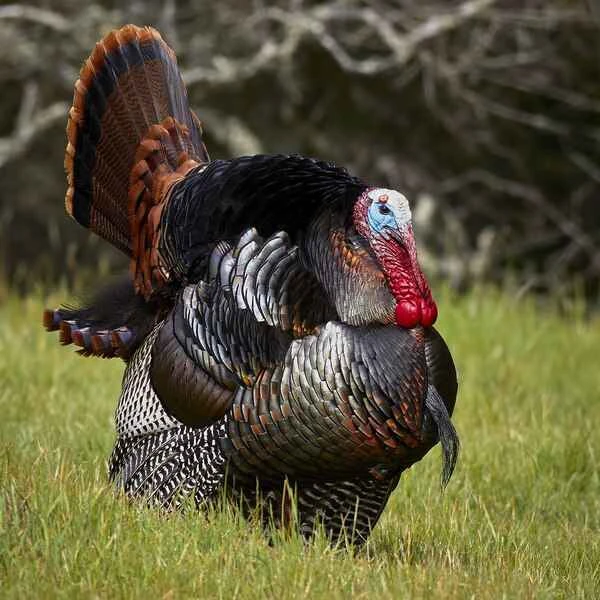
When turkeys are mentioned, many people immediately think of Thanksgiving. This bird has long been a symbol of North American holiday culture.
Thanksgiving tradition: Turkey has been the main dish for Thanksgiving dinner for centuries. Every November, Americans cook roast turkey, served with stuffing, cranberry sauce, and pumpkin pie.
Presidential Pardon for Turkey: Since 1947, every Thanksgiving, the U.S. president has "pardoned" a turkey, saving it from slaughter. This tradition adds a touch of humor and warmth to the holiday.
Turkeys also have symbolic meanings in other cultures. For example, in some indigenous cultures, turkeys symbolize generosity and abundance.
Eight distinctive features of turkey cuisine
Turkeys aren't just a staple of Thanksgiving; their culinary potential extends far beyond roast turkey! Here are eight classic ways to enjoy turkey:
Roast turkey: A classic choice, with crispy skin and tender meat.
Turkey sandwich: A quick and easy meal made with leftover meat from a roasted turkey.
Turkey soup: Nourishing and warming, suitable for winter.
Turkey meatballs: a healthier alternative to beef meatballs.
Turkey burger: low-fat and delicious.
Smoked turkey leg: a must-have for picnics.
Turkey salad: Suitable for people who eat a healthy diet.
Turkey Fried Rice: A creative fusion of Chinese and Western styles.
Scientific research progress and prospects of turkeys
Scientists' research on turkeys extends beyond breeding techniques to include multiple areas such as ecological protection and food safety.
Genetic research: Research on the turkey genome can help improve disease resistance.
Vaccine development: Vaccine development for common diseases such as blackheads is accelerating.
Ecological protection: By monitoring the migration behavior of turkeys through data, we can help protect their habitat.
In the future, with technological advancements, turkey farming may become more efficient and environmentally friendly, while also better protecting wild turkey populations.
The history and cultural heritage of turkeys
Long before Europeans arrived in the Americas, indigenous peoples had already begun domesticating and hunting turkeys. Turkey meat and feathers hold an important place in indigenous cultures.
In Mayan civilization, turkeys were even used as sacred offerings in sacrifices.
Turkeys were introduced to Europe in the 16th century and became a delicacy at banquets.
Today, turkeys are not only an important part of festival culture, but also play a vital role in global trade.
Economic Benefit Analysis of Turkey Farming
Turkey farming has attracted increasing attention from farmers and investors in recent years, with its high-protein, low-fat meat quality driving a continuously expanding market demand. Especially during holidays such as Thanksgiving and Christmas, turkey sales surge, boosting the entire turkey farming industry. The following is a comprehensive analysis of the economic benefits of turkey farming, considering market demand, farming costs, sales revenue, and potential risks.
1. Turkey market demand is growing steadily.
Holiday demand drives sales . Turkey meat is in high demand in North America and Europe, with peak consumption periods during traditional holidays such as Thanksgiving and Christmas, resulting in extremely high demand.
US Market : During Thanksgiving alone, the US consumed approximately 46 million turkeys.
Global Trend : With the growing popularity of healthy eating concepts, turkey meat, due to its high protein and low fat content, is gradually gaining popularity in emerging markets such as Asia.
Turkey products are becoming more diversified . In addition to whole turkeys, the market also offers processed products such as turkey meatballs, turkey sausages, and smoked turkey legs, which greatly expands consumption scenarios and increases the added value of the industry.
2. Cost Analysis of Turkey Farming
The costs of turkey farming mainly include the following aspects:
Seedling cost : The price of high-quality turkey seedlings is generally 10-20 yuan per bird, and the specific price is affected by the breed and region.
Feed costs : Turkeys have a growth cycle of about 16-22 weeks, during which they need high-quality compound feed. On average, feed costs account for about 50%-60% of the total cost.
Breeding equipment : Turkeys have certain requirements for their habitat and need to be raised in well-ventilated and well-insulated sheds. The initial investment in equipment is relatively high, but it can be used for a long time.
Labor and management costs : These include costs for daily feeding, disease prevention and control, and environmental management. The labor cost per turkey is approximately 5-10 yuan.
Estimated average cost of raising each turkey :
The total cost is approximately 80-150 yuan, depending on the scale of the breeding and regional differences.
3. Turkey Sales Revenue Analysis
Live Turkey Sales <br />The market price of turkeys varies depending on their weight and breed. The price of a live turkey is around 20-30 yuan per kilogram. An average adult turkey weighs 5-10 kilograms, and the income from a single turkey ranges from 100-300 yuan.
Sales of processed turkey products <br/>Processed turkey meat products have higher added value, for example:
Turkey sausages can retail for more than 50 yuan per kilogram.
Specialty products such as smoked turkey legs have larger profit margins.
Net profit estimation <br />Taking a small-scale farm raising 1000 turkeys per year as an example:
Total cost: approximately 100,000 yuan.
Sales revenue: approximately RMB 150,000 to 250,000 (subject to market price fluctuations).
Net profit: approximately RMB 50,000 to RMB 150,000, with a profit margin between 30% and 50%.
4. Economic advantages of turkey farming
High efficiency and low risk
Short growth cycle : Turkeys have a shorter breeding cycle than cattle and sheep, resulting in faster capital recovery.
Highly adaptable : Turkeys have strong disease resistance, are suitable for a variety of climates, and have relatively low breeding risks.
High added value
Turkey feathers can be used to make decorations and handicrafts, further enhancing economic benefits.
Turkey manure can be sold as high-quality organic fertilizer, realizing a circular economy.
5. Potential risks of turkey farming
Market price fluctuations <br />The market price of turkeys is greatly affected by seasonal demand. Prices are relatively low outside of festival periods, so it is necessary to plan sales channels reasonably.
Disease control pressure <br/>Although turkeys are relatively resistant to disease, large-scale farming still needs to be vigilant against outbreaks of infectious diseases such as blackhead disease and avian influenza.
Breeding Techniques <br/>The breeding and raising of turkeys requires professional technical support, and novice farmers may face high learning costs in the early stages.
6. Future Development Trends in Turkey Farming
Green Farming and Sustainable Development <br/>As consumers place greater emphasis on food safety and environmental protection, green farming models will become the mainstream trend in the turkey industry, such as using natural feed and reducing antibiotic use.
The market for processed turkey products is expanding . In the future, processed turkey products are expected to become more diversified, attracting more consumers.
Potential for International Trade <br/>Demand for turkey products is growing in Asian markets, especially in China, where turkey meat is considered a health food and imports are increasing year by year, providing good export opportunities for domestic farmers.
Turkey farming is an industry with huge potential.
From market demand to farming profitability, turkeys demonstrate immense economic value. For farmers, as long as they master scientific breeding techniques, implement effective disease control, and plan their markets strategically, turkey farming is undoubtedly a highly profitable investment. Driven by the global trend towards healthy eating, the future development of the turkey farming industry is even brighter.
Turkey Market Demand and Prospect Analysis
The market demand for turkey is showing a steady growth trend, especially around Thanksgiving and Christmas. With the promotion of healthy eating, low-fat, high-protein turkey meat is gradually gaining popularity among fitness enthusiasts.
Future development direction:
Promote green farming practices to meet consumer demand for organic food.
Develop more turkey products, such as turkey sausages and ready-to-eat turkey meat.
Common Turkey Diseases and Prevention
In turkey farming, the prevention and control of common diseases are crucial to ensuring their healthy growth and profitability. Although turkeys have relatively strong disease resistance, they can still be threatened by various diseases under conditions of intensive farming or improper management. The following introduces common turkey diseases and their prevention and control measures.
1. Histomoniasis (blackhead disease)
symptom
Blackhead disease is a parasitic disease caused by Histomonas meleagridis, which is mainly transmitted through the cecum or liver.
Turkeys exhibit lethargy, ruffled feathers , and diarrhea , with their droppings often being yellow.
The disease can lead to death when it is severe, especially in young birds where the morbidity and mortality rates are high.
Transmission routes
Transmitted through nematode eggs carrying parasites.
Contamination of feed or water sources can also lead to infection.
Preventive measures
Environmental cleaning : Regularly clean and disinfect the feeding area, especially the ground and drinking water equipment.
Drug prevention : Add anti-trichomonal drugs, such as ronidazole, to the feed.
Isolation management : Turkeys should be raised separately from chickens, as chickens are a major vector for the spread of blackhead disease.
2. Bird cholera
symptom
Fowl cholera is caused by Pasteurella multocida and is an acute infectious disease.
Acute cases present with sudden death without any obvious warning signs.
Chronic cases may present with difficulty breathing, joint swelling , and decreased appetite .
Transmission routes
It is transmitted through infected feces, secretions, or contaminated water sources.
Preventive measures
Vaccination : Turkeys should be vaccinated against fowl cholera at 4 weeks of age.
Good ventilation : Keep the farm well-ventilated and avoid damp environments.
Rapid isolation : Isolate sick birds immediately to prevent the spread of disease.
3. Avian Tuberculosis
symptom
Avian tuberculosis is a chronic wasting disease caused by Mycobacterium avium.
Turkeys may gradually lose weight, have a decreased appetite , and sometimes experience diarrhea.
Yellow nodules may form in internal organs.
Transmission routes
It is transmitted through contaminated soil, feces, or feed, and has a long course.
Preventive measures
Thorough disinfection : Treat the breeding environment with highly effective disinfectants to prevent the growth of germs.
Culling sick birds : Confirmed sick birds should be culled promptly to reduce the risk of transmission.
Control humidity : Avoid prolonged damp environments to reduce the rate of bacterial growth.
4. Avian Influenza
symptom
Avian influenza is caused by the avian influenza virus and can lead to large-scale outbreaks.
Acute cases present with shortness of breath, head swelling, pale coronary artery , and are associated with a high mortality rate.
Chronic cases may present with problems such as slow growth and decreased egg production .
Transmission routes
The virus is transmitted through the air, feces, or contact with infected poultry.
Preventive measures
Vaccination : Get vaccinated against avian influenza in high-risk areas in a timely manner.
Biosecurity measures : Unauthorized personnel are prohibited from entering the farm to reduce the risk of cross-infection.
Emergency plan : In the event of an outbreak, immediately report to the veterinary department and carry out culling.
5. Aspergillosis
symptom
Aspergillosis is caused by infection with Aspergillus and often occurs in humid environments.
Turkeys exhibit difficulty breathing, panting with their mouths open , sometimes accompanied by coughing and mucus secretion.
In severe cases, it can lead to damage to internal organs.
Transmission routes
Infection can be caused by inhaling air containing fungal spores.
Preventive measures
Feed drying : Ensure feed and bedding are dry to prevent mold growth.
Timely cleanup : Regularly remove waste from the farm to prevent excessive humidity.
Air filtration : Improves ventilation and reduces spore concentration.
6. Enteritis
symptom
Enteritis is one of the most common problems in turkeys, usually caused by Escherichia coli, Salmonella, etc.
Sick birds exhibit diarrhea, loss of appetite , and weight loss ; their feces may contain blood.
Transmission routes
It is transmitted through contaminated food or water.
Preventive measures
Water hygiene : Ensure that turkeys drink clean, uncontaminated water.
Antimicrobial treatment : Use appropriate antimicrobial drugs under the guidance of a veterinarian.
Nutritional management : Provide turkeys with balanced nutrition to enhance their immunity.
7. Vitamin deficiency
symptom
A lack of vitamin A can cause swollen eyes and ruffled feathers .
Vitamin D deficiency can cause bone deformities and growth retardation .
Preventive measures
Feed fortification : Ensure that the feed contains sufficient vitamins and minerals.
Diversify your diet : Regularly supplement with fresh vegetables or special vitamin supplements.
In conclusion, scientific management is key to disease prevention.
In turkey farming, disease prevention and control are fundamental to improving production efficiency. The following points are particularly important:
Environmental hygiene : Regularly clean and disinfect, and keep the farm dry and well-ventilated.
Vaccination : A vaccination schedule is scientifically arranged according to the turkey's growth stage.
Scientific feeding : Provide high-quality, balanced feed to enhance the turkeys' disease resistance.
Regular inspections : early detection, early isolation, and early treatment to prevent the spread of disease.
Scientific management and strict biosecurity measures can effectively reduce the incidence of diseases, ensure the healthy growth of turkeys, and improve the economic benefits of turkey farming.
Conclusion: Turkey is more than just delicious
From wild turkeys to roast turkeys on our dinner tables, the story of this bird goes far beyond a delicious meal. Its ecological value, cultural significance, and economic potential are all areas worthy of in-depth exploration. Turkeys have become an indispensable part of modern life, and whether as a symbol of celebration or a healthy dietary choice, their future is undoubtedly bright!