The leopard (scientific name: Panthera pardus ) is a large carnivorous mammal in the Felidae family, known for its agility, distinctive yellow-and-black rose-colored markings, and remarkable adaptability. They are widely distributed, found from the African savanna to the tropical rainforests, temperate forests, and even high mountains of Asia.
Many people ask: How many kinds of leopards are there in the world?
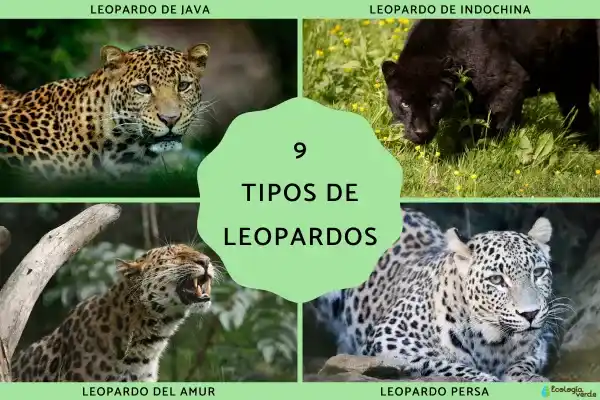
In reality, there is only one species of leopard—* Panthera pardus *, but based on differences in distribution, appearance, and genetics, it can be further subdivided into nine recognized subspecies: Javan leopard, Indochinese leopard, Sri Lankan leopard, Amur leopard (also known as Far Eastern leopard), African leopard, North China leopard, Arabian leopard, Indian leopard, and Persian leopard. Their size, coat color, markings, habits, and even conservation status vary considerably.
Next, we will introduce the characteristics, distribution, survival status, and interesting facts of these nine leopard species in turn.
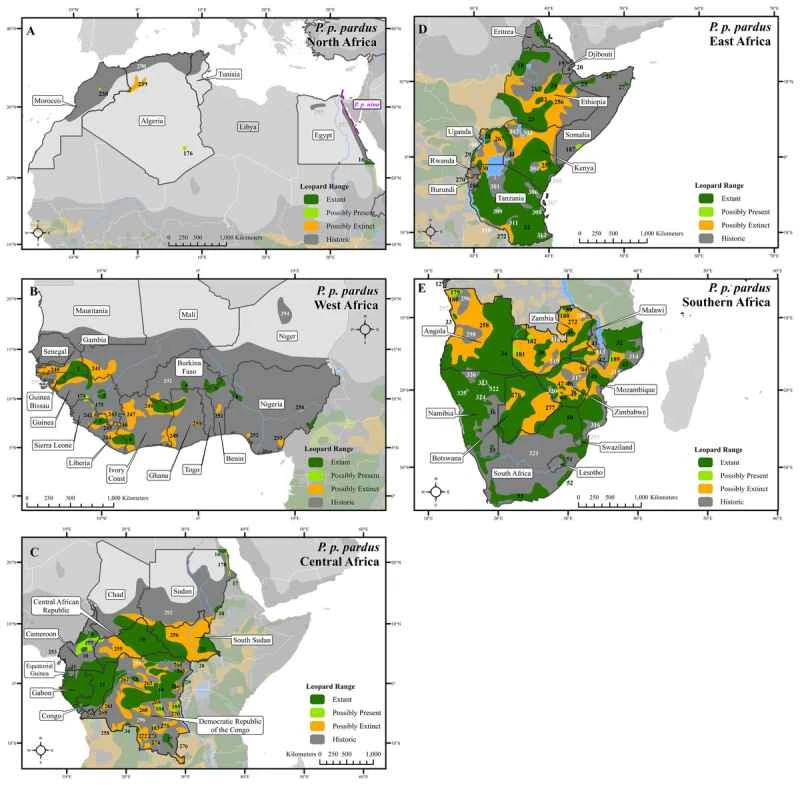
Global distribution map of leopard subspecies (Source: PeerJ Research)
I. Common Characteristics of Leopards
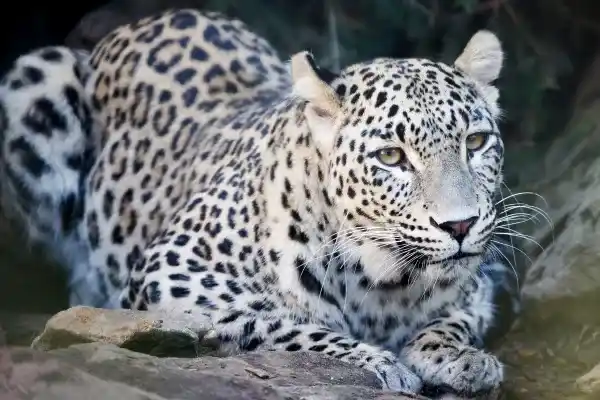
Body shape and appearance : Long body, well-developed limbs, and long tail; the base color ranges from pale yellow to golden yellow, covered with hollow rose-shaped black spots (rosettes) , and each individual's pattern is unique and can be used for individual identification .
Senses and Actions : Primarily nocturnal, with keen vision, hearing, and smell; extremely capable of climbing and jumping , adept at dragging prey up trees to avoid scavengers such as hyenas and lions.
Habitat : One of the most ecologically adaptable large cats on Earth, it can survive in a wide range of environments, from tropical rainforests and arid scrublands to savannas, temperate woodlands, mountains, and even semi-deserts .
Diet : Opportunistic apex/subapex predator . It will eat anything from small rodents and birds to medium to large ungulates (roe deer, wild boar, impala, etc.); its diet will change depending on the location and season.
Social structure : Mostly living alone ; their activity areas overlap but are "used in staggered shifts" through methods such as scent marking.
Reproduction : No distinct fixed estrus season (some areas have seasonal peaks); gestation period is about 90–105 days , with 2–4 offspring per litter; offspring stay with the mother for 18–24 months .
Conservation Overview : The IUCN classifies the species as “Vulnerable (VU)” , with several subspecies facing even greater risks due to habitat loss, poaching, and prey depletion (described below).
1. Javan leopard ( Panthera pardus melas )
Distribution and Habitat : Endemic to Java, found only in tropical rainforests, dry forests and mountainous areas of Java, Indonesia, ranging from sea level to high mountain areas.
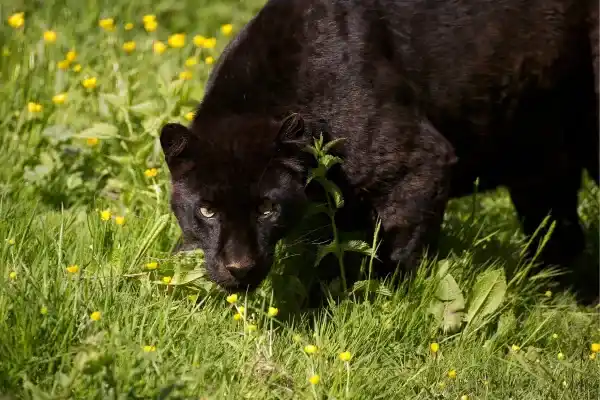
Physical characteristics : There are two types of coat color - the common type with dark rose-colored markings, and the all-black "black panther" type (a melanism caused by a recessive gene).
Habitat : Solitary, highly territorial, mostly nocturnal, preying on deer, wild boar, primates, and sometimes livestock.
Reproduction : Gestation period is about 90-105 days, with 2-4 offspring per litter.
Conservation status : Critically endangered, with only about 350-525 individuals remaining. The main threats are habitat loss and poaching.
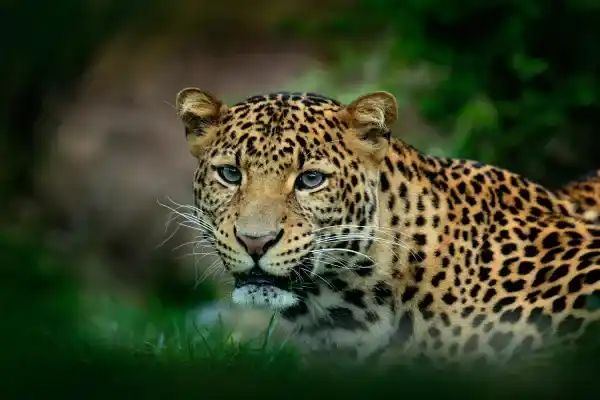
2. Indochinese leopard ( Panthera pardus delacouri )
Distribution and Habitat : Found in Southeast Asia, from southern China to the Malay Peninsula, in tropical rainforests and near rivers.
Characteristics : High proportion of melanistic individuals (black panthers), which helps in stealthy hunting in the jungle.
Predation behavior : Hunting monkeys, wild boars, deer, etc., often dragging heavy prey up trees for storage.
Reproduction : Gestation period is 90-105 days, with 2-4 offspring per litter.
Conservation status : Due to deforestation and poaching, their numbers have decreased dramatically, and they have become partially extinct in some countries.
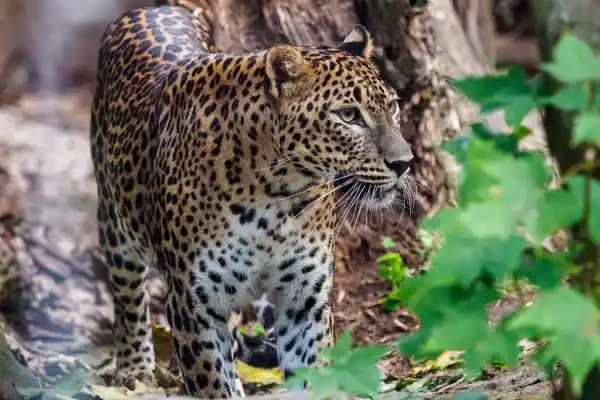
3. Sri Lankan leopard ( Panthera pardus kotiya )
Distribution : Endemic to Sri Lanka, inhabiting tropical rainforests, humid forests and arid shrublands.
Appearance : The fur is yellowish-brown or reddish-yellow with black rose spots; males can weigh up to 77 kg, and females about 29 kg.
Diet : Preys on mammals, birds, reptiles, deer, wild boars, and occasionally water buffalo.
Population characteristics : High density in Yala National Park due to lack of large competing predators.
Conservation status : Endangered.
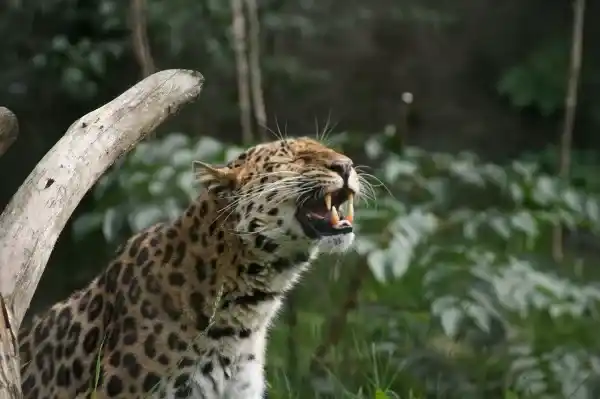
4. Amur Leopard ( Panthera pardus orientalis )
Distribution : Temperate forests in the Russian Far East, Northeast China, and possibly northern Korea.
Appearance : In winter, the coat is light cream-colored, with long and dense fur and large, sparse rose spots.
Diet : Primarily preys on medium-sized mammals such as roe deer, sika deer, and wild boar.
Reproduction : Gestation period is 92-95 days, with 2-3 cubs per litter. The cubs will live with their mothers for 2-3 years.
Rarity : Considered the rarest large cat in the world, with only 84-130 individuals remaining, it is critically endangered.
5. African leopard ( Panthera pardus pardus )
Distribution : Widely distributed in sub-Saharan Africa, covering tropical rainforests, savannas, plateaus and mountains.
Appearance : Coat color varies, from light yellow to reddish brown, and the pattern of markings varies from individual to individual.
Hunting : The range of prey is wide, from rodents to large antelopes, and they often drag their prey up trees to prevent it from being stolen.
Adaptability : Strong, agile, and an excellent climber, adaptable to a variety of ecological environments.
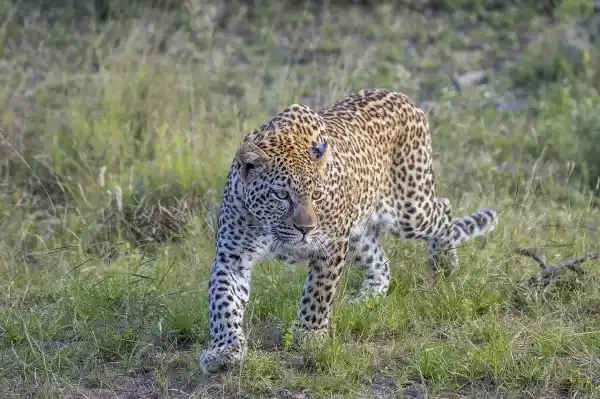
6. North China Leopard ( Panthera pardus japonensis )
Distribution : Mountainous forests and grasslands in Northeast China.
Characteristics : Medium-sized, with dark fur and markings similar to those of a jaguar; long fur to adapt to cold climates.
Habits : They are good at hiding and ambushing, and prey on deer, wild boar and small mammals.
Reproduction : They breed from January to February each year, with 2-3 cubs per litter. The mother leopard will care for the cubs for up to two years.
Conservation status : Endangered, but populations have shown signs of recovery in some areas due to afforestation.
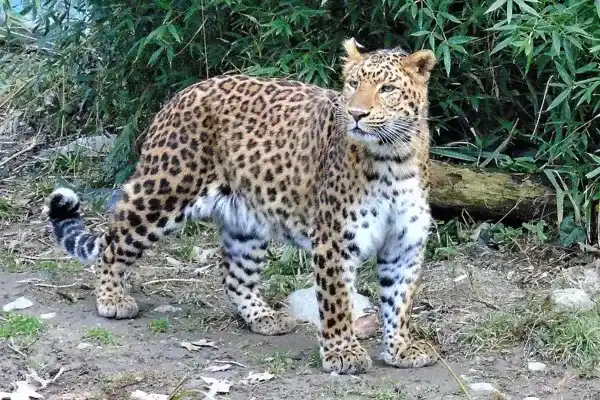
7. Arabian leopard ( Panthera pardus nimr )
Distribution : Mountainous regions of Yemen, Oman and Israel, with fewer than 200 individuals remaining.
Characteristics : It is the smallest leopard subspecies, with males weighing about 30 kg and females about 20 kg, and light-colored fur.
Diet : Primarily feeds on gazelles, wild goats, and hares; will also prey on livestock when food is scarce.
Conservation status : Critically endangered, threatened by habitat loss, poaching and prey depletion.
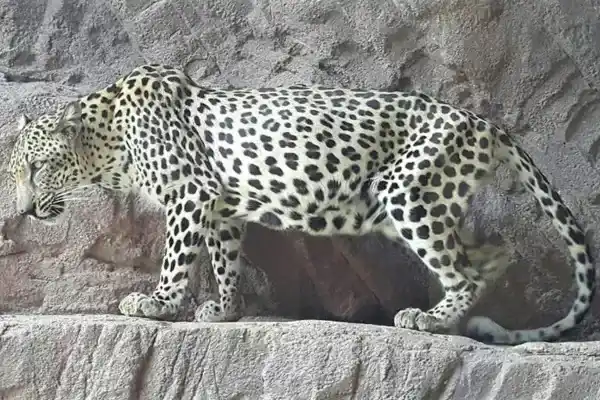
8. Indian Leopard ( Panthera pardus fusca )
Distribution : India, Nepal, Bhutan, and parts of Pakistan.
Characteristics : Robust build, strong limbs, long tail, golden fur with unique rose spots.
Reproductive characteristics : polygamous, gestation period of about 97 days, 2-4 offspring per litter.
Special phenomenon : Black leopards are more common in humid regions such as the Western Ghats.
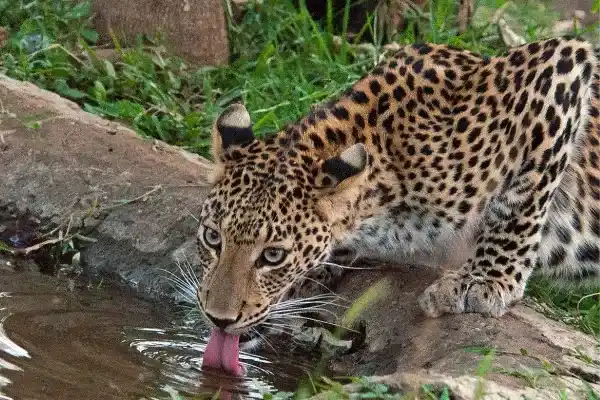
9. Persian leopard ( Panthera pardus saxicolor )
Distribution : Mainly found in Iran, but also in Armenia, Azerbaijan, Afghanistan and the Caucasus region.
Characteristics : The largest leopard subspecies, reaching up to 1.58 meters in length and weighing 75 kilograms. Its fur is light yellow or golden with black spots.
Diet : It preys on medium to large mammals such as goats, deer, and wild boars.
Conservation status : Endangered, threatened by poaching, habitat loss and population fragmentation.
References
Deutsche Welle. (2023). The Indian leopard disappeared, and nothing happened. URL: https://www.dw.com/es/el-leopardo-de-indochina-desaparece-y-nadie-hace-nada/a-66017547
Stein, AB, Gerngross, P., Al Hikmani, H., Balme, G., Bertola, L., Drouilly, M., Farhadinia, MS, Feng, L., Ghoddousi, A., Henschel, P., Jhala, YV, Khorozyan, I., Kittle, A., Laguardia, A., Luo, S.-J., Mann, G., Miquelle, D., Moheb, Z., Raza, H., Rostro-García, S., Shivakumar, S., Song, D., and Wibisono, H. 2025. Panthera pardus (2024 revised assessment). IUCN Red List of Threatened Species 2025: e.T15954A274970607. Accessible at: https://www.iucnredlist.org/species/15954/274970607
WorldWildLife. Far Eastern Leopard. Accessible at: https://www.worldwildlife.org/species/amur-leopard
Jerez Zoo. (sf). Sri Lankan leopard. Accessible at: https://www.zoobotanicojerez.com/coleccion-zoologica/relacion-de-especies/leopardo-de-sri-lanka-panthera-pardus-kotiya