A team led by Zhu Min from the Institute of Vertebrate Paleontology and Paleoanthropology, Chinese Academy of Sciences, in collaboration with scholars from the University of Oxford and the University of Michigan, conducted a detailed study of the cranial fossil of a newly discovered basal lobe-finned fish, *Ptyctolepis brachynotus* gen. et sp. nov., dating back to the Early Devonian Bragg stage (approximately 410 million years ago), in Zhaotong, Yunnan Province. They extracted complex and unexpected morphological features, revealing that spotted fishes (including *Ptyctolepis brachynotus*, *Ptyctolepis*, and *Ptyctolepis*) may be more primitive than previously thought, closely resembling a common ancestor of ray-finned and lobe-finned fishes. This new research significantly advances the understanding of the cranial morphology of the earliest bony fishes and challenges the phylogenetic relationships at the base of bony fish evolution. The findings were published on December 5th in the journal *Nature Communications*.
Bony fishes can be considered the main evolutionary backbone of vertebrates, with their two major branches—ray-finned fishes and lobe-finned fishes—conquering the Earth's waters and land, respectively. Since the inception of paleontology, the exploration of the origin and evolution of bony fishes has never ceased. However, bony fishes from traditional Devonian fossil sites in Europe and North America have diverged into large groups with drastically different morphologies and many of their original characteristics have disappeared. This has brought great difficulty to tracing the initial rise of bony fishes.
Since the 1980s, the discovery and study of a series of primitive bony fish fossils from China have opened an exciting new chapter in the study of the origin of bony fishes. Among them, the discovery of *Psarolepis* and its close relatives, such as *Achoania* and *Guiyu oneiros*, is the most remarkable. These fish possess a combination of features that were previously unthinkable, such as a movable skull divided into anterior and posterior parts, typical of lobe-finned fishes; and mesoderm and spines similar to those of placoderms. Although *Psarolepis* was previously classified as a lobe-finned fish, such numerous and obvious primitive features have led researchers to suspect that they may also be a more primitive basal bony fish. To clarify this issue, the cranial features, which contain a wealth of important morphological information, are crucial. However, early bony fish cranial fossils are quite rare, especially the auricular region, which is often poorly ossified and not preserved, making our understanding of this structure very limited.
The Posongchong Formation of the Early Devonian in Zhaotong, Yunnan, preserves a wealth of fish and plant fossils, representing a vibrant aquatic paradise 410 million years ago. The Early Vertebrate Group of the Institute of Vertebrate Paleontology and Paleoanthropology has been conducting fieldwork in the Posongchong Formation for many years, collecting a number of important fish fossils, especially bony fish fossils. Several important genera and species previously published, such as the earliest tetrapod *Tungsenia paradoxa*, the earliest coelacanth *Euporosteus yunnanensis*, and the earliest clawed fish *Qingmenodus yui*, demonstrate the immense research potential of the Posongchong Formation vertebrate fauna. In recent fieldwork, the group discovered a bony fish fossil with surface ornamentation very similar to that of the Silurian *Dreamfish*, named *Short-eared Foldfish* based on its short, wide outline and surface folds.
Lu Jing and her colleagues used micro-CT and computer-aided 3D reconstruction techniques independently developed by the Institute of Vertebrate Paleontology and Paleoanthropology in collaboration with the Institute of High Energy Physics to reconstruct the internal structure of this fossil in detail. They extracted as much complex morphological information as possible, focusing on a detailed anatomical comparison and analysis of the structural features and three-dimensional positional relationships of the posterior dorsal fontanel, the hyoid articular surface, the bony labyrinth of the inner ear, and the supraotic cavity. This is the first time that detailed data on the morphology of the braincranium in the auricular region of an early bony fish has been obtained. The study shows that the hyoid articular joint of *Short-eared Frillfish* is precisely at the transitional stage in the evolution from basal lobe-finned fish to the crown group of more advanced lobe-finned fish: although it has evolved the two hyoid articular surfaces typical of advanced lobe-finned fish, the jugular vein still passes under the two articular surfaces rather than between them, retaining the pattern of primitive bony fish. At the same time, the short-eared pleated fish began to show the rudiments of the supraorbital cavity (which consists of an endolymphatic sac and an endolymphatic duct connected to it, responsible for absorbing endolymph into cerebrospinal fluid), a structure unique to advanced lobe-finned fish.
Building upon this foundation, Lu Jing et al. conducted a comprehensive reanalysis of the phylogenetic relationships at the root of the entire bony fish evolutionary tree. The results indicate that the braincranial features of *Synostemma short-eared* have a significant impact on early bony fish evolutionary theories. *Synostemma short-eared* occupies the only known position among basal lobe-finned fishes, and its discovery pushes *Platycerioides* to a more primitive position among basal bony fishes, showing that *Platycerioides* are very close to the common ancestor of both ray-finned and lobe-finned fishes. The vast lineage of bony fishes initially originated from morphological bases similar to *Platycerioides*, and over the next four hundred million years, it diversified into numerous descendants occupying diverse ecological niches across the Earth. Humans are one such descendant.
Original link: https://www.nature.com/articles/s41467-017-01801-z
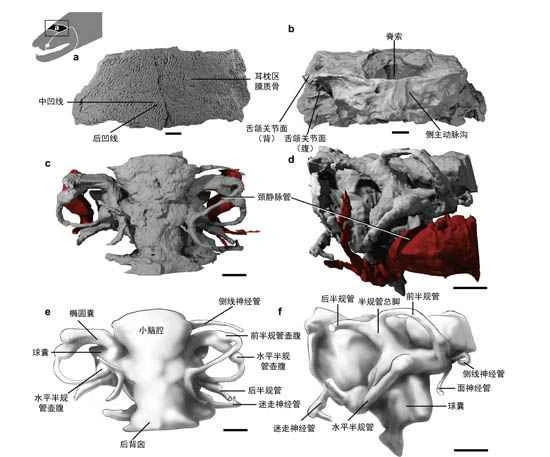
Figure 1. Three-dimensional reconstruction model of the cranium and cranial cavity of the short-eared pleated fish. a, dorsal view of the cranium; b, ventral view of the cranium; cf, dorsal view of the cranial cavity (c; e, line drawing); right lateral view of the cranial cavity (d; f, line drawing) (Image provided by Lu Jing)

Figure 2. Simplified evolutionary tree of bony fishes, showing the evolution of the glossomandibular joint and the lymphatic duct structure of the inner ear; star-shaped symbols indicate bony fish fossils discovered in China (Image provided by Lu Jing).
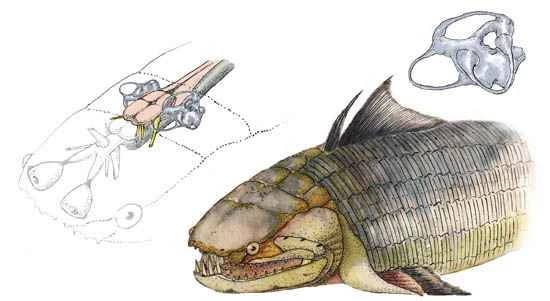
Figure 3. Reconstruction of the brain and inner ear structure of the short-eared pleated fish (illustrated by Kong Jiayi)
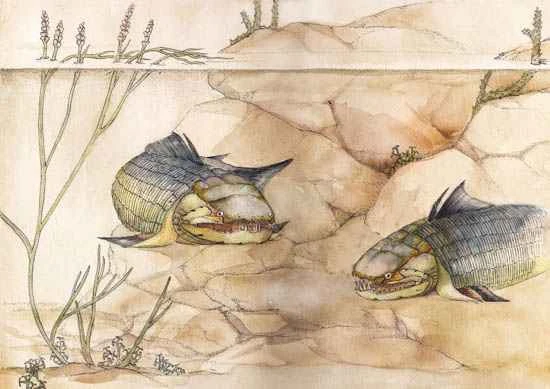
Figure 4. Reconstruction of the life of the short-eared pleated fish (illustrated by Kong Jiayi)