The ghost fish, also known as the vampire fish, is found in northern Myanmar and is estimated to have existed on Earth for nearly 100 million years. It is nicknamed the "vampire fish" because of its sharp teeth and resemblance to vampires from European folklore. This fish is about 17 millimeters long and belongs to the Cypriniformes order. Dr. Ralf Britz, a zoologist at the Natural History Museum in London, was delighted with the discovery, saying, "This fish is the most amazing vertebrate discovered in over a decade."
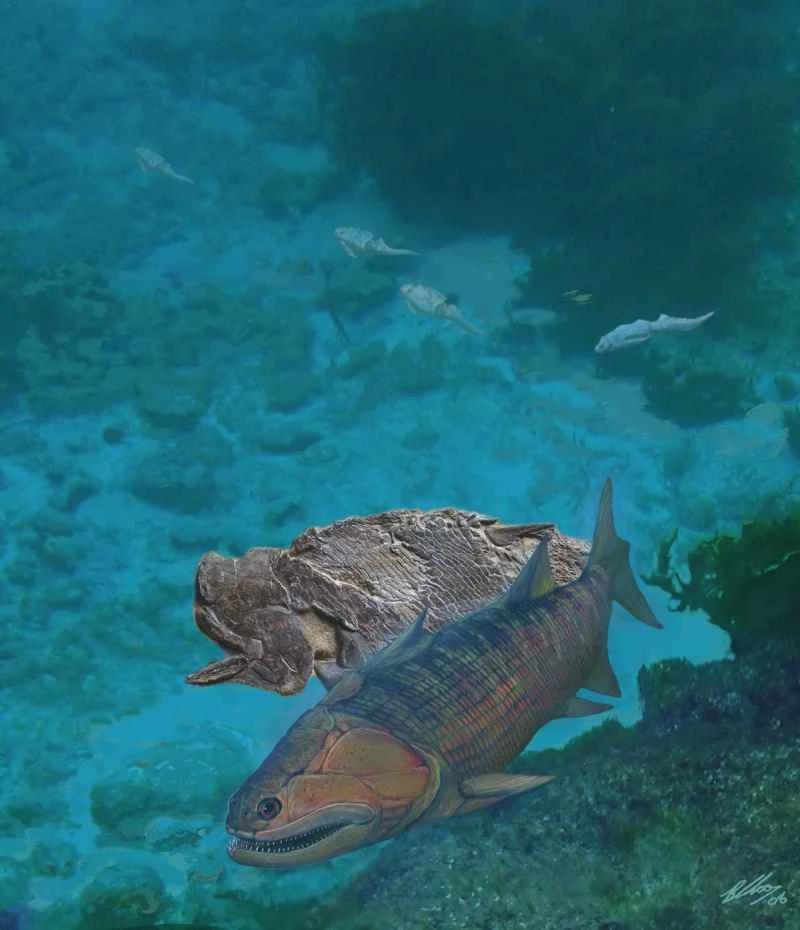
Reconstruction of the ghost fish (by Brian Choo, Victoria Museum, Australia)
Scientists have discovered a mysterious "ghost fish" at a depth of 8,200 feet (approximately 2,500 meters) in the Mariana Trench, the deepest trench in the world. Measurements from the seabed indicate that this fish is approximately 0.3 feet (about 10 centimeters) long.
The deep sea, far removed from humankind, is home to many strange and mysterious creatures. The "ghost fish" discovered by scientists in the Mariana Trench is one such example. It resembles an alien creature. This is the first time humans have seen a living blubber nymph, proving that blubber nymphs are indeed deep-sea animals, a fact that had been controversial in the past.
I. The Discovery of the Ghost Fish
According to the British newspaper Daily Mail, British zoologists say they have discovered a small fish with "vampire-like teeth" in a river in Kachin State, northern Myanmar. Its scientific name is *Danionella dracula* (the name of a vampire in Western folklore), and it looks terrifying. The fish is about 17 millimeters long and belongs to the order Cypriniformes.
This "vampire fish" was discovered in April 2007, but was not officially named a new species until later. Dr. Ralf Britz, a zoologist at the Natural History Museum in London, said, "This fish is one of the most unusual vertebrates discovered in recent decades. Its teeth are truly astonishing, because none of the other 3,700 species in the Cypriniformes family have teeth. In fact, they lost their teeth around 50 million years ago in the early Eocene. However, *Danionella dracula* evolved its own tusks, which grew directly from its jawbone."
Reassuringly, despite its menacing appearance, these teeth are not used for feeding, so there's no need to worry about this fish sucking blood. However, despite its astonishingly small size, Danionella dracula is not the world's smallest fish—that title belongs to Paedocypris progenetica, which is only about 7.6 millimeters long.
Dr. Ralf Britz, a zoologist at the Natural History Museum in London, was delighted with the discovery, saying, "This fish is the most amazing vertebrate discovered in the last 10 years." He added, "The 'vampire fish's' teeth are the most exciting part, because the other 3,700 or so members of the carp family have no teeth; their teeth disappeared as early as 50 million years ago."
II. Experts' description of the ghost fish
They're not big, nor are they particularly beautiful, but this little fish, scientifically known as *Danionella dracula*, is quite peculiar. This tiny fish, only 1.7 centimeters long, possesses vampire-like sharp teeth in its upper and lower jaws. It is the only one of over 3,700 species of cypriniformes to have such sharp teeth, which males use in territorial disputes. Ralf Britz, a fish expert at the National Museum of British History in London, said, "What's so amazing about this discovery is that cypriniformes evolved to lose their tooth structure 50 million years ago." Why did this little fish retain its tooth structure during evolution? Further analysis by scientists revealed that these vampire-like structures are not teeth, but rather a type of bone, or more accurately, a byproduct of the jawbone. These bones pierce the skin and grow into curved, sharp structures. Its lower jaw can open at a wide angle, forming a 45-60 degree angle with the main body.
By comparing the DNA of vampire fish with that of zebrafish and cypriniformes, Bretts determined that this prominent skeletal structure gradually formed after cypriniformes lost their teeth during evolution 30 million years ago. Vampire fish do not use these unusual teeth for hunting; structurally, males also have large pelvic fins and an anus that faces upwards, with their reproductive organs located between the fins.