The Gunnison Grouse (Centrocercus minimus) , also known as the Sage Grouse, is a unique bird species in North America, renowned for its complex courtship behavior and high dependence on habitat. However, due to various reasons, the survival status of this bird is worrying. In the following sections, we will comprehensively explore the ecological habits, survival challenges, and conservation measures of the Gunnison Grouse from multiple perspectives.
Appearance and basic characteristics of Gannessen grouse
Body shape and appearance
The Gannison Grouse is somewhat similar to the more common Great Sage Grouse, but they have significant differences.
Body length: Adult male Gannison grouse are about 55 cm long, while females are usually smaller.
Weight: Males generally weigh 1.2-2 kg, while females are lighter, about 0.8-1.2 kg.
Feather characteristics: The plumage of the Gannison Grouse is predominantly brownish-grey with intricate patterns, which helps it camouflage itself in sage vegetation.
Dietary habits
The Gannison grouse is a strictly herbivorous bird, its diet consisting primarily of sage leaves, especially during winter. In addition, they also consume some other foods.
Wild grasses and flowers provide abundant vitamins.
In the summer, they will occasionally supplement their diet with insects to increase their protein intake.
breeding and raising of Ganneyson grouse
Courtship behavior
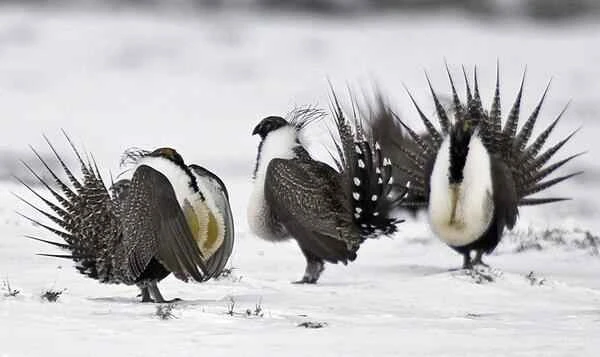
The Ganneyshen Grouse is known for its courtship behavior, with males congregating in the spring at designated "courtyards" for a display. This display includes:
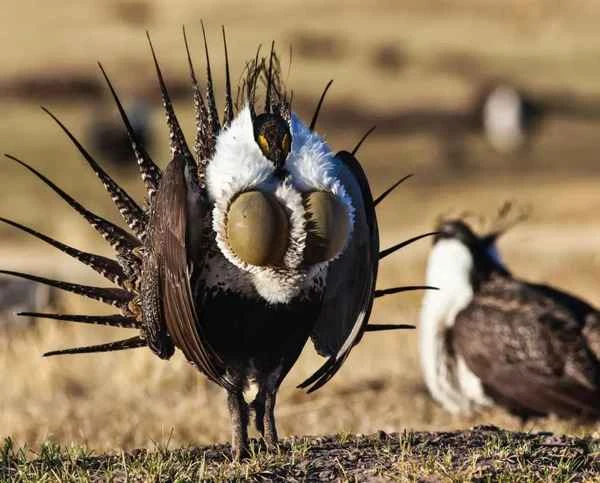
Its bright yellow breast sac bulged out exaggeratedly.
He attracts females by wagging his tail feathers and making a special "cooing" sound.
Females choose mates based on the males' performance, and this selectivity promotes genetic optimization.
Reproductive cycle
Female Ganneyshen grouse typically lay eggs after mating, usually 6-10 eggs at a time, with an incubation period of approximately 25-27 days. Chicks can follow their mother after hatching, but it takes about two months for them to become fully independent.
Comparison of the Ganyshen Grouse with other birds
The characteristics of the Gannison grouse set it apart from other birds:
Habitat dependence: Gannison grouse are highly dependent on the sage ecosystem, while most birds are more adaptable.
Courtship behavior: Its complex courtship displays are more unique than most birds, and few species can match them.
Low breeding success rate: The breeding success rate of the Ganneyshen Grouse is affected by many factors such as habitat quality and predator interference, and is far lower than that of many other birds.
Ganneyshen Grouse Habitat and Migration Behavior
Habitat distribution
The distribution of the Gannison Grouse is extremely limited, mainly concentrated in the Gannison Basin of Colorado, USA, with a small population also in Utah.
Habitat requirements
Breeding grounds: Open areas with sparse vegetation, which facilitates the display of courtship behavior by males.
Winter habitat: Dense sage bushes provide shelter and food for the Gannison grouse.
Migration patterns
Gannison grouse are typically non-migratory birds, but some populations may move short distances within the region depending on seasonal resource distribution.
Changes in the number of Gannison grouse and the reasons for it
The decline in the Gannison grouse population is worrying. Historically, the Gannison grouse may have numbered over 100,000. However, in recent years, their population has declined sharply, and the current estimate is only around 5,000.
Reasons for the decline in quantity
Habitat loss: Urbanization, agricultural development and energy extraction have led to a significant reduction in the area of sage ecosystems.
Increased predators: With human activity causing disturbance, predators such as foxes and eagles pose an increased threat to the Gannison grouse.
Climate change: Climate change restricts the distribution and growth of sage, thus indirectly affecting the food source of Gannessen grouse.
Population isolation: Road and infrastructure construction hinders gene flow between populations, leading to a reduction in genetic diversity.
The position of the Gannessen grouse in the food chain
Ecological role
Ganneyshen grouse are important seed dispersers in the ecosystem and a food source for many predators.
Seed dispersal: By eating plants, the Ganyshen Grouse helps disperse seeds, maintaining the diversity of the ecosystem.
Predator targets: Natural enemies such as foxes, coyotes, and golden eagles pose a threat to its population.
The history and cultural heritage of Gannessen Grouse
The Ganneyson grouse has held an important place in local culture since ancient times. For the Native Americans living in Colorado, this bird is not only an important member of the ecosystem, but also a spiritual symbol.
Traditional meaning
In many tribal cultures, the Ganison grouse is seen as a symbol of abundance and harmony with nature, and its feathers are even used in traditional rituals.
Modern Symbol
Today, the Ganneyshen grouse is considered a symbol of nature conservation, and the success of its conservation is crucial to the health of the entire ecosystem.
Scientific research progress and prospects of Ganneyson grouse
Research Progress
In recent years, research on Ganneyssen chickens has mainly focused on the following aspects:
Genetic research: analyzing their genomes to assess population health and adaptability.
Behavioral research: Recording courtship behavior using videos and sensors to explore its biological significance.
Habitat management: Using remote sensing technology to monitor the coverage and health status of sage.
Future Outlook
The conservation of the Gannison grouse requires the joint efforts of all parties:
Protect habitat: Implement sage planting and restoration projects.
Public education: Raising awareness of the Gannessen grouse and its importance.
Cross-regional collaboration: Unite states and agencies to develop a more comprehensive protection plan.
Conclusion: Saving the Ganneyshen Grouse, Building an Ecological Future
The Gannison grouse is not only a rare bird species in North America, but also a key member of the ecosystem. Protecting the Gannison grouse is not just about protecting a single species, but about safeguarding a complex and fragile ecosystem. Through scientific research, community engagement, and policy support, we have every reason to believe that the future of the Gannison grouse remains promising.