With advancements in science and technology, our understanding of deep-sea ecosystems is constantly deepening. The Atacama Trench, a deep-sea region located in the South Pacific Ocean, has long been a hotbed for scientists exploring deep-sea life. In 2023, scientists from an international research team discovered a new type of predatory crustacean in the Atacama Trench— Dulcibella camanchaca . This discovery not only enriches the diversity of deep-sea life but also reveals the complexity of deep-sea ecosystems. This article will discuss in detail the discovery, morphological characteristics, ecological role, and scientific significance of Dulcibella camanchaca .
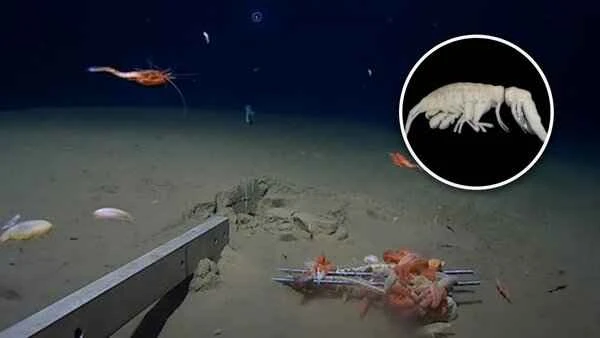
Table of contents
The discovery of Dusibera Kamanchaka
Ecosystem of the Atacama Trench
Morphological features of Dusibera Kamanchaka
Predation behavior of Dusibera Kamanchaka
The scientific significance of Dusibera Kamanchaka
Future deep-sea exploration
The discovery of Dusibera Kamanchaka
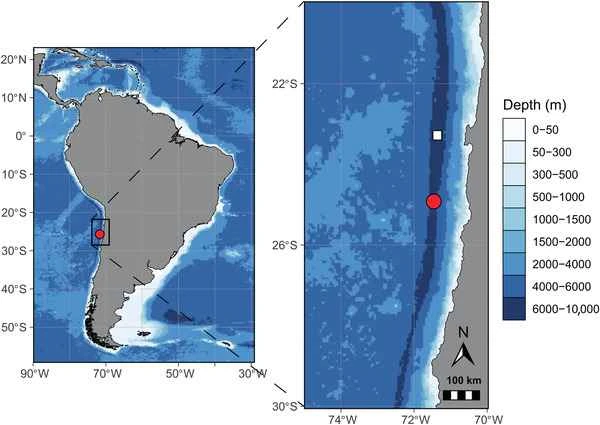
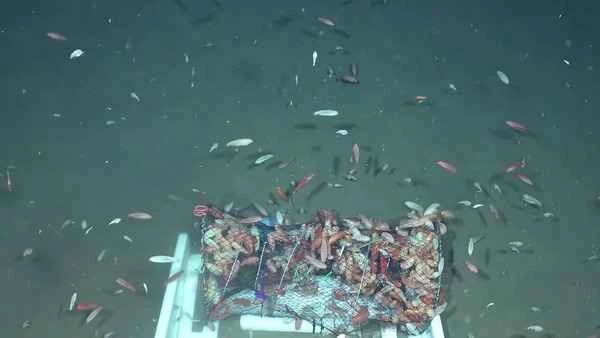
Dusibera Kamantchaca was discovered by scientists in 2023 at a depth of over 7,900 meters in the Atacama Trench. This discovery marks the emergence of a new type of predatory crustacean. Unlike the scavenging crustaceans previously known in the Atacama Trench, Dusibera Kamantchaca is an active predator, and its discovery is significant for understanding the relationship between predators and prey in deep-sea ecosystems.
In this discovery, scientists integrated morphological features and DNA barcoding data to confirm that *Dulcibella* Camanchaca is a new genus and species. The new genus name, *Dulcibella*, is derived from the medieval literary meaning of "sweet and beautiful," symbolizing the unique allure of this deep-sea species. *Camanchaca * comes from the sea fog near the Atacama Desert, representing that this creature originates from the dark, deep ocean.
Ecosystem of the Atacama Trench
The Atacama Trench, located off the coast of Peru and Chile, is an important underwater trench in the South Pacific Ocean, reaching depths of over 8,000 meters. This area is a trench-type ecosystem, typically characterized by extremely high pressure, low temperatures, and extreme darkness. While these conditions are fatal to most organisms, some unique deep-sea creatures thrive here.
The discovery of Dusibera Kamanchaka demonstrates the continued vitality of life even in such extreme environments. Although biodiversity in this region is lower than in shallower waters, it still supports a unique ecosystem where all organisms require extensive adaptation to survive in the deep sea. Dusibera Kamanchaka is an integral part of this ecosystem.
Morphological features of Dusibera Kamanchaka
Establishment of a new genus and species
Dusibera Kammanchaka belongs to the family Eusiridae, a group of crustaceans that typically live in the deep sea. Its discovery expands the family to its fourteenth genus. The genus name Dusibera shares some similarities with Cleonardo and Dorotea, but Dusibera carries a more romantic and symbolic meaning, paying homage to the character Dulcinea from Don Quixote. Although "Dulcinea" is now used by entomologists, the name "Dusibera" continues this literary tradition, symbolizing sweetness and beauty.
External features
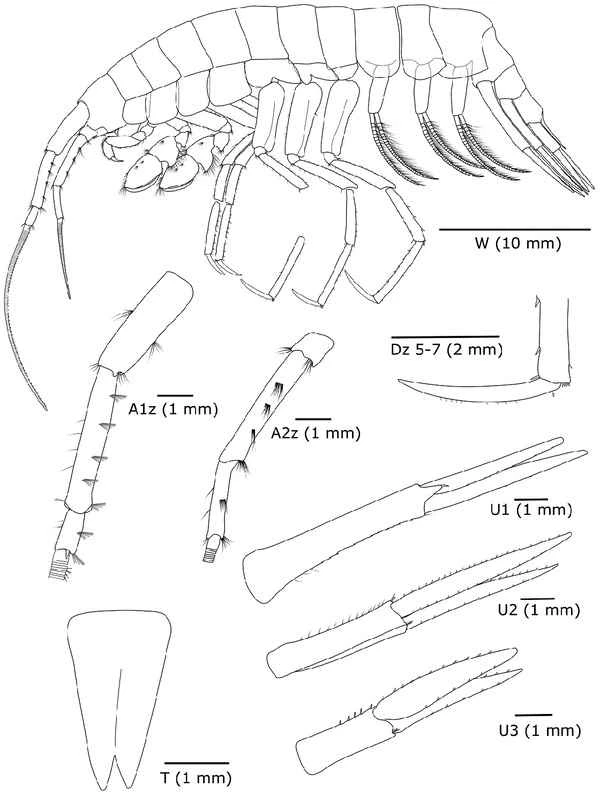
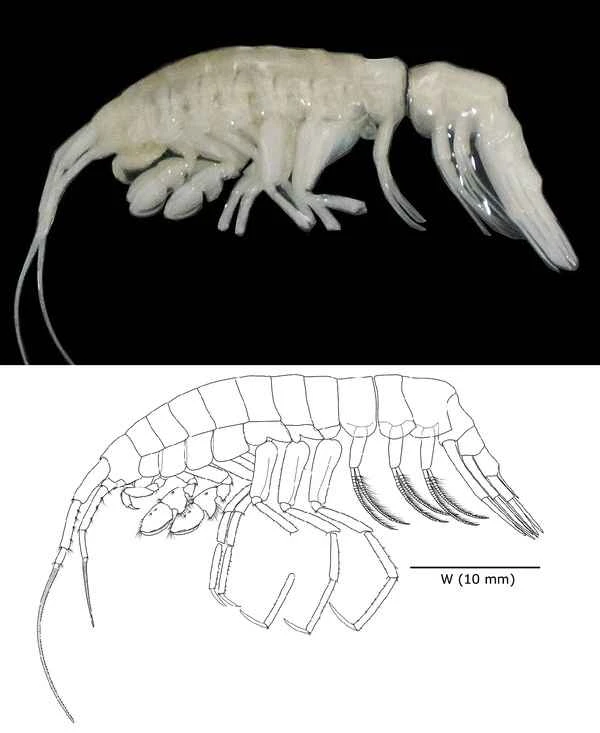
Dulcibella camanchaca , with a body length of approximately 38.9 mm, is characterized by a smooth back, 12 spines on the outer maxilla, a closely chelate maxilliped, broad arms, 0.45 times the length of the corresponding forelegs on the 3rd and 4th digits of the walking legs, and 0.6 times the length on the 5th to 7th digits of the walking legs. The peduncle of the anal foot has distal spines, and the telson is slender but weakly split. In summary, Dulcibella camanchaca gen. nov. sp. nov. is a novel predator that reinforces the ecological evolutionary uniqueness of the Atacama Trench, possessing several typical morphological features that distinguish it from other deep-sea crustaceans.
Smooth back : Unlike other crustaceans, the back of Dusibera Kammanchaka is smooth and scaleless.
Strong jaws and tentacles : its first tentacles are longer than its second tentacles, giving it a powerful ability to hunt prey and adapting it to the extreme environment of the deep sea.
Predatory structure : One of its most distinctive features is its powerful limbs and appendages, especially its maxillipeds and walking legs, which are adapted to prey on other small animals.
Tail and caudal foot characteristics : The tail is elongated and slightly split, which is adapted to fast swimming and capturing prey.
Mouthparts and chelipeds : The largest maxillipeds and appendages of Dusibera Kammanchaka play a crucial role in predation, enabling it to survive in the highly competitive deep-sea environment.
These characteristics enable Dusibera Kammanchaka to act as a predator in extreme environments, rather than just a scavenger.
Predation behavior of Dusibera Kamanchaka
Dusibera Kamanchaca is not only a newly discovered species, but it also possesses unique ecological functions as a deep-sea predator. In deep-sea environments, most crustacean species rely on organic matter in sediments for sustenance, acting as scavengers. However, Dusibera Kamanchaca is different; it is an active predator, meaning it actively hunts other deep-sea creatures, potentially including other crustaceans and small invertebrates.
Scientists, through observation of its predatory behavior, discovered that it possesses extremely sharp maxillipeds and chelipeds, enabling it to successfully capture prey in the highly competitive deep sea. This discovery redefines the structure of the deep-sea food chain, and the predatory behavior of Dusibera Kamanchaka provides us with a new perspective, revealing the complex relationship between predation and scavenging in the deep-sea ecosystem.
The scientific significance of Dusibera Kamanchaka
Breakthrough in deep-sea ecology
The discovery of Dusibera Kamanchaka is of great scientific significance. First, it reveals the role of predators in deep-sea ecosystems, changing our understanding of deep-sea species behavior. For a long time, scientists believed that most deep-sea organisms were scavengers, with relatively few predatory species. However, the discovery of Dusibera Kamanchaka overturns this conventional view; its appearance as a deep-sea predatory crustacean demonstrates that in extreme environments such as the Atacama Trench, predation and biodiversity are intertwined.
Deep-sea species diversity
This discovery not only adds a new genus to the Eusiridae family but also enriches our taxonomic understanding of deep-sea species. Through DNA barcoding analysis of Dusibera Kammanchaka , scientists have further confirmed its uniqueness, making this species an important subject of deep-sea ecological research.
protective significance
The deep-sea environment is facing threats from human activities such as deep-sea mining and climate change. Dusibera Kamanchaka 's discovery reminds us that protecting these mysterious deep-sea areas is crucial for maintaining the health of marine ecosystems. Understanding and studying these deep-sea species will help us better develop conservation measures in the future to prevent irreversible damage to deep-sea ecosystems.
Future deep-sea exploration
The discovery of Dusibera Kamanchaka is just the tip of the iceberg in deep-sea exploration. With continuous advancements in technology, especially breakthroughs in deep-sea exploration and genomics, we can expect to discover many more similar species in the future. These new species discoveries will further enrich our understanding of deep-sea ecosystems and reveal the adaptation and evolution of life in extreme environments.
Scientists will continue to explore the Atacama Trench and other deep-sea areas, hoping to uncover more unknown mysteries about deep-sea predators, food chains, and ecological balance. As Dusibera Kamanchaka 's discoveries show, the deep sea is not just synonymous with mystery and darkness; it is also an ecological treasure trove brimming with vitality and limitless possibilities.
In summary, Dusibera Kamanchaka 's discoveries provide a completely new perspective on understanding the complexity of deep-sea ecosystems. They not only expand our knowledge of deep-sea species but also offer important theoretical support for the conservation of deep-sea biodiversity. As research progresses, more deep-sea creatures will come into our view, and Dusibera Kamanchaka will undoubtedly play a crucial role in this process.