Table of contents
Five characteristics of serrated feather stars
Analysis of the distribution range and habitat of the serrated feather star.
How to protect the habitat of the serrated feather star?
Food chain and major threats of the Sawtooth Feather Star
Reproduction methods and life cycle of Sawtooth Star
Lifespan of the serrated feather star
How to determine the health status of sawtooth feather stars
A deeper understanding of the ecological role of the serrated feather star and its relationship with other marine life.
Scientific progress on the jagged feather star
The relationship between the jagged feather star and humans
How to care for a serrated starfish in an aquarium
1. Five key characteristics of serrated feather stars
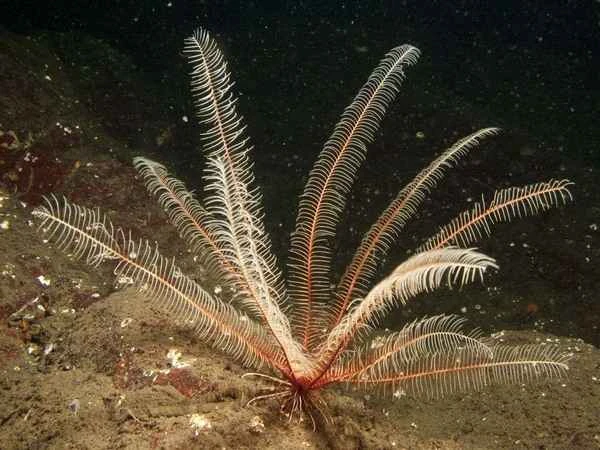
The Feathered Star ( Florometra serratissima ) is a marine creature with unique appearance and physiological characteristics. Belonging to the Feather Star family, it is known for its beautiful feathery tentacles and unique lifestyle. Here are five key features of the Feathered Star:
1.1 Tentacle Structure
One of the most striking features of the serrated feathered star is its complex tentacle structure. Its long tentacles with serrated edges not only enhance its predation efficiency but also improve its adaptability to water currents. These tentacles are covered with fine hairs that effectively filter tiny food particles from the water.
Serrated Feather Star's long and flexible arms
The serrated star 's arms are long and highly flexible, allowing it to move gracefully and filter feed from the water. These arms are covered with tiny branching structures called vanes, which increase the surface area for feeding.
Serrated Feather Star Suction Cup
At the base of the serrated dolphin , this species has a small, disc-shaped structure that allows it to attach firmly to coral or rock surfaces. This sucker is crucial for stabilizing the dolphin in turbulent environments, especially in strong currents.
1.2 Adaptability to water flow
The serrated feathered star captures plankton and organic matter in the water using its tentacles. This unique adaptation allows it to survive in various aquatic environments, especially in areas with strong currents. It can adjust the direction of its tentacles to adapt to changes in water flow.
radial symmetry
Like many other echinoderms, the serrated feather star exhibits radial symmetry. This means its body is organized around a central axis, causing its arms to radiate outwards. This symmetrical structure enables it to efficiently capture food and interact with its environment.
1.3 Color Changes and Camouflage
The body color of the serrated starfish can vary depending on its environment, typically displaying a bright yellow, orange, or red hue, depending on its surroundings . This color variation not only helps it blend into its environment but also provides some protection when hunting or escaping predators, shielding it from harm and preventing it from being noticed by potential threats.
1.4 Regeneration ability
Like many other marine creatures, the serrated feathered star possesses an exceptional regenerative ability. If its tentacles or parts of its body are injured, it can recover to their original state within a certain period. This regenerative ability is crucial for its survival in nature, especially when facing predators.
Calcified auditory ossicles
The internal skeleton of the serrated star is composed of calcareous ossicles, which are small plates of calcium carbonate. These ossicles provide structural support and protection for the species, shielding it from predators and allowing it to maintain its shape while navigating through coral reefs.
1.5 Reproduction Methods
The serrated star reproduces through fission, but can also reproduce sexually. Its reproductive method is closely related to its life cycle, ensuring the species' survival in the face of environmental changes.

2. Distribution range and habitat analysis of the serrated feather star.
Sawtooth starfish are widely distributed in coral reefs and deep-sea areas of tropical and subtropical regions. They typically inhabit waters at depths of 50 to 500 meters, preferring locations with strong currents and abundant plankton.
2.1 Geographical Distribution
Sawtooth stars are mainly distributed in the Pacific, Indian, and parts of the Atlantic Ocean. They are particularly densely distributed in the waters of Southeast Asia, such as the Philippines, Indonesia, and the coastal areas of Australia.
2.2 Habitat
The serrated tarantula prefers to inhabit rich coral reefs and rocky bottoms, typically attaching itself to the rocks. These reefs provide both food and shelter, and the tarantulas prey on plankton in the water using their tentacles. They are adaptable to diverse marine environments, thriving in a wide range of ecosystems from warm tropical waters to colder, deeper seas. This species prefers warm, clear waters where sunlight can penetrate, providing energy to the coral reef ecosystem.
2.3 Water flow and food sources
Sawtooth starfish require strong water currents to catch plankton. The currents not only provide them with food but also help them stay clean, preventing the growth of germs and parasites.
3. How to protect the habitat of the Sawtooth Feathered Star?
Protecting the serrated star and its habitat is crucial to ensuring the species' survival. Here are some effective conservation measures:
3.1 Protecting Coral Reef Ecosystems
Coral reefs are vital habitats for the serrated aster. To protect the serrated aster, we must take measures to safeguard coral reefs from the effects of climate change, ocean acidification, and overfishing. The establishment of coral reef protected areas is an important way to protect this species.
Marine Protected Areas (MPAs): The creation and maintenance of MPAs help protect coral reefs from overfishing and pollution, providing a safe and stable environment for Sawtooth Feather .
3.2 Limit overfishing
Overfishing not only damages the habitat of the serrated aster but also threatens the stability of the entire marine ecosystem. Implementing stricter fisheries management policies and catch quotas can effectively reduce the impact of human activities on the serrated aster.
3.3 Reduce marine pollution
Marine pollution poses a serious threat to all marine life. To protect the Sawtooth Feather and its habitat, it is essential to reduce plastic pollution and the discharge of harmful chemicals, ensuring that the ocean waters remain unpolluted.
4. The food chain and major threats to the Serrated Feather Star
4.1 Food chain of Feathered Serrated Star
Sawtooth starfish are filter predators that capture plankton in the water using their tentacles. They feed on small zooplankton, phytoplankton, and other microorganisms. They play an important role in the marine food chain, helping to control plankton populations as predators while also providing food for other animals.
4.2 Major Threats
Despite their remarkable adaptability, the serrated feathered star still faces some threats:
Climate change : Rising global temperatures are causing changes in ocean temperatures, and the degradation of coral reef systems is affecting the habitat of the Sawtooth Feather.
Overfishing : Overfishing has damaged the habitat of the serrated star, especially in areas with high fishing activity.
Pollution : Plastic pollution and chemical pollutants pose a serious threat to marine life, and the Serrated Feather is no exception.
5. Reproduction methods and life cycle of the serrated feathered star.
Florometra serratissima , a feathered star invertebrate living in the deep sea, exhibits a complex and unique reproductive process and life cycle. By studying its reproductive methods and life cycle, scientists can better understand how this organism adapts to its environment, reproduces, and plays a role in the marine ecosystem. The following will detail the reproductive process of Florometra serratissima, the stages of its life cycle, and the factors influencing its reproductive success.
1. Breeding methods for Sawtooth Star
The Serrated Feathered Star primarily reproduces sexually, typically through egg-laying and fertilization. The reproductive process includes egg production, fertilization, hatching of larvae, and adult development. Specific reproductive methods and processes are influenced by environmental factors such as water temperature, food availability, and habitat.
1.1 Seasonal breeding
The breeding of the serrated starfish is typically seasonal, most commonly occurring in autumn and winter. During this period, lower water temperatures and abundant plankton provide excellent breeding conditions. Serrated starfish usually congregate in suitable habitats during these times to reproduce.
1.2 Egg laying and fertilization
The Sawtooth Starfish fertilizes externally by releasing eggs and sperm into the water. During the breeding season, females release a large number of eggs into the water, while males release sperm. These eggs and sperm meet in the water and fertilization occurs. The fertilized eggs drift with the water current and eventually settle into a suitable habitat to begin developing.
1.3 Larval Development
After hatching, the larvae enter the planktonic stage. These larvae, known as "tadpole-like larvae," drift in the water in a planktonic state, feeding on tiny plankton. The larval stage of the serrated star typically involves several developmental stages, gradually developing into a larva with a basic morphology. After a period of development, the larvae settle in suitable habitats and begin to develop into adults.
2. The life cycle of the serrated feather star
The life cycle of the serrated feather star goes through multiple stages, from egg and larva to adult, each with its unique physiological characteristics and growth requirements.
2.1 Ovulation period
During the breeding season, female Serratus angustifolia release a large number of eggs, which undergo fertilization in the water and then enter the development stage. The size and number of eggs are closely related to environmental factors; water temperature, food supply, and other factors have a significant impact on egg survival and hatching rates. The eggs typically float in the water, gradually maturing and preparing for hatching.
2.2 Larval stage
After hatching from the fertilized egg, the serrated star enters its larval stage. At this stage, the larvae are planktonic organisms, swimming in the water and searching for suitable habitats. The development of the larvae is divided into several stages, from the initial free-swimming stage to the gradual development of small tentacles and feet, eventually enabling them to settle on the seabed or other habitats.
During their larval stage, the serrated feathered star obtains nutrition by feeding on plankton in the water. Over time, the larvae gradually develop into adults with fully developed feathery tentacles and are able to filter feed.
2.3 Larval Settlement and Development
After a period of drifting for several weeks or months, the larvae of the serrated star settle in suitable habitats (such as coral reefs, rocks, or sediments on the seabed) and begin to grow into adults. This stage marks a significant turning point in the serrated star's life cycle, as the larvae begin to transform from planktonic organisms into adults that are completely dependent on their habitat.
After settling down, the serrated feathered star uses its feathery tentacles to filter-feed, capturing plankton in the water. Over time, its tentacles and body size gradually grow, eventually forming a mature feathered star.
2.4 Adult stage
Once they reach adulthood, the serrated starfish begins reproductive activity and enters the reproductive phase of its life cycle. Adults have a relatively long lifespan; in suitable environments, they can survive for many years. Adult serrated starfish play an important role in marine ecosystems, purifying water quality and maintaining ecological balance by filtering plankton from the water.
3. Factors influencing the life cycle of the serrated feather star
The life cycle of the serrated feather star is affected by a variety of environmental factors, especially during the egg, larval, and adult stages of growth.
3.1 Water temperature and salinity
Water temperature and salinity are crucial factors influencing the reproduction and life cycle of the Sawtooth Starfish. Studies have found that warm waters are conducive to the reproduction and survival of larvae. At lower water temperatures, reproductive activity is inhibited. Variations in salinity can also affect reproduction and larval development; therefore, stable water temperature and salinity are essential for the reproduction of the Sawtooth Starfish.
3.2 Food Supply
Food supply is another key factor affecting the life cycle of the Sawtooth Star. In its larval stage, the Sawtooth Star primarily feeds on plankton, while adults obtain nutrients by filtering plankton from the water. The density and variety of plankton in the water directly affect the growth rate and reproductive capacity of the Sawtooth Star. Abundant food resources contribute to its healthy development, while food scarcity can lead to stunted growth and reproductive failure.
3.3 Habitat suitability
Sawtooth starfish have high habitat requirements, especially during juvenile establishment and adult development. Habitat hardness, stability, and water current velocity all influence their growth and reproduction. They typically choose to inhabit waters rich in plankton, often including coral reefs, deep-sea rocky reefs, or seagrass beds. Habitat quality directly affects the survival rate and reproductive success of sawtooth starfish.
3.4 Natural Enemies and Competitors
The presence of predators is also a significant factor influencing the life cycle of the Sawtooth Feather. Both larvae and adults of the Sawtooth Feather are threatened by predators such as fish, sea urchins, and other large invertebrates. Their survival and reproduction are affected by predatory pressure. Furthermore, competitors within its habitat may also compete with the Sawtooth Feather for food resources and habitat space, thus impacting its life cycle.
4. Summary
The reproductive methods and life cycle of the serrated starfish ( Florometra serratissima ) are complex and unique, with specific growth requirements at each stage from egg to larva to adult. The serrated starfish reproduces through external fertilization, with larvae undergoing a planktonic stage before settling and maturing into adults. The success of its life cycle is influenced by a variety of factors, including water temperature, salinity, food supply, habitat quality, and predators. Understanding the reproduction and life cycle of the serrated starfish helps us better understand its role in marine ecosystems and provides a scientific basis for the conservation and research of this vulnerable marine organism.
6. Lifespan of the Serrated Feather Star
The lifespan of the serrated starfish is generally 5-10 years, but under certain special circumstances, it can be extended to 15 years or longer. Their lifespan is affected by habitat, predation pressure, and reproductive success rate.
7. How to determine the health condition of a sawtooth-shaped star?
The serrated feathered starfish ( Florometra serratissima ) is a deep-sea filter-feeding invertebrate that uses its feathery tentacles to filter planktonic organisms from the water as its primary food source. Like many marine organisms, the health of the serrated feathered starfish is closely related to its habitat, food sources, lifestyle habits, and external environmental factors. Understanding the health of the serrated feathered starfish is crucial for its growth and reproductive success, especially in aquarium care and marine ecosystem conservation.
The criteria for judging the health of Sawtooth Starfish mainly include observing its external appearance, behavioral patterns, and growth status. Below are some common methods for assessing the health of Sawtooth Starfish.
1. Observe the external morphology of the sawtooth feather star.
Changes in the external morphology of a serrated starfish are an important indicator of its health. A healthy serrated starfish should have clearly defined, complete feather-like tentacles and a flexible body structure. The following changes in a serrated starfish may indicate a health problem:
Damage or loss of feathery tentacles : The feathery tentacles of the serrated star are used to capture plankton and filter feed. Healthy serrated star tentacles should be intact and without defects. If the tentacles are broken, curled, or detached, it may be due to predation stress, environmental pollution, or long-term malnutrition.
Color Changes : The body color of the Sawtooth Star should be a natural transparent to pale yellowish-green, with a slight sheen on its tentacles and surface. If it turns white, darkens, or develops brown spots, it may be due to a stress response caused by environmental changes or illness.
Surface damage or lesions : During observation, if abnormal scars, ulcers, or abnormal growths are found on the surface of the serrated feather star, it may indicate that it has been injured or infected. Lesions are usually accompanied by color changes or deformation of the tentacles.
2. Check the movement of the sawtooth feather star.
A healthy serrated starfish should be able to move freely in seawater, buoyant and filtering food from the water. Its health can be assessed through the following behavioral patterns:
Sluggish or immobile : Healthy sawfly stars are usually able to maintain balance nimbly in water flow and effectively filter using their feather-like tentacles. If a sawfly star becomes sluggish or remains motionless in one place for a long time, it may be due to insufficient energy, excessive environmental stress, or disease.
Sluggish response : When observing, gently touch the tentacles or body surface of the serrated star. If it does not show a corresponding response (such as vibration or reflexive movement of the tentacles), it may indicate that its senses are impaired and its health is problematic.
3. Monitor food intake and growth.
The health of the serrated starfish is closely related to the amount of food it ingests and its growth. The serrated starfish feeds on plankton, and the amount of food it consumes reflects its nutritional status.
Reduced food intake : If a sawtooth starfish significantly reduces its food intake under normal water quality and environmental conditions, it may be due to poor health. When healthy, the sawtooth starfish maintains a high level of filter feeding ability, effectively capturing plankton in the water. If it is observed that it is unable to feed or filter plankton normally, its health status should be monitored.
Growth stagnation or degeneration : Sawtooth star should grow properly in a healthy environment. If its size does not change for a long time, or if the tentacles or body surface show signs of shrinkage or degeneration, it may indicate that it is malnourished or suffering from environmental stress.
4. The impact of environmental factors on health
The health of the serrated star is closely related to its living environment, including factors such as water quality, temperature, salinity, and water flow. Unsuitable environmental conditions may lead to poor health.
Water Quality Changes : Sawtooth asterias have high requirements for water quality, especially regarding suspended matter and pollutants. Sudden changes in water quality, particularly pollution or insufficient oxygen, can significantly impact their survival and health. If a sawtooth asterias exhibits stress responses, such as shrinkage or slowed movement, it may be due to poor water quality.
Water temperature and salinity : Sawtooth starfish typically live in stable temperate or tropical waters, and drastic fluctuations in water temperature and salinity can affect their growth and reproduction. If the water temperature is too low or the water is too salty, sawtooth starfish may experience health problems, such as damaged tentacles or death.
Water flow speed : The Sawtooth Feather relies on water flow to carry plankton to its tentacles for feeding. If the water flow is too strong or too weak, it will affect the Sawtooth Feather's normal filter feeding, leading to health problems. An excessively strong current may prevent the Sawtooth Feather from settling securely and could even cause physical injury; while an excessively weak current may prevent it from obtaining enough food.
5. Observe the breeding of the serrated feathered star.
The reproductive capacity of the serrated aster is one of the important indicators of its health. If its reproductive activity is normal, it indicates that its physiological functions and ecological role are not problematic. Conversely, a decrease in the reproductive frequency or a significant reduction in the number of eggs may be a sign of health problems.
Reproductive problems : If the reproductive activity of a serrated star is hindered or the eggs do not develop normally, it may be due to malnutrition, excessive environmental stress, or disease. Reproductive problems are often a precursor to a decline in health.
Egg quality : Healthy Sawtooth starfish produce high-quality eggs, and the hatchlings develop normally. If the eggs are found to be abnormal (such as darkening or blackening in color), or if the hatching rate is low, it may mean that there is a problem with the health of the Sawtooth starfish.
6. Methods for dealing with health problems
If any health problems are found in the serrated feather star, measures should be taken promptly to improve its condition. Common treatment methods include:
Improve water quality : Regularly check the oxygen content, salinity, temperature, and harmful substances in the water to ensure that the water quality is suitable for the survival needs of the sawtooth star.
Provide sufficient food : Ensure an adequate number of plankton in the water, or supplement with other suitable food sources as needed.
Suitable habitat : Provide stable water flow conditions and a suitable habitat, avoiding water flow that is too fast or too slow.
Preventing predators : Avoid predators or competitors to ensure the healthy growth of the Serrated Feather Star.
7. Summary
The key to assessing the health of the Sawtooth Starling lies in observing its external morphology, behavior, food intake, and growth. Regularly checking its body color, tentacles, mobility, and reproductive status can effectively determine its health. Simultaneously, ensuring a stable habitat, sufficient food, and freedom from external disturbances are crucial for maintaining the Sawtooth Starling's health. Scientific methods of care and monitoring can improve its survival rate and promote healthy growth.
8. Gain a deeper understanding of the ecological role of the serrated feather star and its relationship with other marine life.
Sawtooth starfish play an important role in marine ecosystems. As a filter predator, it helps regulate the abundance of plankton and maintain the balance of marine ecosystems. In addition, sawtooth starfish have close relationships with other marine organisms, such as sharing habitats with certain fish and invertebrates.
Florometra serratissima , an important marine invertebrate, plays a unique role in the marine ecosystem. It is not only part of the food chain for many marine organisms but also has a significant impact on the survival and reproduction of other species. A deeper understanding of Florometra serratissima's ecological role allows for a better understanding of its relationships with other marine life, thus contributing to ecological conservation and biodiversity maintenance.
8.1 Sawtooth Feather Star's Food Chain Role
The serrated cephalopod primarily feeds on plankton, and the fine hairs covering its tentacles effectively filter out tiny organisms from the water. These plankton include algae, zooplankton, and bacteria. The serrated cephalopod captures particles in the water with its tentacles and then transports them to its mouth for digestion. Therefore, the serrated cephalopod acts as a filter in the ocean, maintaining water quality by removing plankton and thus influencing the balance of the entire marine ecosystem.
8.1.1 The relationship between the serrated feather star and plankton
As a predator of plankton, the serrated aster directly controls the quantity and species of plankton. It captures plankton by filtering tiny particles from the water flow, thus acting as a "controller" in the food chain. Through this process, the serrated aster indirectly influences the reproduction and distribution of plankton populations. Plankton are a food source for many marine species, and their quantity and health directly affect the survival and reproduction of these species.
8.1.2 The relationship between the serrated star and predators
The serrated feather star is not only a predator of plankton, but also prey for other large marine predators. Many large marine predators, such as certain fish and invertebrates, feed on the serrated feather star. The presence of the serrated feather star provides these predators with a rich food source, thus it plays a dual role in the marine food chain: both predator and prey.
8.2 The Relationship Between the Sawtooth Feather and Coral Reefs
Sawtooth corals often inhabit areas surrounding coral reefs, especially in deeper waters. Coral reefs provide abundant habitat for the sawtooth coral, which in turn contributes to the health of the coral reef ecosystem by filtering plankton from the water. Coral reefs are an important part of marine ecosystems, and many marine species depend on them for habitat and reproduction. As a filter, the sawtooth coral helps remove excess plankton buildup, thus maintaining clean water and promoting coral growth.
8.3 The relationship between the serrated feather star and marine microorganisms
The serrated aster not only preys on plankton but also regulates the balance of marine microbial communities by filtering microorganisms from the water. Microorganisms are fundamental organisms in marine ecosystems, playing an indispensable role in decomposing organic matter and participating in carbon and nitrogen cycles. By preying on microorganisms, the serrated aster indirectly affects the quantity and species distribution of these microorganisms, thus significantly impacting the material cycling of marine ecosystems.
8.3.1 The relationship between serrated feather stars and bacteria
The serrated starfish preys on bacteria in the water, which serve as one of its food sources. While these bacteria may seem insignificant, their role in the marine ecosystem is crucial. Bacteria support the flow of matter in the marine ecosystem by breaking down organic matter and cycling nutrients. The serrated starfish's predation on bacteria not only provides it with its own food source but also influences the distribution and population size of bacteria.
8.3.2 The relationship between serrated feather stars and algae
Algae are a component of plankton and play a vital role in marine ecosystems. They produce oxygen through photosynthesis and provide food for other organisms. The serrated tassel preys on algae and other tiny plankton in the water, helping to maintain the balance of the plankton community and thus indirectly affecting algal populations. Excessive algae can lead to eutrophication, but the predation behavior of the serrated tassel helps prevent this.
8.4 Relationship between the serrated feather star and other marine invertebrates
The serrated starfish also has relationships with other marine invertebrates, such as starfish, sea urchins, and mollusks. They share habitats and interact in the food chain. The serrated starfish and these invertebrates work together in the ecosystem to maintain ecological balance. Although they have different lifestyles and food sources, they are linked together through shared habitats and food chains.
8.5 The relationship between the serrated feather star and large marine mammals
Some large marine mammals, such as whales and dolphins, may also consume serrated stars, especially in deeper waters. Although these predators do not primarily rely on serrated stars for their food source, they still play an important role in the food chain. They provide a food source for these large predators and help maintain energy flow in the marine ecosystem.
8.6 Ecological impacts of the Sawtooth Feather and its relationship with humans
As part of the marine ecosystem, the survival status and habitat of the Sawtooth Feather directly impact the ecological health of the ocean. With the increasing impact of human activities on the marine environment, the habitat of the Sawtooth Feather is also threatened. Therefore, protecting the habitat of the Sawtooth Feather is not only crucial for its own survival but also helps maintain the stability and health of the entire marine ecosystem.
A deeper understanding of the ecological role of Florometra serratissima reveals its multiple roles in the marine food chain. It is not only a predator of plankton but also prey for various marine predators. Florometra serratissima regulates the balance of marine microbial communities by filtering microorganisms from the water and plays a vital role in coral reef ecosystems. Its interactions with other marine organisms constitute a complex and stable ecological network; therefore, protecting its habitat is crucial for maintaining the health and sustainability of marine ecosystems.
9. Scientific research progress on the jagged feather star
Florometra serratissima , a unique marine invertebrate, has become a research hotspot in oceanography and ecology in recent years. It not only possesses important ecological functions but also provides scientists with a wealth of research material in evolutionary biology, behavioral science, and environmental protection. With the development of technology, especially the advancement of molecular biology and deep-sea exploration technologies, research on Florometra serratissima has deepened, revealing its crucial role in marine ecosystems and its unique biological characteristics.
9.1 Taxonomic and Species Diversity Studies of the Sawtooth Feather
*Crinoidea serratedis*, a species of starfish ( Crinoidea ), has been shown to differ significantly from other starfish species in morphology and biology. Early studies relied primarily on morphological characteristics, such as limb structure, tentacle distribution, and habitat, to determine its taxonomic position. However, with the development of genomics and molecular biology techniques, an increasing number of studies are beginning to rely on genomic data for the classification and species identification of *Crinoidea serratedis*.
9.1.1 Molecular systematics research
In recent years, many scholars have used DNA barcoding technology to conduct molecular phylogenetic analysis of *Pterygodium japonicum*. By comparing the mitochondrial and nuclear genes of *Pterygodium japonicum*, scientists have found that *Pterygodium japonicum* exhibits significant genetic differences compared to other Pterygodium species, supporting its existence as a separate species. This molecular data has helped to further clarify the taxonomic position of *Pterygodium japonicum* within the order Pterygodium, and has also revealed the complex evolutionary relationships within the family Pterygodium.
9.1.2 Species diversity and genetic diversity
Through genomic analysis of *Pterygodium japonicum* and its closely related species, researchers have discovered certain genetic differences in *Pterygodium japonicum* across different geographical regions. Despite its wide distribution, *Pterygodium japonicum* exhibits varying population genetic diversity across different regions. These studies provide important scientific evidence for the conservation of species and genetic diversity in *Pterygodium japonicum*.
9.2 Ecological Role and Environmental Study of the Sawtooth Feather Star
Sawtooth plumes play a vital role in marine ecosystems, particularly in coral reefs, seagrass beds, and deep-sea ecosystems, where their ecological functions are receiving increasing attention. Through research on their habitats, scientists have revealed how sawtooth plumes purify waters by filtering plankton and their position in the food chain.
9.2.1 Habitat and Ecological Environment
Sawtooth starfish typically inhabit deep-sea environments, especially at depths exceeding 100 meters. Recent studies have found that they usually choose to inhabit nutrient-rich waters with strong currents, which allows them to obtain food by filtering plankton from the water. Furthermore, the habitat selection of sawtooth starfish is also closely related to environmental factors such as water temperature, salinity, and oxygen levels.
9.2.2 Environmental Pollution and Habitat Protection
With increasing marine pollution, the habitat of the Sawtooth Star is facing growing threats. Scientific research shows that factors such as marine plastic pollution, chemical pollution, and rising temperatures may negatively impact the growth and reproduction of the Sawtooth Star. To protect its habitat, researchers recommend strengthening marine pollution monitoring, reducing pollution sources, and protecting its habitat from disturbance.
9.3 Study on the Reproduction and Life Cycle of the Sawtooth Feather
The reproductive methods and life cycle of the serrated starfish are an important research topic in marine biology. Early studies suggested that the serrated starfish reproduces sexually, that is, through spawning and fertilization. However, with more experiments and observations, scientists have discovered that the serrated starfish may employ different reproductive strategies under different environmental conditions.
9.3.1 Reproduction Methods
The breeding season for the serrated starfish typically occurs in autumn and winter. They lay their eggs in water, which are dispersed by water currents and hatch into larvae. Research shows that the larvae undergo multiple developmental stages, eventually developing into adults with fully feathered tentacles. Scientists have also discovered that the breeding of the serrated starfish is influenced by environmental temperature, seawater salinity, and food resources, factors that determine the timing and success rate of their breeding.
9.3.2 Life Cycle Research
Sawtooth feathered stars have a relatively long lifespan, requiring a considerable amount of time from hatching to adulthood. The larval stage is a crucial period in their life cycle, during which larvae drift along water currents, obtaining nutrients and gradually growing into adults. In experimental studies, scientists have tracked the life cycle of sawtooth feathered stars in detail, discovering that their lifespan is closely related to environmental conditions, food supply, and the presence of predators.
9.4 Behavioral Study of the Sawtooth Feather
Behavioral studies of the serrated starfish mainly focus on its foraging behavior, locomotion, and social behavior. As a marine filter organism, the foraging behavior of the serrated starfish is closely related to water currents and the distribution of food resources.
9.4.1 Foraging and Water Flow Adaptation
Sawtooth feathered stars filter planktonic organisms from the water by extending their feathery tentacles, and they can adjust their foraging methods to suit different water flow conditions. Research into this behavior not only reveals how sawtooth feathered stars adapt to different marine environments, but also provides important clues for understanding how filter-producing organisms survive in complex ecosystems.
9.4.2 Locomotion and Habitat Behavior
The serrated starfish moves by waving its tentacles and using the movement of its feet. Although they primarily rely on water currents for locomotion, they can also actively change their position in certain environments. Studies have found that the serrated starfish has a strong ability to orient itself, adjusting its habitat according to changes in the surrounding water flow.
9.5 The Application Research of the Serrated Feather Star and its Relationship with Humans
The biological characteristics of the serrated feather star not only provide valuable research material for marine ecology, but also have certain application value in aquarium breeding, ecological restoration and drug development.
9.5.1 Aquarium Culture
Due to their unique morphology and beautiful appearance, the serrated cereus has become a popular species for aquarium keeping. In recent years, with the development of aquarium technology, more and more people have begun to try breeding serrated cereus in artificial environments. Studies have shown that the survival status of serrated cereus in aquariums is closely related to water quality, temperature, and food supply. Therefore, scientific research is of great significance for improving their breeding success rate and ecological adaptability.
9.5.2 Drug Development and Bioactivity
The applications of *Serrated Feather* in the biomedical field have also attracted attention. Scientists are investigating whether *Serrated Feather* contains specific bioactive substances that may have potential applications in antibacterial, antiviral, or antioxidant applications. The unique physiological structure and lifestyle of *Serrated Feather* make them a promising research subject for biopharmaceutical development.
锯齿羽星( Florometra serratissima )的科学研究取得了显著的进展,从分类学、生态学到繁殖行为、行为学和人类应用等多个领域,都提供了丰富的研究成果。通过深入研究锯齿羽星,科学家们不仅揭示了它在海洋生态系统中的关键作用,还为未来的环境保护、物种保护和生物医学研究提供了重要的理论支持。随着研究的深入,我们可以更好地理解这种神秘海洋生物的生态角色,并为其保护和可持续发展贡献力量。
10. 锯齿羽星与人类的关系
锯齿羽星( Florometra serratissima )作为一种海洋滤食性无脊椎动物,其美丽的外形和独特的生态功能使得它在许多方面与人类产生了间接或直接的关系。尽管锯齿羽星主要生活在自然环境中,但它与人类的关系通过生态系统、科研、养殖业以及水族箱养护等多方面体现出来。以下是锯齿羽星与人类的几种主要关系:
1. 锯齿羽星对生态系统的影响
锯齿羽星是海洋生态系统中重要的滤食性动物,负责从水中清除浮游生物、细小颗粒及有机物质。它通过其羽状触手捕捉水中的浮游生物,扮演着“清道夫”的角色。这一生态功能对水质保持和生态平衡至关重要,间接影响到沿海生态系统的健康,包括鱼类、珊瑚礁等生物的生存环境。
水质净化:锯齿羽星通过滤食作用有效去除水中的有机物,减少水体中的悬浮颗粒和有害物质,改善水质。这对水族馆和人工养殖区的水环境管理至关重要。
食物链的一环:锯齿羽星作为滤食性动物,是许多海洋生物食物链中的一部分。它们为更高层次的海洋动物提供食物,维持着海洋生态系统的稳定。
通过研究锯齿羽星在自然生态系统中的作用,科学家们可以更好地理解海洋生态系统的运作,为海洋保护提供重要参考。
2. 锯齿羽星与水族养护
随着水族馆业和海洋生物爱好者的兴起,锯齿羽星成为许多海水水族箱中受欢迎的生物之一。其美丽的外观和独特的滤食性使得它们在水族箱中具有较高的观赏价值。同时,由于它们对水质的要求较高,锯齿羽星也成为水族箱生态系统健康的一个指标。
2.1 作为水族箱的生物过滤器
锯齿羽星能通过滤食作用清除水中的浮游生物和有机物,因此常被用作水族箱中的“自然过滤器”。它们能够帮助维持水族箱内水质的清洁,减少水族箱中过度的有机物积累,降低人为过滤系统的负担。对于海水水族箱的养护者来说,养护锯齿羽星不仅能够增添生物多样性,还能提高水质稳定性。
2.2 对水族行业的影响
随着海水水族箱的流行,越来越多的海洋无脊椎动物,如锯齿羽星,成为水族行业的商业资源。这些动物不仅用于装饰和展示,还可作为生态系统的一部分,促进水族箱的生态平衡。然而,由于过度捕捞、栖息地破坏等问题,锯齿羽星的捕捞和交易需要受到严格的管理和保护。
3. 锯齿羽星与科学研究
锯齿羽星因其特殊的生物学特性和滤食性行为,成为科学研究的对象。尤其是在海洋生态学、进化生物学、动物行为学等领域,锯齿羽星提供了许多有价值的研究素材。它们的滤食机制、栖息习性、繁殖方式等方面的研究,帮助科学家更好地了解海洋生态系统中的能量流动和物质循环。
3.1 生物学与生态学研究
锯齿羽星是海洋生物多样性和生态系统健康的重要指示物种。通过对锯齿羽星栖息地的研究,科学家能够揭示珊瑚礁和其他海洋生态系统中各物种之间复杂的相互作用。例如,研究人员通过观察锯齿羽星的行为,了解它们如何影响水中的浮游生物群落以及其对水质的影响,从而为海洋保护提供有价值的数据。
3.2 对海洋污染的研究
锯齿羽星还被用作研究海洋污染的生物指示物。由于它们对水质变化非常敏感,科学家可以通过观察它们在污染水域中的存活情况,评估海洋生态系统的健康状况。此外,锯齿羽星的过滤作用也能帮助科学家了解浮游生物和水体中其他微小物质的分布及变化。
3.3 物种保护研究
随着海洋生态系统面临威胁,许多海洋无脊椎动物的栖息地遭到破坏。锯齿羽星作为易受环境变化影响的物种,成为物种保护研究的重点对象之一。通过对锯齿羽星的生态需求和适应能力的研究,科学家能够更好地设计保护策略,推动海洋生态恢复工作。
4. 锯齿羽星与人类文化
尽管锯齿羽星没有直接的经济价值,但其独特的外观和生态特性使其成为自然观察和海洋生物爱好者的关注焦点。许多人对锯齿羽星的美丽触手和动态姿态感兴趣,尤其是在海洋生物摄影、纪录片制作等方面,锯齿羽星常常作为主题之一展示给大众。
4.1 生态旅游与教育
锯齿羽星及其他海洋生物成为生态旅游的一个重要组成部分。海洋生态旅游让游客有机会观察这些美丽的海洋生物,并增加他们对海洋生态保护的意识。锯齿羽星的观赏性和生态功能使得它们成为许多水下观光活动中的亮点。
4.2 海洋文化与艺术
锯齿羽星的外观和行为也为海洋文化和艺术创作提供了灵感。从海洋画作到雕塑,再到数字艺术作品,锯齿羽星的形态和动作被许多艺术家作为创作的素材。它们被描绘为海洋生态中的“美丽精灵”,在传递海洋生物多样性和保护意识方面起到了积极的作用。
5. 锯齿羽星的商业价值
尽管锯齿羽星的直接经济价值有限,但它们在水族箱产业、生态旅游以及科学研究中的商业价值不容忽视。随着对海洋生物多样性保护意识的提高,锯齿羽星也逐渐成为一些保护项目和生态项目的关注对象。
5.1 水族馆贸易
在水族馆行业,锯齿羽星作为一种美丽的海洋无脊椎动物,常被作为观赏生物进入市场。它们的滤食行为和美丽的羽状触手使它们成为海水水族箱中的独特物种。为了满足市场需求,一些海洋水族馆还进行人工养殖,避免过度捕捞对自然生态的影响。
5.2 保护项目与环境教育
随着人们对海洋生态保护的关注逐步增强,锯齿羽星作为受保护的物种之一,成为了许多环保组织和政府保护计划的目标物种之一。通过保护锯齿羽星的栖息地,可以有效提高人们对海洋生态系统保护的认识,推动可持续的海洋资源管理。
锯齿羽星与人类的关系主要体现在其在生态系统中的重要角色、科学研究中的价值、以及水族养护中的应用等方面。它们不仅对维持海洋生态平衡和水质净化起到了至关重要的作用,同时也是海洋保护、科学研究和生态旅游中的重要角色。随着对海洋生物多样性保护意识的提升,锯齿羽星的保护和研究将继续受到广泛关注,并成为推动可持续海洋管理的关键生物之一。
11. 如何在水族箱中养护锯齿羽星
锯齿羽星( Florometra serratissima )是一种美丽的海洋滤食性生物,具有独特的羽状触手,能够有效地从水中捕捉浮游生物。由于其生态需求和对环境条件的敏感性,养护锯齿羽星在水族箱中需要特别的关注和细致的管理。为了确保其健康生长和繁殖,您需要提供一个适宜的栖息环境,定期监测水质,并确保其食物充足。
以下是养护锯齿羽星的一些关键要点和方法:
1. 选择合适的水族箱设备
1.1 水族箱大小和配置
锯齿羽星属于滤食性动物,通常生活在中到大型的海洋水族箱中。选择水族箱时,确保其容量足够大,至少要有100加仑(约378升)的容积。较大的水族箱不仅能提供更稳定的环境,还能有效减少水质波动,给锯齿羽星提供更多的活动空间。
水流系统:锯齿羽星依赖水流将浮游生物带到其触手上,因此需要稳定的水流。在水族箱中安装适当的水泵和滤水器,确保水流适中,不要过强或过弱。过强的水流可能导致其无法稳定地栖息,甚至受伤;过弱的水流则可能使锯齿羽星无法有效进食。
过滤系统:锯齿羽星的滤食性使得它对水质的要求较高。使用高效的生物和机械过滤系统,以确保水中悬浮物质和有害物质得到有效去除。
1.2 水质要求
水质是养护锯齿羽星的核心。为确保其健康,水质应保持在适宜的范围内:
温度:锯齿羽星通常生活在温暖的热带或亚热带水域,水温应维持在24-28°C(75-82°F)之间。温度波动过大可能导致锯齿羽星的应激反应,影响其健康。
盐度:锯齿羽星对盐度变化较为敏感,理想的盐度范围为1.022至1.025,适合其生活的海水环境。定期测试水中的盐度,确保其稳定。
pH值:pH值应维持在8.1至8.4之间,确保水质呈现轻微碱性环境。
氧气含量:保持水中的溶解氧含量较高,以促进锯齿羽星的正常呼吸和健康生长。可通过增加水流、使用空气泵等方式增加水中的氧气供应。
2. 提供适宜的栖息环境
2.1 底部基质
锯齿羽星通常栖息在海底较为稳定的位置,可以选择适合的基质来提供栖息地。底砂可以选择细沙或小颗粒的碎石,以避免过粗的基质对其造成物理伤害。此外,提供一些岩石和珊瑚礁状结构,锯齿羽星可以依附其羽状触手来保持稳定。
2.2 水流和水温调节
由于锯齿羽星依赖水流进行滤食,它们需要一个稳定的水流环境。建议使用流量可调节的水泵,确保水流的稳定性和均匀性。注意水流过强会影响锯齿羽星的栖息和进食,而过弱的水流则会影响其滤食效率。
3. 锯齿羽星的食物与喂养
锯齿羽星是一种滤食性生物,主要通过过滤海水中的浮游生物来获取食物。在水族箱中饲养锯齿羽星时,提供充足的浮游生物或微小的有机物是关键。以下是几种适合锯齿羽星的食物来源:
3.1 浮游生物
在自然环境中,锯齿羽星主要依赖水中的浮游生物(如浮游植物、细小的浮游动物、颗粒状有机物等)为食。为了在水族箱中提供这些食物来源,您可以通过增加浮游生物的数量或使用浮游生物饲料来满足锯齿羽星的需求。
活浮游生物:一些水族馆会通过饲养活的浮游生物(如小型甲壳类、浮游虫等)来提供锯齿羽星所需的食物。这些浮游生物可以通过水流自然带到锯齿羽星的触手上。
专用浮游生物饲料:可以选择一些专门为海洋无脊椎动物设计的浮游生物饲料。这些饲料通常是细小的颗粒,锯齿羽星可以通过过滤水流来摄取。
3.2 悬浮颗粒
如果浮游生物不足,您还可以通过使用水族箱中的悬浮颗粒饲料来补充锯齿羽星的食物。尽量选择颗粒细小、易被过滤器捕捉到的饲料。
3.3 喂食方法
由于锯齿羽星依赖水流来获取食物,因此不需要手动喂食。只需确保水流中有足够的食物来源,锯齿羽星会通过其羽状触手自然而然地进行过滤。
4. 锯齿羽星的健康管理
4.1 定期检查水质
健康的水质对锯齿羽星的生存至关重要。定期测试水中的氧气含量、盐度、pH值、氨氮和硝酸盐浓度,以确保水质适宜其生长和繁殖。
4.2 监测健康状况
健康的锯齿羽星应该保持羽状触手完整、没有明显的损伤或缺失,且能在水中自由漂浮并进行滤食。如果发现锯齿羽星的触手受损、体色异常或活动能力下降,可能是健康出现问题,需要及时采取措施。
4.3 预防病害
锯齿羽星容易受到水质变化和外部环境应激的影响,因此需要定期检查水族箱是否有病害的风险。保持良好的水质、适当的水流和充足的食物供应,有助于减少病害的发生。
5. 繁殖管理
锯齿羽星的繁殖方式通常是通过释放卵和精子到水中进行外部受精。在水族箱中,创造适宜的繁殖条件有助于其繁殖成功。
提供繁殖空间:如果水族箱中存在多个锯齿羽星,确保为它们提供足够的栖息和繁殖空间。锯齿羽星在繁殖时需要安静和稳定的环境。
适宜的水温和盐度:确保水族箱中的水温和盐度在其繁殖期内适宜,以促进繁殖成功。
6. 锯齿羽星与其他海洋生物的共生
锯齿羽星与其他海洋生物,特别是珊瑚、其他海洋无脊椎动物以及浮游生物之间存在一定的生态关系。它们通常不会直接与其他生物竞争食物,但需要确保水族箱中的生物种类和数量适合其生存要求,避免因资源竞争或食物短缺而影响锯齿羽星的健康。
Summarize
养护锯齿羽星是一项细致且复杂的工作,需要提供一个适宜的栖息环境、稳定的水质、足够的食物和合理的繁殖条件。定期监测水质、检查锯齿羽星的健康状况以及保持适当的水流和水温,是确保其在水族箱中健康成长的关键。通过科学合理的养护方法,您不仅能享受锯齿羽星美丽的外观,还能为其提供一个安全、舒适的生存环境。
锯齿羽星(Florometra serratissima )是一种非凡的海洋生物,在珊瑚礁生态系统的健康中发挥着至关重要的作用。其独特的特征,例如长而灵活的手臂、径向对称性和过滤进食系统,使其成为棘皮动物家族中一个非凡的物种。
然而,尽管锯齿羽星具有再生能力并适应各种栖息地,但它并不能免受环境威胁。珊瑚礁的退化、污染和气候变化的影响对其生存构成了重大风险。保护这一物种需要在海洋保护方面做出一致努力,包括建立海洋保护区、控制污染和教育人们了解此类生物的生态重要性。
对于水族爱好者来说,在珊瑚礁水族箱中照顾锯齿羽星可能会很有收获,但这需要致力于保持最佳水质、适当的饮食和稳定的环境。通过了解其生物学、繁殖和生态作用,我们可以更好地欣赏锯齿羽星的脆弱和美丽,并为其保护做出贡献。
锯齿羽星的寿命提醒我们,无论是在野生还是在圈养环境中,都需要采取可持续的做法,以确保这种壮丽的羽毛星在未来几代继续繁衍生息。