A Brief Introduction to the Classification of Seahorses
Seahorses belong to the class Actinopterygii, order Syngnathiformes, and family Syngnathidae . They are mostly distributed in tropical and subtropical waters, inhabiting diverse aquatic environments such as coral reefs, seagrass beds, and mangroves.
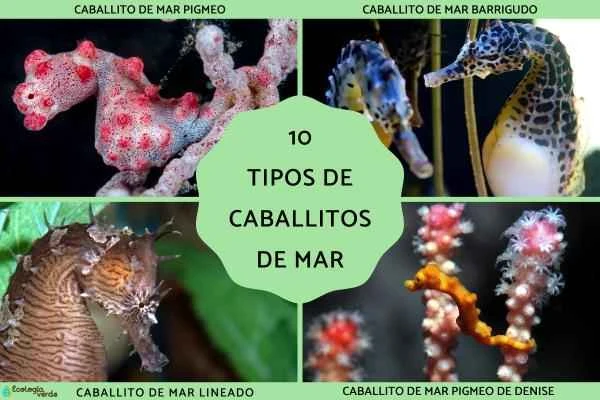
Common seahorse ( Hippocampus hippocampus )
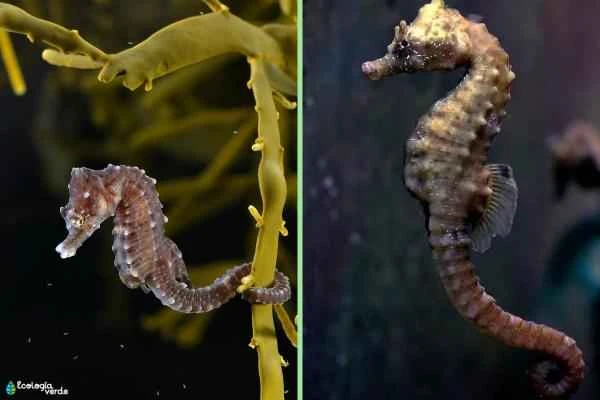
Distributed in the subtropical waters of the eastern Atlantic Ocean, from the Azores and Canary Islands to the coast of Guinea, and throughout the Mediterranean Sea. It is a non-migratory species, commonly found in waters less than 60 meters deep, in seaweed beds. Its physical characteristics include a short snout, less than one-third the length of its head. There is currently insufficient data to assess its conservation status.
Dwarf seahorse ( Hippocampus bargibanti )
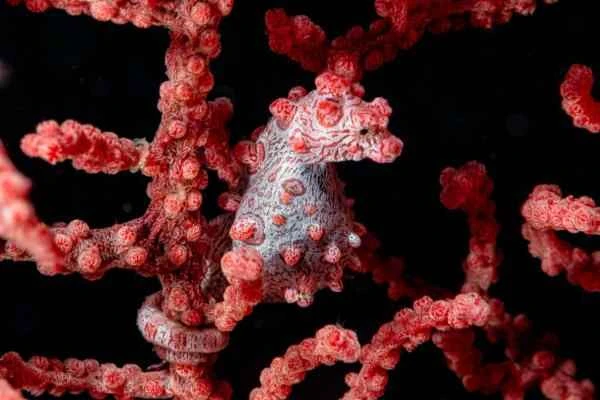
Distributed in Indonesia, the Philippines, Papua New Guinea, Queensland, Australia, and New Caledonia. It lives only on sea fan corals (Muricella), at depths of 16–40 meters. Its body surface has tubercles mimicking corals; it is short and stout, with a relatively short proboscis and a curled, grasping tail. Currently, there is a lack of sufficient data on its conservation status.
Large-bellied seahorse ( Hippocampus abdominalis )
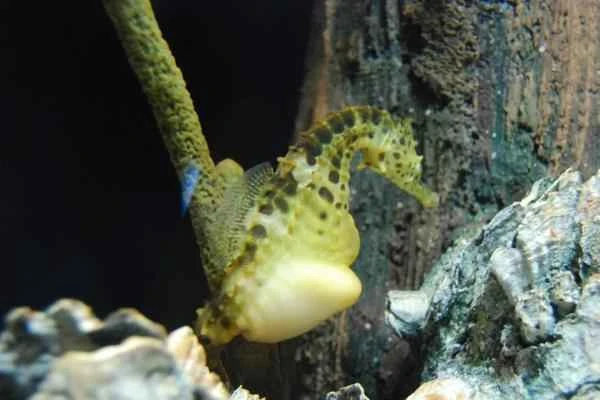
Also known as the big-bellied seahorse, it is distributed along the coast from New Zealand to Australia. It inhabits rocky intertidal waters and seaweed beds, with juveniles living in the planktonic zone or moving with floating seaweed. Reaching up to 35 cm in length, it is one of the largest seahorses. It is listed as "Least Concern" by the IUCN.
Caribbean seahorse ( Hippocampus ingens )
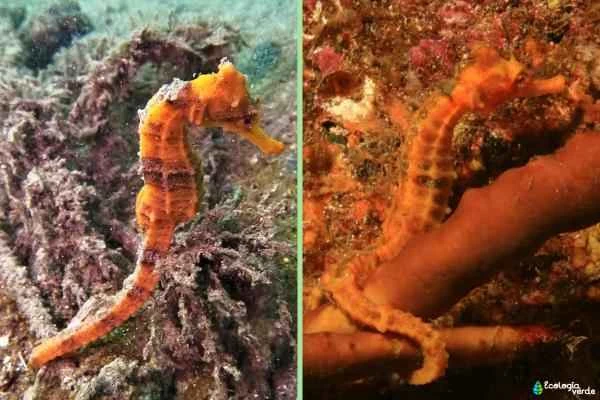
Its distribution ranges from San Diego, California, to Chile, including the Galapagos Islands. It inhabits mangroves, seagrass beds, kelp forests, and coral reefs, at depths of up to 60 meters. Males can reach up to 30 centimeters in length, making them one of the largest species in the genus. It is classified as "Vulnerable" by the IUCN.
Slender seahorse ( Hippocampus reidi )
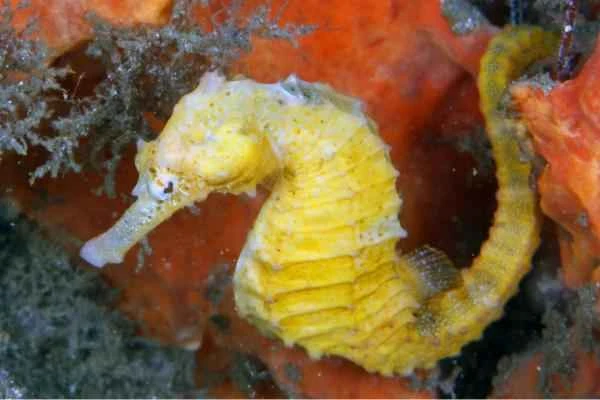
Also known as the long-snouted seahorse, it is distributed in the Caribbean Sea and the western Atlantic Ocean, including several countries such as the United States, Cuba, Jamaica, and Venezuela. It inhabits coral reefs, seagrass beds, and rocky areas, reaching depths of up to 55 meters. Its distinctive physical features include a prominent long snout and ring-shaped white markings on its body. It is classified as "Near Threatened" by the IUCN.
Striped seahorse ( Hippocampus erectus )
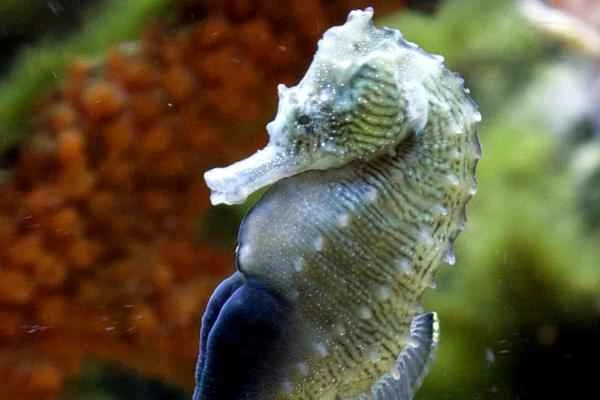
Distributed from Canada and the northern Gulf of Mexico to Panama and Venezuela. They inhabit diverse environments, including mangroves, coral reefs, seagrass beds, shell deposits, and salt marshes. Males can reach up to 19 cm in length. IUCN classifies them as "Vulnerable".
Babur seahorse ( Hippocampus barbouri )
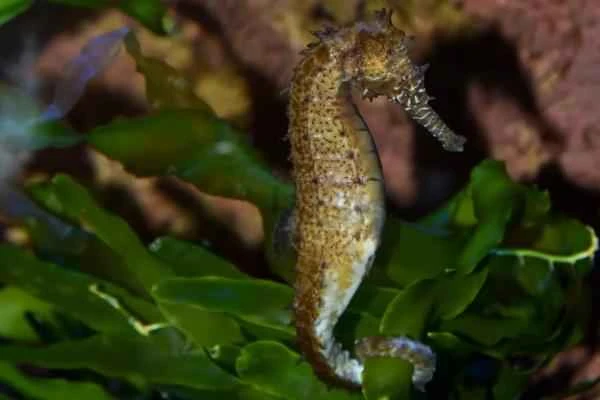
It is mainly distributed in the Philippines, Malaysia, and Indonesia. It primarily inhabits shallow seagrass beds, living at depths not exceeding 10 meters. Males can reach a maximum length of about 15 cm. It is listed as "Vulnerable" by the IUCN.
Long-nosed seahorse ( Hippocampus guttulatus )
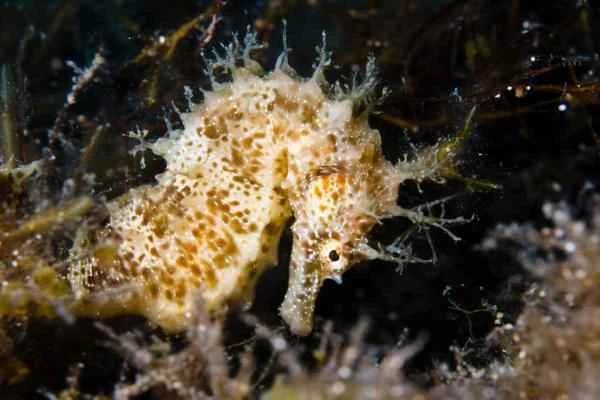
Distributed in the shallow waters along the eastern Atlantic, Mediterranean, and Black Sea coasts, often found near seaweed and seagrass beds. The body surface has small bony protuberances; the pectoral fins have 15–18 rays, the dorsal fin 18–21 rays, and the anal fin is very small. The male's abdomen is more rounded, while the female's abdomen ends at a right angle. Insufficient data are currently available regarding its protected status.
Denise pygmy seahorse ( Hippocampus denise )
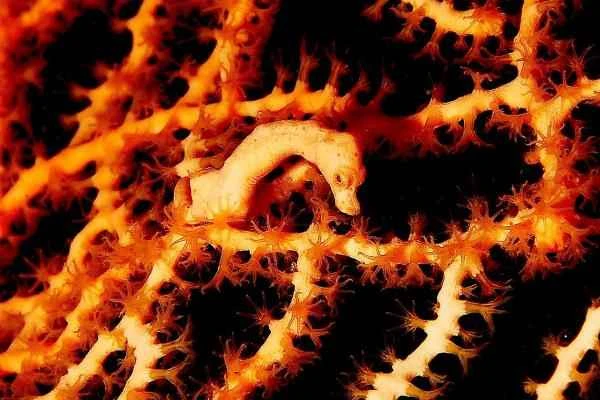
Distributed in Indonesia, Malaysia, Palau, Vanuatu, the Philippines, the Solomon Islands, and Micronesia. Inhabits sea fan corals (Annella, Muricella, Echinogorgia) at depths of 13–90 meters. Features a long neck, short snout, curled tail, and mimicking nodules on the body surface. No IUCN assessment data is currently available.
Japanese pygmy seahorse ( Hippocampus japapigu )
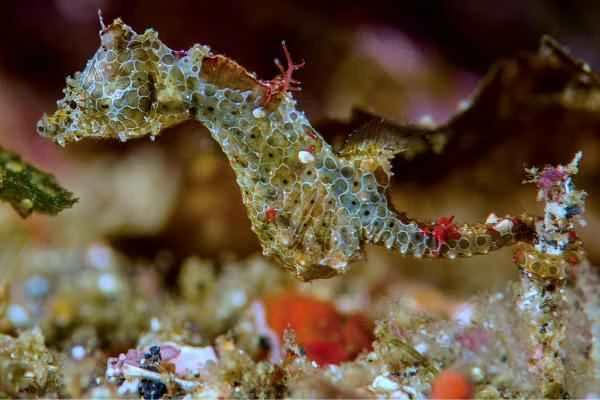
This newly discovered species is distributed in southeastern Japan, including Kashiwa Island, Sukumo Bay, the Kii Peninsula, the Izu Peninsula, Sagami Bay, and the Ogasawara Islands. It inhabits depths of 10–20 meters. Its distinctive skeletal structure is characterized by a triangular bony protuberance on its back and a pair of large, truncated spines.