Japan's diverse climate zones, ranging from the subarctic of Hokkaido to the subtropical of the Nansei Islands (Ryukyu Islands), and its numerous islands (4 main islands + 6,000+ smaller islands), have fostered an exceptionally rich and unique array of wildlife. This article compiles information on 10+ representative Japanese animals (including common Chinese names and scientific names), along with their physical characteristics, habitats, habits and diets, conservation status , and viewing tips , for easy browsing and educational purposes.
Tip: The Chinese names in this article are mainly the commonly used names in mainland China, while the scientific names are in parentheses, which facilitates cross-language retrieval.
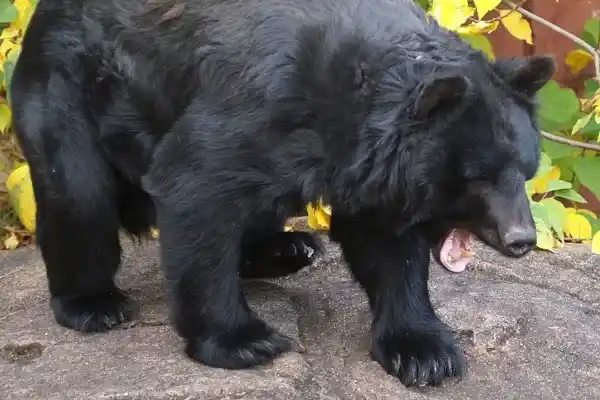
Japanese black bear (Japanese subspecies of Asian black bear) Ursus thibetanus japonicus
Physical characteristics : entirely black, often with a crescent-shaped white spot on the chest; adults are about 120–140 cm in length.
Habitat and distribution : Mountain broad-leaved forests and mixed coniferous and broad-leaved forests in Honshu and Shikoku (Note: The species distributed in Hokkaido is "Hokkaido brown bear" Ursus arctos yesoensis ).
Habits and Diet : Typical omnivorous , mainly feeding on nuts, berries, and insects, and seasonally consuming honey and small vertebrates.
Conservation status : Endemic, affected by habitat fragmentation, road segmentation and human-bear conflict.
Observation tips : Bears are more active in autumn when they gather to feed on hard fruits (oak, cork oak); be sure to accompany them with bear bells and bear spray and observe them from a distance.
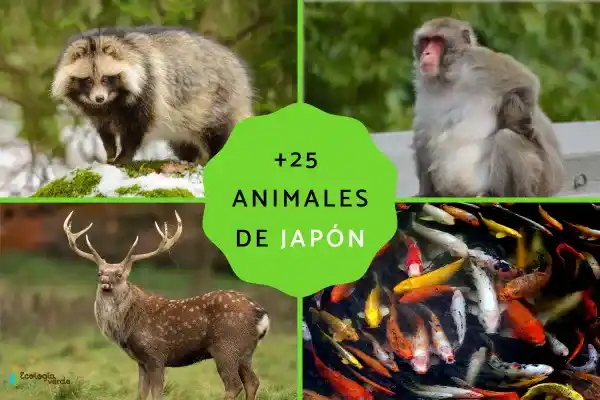
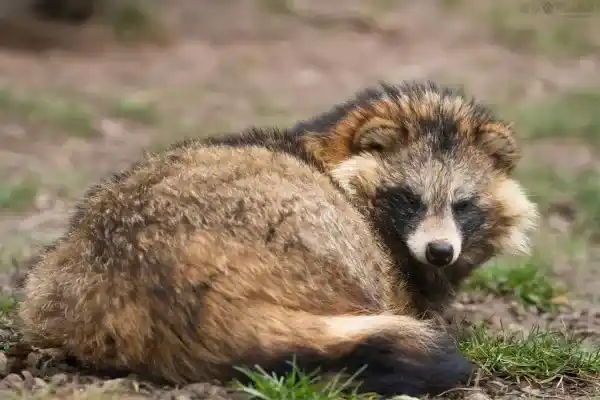
Tanuki (raccoon dog) ("Tanuki" is not a cat) Nyctereutes procyonoides (commonly known as Tanuki)
Physical characteristics : It has mask-like black spots resembling a raccoon, short limbs, and thick fur.
Habitat and distribution : Wetlands, shrublands and farmland - forest edge mosaic landscapes are commonly seen.
Habits and Diet : One of the few canines that hibernates or semi-hibernates (without a significant drop in body temperature); lives in small groups; omnivorous , consuming insects, fruits, amphibians, reptiles, and human food scraps.
Cultural Highlights : In Japanese folklore, the tanuki (raccoon dog) is a symbol of protection and good fortune , and is commonly seen in front of shrines and shops.
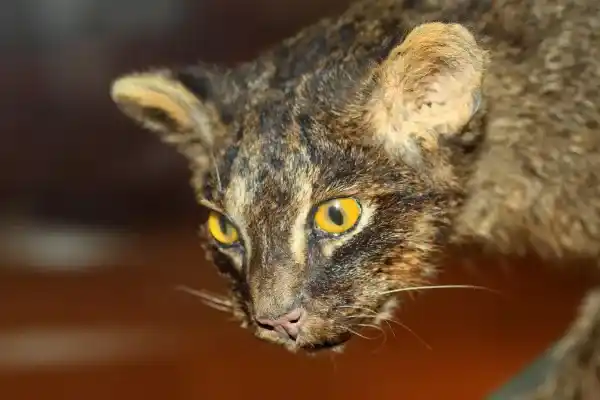
Iriomote Lynx (Iriomote Cat) Prionailurus bengalensis iriomotensis
Physical characteristics : Small to medium-sized wildcat with alternating black and brown spots and stripes on its body; short and rounded ears.
Habitat and distribution : Endemic to Iriomote Island, Okinawa Prefecture , with a small range, it is one of the wildcats with the smallest habitat in the world.
Habits and diet : Nocturnal, its diet includes crabs, frogs, lizards, birds and small mammals.
Conservation Status : Critically Endangered; road fatalities, introduced dogs and cats, and habitat development are the main threats. Iriomote Island has extensively implemented cat trails/culverts and speed limit signs to mitigate road fatalities.
Observation tips : Chasing and feeding are strictly prohibited; the activity is mainly for scientific research and observation using infrared cameras, and the public should only use it as an interpretation center for learning.
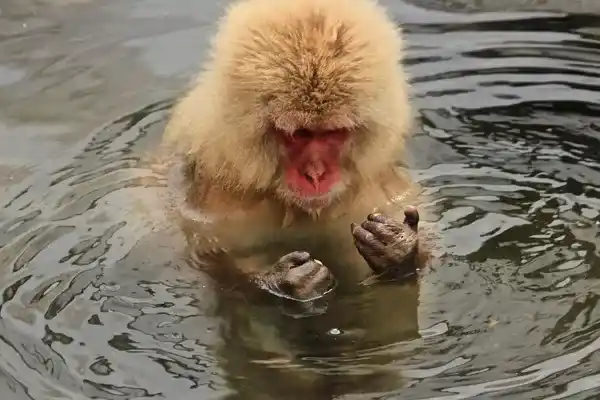
Japanese macaque ( Macaca fuscata )
Physical characteristics : red face, prominent hindquarters; one of the northernmost primates .
Habitat and distribution : From the central mountains of Honshu to the snowy northern regions; known for its "hot spring monkeys" at Jigokudani Hot Spring .
Habits and diet : They live in groups and are omnivorous, mainly eating plants; using hot springs for warmth in winter is a learned behavior.
Current status of protection : Overall stable; local conflicts with agriculture require non-invasive interventions to mitigate.
Observation tips : Keep your distance at the macaque park, do not look directly at them, and do not offer them food.
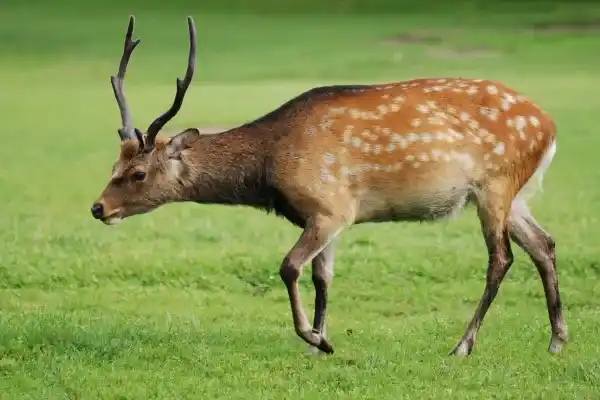
Sika deer/Japanese deer (Japanese subspecies of sika deer) Cervus nippon
Physical characteristics : prominent white plum blossom spots on the sides of the body in summer; well-developed forked horns on the head of males.
Habitat and distribution : forests, shrublands, and the edges of urban green spaces (the "divine deer" in Nara Park are from this area).
Habits and diet : Herbivorous, feeding on tender branches, leaves and herbs; male deer call and fight during the breeding season.
Conservation status : Overall not endangered, but overcrowding in some areas may lead to grazing on the understory, requiring scientific population management.
Observation tips : Only buy special deer crackers to feed them, and avoid plastic bags and human snacks.
Giant flying squirrel (Japanese giant flying squirrel) Petaurista leucogenys
Physical characteristics : Body length is about 50 cm, and tail length can reach 40 cm; there is a membrane between the forelimbs and hindlimbs, which allows it to glide at night like a "parachute".
Habitat and distribution : Mature forests in the mountains of this state, relying on large tree cavities for breeding and habitat.
Habits and diet : Nocturnal herbivorous, feeding mainly on tender leaves, fruits, and bark.
Viewing Tips : At night, use a red/low-brightness flashlight to observe from a distance, avoiding direct light into the eyes and minimizing interference.

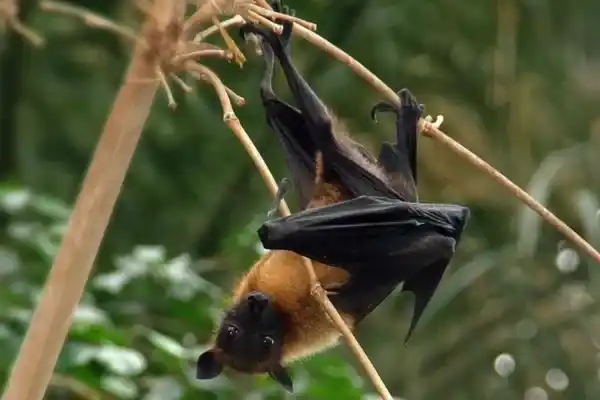
Ogasawara flying fox (Ogasawara fruit bat) Pteropus pselaphon
Physical characteristics : Large fruit bat with a wingspan of over 1 meter; "like the face of a small fox".
Habitat and distribution : Dry forest to subtropical forest in the Ogasawara Islands (Chichijima and Hakajima area).
Habits and diet : They feed on fruits and nectar , and are important pollinators/dispersers for island plants.
Conservation status : Endangered due to typhoons, habitat loss, predation by cats and rats, and conflicts with humans.
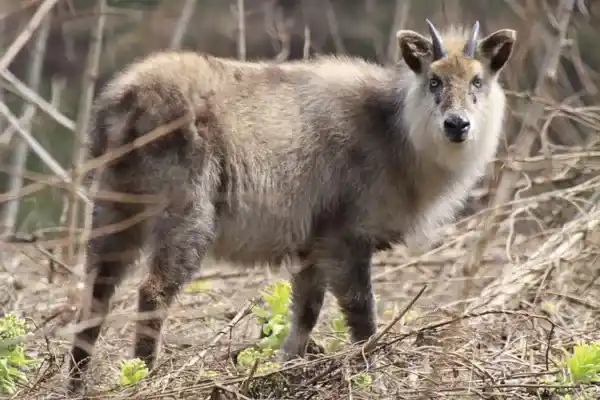
Japanese serow ( Capricornis crispus )
Physical characteristics : A small bovine species between a goat and an antelope, with short, straight horns and fluffy, grayish-black fur.
Habitat and distribution : Mountainous mixed coniferous and broad-leaved forests and rocky slopes in Honshu and Shikoku.
Habits and diet : Diurnal, feeding on tender branches of shrubs and herbs; usually solitary or in small groups.
Current state of preservation : Designated as a Special Natural Monument in Japan, it is generally well protected.
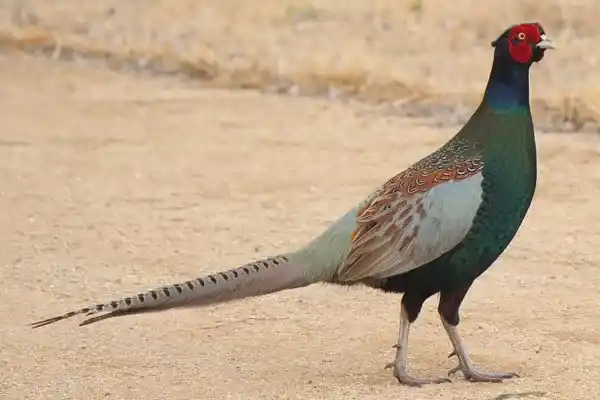
Japanese Green Pheasant ( Phasianus versicolor )
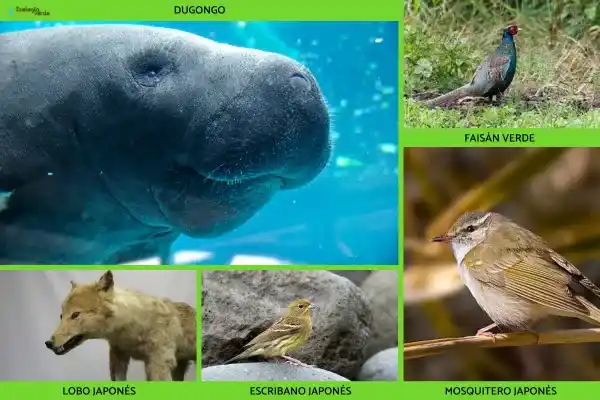
Physical characteristics : Japan's national bird; the male has metallic green plumage, brownish-grey wing coverts, and a long, pointed tail; the female has brown spots for camouflage.
Habitat and distribution : Farmland, riparian grasslands and shrublands in Honshu and Kyushu.
Habits and diet : Terrestrial, mainly feeding on seeds and insects; during the breeding season, the male bird's courtship call is loud.
Viewing tips : It is best seen at dawn and dusk in spring. Be patient and "wait" along the ridges of fields and by the reeds.
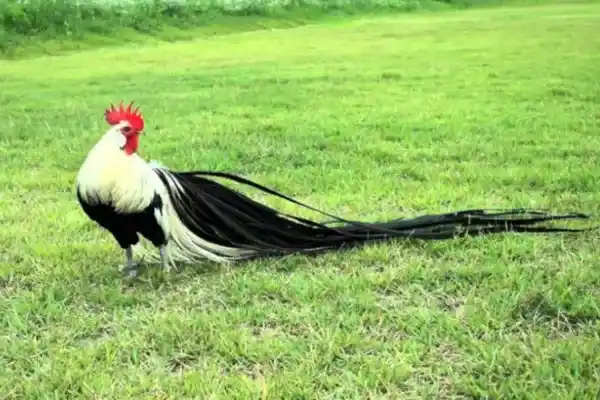
Long-tailed chicken (a domestic chicken breed) * Gallus gallus domesticus* “Onagadori*
Physical characteristics : The rooster has an extra-long tail feather that can exceed 1.5 m, and its plumage comes in various colors.
Habitat and distribution : A traditional breed kept and admired in Japan, it was listed as a Special Natural Monument in 1952.
Science highlights : Tail feathers require special enclosures and husbandry management to grow continuously, and the species is not a wild species.
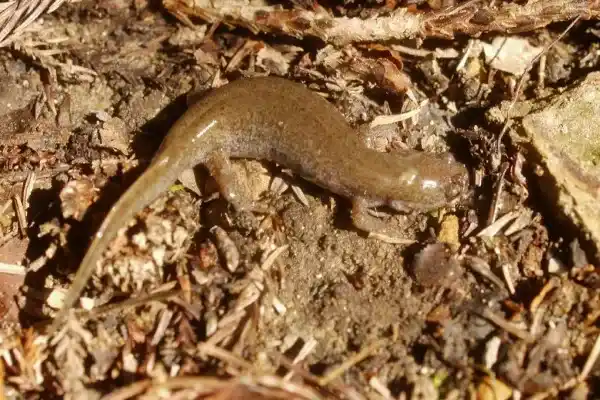
Japanese newts (several species in the family Hynobiidae )
Representative species :
Hynobius abei
Japanese cloud-patterned newt ( Hynobius nebulosus)
Japanese Newt ( Onychodactylus japonicus)
Key ecological features : It breeds mainly in cool mountain streams and moist woodlands , and is extremely sensitive to water quality, making it an excellent environmental indicator species .
Viewing Tips : Do not handle with bare hands, as amphibians have delicate skin and are particularly sensitive to hand lotion/sunscreen.
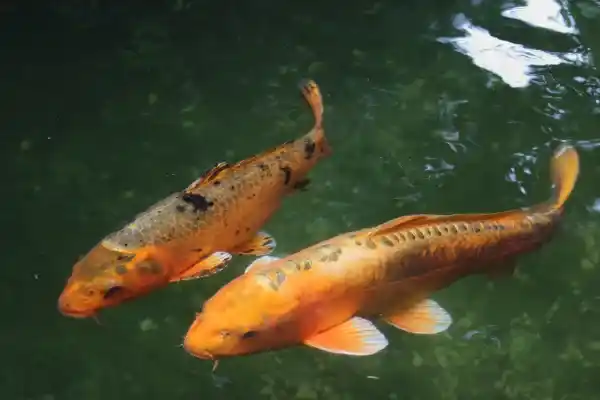
Koi (ornamental carp) Cyprinus carpio
Physical characteristics : An ornamental strain improved from European carp , with color patterns including red and white, Taisho Sanshoku, and Showa Sanshoku.
Habitat and distribution : Commonly found in traditional Japanese gardens, water features, and temple ponds; tolerant of low oxygen and wide temperature range.
Cultural highlights : Symbolizing good fortune, longevity, and resilience ; Japan has developed a systematic evaluation standard and competition culture.
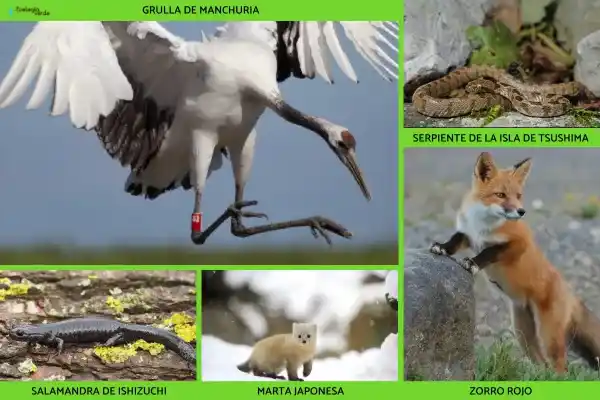
Other notable Japanese animals (quick list)
Red-crowned crane (Grus japonensis) (Hokkaido wetlands)
Tsushima viper (Gloydius tsushimaensis) (endemic to Tsushima Island)
Hynobius hirosei
Japanese yellow weasel ( Martes melampus )
Red fox Vulpes vulpes
Eumetopias jubatus (Northern Sea Lion)
Japanese Sandpiper Gallinago hardwickii
Japanese Red-bellied Salamander ( Cynops pyrrhogaster )
Blue-breasted parrot ( Erythrura trichroa )
Dugong dugon (Okinawa waters)
Japanese wolf (Canis lupus hodophilax) (extinct, historical species)
Yellow-breasted Bunting (Emberiza sulphurata ) and Japanese Warbler (Phylloscopus xanthodryas) (representative migratory/forest birds)

Three basic principles of viewing and photographing
Do not feed or touch the animals : Avoid altering their behavior or causing conflict between humans and animals.
Keep your distance : Use a telephoto lens/telescope; amphibians and reptiles should especially not be handled or played with by hand.
Follow the trails : Adhere to trails and speed limits to reduce the risk of roadkill (Iriomote lynxes and amphibians benefit the most).
Frequently Asked Questions (FAQ)
Q: Where in Japan is it easiest to spot iconic wildlife?
Hokkaido : Red-crowned cranes, Hokkaido brown bears, sea eagles and sea lions;
Central mountainous region of Honshu : Japanese macaque, green pheasant, serow;
Okinawa and Yaeyama (Iriomote, Ishigaki) : Iriomote wildcat, birds endemic to Ryukyu, dugong (viewed from offshore).
Q: When is the best time to travel?
Spring (March–May) : Birds are actively breeding and singing;
Autumn (September–November) : Peak season for forest colors and frugivorous animal activity;
Winter (December–February) : Hokkaido for crane, eagle, and marine mammal viewing;
Summer (June–August) : Observe amphibians, reptiles and nocturnal mammals in the Southwest Islands.
Conclusion
From Japanese macaques basking in snowy hot springs to giant flying squirrels gliding through rainforest night skies, and Ogasawara flying foxes patrolling the island nightscapes, the diversity and uniqueness of Japan's animals far exceed expectations. This illustrated guide aims to help readers quickly identify, scientifically observe, and encounter them in a friendly manner .
References
E. Wilson & M. DeeAnn (2005) Ursus thibetanus japonicus. World mammal species. Taxonomic and geographical reference. Third ed. Johns Hopkins University Press, Baltimore; Volume 2: 2142.
V. Millien-Parra et al., (1999) Island Biogeography of Terrestrial Mammal Communities in Japan: An Example of a Relict Fauna. Wiley Online Library.
Taylor, J., R. Mahon. 1977. Hybridization of carp (Cyprinus carpio) and crucian carp (Carassius auratus), the two earliest introduced species in the lower reaches of Lake Laurentian. Fish Environmental Biology 1(2):205-208.
R. Tadano, M. Nishibori, M. Tsudzuki (2009). Genetic structure and differentiation of the Japanese Onagadori breed and its relationship with feather color variation: recommendations for its management and conservation. Animal Genetics 40 (6): 989–992.