Located in Oceania, Australia's isolated islands and diverse climate zones have fostered world-class bird diversity. Besides large, fast-moving but not particularly adept fliers like the cassowary and emu , Australia boasts a significant number of endemic species (found only in the wild on its mainland or outlying islands). According to BirdLife International's geographical distribution, these endemic birds are found in: Cape York, tropical Queensland, eastern/southern Australia, southwestern Australia, northwestern Australia, Tasmania, and Christmas Island.
Below is a selection of 20+ highly representative Australian bird species.
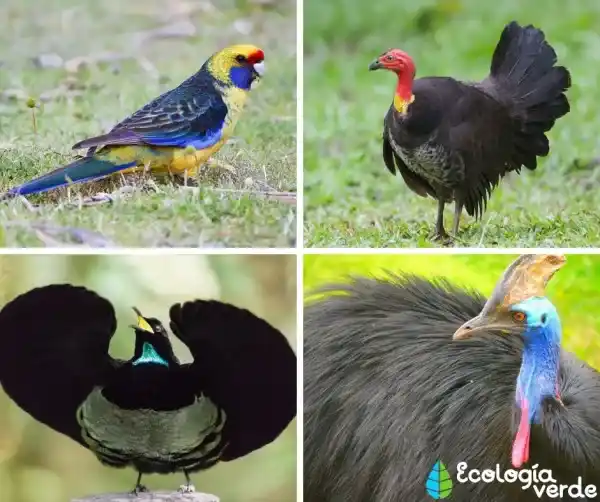
1) Green Rosetta (Tasmanian Rosetta)
Green Rosella | Platycercus caledonicus
Key identification features : Brightly colored body; yellowish head and abdomen, bright red stripe on the forehead, blue spots on the cheeks; long tail with a slight grayish-green tinge, and blue side tail.
Distribution and Habits : Endemic to Tasmania ; commonly found on forest edges, in orchards and gardens; mainly feeds on seeds, fruits and nectar; has a clear and melodious call.
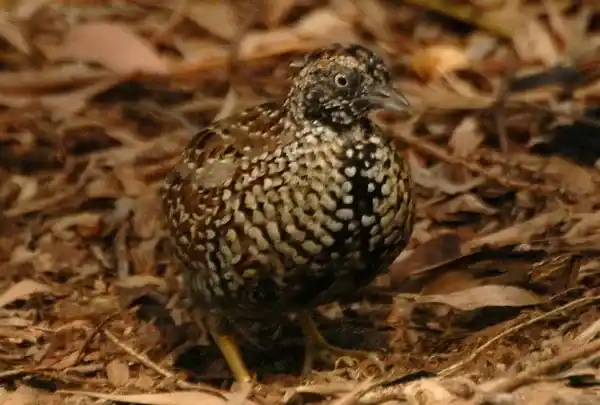
2) Black-breasted Three-toed Quail
Black-breasted Buttonquail | Turnix melanogaster
Key identification features : It resembles a quail/partridge in appearance; both males and females have mottled black, white and brown plumage, with prominent black spots on the chest.
Distribution and Habits : Found in the humid forests and coastal shrublands of eastern Australia ; typically terrestrial , often foraging for insects and seeds in the leaf litter.
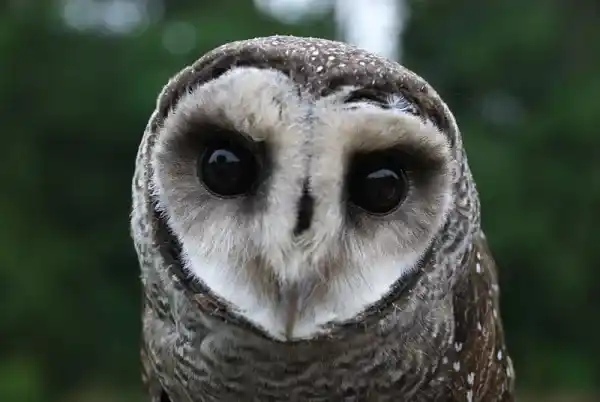
3) Little tobacco owl (spotted grass owl)
Lesser Sooty Owl | Tyto multipunctata
Key identification features : Heart-shaped facial disc; body feathers are predominantly gray-black with dense fine white spots, giving an overall "smoky" appearance.
Distribution and Habits : Endemic to tropical Queensland (Cape York area); nocturnal raptor that feeds on small mammals and large insects and often hunts in rainforest valleys.
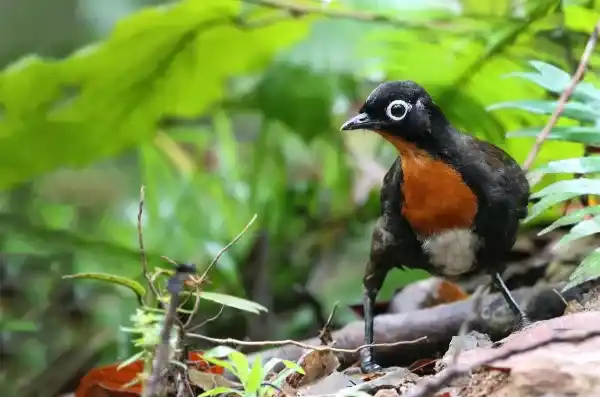
4) Spalding Spinebird ("Spinebird")
Chowchilla | Orthonyx spaldingii
Key identification features : The tail feathers are firm and upright; the body feathers are mainly dark brown, with reddish-brown spots on the chest and a whitish abdomen.
Distribution and Habits : Found in the mountain rainforests of northern Queensland; a passerine bird known for its songbirds , which are adept at repeatedly plucking leaves and turning over branches in the forest floor to find arthropods, and also prey on small vertebrates.
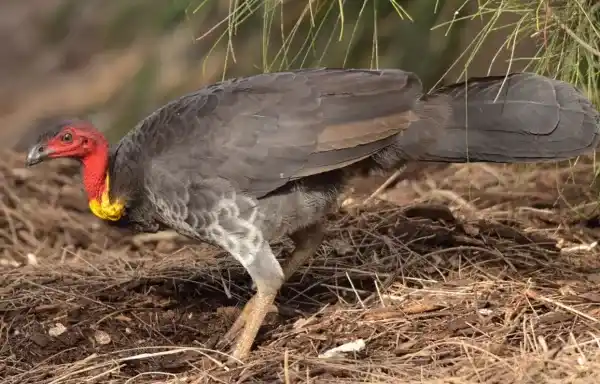
5) Australian bush turkey (bush pheasant)
Australian Brush-turkey | Alectura lathami
Key identification features : It is about the size of a domestic chicken, and its body is dark; its bare head and neck are bright red , and the male has prominent yellow wattles.
Distribution and Habits : Evergreen forests to subtropical forests along the eastern coast; Famous **"compost incubators"**: The male bird builds a "nest" from fallen leaves and relies on the heat of decay to control the temperature for incubating the eggs.
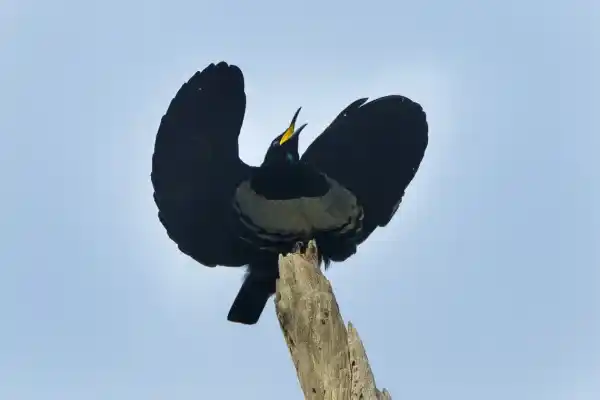
6) Victoria Riflebird (Victoria Bird of Paradise)
Victoria's Riflebird | Ptiloris victoriae
Key identification features : The male is velvety black with metallic green-blue "electric" markings on its throat and chest; it flaps its wings during courtship, making it a highly entertaining sight.
Distribution and Habits : Found in the Atherton Plateau and other areas of northeastern Queensland; feeds on insects and fruits, a typical member of the Passeriformes-Paradise Birds group .
Other common "songbirds" in the same genus/region include :
Macleayanus (Xanthotis macleayanus )
Green Catbird Ailuroedus crassirostris
Red-eared Firefly (Stagonopleura oculata)
Menura novaehollandiae (the Lyrebird of Paradise)
Oriental Bearded Bird (Dasyornis brachypterus)
Ochre-colored shrub thrush (Atrichornis rufescens)
7) Tasmanian Black Kulaon (Black Kulaon)
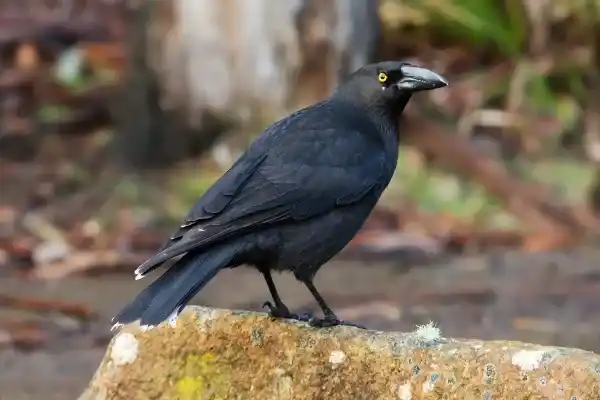
Black Currawong | Strepera fuliginosa
Key identification features : It resembles a crow but is more slender; it has striking yellow eyes and a thick beak.
Distribution and Habits : Endemic to Tasmania ; omnivorous (insects, berries, small vertebrates), common in forest edges and highland scrubland.
Closely related species : Strepera graculina and S. versicolor are found on the Australian mainland and near-shore islands.
8) Australian cockatoos (representing 4 species)
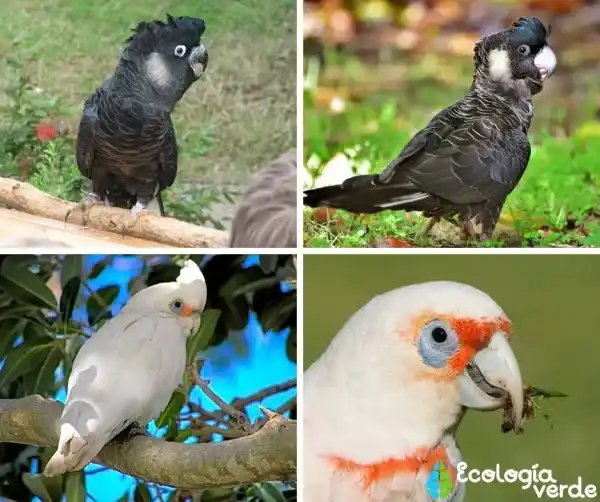
Long-billed Black Cockatoo (Calyptorhynchus baudinii)
Short-billed Black Cockatoo (Calyptorhynchus latirostris)
Burrowing Cockatoo (Cacatua pastinator )
Long-billed Cockatoo ( Cacatua tenuirostris )
Common features : a tuft of phoenix crest on its head that can stand upright; a hoarse and loud cry.
Ecological highlights : They are mostly found in the eucalyptus forest-farmland ecotone in southern and southwestern Australia ; they feed on nuts, seeds, tubers and larvae, and often move in small groups with loud noise.
9) Australian birds that are good at running (but not good at flying)
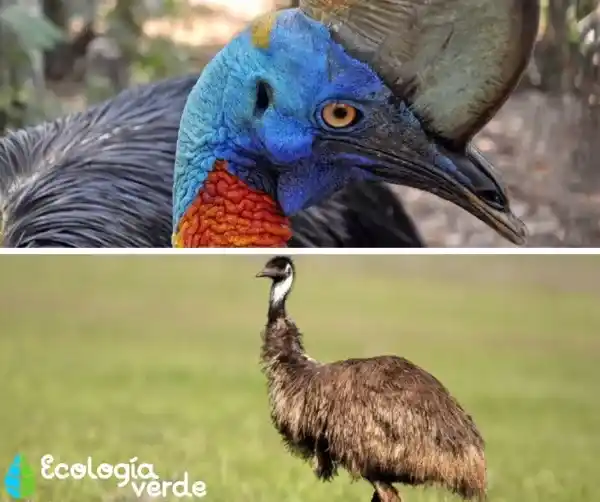
Cassowary (Castanopsis)
Cassowaries | Casuarius spp.
Key identification features : height up to 1.5 meters ; a "bone helmet" on the head; blue and red bare skin on the neck; three-toed feet with "prickly toes".
Ecology : A large fruit disperser in tropical rainforests, it ingests large fruits and defecates over long distances to spread its seed; it is wary and should not be disturbed at close range.
emu
Emu | Dromaius novaehollandiae
Key identification features : The world's second largest living bird; brownish-grey downy feathers with black tips.
Ecology : Widely distributed in arid and semi-arid regions of Australia; good runner (up to 50 km/h), feeds on seeds, buds and insects, and the male is responsible for incubation and care of the chicks.
A list of more representative bird species of Australia (supplementary list)
Albatross: Wandering Albatross ( Diomedea exulans ), White-fronted Albatross (Thalassarche salvini) , Smoky Albatross (Phoebetria fusca) – A pelagic seabird that glides with large wings and is commonly found in the Southern Ocean and off the southern coast of Australia.
Inca Tern ( Larosterna inca) — A seabird endemic to the southeastern Pacific Ocean, occasionally observed near the coast of Australia; easily identifiable by its grey body, red beak, and white "mustache".
Woodland birds in Tasmania and the southeastern part of the continent , such as the Yellow-tailed Black Cockatoo (Zanda funerea) and the Laughing Kookaburra (Dacelo novaeguineae) , are well-known birdwatching stars.
Birdwatching and Science Popularization Highlights (for easy reader browsing)
Best birdwatching window :
Queensland Humid Tropics (Cairns-Atherton Plateau) : Rainforest specialties such as Victoria Riflebird, Little Tobacco Owl, and Spiny-tailed Bird.
Tasmania : Black Kulaon, Green Rosette and Southern Seabird.
Eastern coastal woodlands : shrub turkeys, black-breasted quails, and other ground-dwelling birds.
North Queensland/New Guinea : Cassowary habitat (a safe distance must be maintained from a professional guide).
Identification Shorthand :
Pay attention to the outline and behavior (whether it is terrestrial, whether it is noisy in groups);
Look for key pigmentation spots (blue spots on the cheeks, chest spots, and metallic sheen).
Listen to the calls (the hoarse call of the kulawon, the screeching of the cockatoo, the courtship call of the bird of paradise).
summary
Australia's birdlife is uniquely adapted, ranging from tropical rainforests to arid outbacks, from mountains to offshore islands. The 20+ species listed above include both continental icons (emu, cassowary, cockatoo) and regional endemicities (specifically found in the rainforests of Tasmania and Queensland). Whether for scientific research or nature travel, as long as you respect their habitats, maintain distance, and refrain from disturbing feeding, you can enjoy a consistently wonderful birdwatching experience in this "bird paradise."
bibliography
Forshaw, JM and Cooper, WT (1981), The World's Parrots. David & Charles, Newton Abbot, London, p. 233.
Ferrán i Andreu, O. and Induráin, J. (2002), Contemporary World Geographic Atlas, SPES, 7th edition, pp. 194-195.
Ardeola. Handbook of the Birds of the World. Madrid: SEO/Birdlife Publishing House, 45 (1): 87-96.