The origin of hominins, represented by the transition from Australopithecus to Ardipithecus, was an evolutionary leap that marked the divergence of the human family from other groups within higher primates. The next leap was within the human family itself: a group within the homininaceae family more closely related to us—the genus Homo—appeared around 2.5 million years ago.
talented people
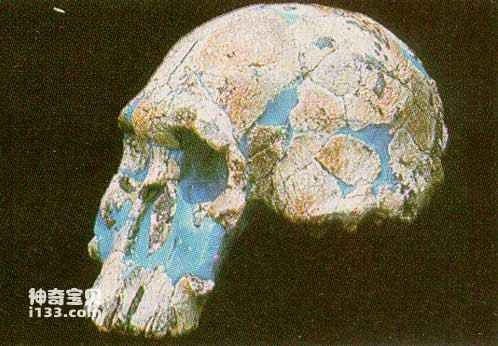
In 1960, just one year after Mary Leakey discovered the famous "East African Man" (Australopithecus boisei) in Olduvai Gorge, Tanzania, her eldest son, Jonathan Leakey (Richard Leakey's brother), discovered a skull fragment of another type of human in Olduvai Gorge, along with related mandibles, hand bones, and other clavicle, hand, and foot bones. This skull fragment was relatively thin, indicating that this individual was more agile than any known Australopithecus. Other bones corroborated this hypothesis, particularly the smaller cheek teeth. Most importantly, however, this new type showed that their brains were 50% larger than those of Australopithecus. After several more years of excavation and research, Louis Leakey, Jonathan and Richard's father and Mary's husband, concluded that while Australopithecus was part of the human ancestry, these newly discovered fossils represented the early human type that would eventually give rise to modern humans. Therefore, Louis Leakey named this new type Homo habilis, as the first early member of the genus Homo. The name “Capable Men” was suggested to Louis by Dart, meaning “skillful people”, because it is speculated that the tools found in this era were made by them.
Lewis's conclusions immediately sparked a clamor of opposition among his peers. At the time, the prevailing definition in anthropology was the standard definition of the genus *Homo* proposed by the British anthropologist Sir Arthur Keith, which set the brain volume at 750 ml or more. However, the new types discovered by Olduvai had a brain volume of only 650 ml, not even crossing the then-considered boundary between human and ape brain volume. Yet, the new skulls did indeed resemble humans more than apes. How to address this contradiction? Lewis firmly believed in his viewpoint and therefore proposed that the boundary between human and ape brain volume should be adjusted to 600 ml. This approach undoubtedly greatly intensified the heated debate on this issue. However, with the accumulation of new discoveries and the deepening of research, the view that *Homo habilis* was the earliest member of the genus *Homo* was eventually accepted; moreover, it was later proven that the 650 ml brain volume skull belonged to a child, and the average brain volume of adult *Homo habilis* was close to 800 ml.
The emergence of the genus *Homo* was the first and most significant event since the birth of the human family, representing the first evolutionary leap within this family. Starting with *Homo habilis*, the earliest member of the genus, humanity began its truly "human" development, characterized by a rapid increase in brain size and accompanied by numerous other evolutionary advancements. It was within the genus *Homo* that humans evolved from *Homo habilis* to *Homo erectus*, then through the early and late stages of *Homo sapiens*, ultimately forming the modern humans we know today, with their rich and diverse cultures and advanced technology.