Many animals have horns or horn-like structures on their heads. Some of these structures are used for defense, some are weapons used for courtship or fighting among individuals of the same species, and others also serve functions such as thermoregulation and display. They vary in shape: some are thick and some are thin, some are straight and some are spiral, some are curved backward, and some even have segments and branches. Below, we will systematically introduce you to what horns are, how to distinguish them from deer antlers, and list 20+ of the most representative long-horned animals from Africa, Europe, and Asia (including scientific names for easy reference and popular science display).
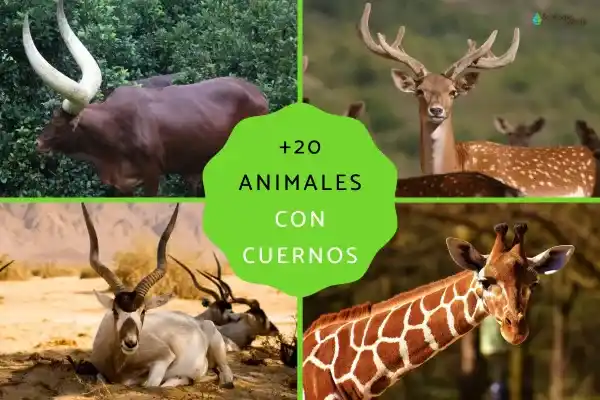
What are "horns"? The key difference between them and "antlers" (deer antlers)
Horn (Cornu / Horn)
Horns are bony cores extending from the frontal bone (forehead), covered by a keratin sheath (or fine hair-covered skin). They do not shed completely each year , are usually carried throughout life, and thicken and lengthen as the individual grows. They are typically found in the **Bovidae** family, such as cattle, sheep, antelopes, and other similar animals. Whether males and females have horns varies depending on the species (e.g., both male and female European bison have horns, while many female antelopes have shorter horns).Antlers
Found in the Cervidae family (such as deer, moose, roe deer, and reindeer), antlers are entirely composed of bone tissue , covered with a "velvet skin" (rich in blood vessels) during the growing season, which sheds and regenerates annually ; most only males have antlers, with the exception of reindeer (Rangifer tarandus), where both males and females possess antlers . Therefore, antlers are not the same as "horns" .Easily confused "horn-shaped" structures
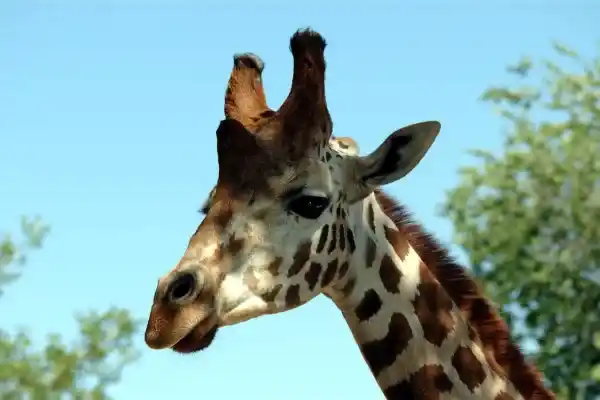
The giraffe's "osicones" are ossified cartilage and fused with the skull, covered with fur, and are not "horns" in the bovine sense .
Rhinoceros horn : It is composed almost entirely of keratin fibers and has no bony core . Strictly speaking , it is not a typical bovine horn.
The horns of some reptiles (such as some chameleons and horned lizards) are made of keratin or skin and bone structures, and are different from the horns of bovids.
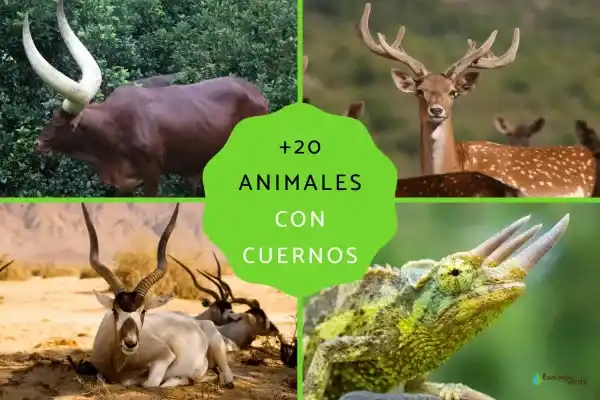
In summary, the term "horned animals" in this article mainly refers to the " true horns " of the Bovidae family. A few special cases that are commonly referred to as "horned" are also listed with explanations to help website readers identify them correctly.
African longhorned animals (selection)
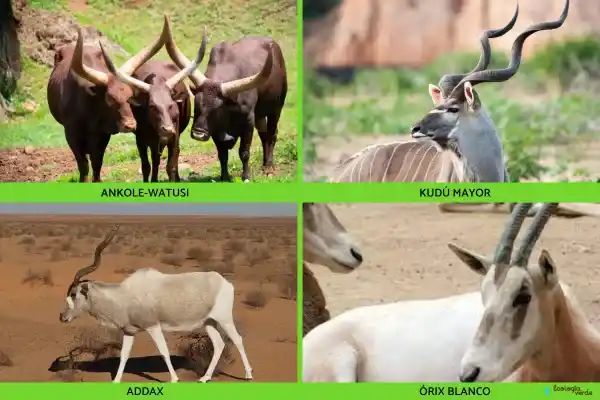
Ankole-Watusi ( Bos taurus africanus )
Known for its enormous horns , a single horn can exceed 1.5 meters in length and weigh up to 50 kilograms . Hollow and rich in blood vessels, these horns serve both as display and heat dissipation features, making them a visually striking breed of livestock.Greater kudu ( Tragelaphus strepsiceros )
The male has an elegant V-shaped spiral horn , which typically rotates 2–3 times and can reach a length of about 1.25 m ; the horn shape is used for both male display and wrestling.Addax ( Addax nasomaculatus )
This species of Sahara Desert species, both male and female, possess long, spiral horns with distinct " segments " on their faces; they are highly drought-resistant and are masters of survival in the extreme desert environment.Scimitar-horned oryx ( Oryx dammah )
With long, backward-curving horns resembling the " scimitars " of the Middle East, it lives in groups and is an iconic species of open deserts and semi-arid grasslands.Sable antelope ( Hippotragus niger )
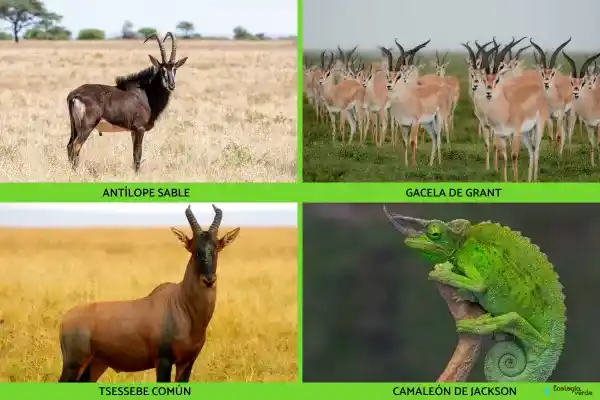
They have thick, long , sickle-shaped horns, which are especially exaggerated in males; when they encounter predators, they will lower their heads and thrust forward to fight back , and are known for their bravery.Grant's gazelle ( Nanger granti )
It has slender, symmetrical segmented horns, with the male horns being even longer ; it is distributed in the East African grasslands and possesses both speed and endurance.Red-spotted wildebeest (Tsessebe, Damaliscus lunatus )
Both males and females have horns , which are short, open spirals , enabling them to run swiftly.Jackson's chameleon ( Trioceros jacksonii ) (Description: Reptile)
Males often have three "horns," which are keratin/bone protrusions and not horns in the Bovidae family ; they are used for courtship and confrontation with other males.The bony osicones of a giraffe ( Giraffa spp.) (Supplement)
Ossification of cartilage and coverage with fur , fused with the skull; often mistakenly referred to as "horns," but is actually a distinct type .
European longhorned animals (selection)
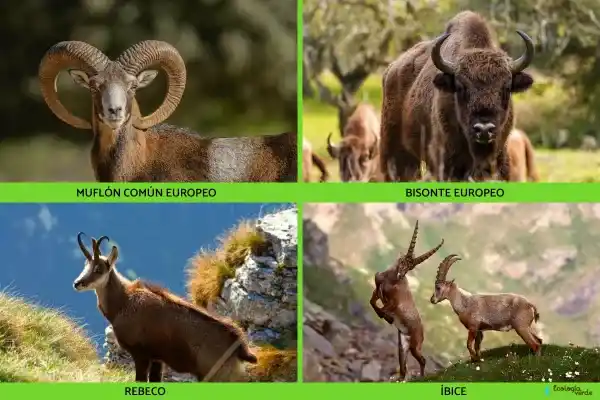
European argali sheep (Mouflon, Ovis orientalis musimon )
The males have large, inward-curling "ram's horns" that are symmetrical and are often used for duels; they are mostly found in open areas of mountains and hills.European bison ( Bison bonasus )
One of the largest land mammals in Europe, both males and females have horns , which are short, thick, and curved upwards; they live in groups on the edges of mixed coniferous and broad-leaved forests and grasslands.Alpine ibex/Alpine antelope (Chamois, Rupicapra rupicapra )
After the short horn grows upward, it hooks sharply backward into a " hook " shape, making it an agile and skilled jumper in mountainous terrain.Alpine ibex/Alpine ibex (Alpine ibex, Capra ibex )
It has an extremely long, backward-curving horn with a lateral protrusion at the leading edge; it is skilled at rock climbing and is an "expert" on high mountain cliffs.
Asian longhorned animals (selection)
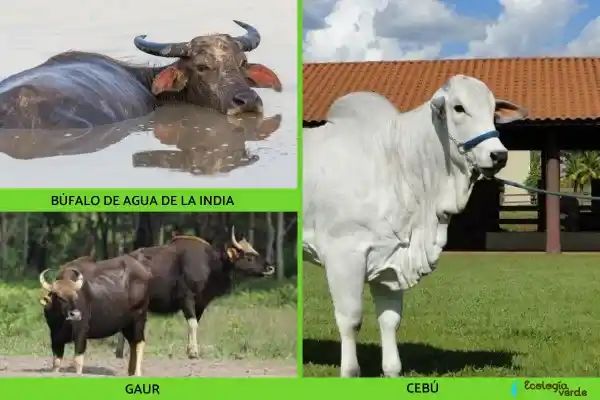
Indian buffalo ( Bubalus bubalis )
The horns are flat, wide , and spread outwards , with the distance between the two horns reaching about 1.2 m ; they are widely distributed in Asia in a semi-domesticated/domesticated manner.Gaur ( Bos gaurus )
It has relatively short and thick horns with black tips that arch upwards; it is native to the edge of forests in South and Southeast Asia and has a robust physique.Zebu (common name; scientific name often written as Bos indicus or Bos taurus indicus )
Characterized by short horns, long drooping ears, and a prominent hump on its back and shoulders ; heat-resistant and tolerant of poor feed, it is an important livestock type in Asia.Nilgai ( Boselaphus tragocamelus )
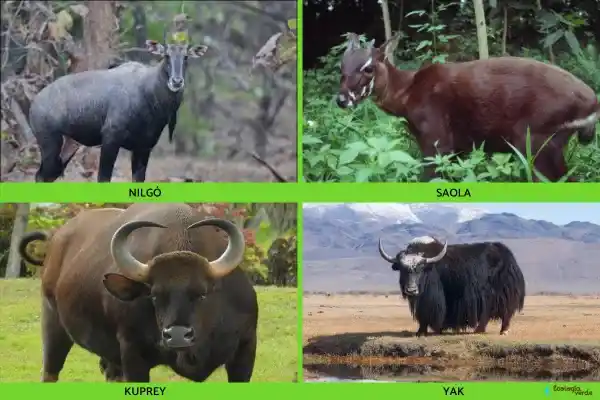
Only males have horns , which are short and straight, about 15–24 cm long; they are commonly found in dry forests and shrublands in the Indian subcontinent.Saola ( Pseudoryx nghetinhensis )
The " Asian Unicorn " of the mountainous border region between Vietnam and Laos has long, nearly straight horns on both males and females ; it is critically endangered and elusive.Kouprey ( Bos sauveli )
Mysterious cattle species in the tropical forests of Cambodia and other places; male horns are spiral , female horns are longer and bend forward , and sexual dimorphism is obvious (their survival status in the wild is extremely pessimistic).Wild yak ( Bos mutus ) / Domestic yak ( Bos grunniens )
It adapts to the cold and arid environment of Central Asia and Qinghai-Tibet, with its long horns pointing upwards and slightly inwards ; it has well-developed fur and is resistant to cold and hypoxia.
Frequently Asked Questions (Quick Science Tips for Readers)
Will the corner "fall off"?
Bovine antlers typically do not detach ; if they are injured and broken, the core of the bone is damaged and they are difficult to regenerate completely (unlike deer antlers).
Rhinoceros horn is made of keratin and can grow back after being cut , but for ethical and conservation reasons, removing the horn is not a foolproof way to prevent poaching.Why do some females also have horns?
In many bovine species, both males and females have horns (such as European bison and some antelopes), with female horns typically being thinner and shorter; whether or not a species has horns is related to its population ecology and behavior (predation pressure, competition among its own kind, etc.).Are horns only used for combat?
It may also be used for heat dissipation (such as in hollow, blood vessel-rich bighorn cattle), species/sex identification and display , defense and path clearing , etc.
Reference list overview (for quick browsing and internal links)
Africa : Ankole-Watusi ( Bos taurus africanus ) / Tragelaphus strepsiceros / Addax nasomaculatus / Oryx dammah / Hippotragus niger / Nanger granti / Damaliscus lunatus / Trioceros jacksonii / (supplement) Giraffe bony horn
Europe : European argali ( Ovis orientalis musimon ) / European bison ( Bison bonasus ) / Alpine ibex ( Rupicapra rupicapra ) / Alpine goat ( Capra ibex )
Asia : Indian buffalo ( Bubalus bubalis ) / Great bull ( Bos gaurus ) / Zebu ( Bos indicus ) / Blue bull ( Boselaphus tragocamelus ) / Sura ( Pseudoryx nghetinhensis ) / Khunpai wild buffalo ( Bos sauveli ) / (wild) yak ( Bos mutus )
Want to explore further? You can find related reading on this site:
Vertebrates : Classification, Characteristics, and Examples
What are the bony horns of a giraffe ? And how do they differ from "antlers"?
Why do deer antlers fall off and regenerate every year? The physiology of antlers.
bibliography
C. Urods (2006). Elements of animal anatomy and physiology. Editorial, Universidad Estatal a Distancia, 2: 85-90.
C. Gregson (1991). The African origin of African cattle? African Archaeological Review, 9: 119-144.
L. Harrison Matthews (1977). The Life of Mammals. Destination Editor. Pages 710-711
V. Harnak and V. Mazak (1990). Encyclopedia of Animals, World Mammals. Madrid: Susaeta, Spain. p. 208.