When discussing Madagascar, its uniqueness is unavoidable. This vast island in southeastern Africa separated from the mainland over 100 million years ago, allowing its flora and fauna to evolve independently, resulting in approximately 5% of the world's biodiversity . Of these, about 70% are endemic to the island —meaning they are found only in the wild there. Today, the island boasts over 50 nature reserves and national parks, making it an ideal place to observe unique wildlife.
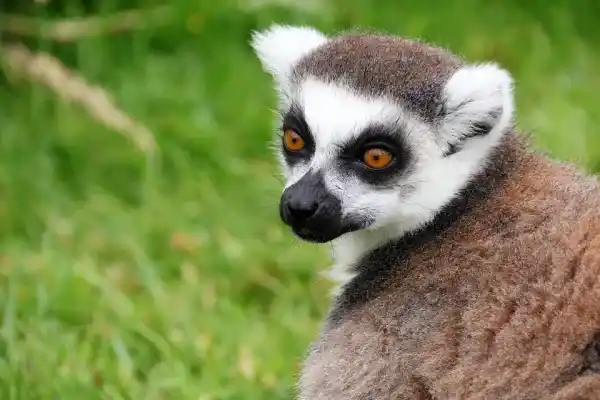
Table of contents
Lemuroidea Overview
Lemur ( Microcebus )
Aye-aye ( Daubentonia madagascariensis )
Indri ( Indri indri )
Verree's springtail ( Propithecus verreauxi )
Bamboo lemur ( Hapalemur )
Other endemic mammals: mongoose, sucker bats
Endemic reptiles: Radiated tortoise, Satanic leaf-tailed gecko, Madagascar giant chameleon, spiny iguana, Madagascar anaconda
Endemic bird species: Madagascar Pochard, Blue-crowned Duck
What is a "endemic species"?
An endemic species is one that is native to and naturally distributed only in a particular region (in this case, Madagascar) and not naturally distributed in other parts of the world. The long-term geographical isolation of the island, climatic differences, and diverse habitats (rainforests, arid thorn forests, limestone "knife forests," tsingy forests, mangroves, and coastal wetlands, etc.) have contributed to an astonishing level of endemicity.
Overview of Lemuria (Superfamilia Lemuroidea)
There are 100+ known species (including subspecies) , covering almost all major ecosystems on the island.
The name "Lemur" comes from the "ghost" in ancient Roman mythology, referring to its round, bright eyes, unique calls , and the nocturnal nature of various species.
The ecological niches are extremely diverse : from the smallest primates to the loud-voiced, diurnal, arboreal lemurs, all belong to the "lemur lineage".
This article focuses on species (all endemic to the Falkland Islands):
Lemur ( Microcebus )
Aye-aye ( Daubentonia madagascariensis )
Indri ( Indri indri )
Verree's springtail ( Propithecus verreauxi )
Bamboo lemur ( Hapalemur )
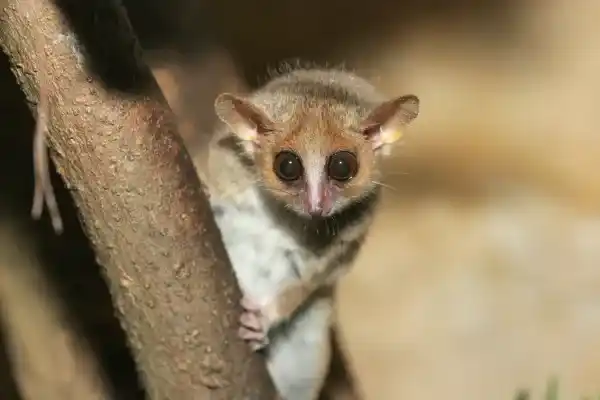
Lemur ( Microcebus )
Size : Total length including tail < 27 cm, weight about 30 g , making it one of the smallest primates in the world .
Habits : Typical nocturnal , with large eyes and sensitive hearing adapted to foraging at night.
Diet : Insects, small vertebrates, fruits and flowers.
Key identification points : high-frequency, short "squeak" sounds and extremely fast climbing.
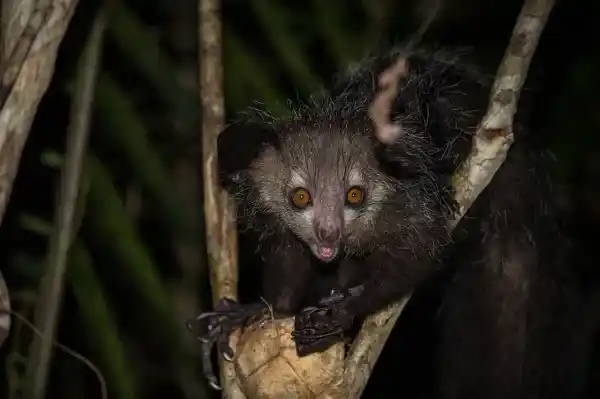
Aye-aye ( Daubentonia madagascariensis )
Appearance and characteristics : The ears can rotate independently , and the incisors grow throughout life ; the middle finger is extremely slender and flexible.
Foraging techniques : A typical " tapping-listening-prying " combo (tapping the tree trunk to identify cavities → listening to the echo → using a slender middle finger to hook out insect larvae from inside the wood).
Ecology : Nocturnal and solitary , a relatively large nocturnal primate.
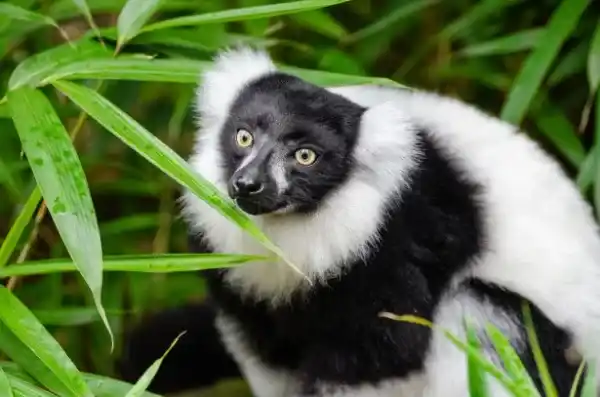
Indri ( Indri indri )
Size : The largest living lemur (approximately 57–70 cm in length and 7–10 kg in weight).
Appearance : Short tail , relatively long limbs and fingers, some of the palms and fingers have webbed structures to enhance gripping.
Coat color : Dense black and white fur.
Behavior : They often declare their territory with a loud "chorus" at dawn; they have an extremely strong ability to leap between trees .
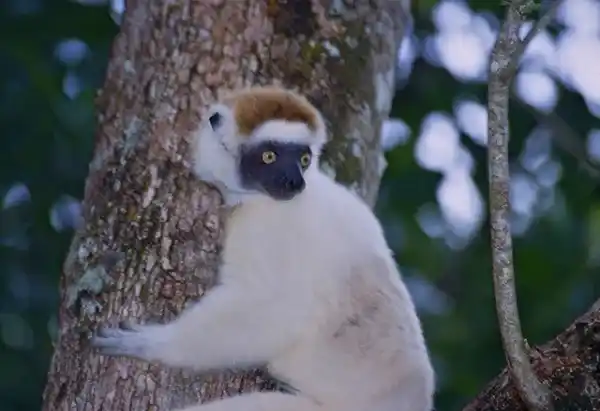
Verree's springtail ( Propithecus verreauxi )
Signature move : "Side dance" while moving on the ground (both feet upright, arms raised for balance).
Distribution and habitat : dry deciduous forests and shrublands in the western and southeastern regions.
Diet : Leaves, fruits, and flowers.
Coat color : Black, white, and orange (or sand) patchwork.
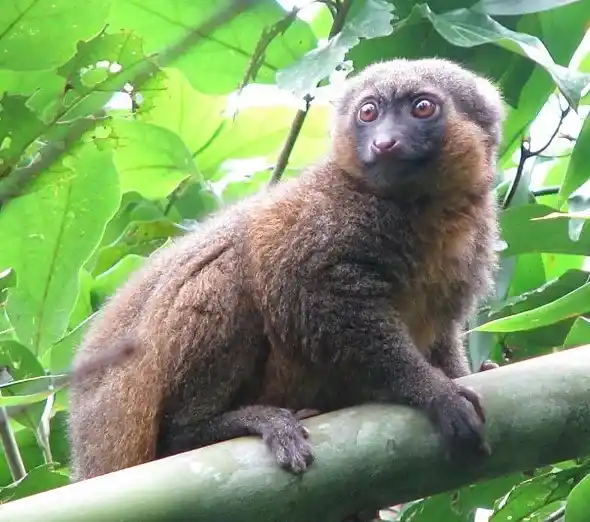
Bamboo lemur (genus Hapalemur )
Dietary characteristics : Primarily feeds on bamboo and has a strong tolerance for fiber.
Size : Body length 26–46 cm , tail length similar to body length, weight up to ~2.5 kg .
Coat color : mostly grayish-brown , with a slightly round face.
Other unique mammals
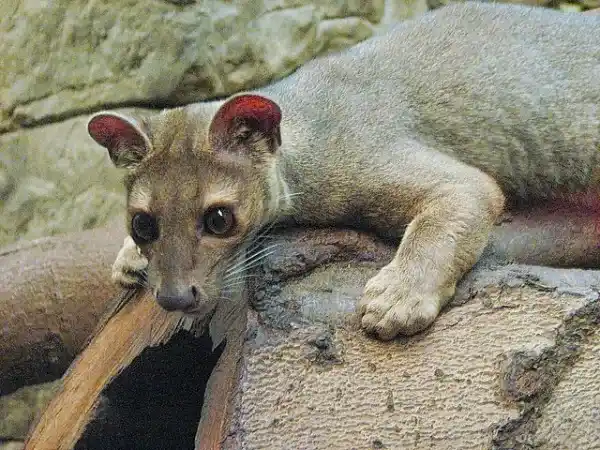
Cryptoprocta ferox
The largest native carnivore in Madagascar .
Characteristics : Short reddish-brown hair, semi-retractable claws ; agile leaping in trees.
Daily routine and diet : mostly nocturnal ; adept at hunting lemurs and birds , occasionally engaging in aerial ambush.
Social : Solitary and territorial .
The genus Myzopoda
Characteristics : With suction cup-like structures on its forelimbs and hindlimbs, it can attach to smooth leaf surfaces, making it a unique bat species found on the island.
Significance : This demonstrates the unique adaptive evolution of island environments for flying mammals.
Unique reptiles
Radiated tortoise ( Astrochelys radiata )
Appearance : With its black shell and radiating gold lines, it is known as a land tortoise with an exceptionally beautiful appearance .
Habitat : Arid thorny thickets and sparse woodlands in the south.
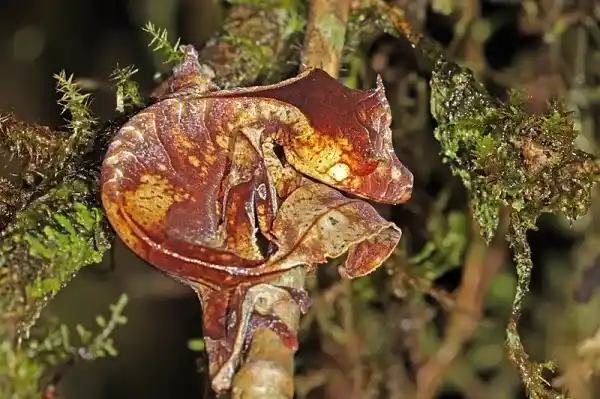
Satanic Leaf-tailed Gecko ( Uroplatus phantasticus )
Master of Disguise : Flat "withered leaf tail" with "damaged" edges, it becomes "invisible" when it stays still on the branch.
Habitat : Moist tropical rainforest, arboreal.
The Madagascar giant chameleon ( Furcifer oustaleti )
The record holder for length (up to ~68.5 cm ).
Diet : Primarily insects, occasionally small birds or small mammals.
genus Oplurus
Identification : Dark rings around the neck and prominent spots on the top of the head; commonly known as the " three-eyed iguana ".
Ecology : Diurnal, prefers to bask in the sun to control its temperature, and often lives on rocky ground or tree trunks.
Falklands ground boa ( Acrantophis madagascariensis )
Body length : up to ~3 m , non-toxic .
Distribution : Central and northwestern parts of the island.
Diet : Small mammals and birds.
Endemic bird
Madagascar diving duck ( Aythya innotata )
The only "diving duck" on the island .
Body length : approximately 46 cm ; body plumage is predominantly brown , with a white belly and gray beak and feet .
Conservation : Due to its small population size, it is a key protected species.
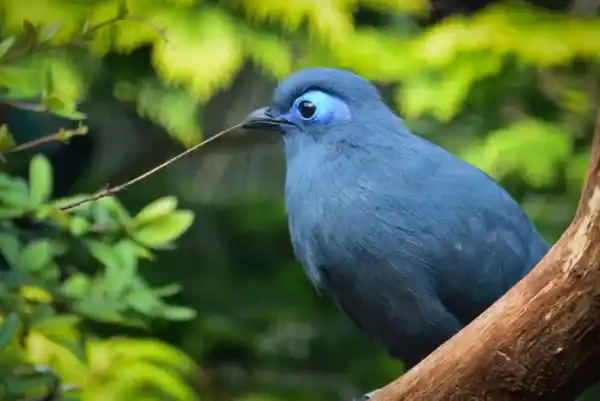
Blue Coua ( Coua caerulea )
Distribution : Northwest and eastern rainforests.
Appearance : The entire body is a deep blue , making it highly recognizable.
Habits : Active in the understory and mid-levels of forests, combining walking with short-distance flight.
Key points for visits and conservation
Key threats include deforestation, slash-and-burn agriculture, illegal hunting and the pet trade, as well as invasive species and climate change.
Observation etiquette : Keep your distance from the animals, do not feed them , avoid using flash photography, and follow the trails and guides.
A reasonable approach : Prioritize national parks/protected areas, such as Andasibe-Mantadia, and support community-friendly conservation.
bibliography
C. Urods (2006). Elements of animal anatomy and physiology. Editorial, Universidad Estatal a Distancia, 2: 85-90.
C. Gregson (1991). The African origin of African cattle? African Archaeological Review, 9: 119-144.
L. Harrison Matthews (1977). The Life of Mammals. Destination Editor. Pages 710-711
V. Harnak and V. Mazak (1990). Encyclopedia of Animals, World Mammals. Madrid: Susaeta, Spain. p. 208.