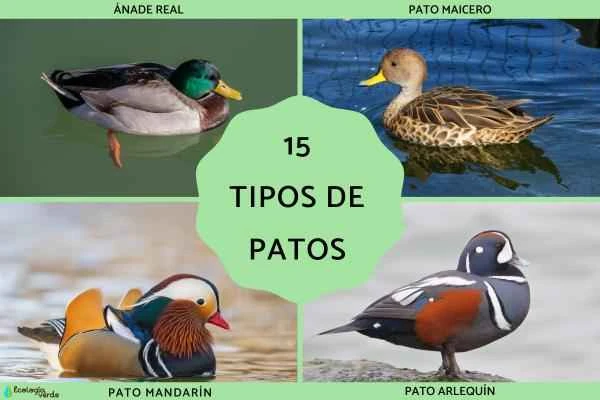
Duck species include the domestic duck ( Anas platyrhynchos domesticus ), mallard ( Anas platyrhynchos ), red-necked pochard ( Spatula cyanoptera ), and floodwater duck ( Merganetta armata ). Ducks are waterbirds belonging to the family Anatidae, which contains many species. Would you like to learn more about some of them?
Domestic duck ( Anas platyrhynchos domesticus )
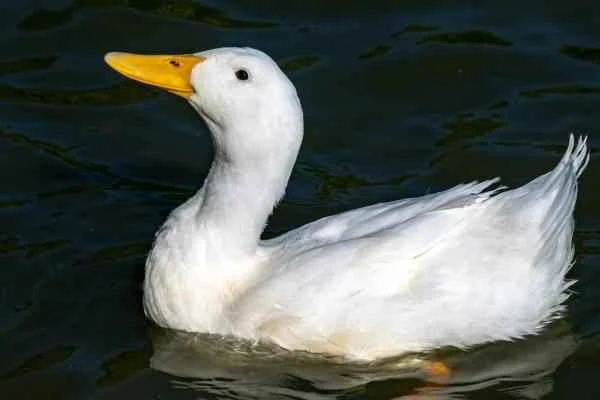
Domestic ducks are poultry bred from wild mallards ( Anas platyrhynchos ) through artificial domestication. They have typical white feathers, orange beaks and feet, and weigh between 3 and 4 kilograms. Originally kept for food, they are now also kept as pets.
Mallard ( Anas platyrhynchos )
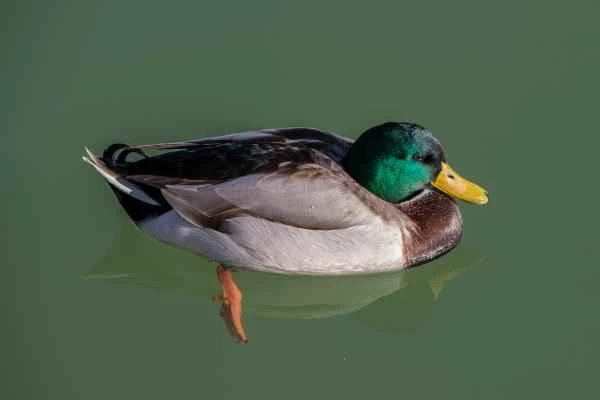
Also known as the Ring-necked Duck, it is distributed in temperate regions of the Northern Hemisphere and has been introduced to Australia and New Zealand. It is a migratory bird, migrating to Central America and the Caribbean for winter. Males have a bright green head and neck with a white collar; females are brown. It commonly inhabits shallow freshwater or brackish water areas and urban parks, and is a broad-spectrum omnivorous bird.
Red Duck ( Spatula cyanoptera )
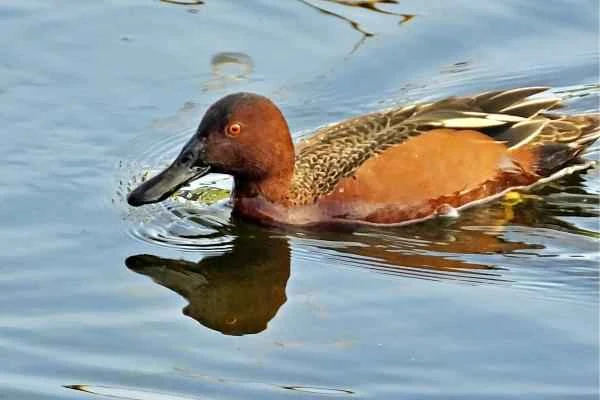
Endemic to the Americas, its distribution extends from southern Canada to Tierra del Fuego and the Falkland Islands in Argentina. Males have reddish-brown plumage and red irises, while females are light brown with black beaks. They live in freshwater and coastal areas, typically nesting in low-vegetation areas near water, laying up to 10 eggs per clutch. They are omnivorous, feeding on plants, seeds, insects, and mollusks.
Whitewater Duck ( Merganetta armata )
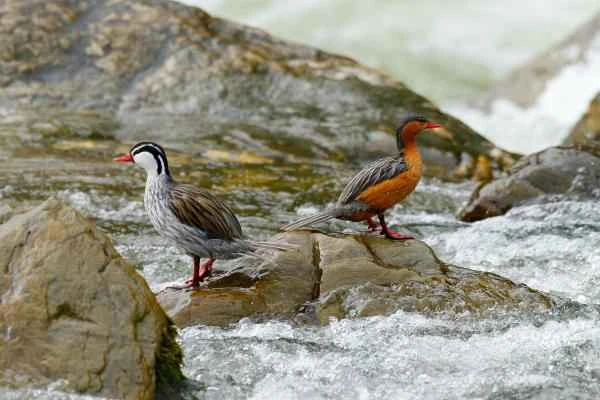
They live in the cold, fast-flowing streams and rivers of the Andes Mountains in South America, distributed from Venezuela to the southern tip of Argentina. They exhibit significant sexual dimorphism: males are black and white, while females are grayish-brown. They are mostly solitary or in pairs, feeding primarily on insects and mollusks. They build nests under rocks, laying 3 to 4 eggs per clutch.
Corn duck ( Anas georgica )
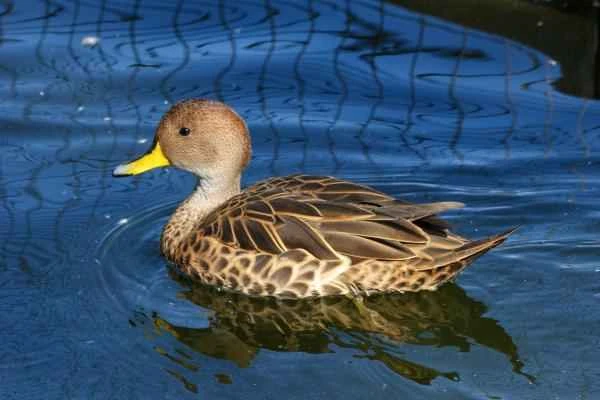
Distributed in lakes, swamps, and wetlands of South America, its habitat ranges from humid forests to dry grasslands. It has yellowish-brown plumage, a yellow beak, and gray legs. It feeds on invertebrates, plants, and grains. Its nests are located in depressions in the ground and are constructed from grass and feathers.
Mandarin ducks ( Aix galericulata )
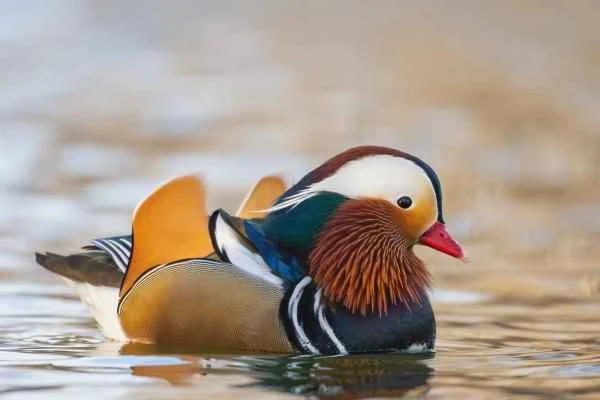
Native to Central Asia, it has now settled in parts of Europe. It prefers small wetlands with abundant aquatic vegetation. The male has striking, colorful plumage, while the female's plumage is more brownish. It feeds on nuts, seeds, aquatic plants, and invertebrates.
White-faced tree duck ( Dendrocygna viduata )
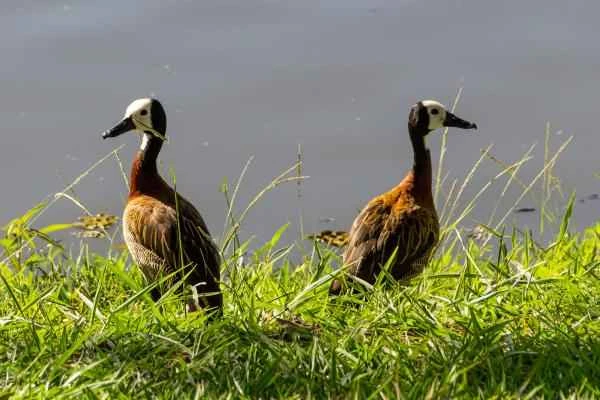
Distributed in the Americas and Africa, it gets its name from its call "sirirí". Males and females show little difference in appearance; males have white faces, brown plumage, and black and white markings on their sides. They are often found in flocks, are most active at dusk, and inhabit shallow lakes, rivers, and saltwater estuaries, typically in environments with tall grasses.
Common Shovel-billed Duck ( Spatula clypeata )
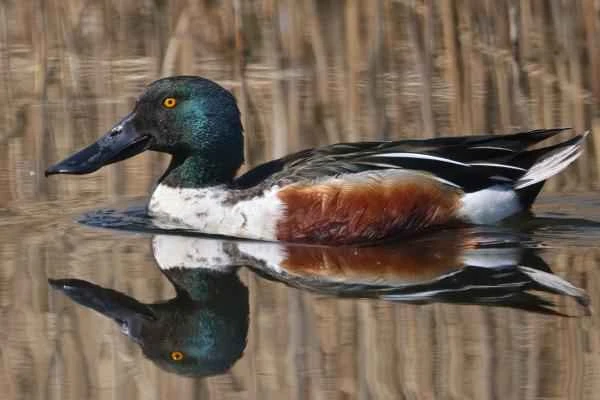
Distributed in North America, Europe, and Asia, it is a migratory bird. It is best known for its broad, flat, "shovel-shaped" beak, which it uses to filter-feed plankton, insects, crustaceans, and seeds. Males have a glossy green head, white breast, and brown sides; females have brown-spotted plumage.
Great Pochard ( Oxyura jamaicensis )
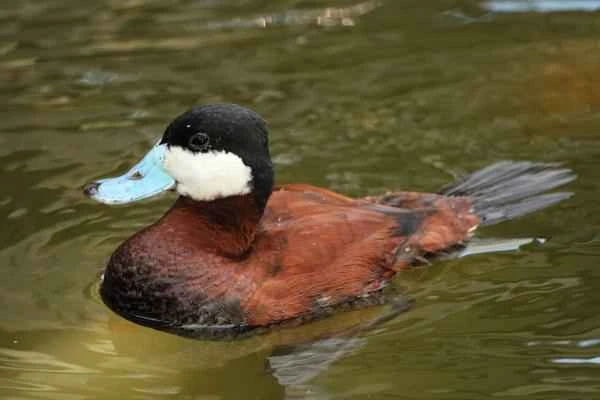
Also known as the Cinnamon Pochard, it is distributed in the Americas. Northern breeding populations migrate south or to the coast during winter, while other populations remain settled or migrate short distances. They inhabit densely vegetated, open marshes, lakes, and wetlands. Males are distinguished by their blue beaks.
Yellow-billed duck ( Anas flavirostris )
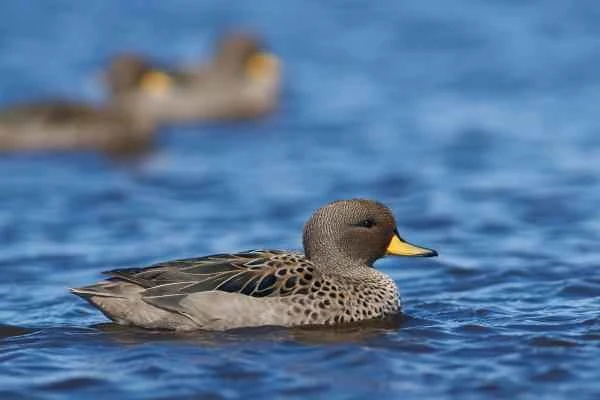
Endemic to South America, found in Argentina, Chile, and the Falkland Islands, migrating to parts of Uruguay and Brazil in winter. It resembles the Corn Duck in appearance, but has a shorter neck and tail. There is no significant difference in plumage between males and females. It is distributed in waters up to 4400 meters above sea level.
Black duck ( Anas rubripes )
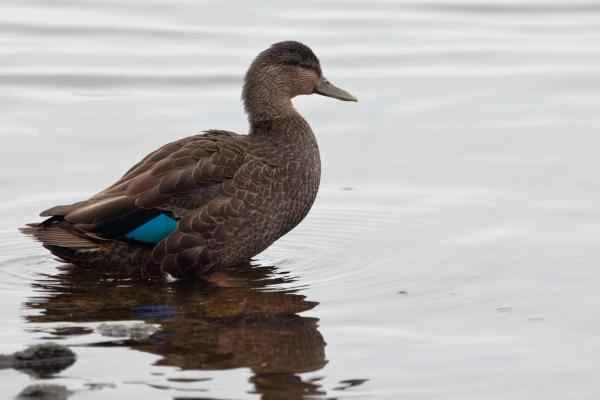
A North American species, widely found in the Great Lakes region and the Adirondack Mountains. It has dark plumage and bluish-green wings. Its diet consists mainly of aquatic plants, insects, and crustaceans. It frequently interbreeds with mallards, producing hybrid offspring.
Muscovy duck ( Cairina moschata )
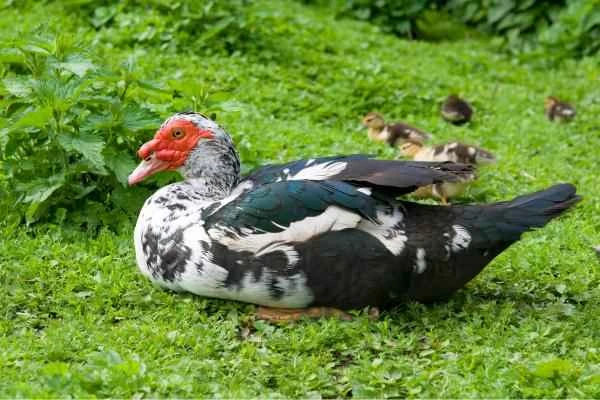
Native to Central and South America, now widely domesticated. It has black and white plumage and a red wattle around its beak. Its diet includes plants, seeds, small fish, and invertebrates. It typically inhabits tree branches near water. There are two subspecies: the domestic duck type ( C. moschata domestica ) and the wild type ( C. moschata sylvestris ).
Ugly duck ( Histrionicus histrionicus )
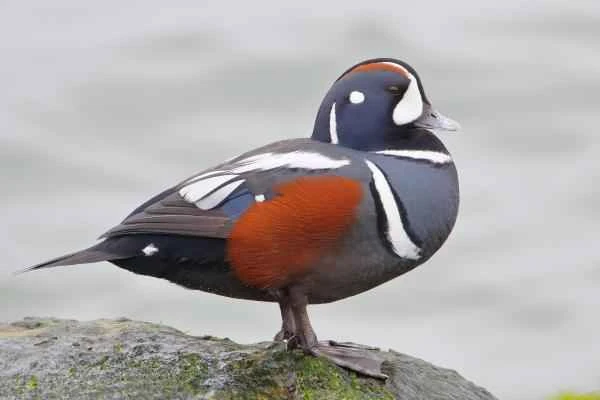
Also known as the Ugly Duck or Ugly Spotted Duck, it is the only species in its genus. There are two subspecies: *H. h. histrionicus* and *H. h. pacificus*. It is distributed in northern North America, southern Greenland, the Russian Far East, and Iceland, living in cold, fast-flowing lakes and rivers.
Spotted duck ( Stictonetta naevosa )
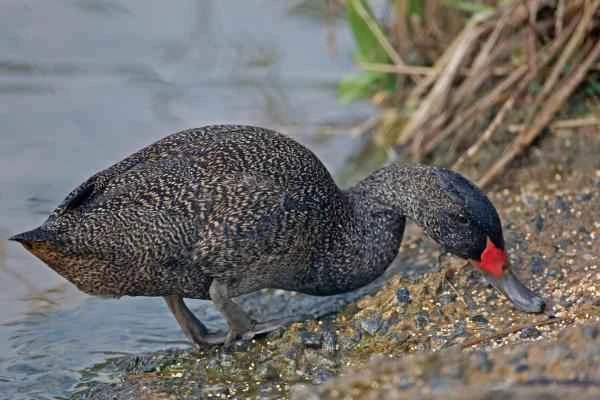
This species is endemic to southern Australia and is the only one in its genus and subfamily. It is endangered due to habitat loss and is protected by law. It is medium-sized with a large, pointed head and dark plumage covered with tiny white spots. It is a strong flier, but rather clumsy when landing.
Red-faced Tree Duck ( Dendrocygna bicolor )
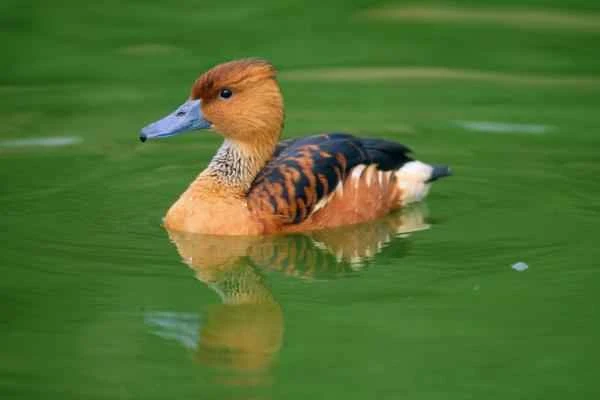
Its plumage is reddish-brown, while its beak and legs are dark. It is distributed in wetlands and swamps from the United States to Argentina. It feeds on aquatic plants, seeds, and small insects. It is a gregarious species and emits a distinct call during flight.