Table of contents
The Mysterious Charm of the Red Feather Starfish
Five characteristics of the red-feathered starfish
Ecological Habits of the Red Feathered Starfish
Habitat of the Red Feathered Starfish
How long is the lifespan and reproduction period of the red-feathered starfish?
Predation habits and natural enemies of the red-feathered starfish
Exploring the ecological role of the red-feathered starfish
Scientific research progress on the red-feathered starfish
How to care for Red Feathered Starfish: Care Guide, Aquarium Setup Tips, Common Diseases and Prevention
Can the red-feathered starfish coexist with other marine life?
1. The Mysterious Charm of the Red Feathered Starfish
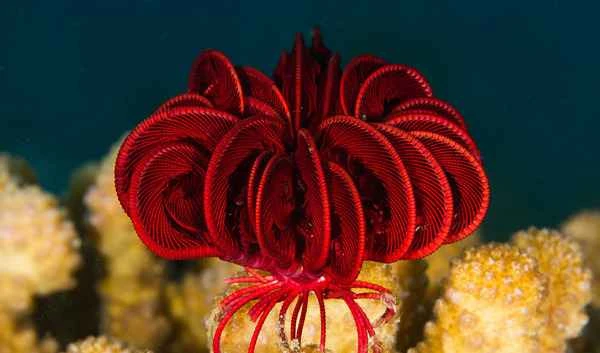
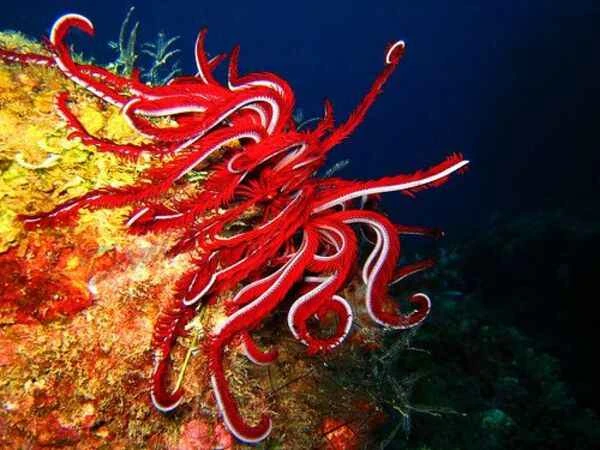
The red feather star (scientific name: * Ophiothrix fragilis *), belonging to the genus *Ophiothrix* , is a mysterious and captivating marine creature, highly favored by marine life enthusiasts for its unique shape and color. This starfish typically inhabits warm oceans, and its distinctive appearance and biological characteristics make it a focus of attention for many researchers and hobbyists. Belonging to the family Ophiothrix, its branching "wing"-like arms and vibrant red color leave a lasting impression.
The red-feathered starfish 's habits, reproductive methods, and ecological role make it an important part of the marine ecosystem. To better understand this mysterious marine creature, we will discuss in detail its characteristics, ecological habits, habitat, and conservation methods.
2. Five key characteristics of the Red Feathered Starfish
The red-feathered starfish holds a place among marine life due to its unique appearance and biological characteristics. It attracts numerous enthusiasts and researchers not only with its vibrant colors and morphology but also with its unique adaptability and behavioral patterns, making it an important member of the marine ecosystem. Here are five key characteristics of the red-feathered starfish:
1. A striking appearance and feather-like arms
The most striking feature of the red-feathered starfish is its vibrant, colorful appearance. Its arms, resembling feathers, have a long, branching structure, which is one of the reasons for its name. These feather-like arms not only add to its beautiful visual appeal but also help it move quickly in the water. The red-feathered starfish's arms are typically red, orange, or yellow, creating a striking contrast that makes it appear like a shining star underwater.
2. Strong regenerative ability
Like many other starfish, the red-feathered starfish possesses an amazing regenerative ability. If its limbs are bitten off or injured by predators, it can regenerate the lost parts within a certain period of time. This regenerative ability is particularly pronounced during the breeding season. Under certain conditions, a red-feathered starfish that has lost multiple limbs can gradually restore its entire body.
3. High adaptability
The red-feathered starfish has a strong ability to adapt to its environment. It can survive in a range of water temperatures, depths, and salinities, and typically lives in coral reefs, rock crevices, or sandy bottom areas. Although it prefers warm waters, its range is relatively wide, and it can adapt to environments ranging from shallow to deep waters.
4. Highly predatory and possesses specialized hunting methods
The red-feathered starfish is a carnivorous animal that primarily preys on small marine invertebrates, such as crustaceans and mollusks. Its hunting method is quite unique; it uses sensors on its tentacles to sense its surroundings, and once it captures prey, it extends its stomach into the prey to digest it. This method helps it obtain food more efficiently and also allows it to hunt in extremely confined spaces.
5. A balance between social interaction and independence
Although red-feathered starfish are typically solitary animals, they can maintain a degree of sociality with other red-feathered starfish in certain environments. In food-rich environments, they sometimes form small groups, remaining relatively independent but still interacting due to food resources. However, once the environment becomes more confined or resources are scarce, competition between individuals becomes apparent, and they often maintain a certain distance to avoid conflict.
These five characteristics make the red-feathered starfish not only an important part of the ecosystem, but also a popular subject for marine life enthusiasts to study and keep.
3. Ecological Habits of the Red Feathered Starfish
The red-feathered starfish ( Ophiothrix fragilis ) is an echinoderm that inhabits shallow marine waters and plays a vital role in the marine ecosystem through its unique ecological habits. Understanding the red-feathered starfish's ecology helps to gain a deeper understanding of its position in the marine food chain and how it interacts with other organisms. The following will analyze the ecological habits of the red-feathered starfish in detail from aspects such as food sources, activity patterns, habitat habits, and reproductive behavior.
I. Food Sources and Foraging Methods
The red-feathered starfish is a typical filter feeder , obtaining nutrients primarily by filtering plankton, algal debris, and organic matter from the water. Their foraging methods and food sources are crucial to their ecological habits.
1. Filter feeding
The red-feathered starfish moves along the seabed using its long, flexible arms and legs, filtering organic matter and plankton from the water with the help of the fine hairs on its arms and legs. These tiny plankton and organic debris provide them with a rich source of nutrition.
They not only feed on zooplankton and plant remains, but also obtain nutrients by filtering bacteria and microalgae from the water, thus playing a role in cleaning the water.
2. Predation methods
Red-feathered starfish typically lack the ability to actively hunt for food; they rely on food brought by ocean currents and are able to effectively utilize resources from their surrounding environment for filtration.
They adjust their body posture according to the strength and direction of the water flow in order to maximize the collection of food in the water. Due to their excellent adaptability, the red-feathered starfish can survive in different marine environments.
3. Environmental Impact
The foraging efficiency of the red-feathered starfish is closely related to water flow speed and water quality. In areas with strong currents, their foraging activities are affected, but they can still efficiently filter organic matter from the water in relatively calm waters.
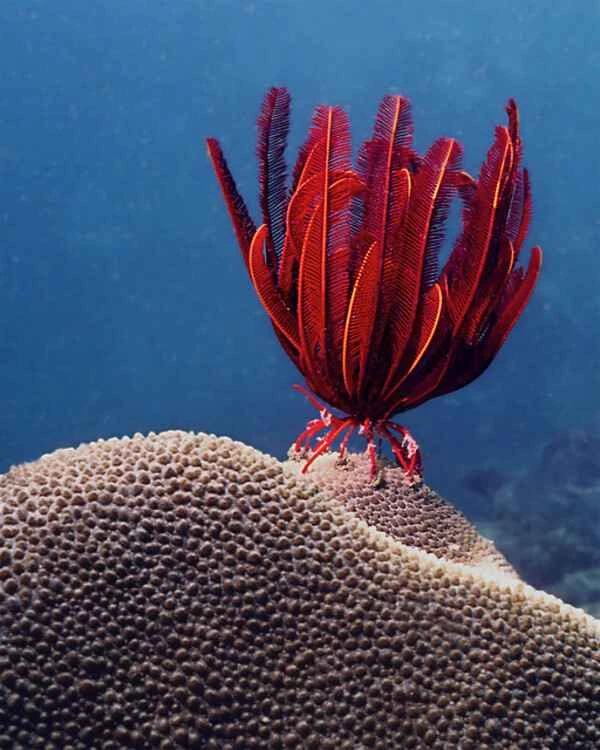
II. Activity Types and Exercise Habits
The activity patterns of the red-feathered starfish are closely linked to its habitat. They primarily move by crawling and gliding, relying mainly on their soft and flexible arms and legs.
1. Arm and foot movements
The red-feathered starfish has five long arms covered with tiny bristles and spines that help it grip the seabed and move smoothly. It glides or crawls along the seabed by contracting and extending its arms, but at a relatively slow speed.
When foraging, the red-feathered starfish extends its arms and legs outwards, constantly moving to absorb surrounding organic matter and plankton and bring them into its mouth.
2. Stationary and Swimming
Red-feathered starfish typically prefer to inhabit rock crevices, seagrass beds, and coral reefs. Their range is relatively small, unlike some starfish species that migrate widely. They spend most of their time stationary in fixed areas to avoid excessive energy expenditure.
However, the red-feathered starfish also possesses a certain degree of swimming ability. Under suitable conditions, especially when there is a food source in the environment, they will briefly swim to find new habitats.
3. Adaptation to water flow
The strength of the water current has a significant impact on the activity of the red-feathered starfish. They can sense changes in water flow and adjust their movement patterns according to the direction of the current to maintain a stable lifestyle. In environments with strong currents, the red-feathered starfish move more slowly and choose to hide in rock crevices or other sheltered places to reduce the impact of the current.
III. Habitat Habits and Habitat Selection
Red-feathered starfish exhibit certain habitat preferences, primarily relying on suitable water temperature, current, and substrate. Their habitat is crucial for their survival and reproduction.
1. Prefers rocky and sandy environments.
Red-feathered starfish typically inhabit rocky substrates, coral reefs, and sandy substrates. They prefer to live in relatively secluded places, such as rock crevices and under seagrass beds, to avoid predators and strong currents.
They choose to settle in places with stable substrate and rich organic matter, which not only provides sufficient food sources but also provides a relatively ideal habitat.
2. Habitat density
Red-feathered starfish do not live in isolation; they typically form colonies in suitable habitats. They tend to be densely distributed within the same area, especially in resource-rich locations such as seagrass beds and reef areas. These groups not only protect each other but also improve their foraging efficiency.
Although they inhabit densely populated areas, the red-feathered starfish does not exhibit obvious social behavior. Each individual still forages, moves around, and reproduces independently.
IV. Reproductive Habits
The reproductive methods of the red-feathered starfish are an important aspect of its ecological behavior. They reproduce through sexual reproduction and asexual regeneration.
1. Sexual reproduction
Red-feathered starfish typically reproduce during the warm spring and summer seasons. They are dioecious organisms, releasing sperm and eggs in the water for external fertilization. Mature individuals release eggs and sperm into the water at the appropriate time, forming planktonic larvae, which are then dispersed by water currents.
Through in vitro fertilization, the red-feathered starfish can reproduce a large number of offspring in a short period of time, thus ensuring the propagation and survival of the species.
2. Asexual Regeneration
The red-feathered starfish possesses a remarkable regenerative ability. Even if its tentacles or parts of its limbs are damaged, it can regenerate within a short period, returning to its original state. This regenerative ability not only helps individual survival but also contributes to the recovery of the colony's population.
V. Social Behavior and Interactions of the Red Feathered Starfish
Red-feathered starfish are usually solitary, but under certain environmental conditions, individuals may interact, especially when foraging and resting. They primarily rely on touch and chemical signals for communication.
1. Foraging and Interaction
When foraging, red-feathered starfish typically do not compete with other individuals of the same species. They effectively avoid fighting by maintaining spatial separation and cooperate to forage together in areas with abundant food resources.
2. Predator avoidance
Red-feathered starfish inhabit relatively secluded environments, hiding in rock crevices and seaweed thickets to avoid predators. Although they do not possess a clear social structure, living in groups increases their chances of survival and helps them avoid attacks from predators.
The ecological habits of the red-feathered starfish demonstrate their unique adaptability to the marine environment. Through filter feeding, adaptation to water currents, flexible movement patterns, and strong regenerative abilities, they have become important members of the ecosystem. Understanding these ecological habits not only helps us understand how red-feathered starfish interact with other organisms, but also provides valuable evidence for ecological conservation and marine biodiversity research.
4. Habitat of the Red Feathered Starfish
The red-feathered starfish ( Ophiothrix fragilis ) is a marine echinoderm widely distributed across various marine ecosystems. Their habitat has a significant impact on their growth, reproduction, and survival. This article will explore the habitat characteristics of the red-feathered starfish in detail, including their distribution areas, habitat types, water quality requirements, and the impact of their habitat on their survival.
I. Distribution area of the Red Feathered Starfish
Red-feathered starfish are mainly distributed in the shallow waters of the Atlantic Ocean and the Mediterranean Sea , especially in coastal habitats such as coral reefs, rocky seabeds, and seagrass beds. They are widely distributed in these areas, but are primarily concentrated in the following regions:
Mediterranean : Red-feathered starfish are commonly found in the shallow waters along the Mediterranean coast, especially in Spain, France, Italy, and Greece.
North Atlantic : They are also widely distributed in the temperate and subarctic waters of the North Atlantic, from the warm waters of Europe to the colder waters around the Arctic Ocean.
Caribbean Sea : In the Caribbean, red-feathered starfish can also be found in shallow waters, reef crevices, and sandy bottom areas.
The water temperatures in these areas are suitable, typically between 12-22°C , which is the temperature range where the red-feathered starfish thrives most.
II. Habitat Types
Red-feathered starfish prefer to inhabit marine environments with rich substrate and complex structures. They have relatively specific requirements for their habitat selection:
1. Coral Reef Environment
Coral reefs provide abundant food sources and refuge. Red-feathered starfish settle in the rocky crevices of coral reefs, using the surrounding natural barriers to avoid predators. These areas have relatively stable water currents and usually firm seabeds, which is conducive to the attachment and movement of red-feathered starfish.
2. Seagrass beds and seaweed colonies
Red-feathered starfish also prefer to inhabit seagrass beds and areas with abundant seaweed. The plants and algae in these areas provide rich organic matter and plankton, which are important food sources for red-feathered starfish. In addition, the root system of seagrass and seaweed can provide them with hiding spaces, helping them to avoid predators.
3. Rocky and sandy substrates
Besides coral reefs and seagrass beds, the Red Feather Starfish can also find suitable habitats on rocky and sandy substrates. On these substrates, the Red Feather Starfish uses its long, flexible arms and legs to navigate through the sand and rock crevices in search of food and habitat. Sandy substrates are typically found in shallower waters with gentler currents.
III. Water Quality Requirements
Red-feathered starfish have certain requirements for water quality, especially water temperature, salinity, and water flow rate, which are crucial for their survival:
1. Water temperature
Red-feathered starfish are mainly distributed in warm marine environments, with a suitable water temperature range of 12-22°C . When the water temperature exceeds or falls below this range, their activity and reproductive abilities will be affected, and may even lead to death.
2. Salinity
Salinity has a significant impact on the survival of the red-feathered starfish. They generally live in sea areas with relatively stable salinity, with an optimal salinity range of 35-37‰ . If the salinity is too high or too low, the physiological processes of the red-feathered starfish may be disrupted, preventing them from growing and reproducing normally.
3. Water flow
Water currents also significantly impact the habitat of the red-feathered starfish. Red-feathered starfish prefer environments with relatively stable currents, as strong currents can disrupt their foraging and habitat. They typically inhabit areas with weak currents, such as the shaded areas of coral reefs or deep within seagrass beds, providing a calmer environment.
IV. The Impact of Habitat Changes on the Red Feathered Starfish
The habitat of the red-feathered starfish is crucial to its growth and reproduction, and any environmental changes can directly affect its survival.
1. Environmental pollution
Water pollution, particularly the accumulation of chemicals and heavy metals, can hinder the growth of red-feathered starfish and even cause their death. Pollutants can affect their foraging behavior and reproductive capacity, leading to a decline in their population.
2. Climate Change
Rising sea temperatures and ocean acidification caused by climate change pose a threat to the habitat of the red-feathered starfish. Temperature changes affect the distribution range and reproductive cycle of the red-feathered starfish, while ocean acidification may affect the formation of its exoskeleton, thereby impacting its growth.
3. Habitat destruction
Human activities that destroy habitats, such as coral bleaching and seagrass bed degradation, may reduce or degrade the habitat of the red-feathered starfish. Habitat reduction not only impacts its living space but also reduces food availability, affecting its survival and reproduction.
V. Adaptability of the Red Feathered Starfish
Although red-feathered starfish have certain habitat requirements, they possess a strong ability to adapt. When their habitat is destroyed or the environment changes, they can cope with the challenges by adaptive migration or adjusting their foraging strategies. For example, when their original habitat is no longer suitable, red-feathered starfish can migrate to more suitable places.
Red-feathered starfish live in warm, shallow sea environments, inhabiting areas such as coral reefs, seagrass beds, rocky bottoms, and sandy bottoms. They have specific requirements regarding water quality conditions, including temperature, salinity, and current speed. With habitat destruction and environmental changes, the survival of red-feathered starfish faces challenges; therefore, protecting their habitat is crucial for maintaining population health and ecological balance.
5. How long do red-feathered starfish reproduce and live?
The red-feathered starfish (scientific name: *Ophiothrix fragilis *) exhibits unique adaptability among marine organisms in terms of reproduction and lifespan. They employ efficient reproductive strategies and regenerative capabilities, maintaining a strong survival advantage within the ecosystem. The following will provide a detailed analysis of their reproductive methods, life cycle, and factors influencing their lifespan.
I. Reproduction methods of the Red Feathered Starfish
Red-feathered starfish primarily reproduce through sexual reproduction, supplemented by a certain degree of asexual regeneration.
1. Sexual reproduction
Dioecious :
The red-feathered starfish is a dioecious organism, exhibiting clear sexual dimorphism among individuals. Mature individuals release eggs and sperm to reproduce.In vitro fertilization :
Fertilization typically occurs in the water, where the eggs and sperm of the red-feathered starfish combine after being released into the seawater. Due to the randomness of this process, the reproductive success rate is low, but this is compensated for by releasing a large number of gametes.Breeding season :
Reproduction mainly occurs in spring and summer, when warmer water and nutrient-rich environments are more conducive to the development of fertilized eggs.Larval development :
The fertilized egg develops into a planktonic larva and floats in the seawater. After gradually developing into a larva, it sinks to the seabed, settles down, and grows into an adult.
2. Asexual Regeneration
Tentacle regeneration :
When the tentacles of the red-feathered starfish break off due to attacks from predators or accidental damage, they possess a strong regenerative ability. Tentacle regeneration typically takes anywhere from several weeks to several months, depending on environmental conditions.The significance of regeneration for survival :
Regeneration plays a vital role in the survival and population recovery of the red-feathered starfish, especially in areas with high predation pressure.
II. Life Cycle of the Red Feathered Starfish
The life cycle of the red-feathered starfish consists of multiple stages, each of which plays an important role in the reproduction and continuation of the population.
1. Planktonic larval stage
Newly developed juvenile red starfish are tiny, float in the water, move with the current, and feed on plankton.
This stage lasts for several weeks, during which the larvae gradually develop the tentacles and morphological features of an adult.
2. Larval settlement stage
After the larvae sink to the seabed, they begin to settle down and choose suitable environments to grow, such as coral reefs, rock crevices, or seagrass beds.
After settling in, the red-feathered starfish enters a period of rapid growth and gradually develops into an adult.
3. Adult stage
Adult red-feathered starfish can live for several years, with their lifespan closely related to habitat conditions.
The adult stage is their main reproductive period, during which they expand their population size through multiple reproductive behaviors.
3. How long does the red-feathered starfish live?
1. Typical lifespan
In ideal environments, the lifespan of the red-feathered starfish is typically 5 to 7 years . This lifespan is considered average among marine invertebrates.
2. Factors affecting lifespan
Habitat :
Red-feathered starfish are quite sensitive to environmental changes; temperature, salinity, and pollution levels can all affect their lifespan. In harsh environmental conditions, their lifespan may be shortened to 2-3 years.Predation pressure :
High predation pressure leads to increased individual mortality. Although regenerative capacity can mitigate losses to some extent, persistent predation threats still reduce the overall lifespan of the population.Diseases and Parasites :
Red-feathered starfish can be infected with bacteria, viruses, or parasites, which can weaken their health and shorten their lifespan.Human activities :
Human activities such as overfishing, marine pollution, and habitat destruction also threaten the lifespan of the red-feathered starfish.
IV. Ecological Significance of Reproduction and Lifespan
The reproductive capacity and regeneration mechanism of the red-feathered starfish enable it to play an important role in stabilizing populations and promoting ecological cycles within the ecosystem.
High population resilience : Efficient reproductive strategies and regeneration capabilities enable them to restore their population size in a short period of time, even in the face of predation pressure and environmental threats.
Ecosystem balance : Red-feathered starfish support the material cycle of marine ecosystems by filtering plankton and cleaning up organic debris.
V. Future Research Directions
Scientists are studying the reproductive strategies and lifespan variations of the red-feathered starfish to better understand its adaptation to environmental changes:
Genetic research : exploring the impact of genetic diversity on population survival.
Impacts of climate change : This study investigates the effects of global warming on the reproductive success and life cycle of the red-feathered starfish.
Protection measures : Develop targeted protection plans to maintain the ecological health of their habitats.
The reproductive and lifespan characteristics of the red-feathered starfish demonstrate its high adaptability and survival ability in marine ecosystems. They maintain population stability through sexual reproduction and regeneration strategies, and although their lifespan is influenced by various factors, they generally exhibit strong ecological resilience. Exploring these characteristics not only helps to understand the ecological role of the red-feathered starfish but also provides a scientific basis for protecting its habitat.
6. Predatory habits and natural enemies of the Red Feathered Starfish
The red-feathered starfish (scientific name: *Ophiothrix fragilis *) is an important member of the marine ecosystem, and its predatory behavior and food selection are crucial for maintaining ecological balance. However, it also faces threats from various predators. The following will analyze in detail the red-feathered starfish's predatory habits and its main natural enemies.
I. Predatory Habits of the Red Feathered Starfish
1. Food sources
The red-feathered starfish primarily feeds on tiny marine organisms and organic detritus, and is a filter feeder .
Plankton : including phytoplankton and zooplankton, such as diatoms, dinoflagellates, copepods, etc.
Organic particles : suspended organic debris in seawater, remains of dead organisms, and organic matter in sediments.
Seabed sediments : Red-feathered starfish often ingest sediments on the seabed surface as they move to obtain edible substances.
2. Predation methods
The red-feathered starfish has a unique hunting technique, feeding using its delicate and sensitive tentacles:
Tentacle predation :
The tentacles of the red-feathered starfish are covered with tiny bristles, which can capture food particles onto the surface of the tentacles by creating water vortexes, and then transfer the food to the mouth through the movement of the cilia.Active feeding :
It also extends its tentacles to actively capture floating plankton, especially in environments with strong currents.Nighttime activities :
Red-feathered starfish mostly forage at night to avoid predators and increase hunting efficiency.
3. Ecological Role
As "cleaners" of the ocean, the red-feathered starfish can not only effectively remove suspended particles from the water, but also play a positive role in the recycling of seabed sediments.
II. Natural enemies of the Red Feathered Starfish
Despite possessing some self-defense capabilities, the red-feathered starfish remains a significant prey for many marine creatures.
1. Main natural enemies
Fish :
Some bottom-dwelling fish, such as groupers, flounders, and catfish, prey on the tentacles of the red-feathered starfish or swallow the entire starfish whole.Crustaceans :
Crabs and lobsters are common predators of the red-feathered starfish, using their powerful pincers to tear at the starfish's tentacles or body.Marine mollusks :
Octopuses and large conches, for example, often prey on red-feathered starfish, thanks to their keen hunting skills.
2. Environmental enemies
Waves and strong currents :
Red-feathered starfish are vulnerable to strong currents and storms, which can cause them to be swept away from their suitable habitats, thus increasing their risk of predation.Parasites :
Some parasitic worms and microorganisms can damage the surface and internal tissues of the red starfish, weakening its ability to survive.
III. Defense Mechanisms of the Red Feather Starfish
1. Tentacle self-repair ability
When the tentacles of the red-feathered starfish are bitten off by predators, it can quickly regenerate through a regeneration mechanism. This ability allows it to maintain its population size under high predation pressure.
2. Covert activities at night
Red-feathered starfish typically hide in coral reef crevices, under rocks, or in sediment during the day to avoid being discovered by predators, and only come out at night to forage.
3. Group behavior
Red-feathered starfish tend to live in groups, and this gregarious behavior can distract predators to some extent, reducing the probability of an individual being preyed upon.
4. Disguise ability
The red-feathered starfish often blends into its surroundings with its color and patterns, a camouflage that effectively reduces the threat of predators.
IV. Predator-prey balance in ecosystems
The red-feathered starfish is both a predator and prey, playing a crucial "connector" role in the marine ecosystem:
Promoting the circulation of the food chain : Red-feathered starfish prey on plankton, transferring energy from lower trophic levels to higher trophic levels, thus enriching the complexity of the food web.
Natural predators control population size : The presence of predators limits the overpopulation of the red-feathered starfish, maintaining the dynamic balance of the ecosystem.
V. Future Research and Conservation Significance in Dealing with Natural Enemies
Scientists are studying the interactions between the red-feathered starfish and its predators , investigating how predation pressure affects the behavior, ecological role, and population dynamics of the red-feathered starfish. This research helps to understand key mechanisms of marine ecological balance.
Protecting Habitat Diversity <br/>Because the red-feathered starfish is sensitive to predators and environmental changes, its population status is often used as an indicator of ecological health. Protecting its habitat helps maintain the stability of the entire ecosystem.
The red-feathered starfish provides vital services to the marine ecosystem with its unique predatory habits, while also facing threats from various predators. Their survival strategies and the predatory behavior of these predators form a dynamic balance, revealing the complexity of marine ecosystems. Future in-depth research into the predatory behavior and predator-prey relationship of the red-feathered starfish can provide more scientific evidence for marine ecological conservation.
7. Explore the ecological role of the Red Feathered Starfish
The red-feathered starfish (scientific name: *Ophiothrix fragilis *) is considered a key species in marine ecosystems due to its widespread distribution and important ecological functions. Its presence not only affects the health of coral reefs and seabed environments but also plays an indispensable role in marine food chains, sediment cycles, and biodiversity maintenance. The following is a detailed analysis of the red-feathered starfish's ecological role.
I. "Scavengers" in Marine Ecosystems
Red-feathered starfish feed on tiny plankton, detritus, and organic matter, cleaning the water through filter feeding.
Water purification
It captures plankton and organic particles through micro-vortices formed by the bristles on its arms, effectively reducing the concentration of suspended solids in the water.
In addition, it can decompose organic matter in seabed sediments and promote the recycling of nutrients.
Reduce pollutant accumulation
Their feeding behavior can reduce pollutants in water bodies and seabeds, such as algal debris caused by eutrophication, and maintain the balance of the ecosystem.
II. Mediators of Energy Flow
The red-feathered starfish transfers energy to higher-level consumers by preying on lower organisms:
Middle layer of the food chain
As part of the marine food web, the red-feathered starfish preys on plankton and organic particles, while also serving as prey for certain fish, crabs, and mollusks.
It plays a role in energy conversion and transfer in the food chain, connecting different trophic levels in the ocean.
Support the growth of benthic organisms
Its activity stirs up seabed sediments, promoting oxygen permeation into the sedimentary layer, which is beneficial to the survival of other benthic organisms (such as polychaetes and small crustaceans).
III. Maintaining the ecological balance of the seabed
The activity of the red-feathered starfish directly impacts the health and diversity of seabed ecosystems:
Seabed oxygen supply
It stirs up sediments through its movement and feeding behavior, exposing bottom sediments to oxygen and improving the seabed environment.
The "engineers" of biodiversity
The red-feathered starfish provides shelter and food, attracting many small benthic organisms and enhancing the diversity of the local biota.
IV. Synergistic Effects of Coral Reef Ecosystems
Red-feathered starfish are widely distributed in coral reef ecosystems, playing a role in maintaining stability in these complex ecological environments.
Mutually beneficial relationship with corals
It preys on debris and plankton remaining on the coral surface, reducing the stress on the coral from attached organisms and thus promoting coral growth.
Meanwhile, the coral reefs provide shelter and foraging grounds for the red-feathered starfish, forming an ecological symbiotic relationship between the two.
Support coral ecosystem restoration
Studies have shown that introducing red-feathered starfish into damaged coral reefs can accelerate ecological restoration because it can promote water quality improvement and sediment removal.
V. Stabilizers of Marine Biological Communities
As a highly adaptable species, the red-feathered starfish can maintain a stable population in changing environments, providing stability to the ecosystem.
Adaptation to environmental changes
It has a strong adaptability to environmental fluctuations (such as temperature and pH) and maintains population balance in different marine environments.
Buffer environmental pressure
Red-feathered starfish can reproduce rapidly and fill ecological gaps in a short period of time, providing support to the ecosystem after natural disasters or human activities.
VI. Symbiotic and cooperative relationships among red-feathered starfish
The red-feathered starfish has formed a complex symbiotic network with other marine organisms, a relationship that further expands its ecological impact:
Symbiosis with crustaceans
Some small crustaceans, such as hermit crabs and cleaner shrimp, often live in symbiosis with the red-feathered starfish, cleaning the starfish's body while the starfish provides it with protection.
Cooperation with other benthic organisms
The activity of the red-feathered starfish often attracts a large number of benthic animals, such as polychaetes and bivalves, which together create a diverse and rich ecosystem.
VII. Contribution to Ecosystem Vulnerability
Despite their strong adaptability, the red-feathered starfish's population size is sensitive to environmental changes, and its fluctuations often indicate the health of the ecosystem.
As an indicator species of ecological health
Its response to marine pollution, overfishing, and climate change can serve as an important indicator for assessing the state of ecosystems.
The chain reaction of species extinction
If the population of red-feathered starfish decreases significantly, the loss of its ecological function may lead to sediment accumulation, water quality deterioration, and a decline in other benthic species populations.
VIII. The Importance of Science and Conservation
The ecological role of the red-feathered starfish has become a hot topic of scientific research, especially in ecological restoration and climate change studies:
Applications in ecological restoration
By leveraging the water-cleaning and seabed-stabilizing properties of the red-feathered starfish, its application in artificial restoration projects offers a new approach to protecting coral reefs and seabed ecosystems.
Education and public awareness of protection
The ecological role of the red-feathered starfish is of great significance in marine education, as it can help the public understand the key role of benthic organisms in maintaining the balance of ecosystems, thereby enhancing awareness of marine conservation.
The red-feathered starfish, with its scavenging properties, bridging role in energy flow, and maintenance of the seabed, is an indispensable part of the marine ecosystem. It is not only a key player in maintaining biodiversity but also ensures the stability and health of the marine ecosystem. Future research into the ecological role of the red-feathered starfish will provide more scientific evidence for marine conservation and ecological restoration.
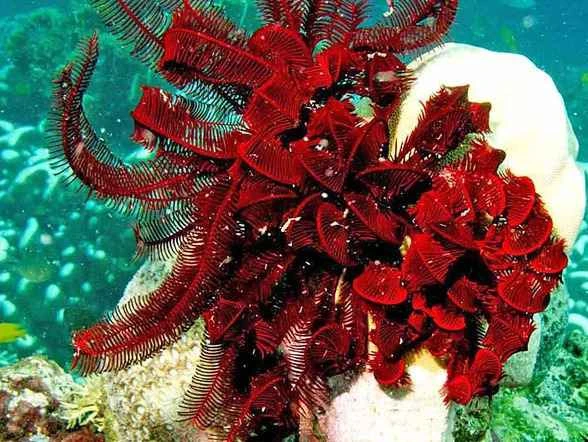
8. Scientific research progress on the red-feathered starfish
The red-feathered starfish (scientific name: *Ophiothrix fragilis *) has become an important subject of marine biological research due to its unique appearance and ecological role. Scientists, through research in ecology, molecular biology, and environmental science, have revealed the red-feathered starfish's position in the ecosystem and its adaptation mechanisms. The following are the latest advances in scientific research on the red-feathered starfish in recent years.
I. Population Dynamics of the Red Feathered Starfish
1. Population distribution and size changes
Studies have shown that the population of red-feathered starfish is relatively stable in warm waters (such as the Mediterranean Sea) and temperate seas. However, rising sea temperatures due to climate change may alter its distribution range.
Some scholars have found that the high density of red-feathered starfish in certain coral reef ecosystems is related to its ability to prey on microplankton.
2. Reproductive patterns and genetic diversity
The red-feathered starfish has the ability to reproduce both sexually and asexually, and this dual reproductive strategy enables it to maintain population stability under changing environmental conditions.
Genome sequencing studies have shown that it has high genetic diversity, which provides a genetic basis for its adaptation to different marine environments.
II. In-depth exploration of the ecological role
1. Key species in the ecosystem
The red-feathered starfish is considered a key species, regulating energy flow in coral reef and seabed ecosystems by preying on plankton.
Some studies have found that the red-feathered starfish can inject oxygen into marine sediments, contributing to seabed health and biodiversity.
2. Relationship with other organisms
The red-feathered starfish often lives in symbiosis with other benthic organisms. For example, studies have found that it forms a mutualistic relationship with certain small crustaceans, where the crustaceans clean the starfish's arms, and the starfish provides it with a habitat.
III. Adaptation Mechanisms for Addressing Climate Change
1. Tolerance to ocean acidification
Experimental studies have shown that the red-feathered starfish can still live normally in slightly acidified water. Its lower degree of calcification in its skeletal structure may contribute to its greater adaptability.
2. The effect of temperature change
Studies show that the red-feathered starfish can survive in a temperature range of 24°C to 28°C, and exhibits behavioral adaptations in extreme high-temperature environments, such as reducing activity to conserve energy.
IV. Research on the predatory behavior of the red-feathered starfish
1. Microfluidic predation model
Scientists used high-resolution hydrodynamic models to study the tiny eddies formed by the arms of the red-feathered starfish in water currents. The results showed that these eddies can effectively trap plankton.
2. Advantages of nighttime activities
Long-term field observations have revealed that the red-feathered starfish is mostly active at night, possibly to avoid the threat of predators during the day, while also taking advantage of the higher density of plankton at night.
V. Research on the regenerative capacity of the Red Feathered Starfish
1. Arm regeneration mechanism
研究发现,红羽星海星的臂膀再生能力与其体内的一种特殊蛋白质相关,这种蛋白质可以促进细胞快速分裂与组织重建。
在断臂实验中,红羽星海星能够在3至5周内恢复大部分臂膀功能,展现了惊人的再生能力。
2.再生过程中的能量分配
再生期间,红羽星海星会减少捕食行为,将更多能量用于修复受损组织。这种能量分配策略使其在生存与恢复之间找到平衡。
六、红羽星海星在海洋污染中的作用
1.微塑料的吸附与影响
研究发现,红羽星海星在过滤浮游生物时可能意外摄入微塑料。尽管短期内其健康未见明显影响,但长期的微塑料积累可能干扰其消化系统功能。
2.重金属污染的指示作用
科学家通过检测红羽星海星体内的重金属浓度,监测海洋污染水平。其广泛分布和高敏感性使其成为环境监测的重要生物指标。
七、红羽星海星的人工繁殖技术研究
1.人工繁殖的突破
实验室条件下,科学家成功模拟了红羽星海星的繁殖过程,揭示了其幼体发育的关键阶段。
人工繁殖的红羽星海星已用于生态修复项目,例如恢复受损珊瑚礁生态系统。
2.培育环境优化
在人工环境中,通过调整水质参数和光照条件,科学家显著提高了红羽星海星的繁殖成功率。
八、未来研究方向
1.气候变化下的适应能力
探索红羽星海星在极端环境条件(如海洋酸化和高温)下的长期适应能力,为预测未来生态系统变化提供数据支持。
2.生态修复中的潜力
利用红羽星海星的生态作用(如促进沉积物氧化和清洁水质)在海洋生态修复项目中的应用潜力,仍有待深入研究。
3.基因编辑技术的应用
通过基因编辑研究红羽星海星的再生基因和抗压基因,为开发新型生物材料或医药技术提供灵感。
红羽星海星的研究已经覆盖了生态学、分子生物学和环境保护等多个领域,为了解海洋生态系统的复杂性和多样性提供了重要视角。未来,随着技术的进步,科学家将进一步挖掘红羽星海星在气候变化适应、生态修复和生物材料开发中的潜力。
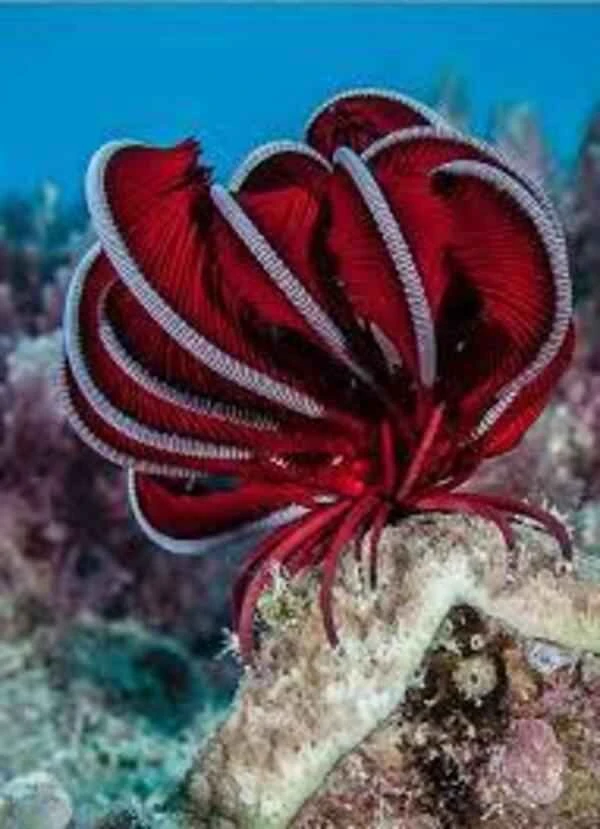
9. 如何养护红羽星海星:饲养指南、水族箱设置技巧、常见疾病及预防
红羽星海星(地中海羽毛星)因其绚丽的外形和迷人的动作深受水族爱好者喜爱。然而,这种海洋生物对环境的要求较高,饲养难度也相对较大。以下为饲养红羽星海星的全面指南,从水族箱设置到疾病预防,为你打造一个适宜的养护环境。
一、饲养指南
1.适宜的水质条件
水温:保持在24°C至27°C之间。水温过高或过低都会对红羽星海星的健康造成威胁。
盐度:盐度应控制在1.023至1.025之间,比重计的定期监测至关重要。
pH值:维持在8.1至8.4之间。酸碱度的波动可能引发应激反应。
氨氮和硝酸盐:确保水中的氨氮和硝酸盐接近于零。使用高效过滤系统保持水质清洁。
2.食物投喂
红羽星海星是杂食性动物,主要摄取浮游生物和微型甲壳类。
食物种类:冷冻浮游生物、微型甲壳类、小型螃蟹碎片或藻类片。
喂食频率:每天1-2次,避免过量,以免污染水质。
喂食方法:可以使用滴管定点投喂,将食物靠近红羽星海星的臂膀末端,方便它捕食。
3.避免捕食者
红羽星海星需要一个安全的环境,避免和捕食性强的鱼类或蟹类混养,例如:
捕食性鱼类:石斑鱼、狮子鱼等。
掠食性蟹类:比如某些大型螃蟹。
二、水族箱设置技巧
1.水族箱的尺寸
推荐尺寸:至少150升以上的水族箱,提供足够的活动空间。
布景设计:以珊瑚礁、岩石和沙底为主,模仿红羽星海星的自然栖息地,方便它攀爬和隐藏。
2.水流控制
红羽星海星对水流敏感,适度的水流有助于它捕食浮游生物。
水流强度:使用循环泵制造中等强度的水流,避免过于湍急或完全静止的环境。
水流方向:确保水流能覆盖整个水族箱,使浮游生物均匀分布,方便红羽星海星捕食。
3.光照条件
光源类型:使用柔和的LED灯光,不建议过于强烈的光线。
光照时间:每天8-10小时,有助于稳定水族箱生态系统,同时避免光照过多导致藻类过度生长。
三、常见疾病及预防
1.臂膀损伤
原因:受到捕食性生物攻击或水族箱布景中尖锐岩石划伤。
解决方法:及时隔离受伤个体,调整布景,移除可能造成伤害的生物。
2.应激反应
表现:臂膀萎缩、活动减少或拒食。
原因:水质恶化、温度波动或同伴攻击。
解决方法:稳定水质,保持水温和盐度恒定,减少外界干扰。
3.真菌感染
表现:臂膀上出现白色或棉絮状物质。
预防方法:确保水族箱的清洁和水质稳定,避免过多有机物残留。
治疗方法:可用专用抗真菌药物处理,同时隔离感染个体。
4.营养不良
表现:臂膀变薄、色彩暗淡或脱落。
原因:食物不足或营养单一。
解决方法:提供多样化的饲料,并确保投喂的食物种类和数量充足。
四、红羽星海星的饲养注意事项
1.定期检测水质
每周检测水族箱中的盐度、pH值、氨氮和硝酸盐含量,及时调整水质以确保稳定的生存环境。
2.避免环境突变
避免突然更换水族箱的水质、温度或光照条件,任何突变都可能导致红羽星海星产生应激反应。
3.定期维护
清洁过滤系统,移除多余的食物和废弃物,保持水质清洁,防止藻类过度生长。
4.定期观察健康状态
每天观察红羽星海星的活动情况、臂膀完整性和颜色变化,及时发现和处理异常情况。
红羽星海星的养护需要精心的环境设置和日常维护,特别是水质、食物和伴生生物的选择。通过提供适宜的环境和细致的照料,红羽星海星不仅能展现其迷人的美态,还能为你的水族箱增添一抹动态的海洋风景。做好日常观察和疾病预防,你可以在家中享受这种奇特生物带来的无限魅力。
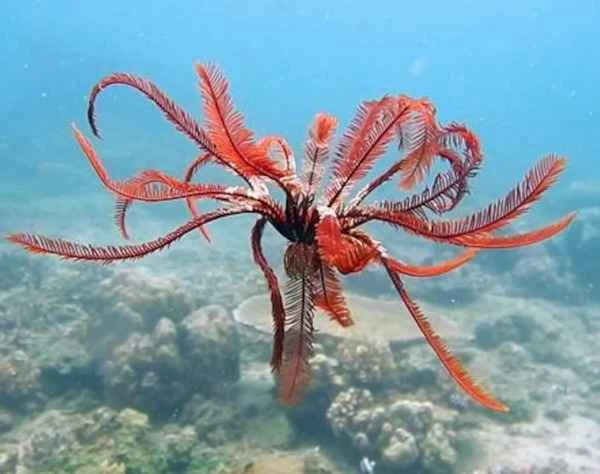
10. 红羽星海星能与其他海洋生物共存吗?
红羽星海星(地中海羽毛星)作为一种海洋生物,在自然环境和人工饲养中都展现了一定的共存能力。它的共存关系主要取决于环境、食物资源以及共存生物的种类。以下从生态系统和饲养两个方面解析红羽星海星与其他海洋生物共存的可能性。
自然环境中的共存情况
共生关系<br/>在自然界中,红羽星海星与某些小型生物形成了互利共生关系。例如,一些微型虾类、海葵或鱼类可能栖息在红羽星海星的羽毛状臂膀间。这些生物利用红羽星海星的臂膀作为庇护所,避免被捕食,而它们的存在不会对红羽星海星造成直接伤害,甚至可以清理红羽星海星臂膀上的残留食物。
竞争关系<br/>红羽星海星与其他底栖海洋生物,如海胆和某些种类的海星,可能在栖息地和食物资源上产生竞争。这些生物都生活在海底,若资源有限,竞争可能变得激烈。但由于红羽星海星的强适应性和灵活的捕食策略,它通常能找到适宜的栖息点,减少与其他生物的直接冲突。
捕食关系<br/>红羽星海星有一定的捕食能力,但它主要以小型甲壳类、浮游生物和腐殖质为食,因此不会对体型较大的生物造成威胁。与此同时,它自身也可能成为某些捕食者(如大型鱼类或章鱼)的猎物。在这种关系中,红羽星海星通过敏捷的动作和再生能力来应对。
人工饲养中的共存可能性
适合的伴生生物<br/>在水族箱中,红羽星海星可以与以下类型的海洋生物共存:
小型鱼类:如小丑鱼或其他温和的珊瑚礁鱼类。
无脊椎动物:如珊瑚、海葵、海胆等,但需要注意食物竞争。
清洁生物:如清洁虾或海葵虾,它们不仅可以清洁水族箱环境,还能帮助清理红羽星海星。
不适合的伴生生物<br/>某些具有攻击性或捕食习性的生物不适合与红羽星海星共存:
大型捕食鱼类:如狮子鱼、石斑鱼,可能将红羽星海星视为食物。
掠食性无脊椎动物:如掠食蟹类,可能伤害红羽星海星的臂膀。
竞争性海星:如皇冠海星,它们可能因食物和空间问题与红羽星海星产生冲突。
环境要求<br/>共存的关键在于为水族箱提供足够大的空间和适宜的环境条件:
水质:保持适合红羽星海星生存的温度(24°C至27°C)和盐度(比重1.023-1.025)。
空间:足够的活动空间可避免生物间的直接冲突。
食物:定期提供适量的浮游生物、微型甲壳类和碎屑,以避免食物竞争。
红羽星海星的共存能力
红羽星海星在自然环境中具有较强的共存能力,尤其是在与温和型海洋生物的共生中展现出互利性。在人工饲养中,通过合理选择伴生生物、优化环境条件和避免捕食性生物的威胁,可以实现红羽星海星与其他海洋生物的和谐共存。这种共存不仅有助于创造美丽的水族景观,还能为观赏者提供了解多样海洋生态的机会。
通过以上的介绍,我们可以看出,地中海羽毛星(红羽星海星)无论是在生态系统中的作用,还是在科学研究方面的价值,都具有极大的魅力。对于海洋生物爱好者来说,了解这种神秘的海星,不仅能加深对海洋生态的认识,还能帮助我们更好地保护这一美丽的海洋生命。