From birth to growth to death, the fossil record preserves fascinating clues about the life cycle of dinosaurs.
reproduction
Dinosaur sex is a hotly debated topic, conjuring up fascinating images in people's minds. Unfortunately, figuring out how they did it remains speculation. The passions of dinosaurs cannot be preserved in stone.
male or female?
Determining the sex of dinosaur skeletons is difficult. Various suggestions have been made based on differences between fossils of the same species. However, the evidence is not conclusive, and there is much debate among scientists.
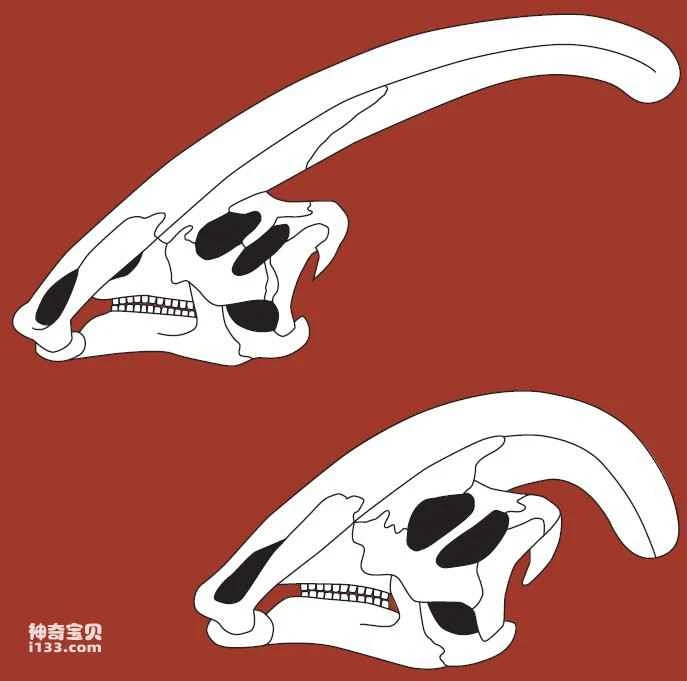
It is often thought that hadrosaurs such as Parasaurolophus exhibited consistent crown size differences, and that those with more prominent crowns were likely males. The fact that many living animals show physical differences between sexes suggests this is a possibility. Unfortunately, fossil evidence makes this difficult to interpret.
Life begins
Dinosaur life began with a hard-shelled egg. Depending on the species, their shape and size varied, but the internal structure of their shells was more similar to modern bird eggs than any extant reptile. Most sauropods laid their eggs in mud nests or burrows dug in the sand, but some sauropods appear to have laid eggs with simple lines. Large nesting colonies have also been discovered, suggesting that reproduction in some species was social—like in many birds today.
Where were eggs discovered?
Dinosaur eggs have been discovered in more than 200 locations worldwide, with significant sites in the United States, China, France, Argentina, and India. No eggs have been found in Australia.
egg size
The great goose was an extinct bird that laid the largest eggs known to any animal. Its eggs were close to the maximum size of a chicken egg. Larger eggs require thicker shells so they don't collapse. However, if the shell is too thick, the hatchling cannot escape; if the egg is too large, the embryo will suffocate because there isn't enough oxygen and carbon dioxide to pass through the membrane.
Whose egg?
The vast majority of dinosaur eggs discovered are empty eggshell fossils. This isn't very useful if you're wondering which dinosaur laid them. However, we can distinguish a wide range of eggs based on size, shape, and shell features. Shell features found on fossils can be used to identify the type of egg. The thickness and surface texture of an egg can be quite clear, but the crystal structure and pore patterns can only be seen under a microscope. If more evidence is found later, these groups can be classified into a family or species. Sometimes the task becomes easier. Some eggs contain embryonic remains that can identify a specific species. Some extremely rare fossils even preserve adult dinosaurs that died in the nest.
Some examples of identified egg fossils include:
duckbill dinosaur eggs from China
Sartorosaurus was a large sauropod titanosaur and one of the few species whose eggs have been definitively identified from well-preserved embryos.
Gobiornis was a primitive bird (and therefore a dinosaur) that lived alongside other Cretaceous dinosaurs. Embryo fossils were discovered in Mongolia, allowing for the identification of the eggs.
An adult oviraptorosaur discovered in Mongolia in 1995. It appears to have died while incubating or protecting its eggs.
Is it innate or nurtured?
Did dinosaurs employ the "postpartum departure" strategy common to many modern reptiles, or did they raise their offspring like most birds? Dinosaurs appear to care for their eggs and chicks in different ways, much like living animals. Some species might let their young fend for themselves, while others would use their bodies to incubate or protect their eggs. Many birds nest in their habitats, and some even lay eggs together with their newly hatched chicks—typical avian behavior.
Mayasaurus, whose name means "good lizard mother," is one of the dinosaurs with the most complete records of its eggs, embryos, nests, and hatchlings. Evidence suggests that they used communal nesting sites and cared for their newly hatched young. The hatchlings also grew rapidly, reaching about three meters in length after a year.
growing up
Did dinosaurs grow rapidly like most warm-blooded mammals and birds, or slowly like cold-blooded reptiles?
Many dinosaurs, especially large theropods, hadrosaurs, and sauropods, may have grown very rapidly in their early lives, but their growth rate slowed down in adulthood. However, they appear to have a unique growth pattern, growing faster than extant reptiles but slower than most extant mammals or birds.
Evidence of growth
Some dinosaurs had internal skeletal structures, such as blood vessels, which is a characteristic of rapidly growing living animals.
Cross-sections of bones can reveal growth rings. These layers of bone form during periods of interrupted or slowed growth—often due to colder seasons. Some scientists believe these rings may reflect the growth stage each year, and calculating the rings could provide an individual's approximate age.
Comparing identical skeletons of individuals of different sizes within the same species helps to create approximate growth sequences. Combining this with approximate ages determined by other methods creates growth curves relating age to size. For example, based on fossil evidence, hadrosaur larvae could grow to over three meters in a year.
Estimate weight
There are two methods for estimating the weight of dinosaurs. One method uses the cross-section of the load-bearing bones (usually the limb bones) to calculate how much weight they can support. The other measures the volume of liquid displaced when a scaled-down model of the dinosaur is placed in water. Both methods are inherently uncertain, which explains why any given dinosaur has a certain weight range.
Minimum and maximum
Smallest:
Epidexipteryx hui (China): 25 cm (or 44.5 cm, including long tail feathers) and 0.16 kg
Parvicursor remotus (Mongolia): 39 cm long, 0.16 kg
Anchiornis huxleyi (China): 40 cm long, 0.25 kg
Largest: Titanosaur (Sauropod dinosaur)
Argentinosaurus huinculensis (Argentina): 35-40 m long, weighing 80 tons.
Puertasaurus reuili (Argentina): 35-40 m long, weighing 80 tons.
Maraapunisaurus fragillimus (USA): 35 m long, 70 tons
Paralititan stromeri (Egypt): 32 m long, weighing 65-80 tons.
Highest: Brachiosaurus sauropod dinosaurs
Sauroposeidon proteles (USA): 17-18 m or higher
Giraffatitan brancai (Tanzania): 12 m high
Brachiosaurus taurus (USA): 12 m tall
Largest carnivore:
Mapusaurus rosaea (Argentina): 14 m long, weighing 7-8 tons
Caroline Megalosaurus (Argentina): 13–14 m long, 7 tons in weight
Spinosaurus gravidae (Egypt): 15 m long, weighing 5-7 tons.
Tyrannosaurus Rex (USA): 12–13 m long, 7 tons in weight
They died like dinosaurs!
How long did dinosaurs live? Among living animals, lifespan depends primarily on size and metabolism. For example, reptiles with slow metabolisms tend to live longer than warm-blooded birds and mammals of similar size. There is evidence that many dinosaurs had metabolisms more like birds, but their relative lifespans were likely shorter than those of larger reptiles. Sauropod dinosaurs may have lived 50-100 years, large theropod dinosaurs had shorter lifespans, and smaller dinosaurs may have lived around 10 or 20 years.