In 1983, fossil hunter Walker, while searching for fossils in Surrey, southeast England, discovered this massive claw, over 30 centimeters long, in a dirty, muddy pit. The claw was sickle-shaped with a sharp, dagger-like tip. The media immediately went wild, hailing it as a "super claw," not only because it was the first carnivorous dinosaur claw discovered in Britain, but also because no other dinosaur claws found before it were that large. Tyrannosaurus Rex's small forepaws aside, Velociraptor's second toe was only 9 centimeters long, and Allosaurus's forepaws were only 15.2 centimeters long.
Subsequently, more Baryonyx fossils were discovered by an exploration team from London, England, who rushed to the scene. In 1986, Milner and Gallug of the Natural History Museum in London named this new dinosaur "Baryonyx wolke," with the genus name meaning "strong claws" and the species name commemorating the discoverer, Walker.
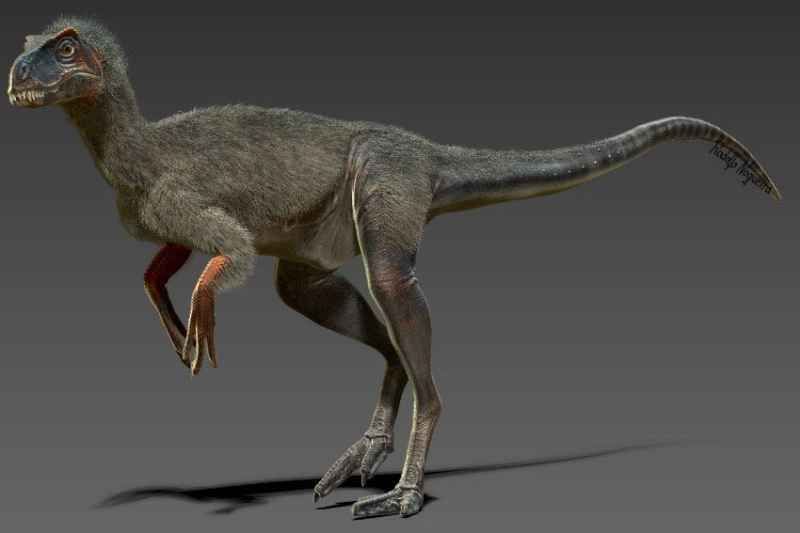
In fact, the Baryonyx fossil discovered by Walker was a sub-adult, measuring 9.5 meters long and 2.5 meters high; paleontologists speculate that an adult Baryonyx could reach 12 meters in length. It had a flat, elongated head, strong hind limbs, a low-hanging body, a long tail for balance, and strong forelimbs with three powerful fingers, especially a thumb with a super-large claw. However, compared to other carnivorous dinosaurs, such as Tyrannosaurus Rex and Allosaurus, Baryonyx had a straight neck, unlike most carnivorous dinosaurs with S-shaped necks.
While our knowledge of the diets of most dinosaurs is extremely limited, Baryonyx is a notable exception. Judging from the design of its unique mouth and teeth, it wouldn't actively attack healthy herbivorous dinosaurs over 9 meters long, such as Iguanodon, which lived in the same era. Although Baryonyx's large claws could kill herbivores, its conical teeth, unlike the cleaver-shaped teeth of typical carnivorous dinosaurs, made it difficult for Baryonyx to tear pieces of flesh from other dinosaurs. Based on the above analysis, Baryonyx was not suited to the role of predator; however, it did eat dead dinosaurs, as evidenced by the small Iguanodon bone fragments found in its stomach. So what was Baryonyx's main food? A close examination of Baryonyx's teeth and jaws reveals a striking resemblance to crocodiles, suggesting it likely lived near water and used its formidable claws to hunt fish. Later, paleontologists discovered numerous fish scales and bone fragments in Baryonyx's stomach, thus solidifying our hypothesis: this was a dinosaur that primarily fed on fish, supplemented by carrion.

Chinese name: Baryonyx
Latin name: Baryonyx
Era: Early Cretaceous
Fossil origin: United Kingdom
Physical characteristics: 9.5–12 meters in length
Diet: Carnivorous
Type: Theropod
Definition: Heavy-duty claws