It is estimated that there are over 3,000 species of snakes worldwide. Red snakes come in many varieties, all belonging to the order Serpentes in the class Reptilia, and are reptiles with degenerated limbs. Snakes are covered in scales and are all carnivorous. Here, we introduce ten of the most common green snakes, including the green tree snake, Gang's bamboo pit viper, green mamba, green tree python, and green forest snake. Some of these green snakes are venomous, while others are non-venomous. If you are not familiar with snakes, it is best to keep your distance. Regardless, green snakes remain a fascinating topic, and many people visit zoos or observe them in the wild to appreciate their beauty and mystery.
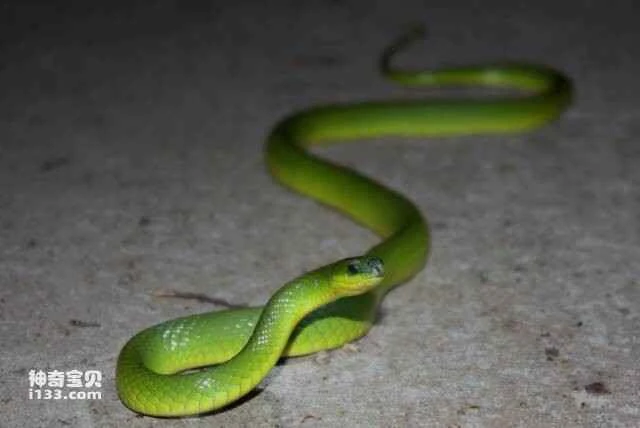
1. Green snake
The green tree snake, also known as the green snake or green bamboo snake, belongs to the Colubridae family and the genus *Agrostis*. It is a small, non-venomous snake. It is not only a beautiful pet snake but also one of the most popular snakes in China. The green tree snake has a slender, moderately sized body; adults typically reach 80-110 cm in length. Its body is green, with an oval head, a narrow and slightly rounded snout, oval nostrils, and round pupils. Its back is smooth and without ridges.
Unlike other snakes, the green tree snake is very docile, even "introverted." They will avoid humans and will not attack or bite. They are diurnal, primarily active during the day and choosing to roost in trees at night. In short, the green tree snake is a very suitable pet; they are beautiful, docile, and non-aggressive, making them popular with snake enthusiasts and pet owners.
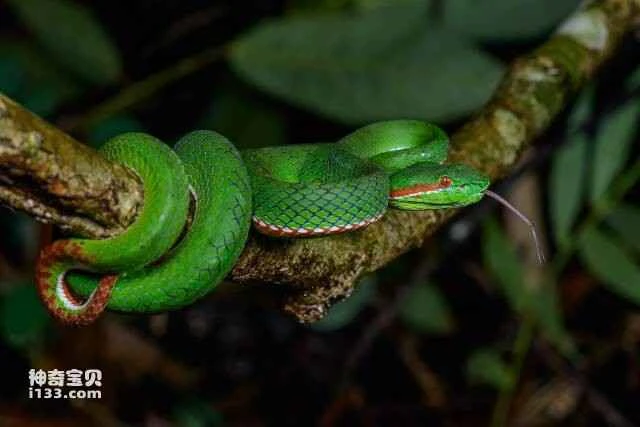
2. Okashi Bamboo Leaf Green
The Gang's pit viper, scientifically known as *Viridovipera gumprechti*, is a species of pit viper belonging to the genus *Viridovipera* in the subfamily Viperinae of the family Viperidae. This snake was first discovered in 2002. It is venomous, with a bright green body and a yellowish-green belly. Its eyes are deep red, and its sides are marked with deep red and white stripes. Adult individuals can reach up to 130 cm in length.
The Gang's bamboo pit viper is mainly distributed in areas above 400 meters in the far north of Myanmar, and can also be found in central Thailand, Laos, and Yunnan, China. They have a coiled tail, sharply defined scales, and are excellent climbers, making them adapted to arboreal life. They are nocturnal, especially on cloudy or rainy days. The Gang's bamboo pit viper reproduces ovoviviparously and feeds on small mammals and reptiles. Due to its venom, people should stay away from them, and exercise caution and maintain a safe distance when encountering one.
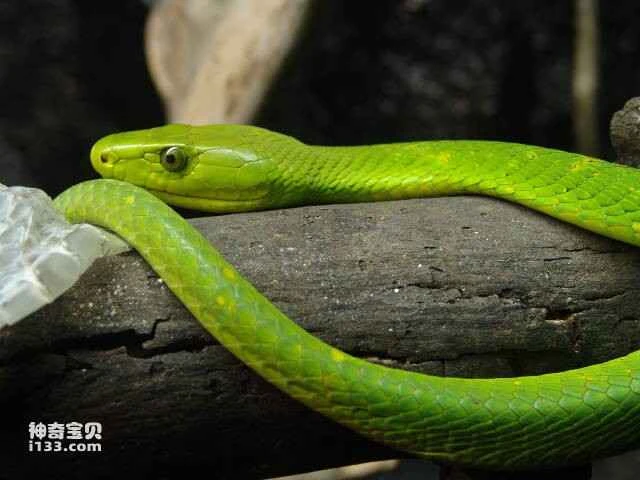
3. Green Mamba
The green mamba is a snake native to Africa, belonging to the family Elapidae and the genus *Mamba*. It is considered the fastest snake of all, capable of speeds exceeding 11 kilometers per hour. The green mamba is entirely emerald green, with a very slender head and body; adult individuals typically reach a length of about 2 meters. They are mainly distributed in the forests of eastern and southern Africa.
The green mamba is as green as a bamboo shoot, a form of camouflage. As arboreal snakes, their green appearance helps them conceal themselves, better evade predators, and enhance their hunting abilities. In short, the green mamba is a very special snake, renowned for its high-speed movement and beautiful green coloration. Although they are non-venomous, caution is still advised. If you encounter a green mamba in the forests of Africa, do not approach them to ensure your safety.
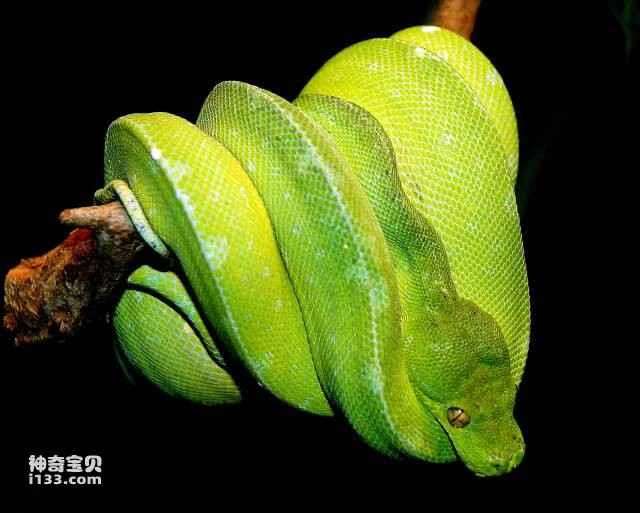
4. Green Tree Python
The green tree python is a small, non-venomous, nocturnal snake found in New Guinea, Indonesia, and northern Australia. This snake is entirely arboreal, typically active in trees, and has a striking, pure green coat. Although it belongs to the python family, green tree pythons rarely exceed 1.8 meters in length, making them a rather miniature species.
Due to their moderate size, vibrant colors, and unique habits, the green tree python has become highly sought after by enthusiasts since its introduction to the market. They are frequently sought-after items in pet stores. In short, the green tree python is a very special snake, renowned for its exquisite appearance and unique lifestyle. If you are interested in keeping a pet snake, the green tree python may be a good choice. However, as a wild animal, it requires professional care and management to ensure they receive a good living environment.
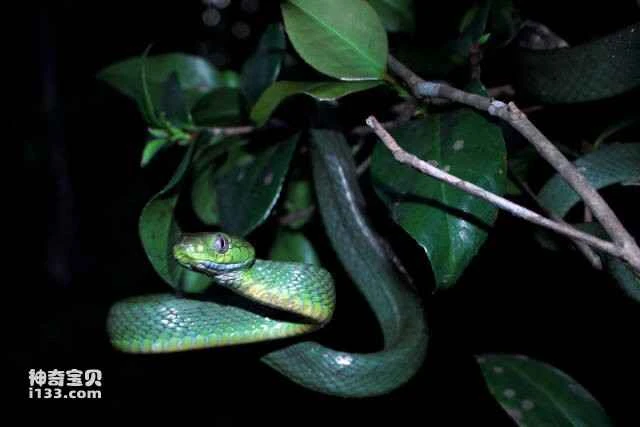
5. Green Forest Snake
The green forest snake is a reptile belonging to the genus *Rana* in the family Colubridae. It has a slender, laterally flattened body, a large head, and very large eyes with vertical pupils. The scales on its back are green with a touch of blue, while its belly is yellow; juveniles are brown. This species is distributed in the Indochina Peninsula, India, Myanmar, Thailand, Sikkim, and Yunnan Province in mainland China, primarily inhabiting mountainous forests with abundant water sources.
The green forest snake is an arboreal snake that typically inhabits forests. They rest coiled on branches during the day and actively hunt at night, seeking out lizards, other snakes, and small mammals. Green forest snakes are grooved-fanged snakes, and their venom helps them subdue their prey. Although venomous, they pose little threat to humans. A bite may cause pain and itching for a few days, but it usually heals within 10 days and is not life-threatening. In short, the green forest snake is a very special snake, known for its unique appearance and habits. If you encounter a green forest snake in the wild or at a pet store, please maintain a safe distance and handle it with caution.
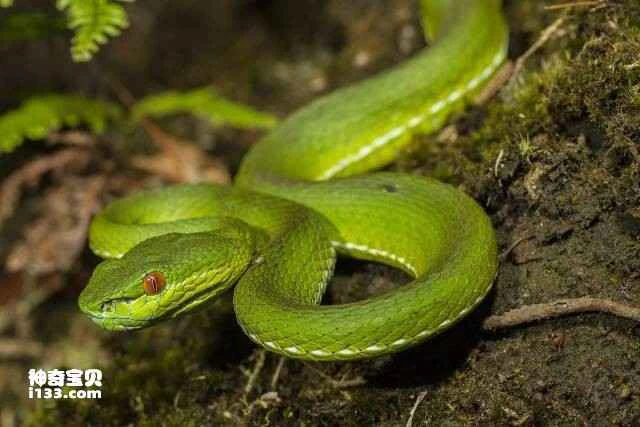
6. Red tail bamboo leaf green
The red-tailed bamboo viper, also known as the white-lipped bamboo viper, bamboo viper, green bamboo snake, and green bamboo mark, is a venomous snake. This species has a triangular head, a slender neck resembling a branding iron; a bright green back with indistinct black horizontal bands; a yellowish-white belly; and a white stripe extending from the neck to the tail on the outermost side of the body.
The venom of the white-lipped bamboo pit viper is hemotoxic, causing extreme pain after a bite, though systemic symptoms are relatively mild. Although the mortality rate from a bamboo pit viper bite is low, many people are still bitten each year, causing them great suffering. In short, the red-tailed bamboo pit viper is a very dangerous snake and requires serious attention. If you encounter this snake in the wild or in a pet store, please maintain a safe distance and handle it with caution. If bitten, seek professional medical help immediately.
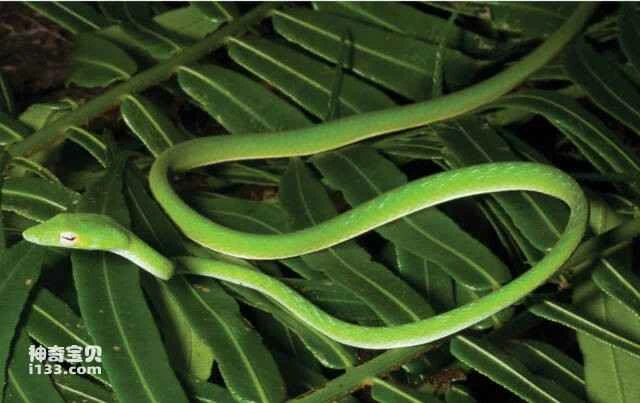
7. Green-skinned snake
The green leptomaniac snake, also known as the blue whip snake, crane snake, or slender green snake, is a mildly venomous snake with rear-fanged fangs, belonging to the genus *Leptomaniac* in the family Colubridae. This species has an extremely slender and elongated body; males measure approximately 775 ± 435 mm in total length, while females can reach 1055 ± 595 mm. They have a hexagonal head, large eyes with pupils that are merely horizontal slits, and highly developed vision, possessing compound eyes and stereoscopic vision. Their backs are bright green, while their bellies are pale green.
The green slender snake prefers to climb tree branches to hunt and moves swiftly. Its main prey includes lizards, birds, and other small rodents. In short, the green slender snake is a very special snake, known for its extremely slender body and beautiful green appearance. Although they are venomous, their venom is relatively mild and poses little threat to humans. If you encounter a green slender snake in the wild or at a pet store, please maintain a safe distance and handle it with caution.
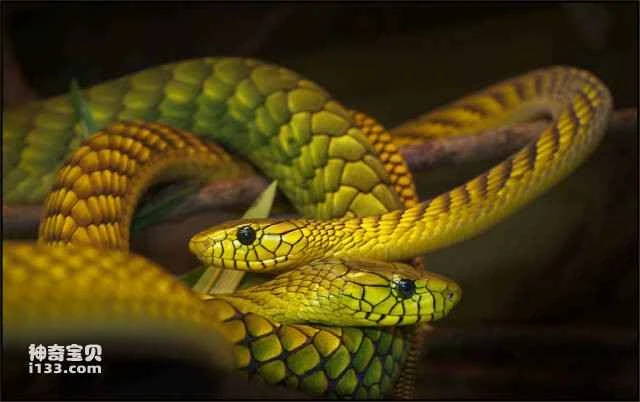
8. East African Green Mamba
The genus *Dendroaspis*, also known as the mamba, comprises a group of highly venomous snakes in the family Elapidae. These snakes primarily inhabit Africa, are mostly arboreal, move at extremely high speeds, and prey on birds and small mammals. The venom of this genus is highly potent and requires serious attention.
Among the genus *Mamba*, the black mamba is particularly well-known. It is a large, venomous snake, typically active during the day. Apart from the black mamba, which is terrestrial, other mamba species are highly arboreal. In short, snakes of the genus *Mamba* are very dangerous and require extreme caution. If you encounter this snake in Africa or at a pet store, please maintain a safe distance and handle it with extreme care.
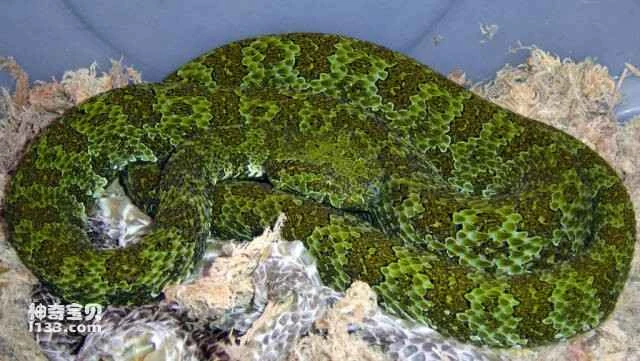
9. Mangshan Pitting Iron Head
The Mangshan pit viper, also known as the Mangshan lancehead viper, is a giant venomous snake endemic to China. It is nicknamed "pit viper" because of its slightly large triangular head with loreal pits. Listed as "Endangered" on the IUCN Red List, it is often compared to the panda, earning it the nickname "panda of snakes." The Mangshan pit viper can reach 2 meters in length and is a venomous snake with tubular fangs. Its body is primarily dark brown, interspersed with tiny yellowish-green or rust-colored spots, creating a fine reticulated pattern.
The Mangshan pit viper is even more venomous than the five-step snake; a bite can be fatal within ten minutes if not treated promptly. In short, the Mangshan pit viper is an extremely dangerous venomous snake that requires serious attention. If you encounter this snake in the wild or in a pet store, please maintain a safe distance and avoid touching or disturbing it. If you are unfortunately bitten, please seek professional medical help immediately.
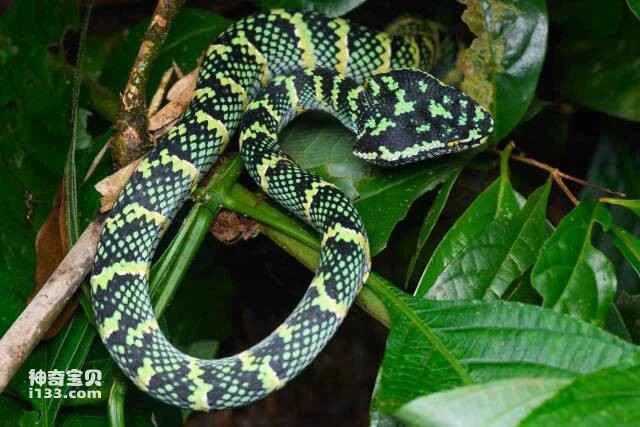
10. Armored viper
The armored pit viper, also known as the Wei's bamboo pit viper, is a small venomous snake belonging to the subfamily Viperinae. Besides being used as food, it also has high medicinal value. Like other pit vipers, the armored pit viper can move both on land and in water, therefore they often congregate in plains, hills, low mountain areas, or fields and streams near water sources, inhabiting under piles of rocks or in grassy areas. Due to its readily available breeding stock and simple farming methods, armored pit vipers have become a new type of aquaculture, providing opportunities for people to increase their income.
In summary, the armored viper is a very special venomous snake, possessing both edible value and important medicinal uses. If you encounter this snake in the wild or in a pet store, please maintain a safe distance and carefully observe its behavior. For those interested in breeding armored vipers, proper husbandry methods and management strategies are crucial.
If you encounter a venomous snake, remain calm and do not panic. Here are some suggested responses:
1. Keep your distance: If you spot a venomous snake, stay as far away from it as possible and do not approach or attempt to catch it.
2. Do not challenge venomous snakes: Whether intentional or unintentional, contact with venomous snakes is very dangerous, as they will perceive you as a threat and take defensive action.
3. Clear an escape route: If you are blocked by a venomous snake, first find a clear escape route and get away from the snake.
4. Do not touch venomous snakes with your hands: No matter how confident you are, never try to touch a venomous snake with your hands, as this is extremely dangerous.
5. Seek professional help: If you are unsure how to deal with a venomous snake, seek assistance from your local wildlife conservation organization or other professionals. They can tell you about the types of snakes, their habits, and the best way to handle them.
In short, when facing a venomous snake, the most important thing is to remain calm, not panic, and take appropriate measures to ensure your safety.