It is estimated that there are over 3,000 species of snakes worldwide. Many red snakes belong to the order Serpentes in the class Reptilia and are limbless reptiles. Their bodies are covered in scales, and they are all carnivorous. Here, we introduce ten of the most common red snakes, including the milk snake, the Pabra milk snake, the fragrant snake, the purple-grey rat snake, and the red-tailed boa. Some of these red snakes are venomous, while others are non-venomous. If you are not familiar with snakes, it is best to keep your distance. Regardless, red snakes remain a fascinating topic, and many people visit zoos or observe them in the wild to appreciate their beauty and mystery.
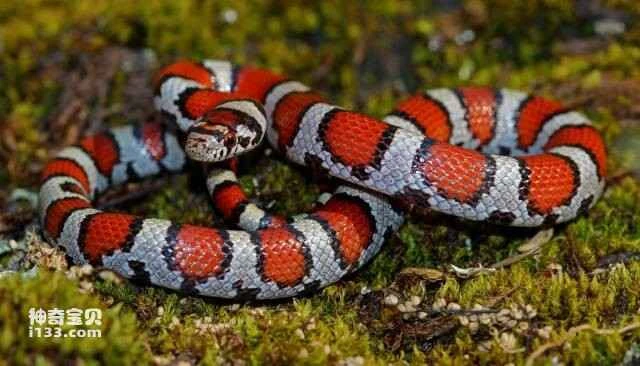
1. Milk Snake
Milk snakes are native to the United States and are often found in areas such as cowsheds around human settlements, leading to the misconception that they like to steal milk, hence the name "milk snake." In reality, milk snakes are non-venomous and very popular in the pet snake market. Along with kingsnakes and corn snakes, they form the "iron triangle" of the Colubridae family (also known as the yellow-spotted snake family), making them one of the three most popular pet snake species. It's worth noting that these colubrid snakes are beneficial to humans, as they help control rodent populations and reduce crop damage. In short, milk snakes are not only very beautiful snakes but also highly useful ecosystem protectors.
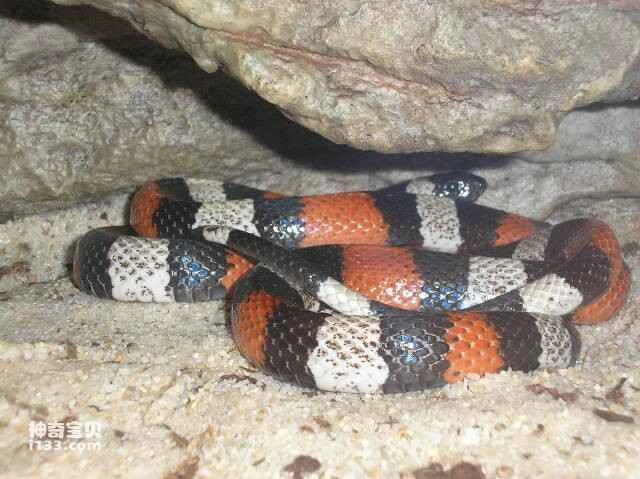
2. Pabra Milk Snake
The Pabra milk snake is a species of snake found in Central America, primarily inhabiting the Pabra, Moreros, and Oaxaca regions of Mexico. They mainly inhabit dry grasslands, forests, farmlands, and wilderness. This non-venomous snake measures 70-90 cm in length, with a slender body, an oval head, and an indistinct neck that is difficult to distinguish from the head. Its scales are smooth and glossy, and its tail is very pointed at the tip. The front half of the Pabra milk snake's head is typically black, while its back is characterized by alternating yellow, black, red, and black rings, and its tail by alternating yellow and black rings. In conclusion, the Pabra milk snake is a very beautiful, non-venomous snake worthy of appreciation and protection.
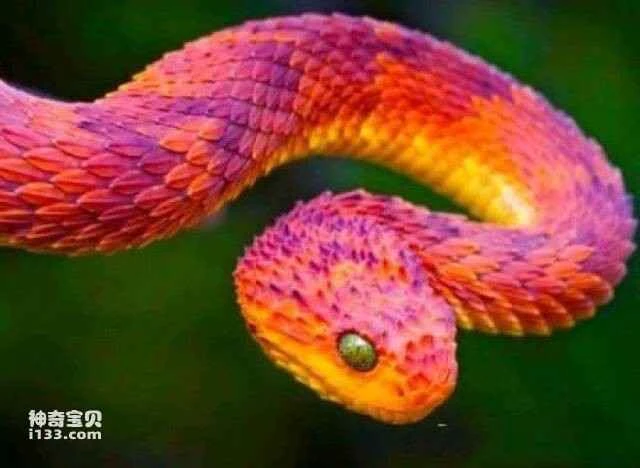
3. Fragrant snake
The fragrant snake is a non-venomous snake found in Guyana, named for its distinctive scent. Covered in dense, spiky scales, it can coil itself into a beautiful flower shape. Locals capture these snakes, coat them with glue, and use them as window decorations. Furthermore, the snake's unique fragrance makes it a favorite among local women, who coil it into attractive shapes and wear it as distinctive earrings. In short, although non-venomous, the fragrant snake is beloved by the locals for its beauty and unique scent, and is widely used in decoration and handicrafts.
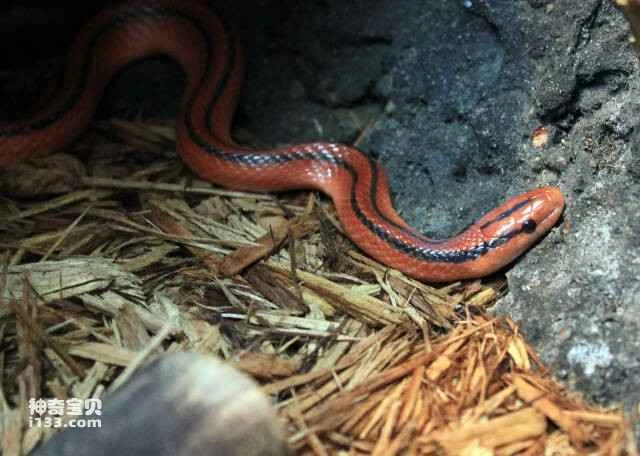
4. Purple-gray rat snake
The purple-grey rat snake (scientific name *Elaphe porphyracea*) is a non-venomous snake. Its back is coppery-purple, with three black bands running along its head and back from its nose to its tail. Additionally, its body and tail have more than ten saddle-shaped, pale black transverse bands, each about 3-5 scales wide; its belly is jade-white. This snake lives in mountainous areas, streamsides, fields, roadsides, and grasslands, and feeds on small mammals. In short, although the purple-grey rat snake is non-venomous, its unique colors and markings make it one of the most beautiful snakes, attracting much love and attention.
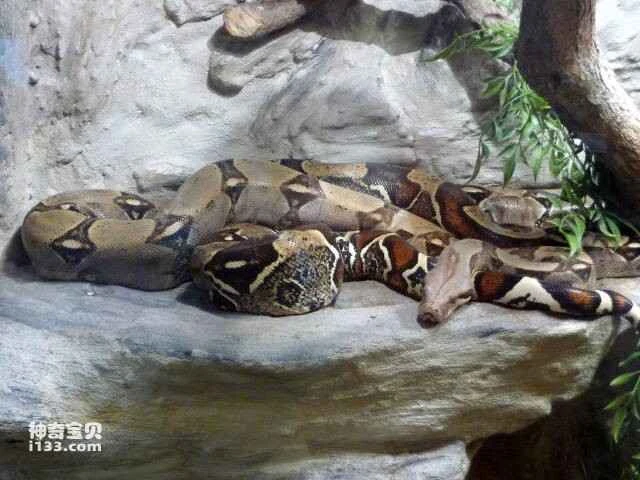
5. Red-tailed Boa
The red-tailed boa (scientific name: *Boa constrictor*), also known as the red-tailed python, is a non-venomous snake measuring approximately 1.8-3 meters in length and weighing 10-15 kilograms. It is mainly distributed in Central America, South America, and some islands near the Caribbean Sea. They feed on reptiles, mammals, and birds, and can live for 20-30 years. This snake exhibits a variety of colors and is quite large, making it one of the most striking snake species. Ten subspecies have been identified to date. In terms of coloration, the red-tailed boa's body is typically red or brown, with a brick-red tail. The back is predominantly marked with brownish-yellow stripes, while the tail stripes are usually lighter. Through artificial breeding, the red-tailed boa now displays many different color variations, such as albino and salmon. In short, the red-tailed boa, as a large and colorful snake, has attracted considerable attention.
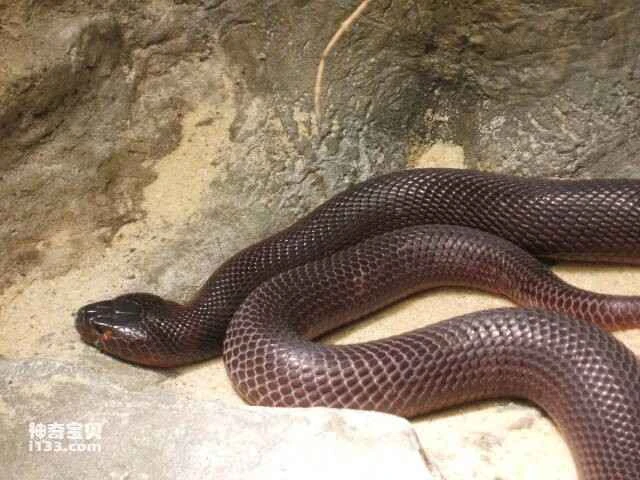
6. Red-spotted cobra
The red-spitting cobra is a snake with a predominantly red to gray body color, measuring approximately 70-120 cm in length, with a maximum length reaching 150 cm. They are one of the few cobras capable of spitting venom, able to spray it at enemies through tiny openings at the tips of their fangs when threatened, with a range of up to two meters. While their venom causes intense pain, it rarely results in death. The red-spitting cobra is primarily nocturnal and terrestrial. They are mainly distributed in Djibouti, Eritrea, Somalia, Egypt, Ethiopia, Tanzania, Sudan, and Kenya. In conclusion, the red-spitting cobra, as a highly dangerous venomous snake, requires sufficient attention and protection.
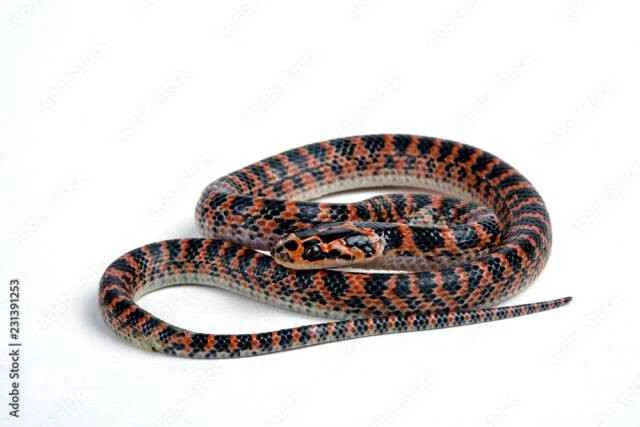
7. Red-banded snake
The red-banded snake, also known as the fire-red snake or red-spotted snake, is a reptile belonging to the order Serpentes, family Colubridae, and genus *Symplocos*. They have a relatively flat and broad head, and are generally 1-1.5 meters long with a slender body. Their body is marked with alternating red and black stripes, while their belly is yellowish-brown, also interspersed with black stripes. However, the black stripes on their back and belly grow intricately, creating a striking visual effect that makes them appear highly venomous. In reality, the red-banded snake's venom is negligible; it is considered a microvenomous snake, or even non-venomous. In short, although the red-banded snake may appear somewhat "venomous," they are actually very docile snakes and pose little threat to humans.
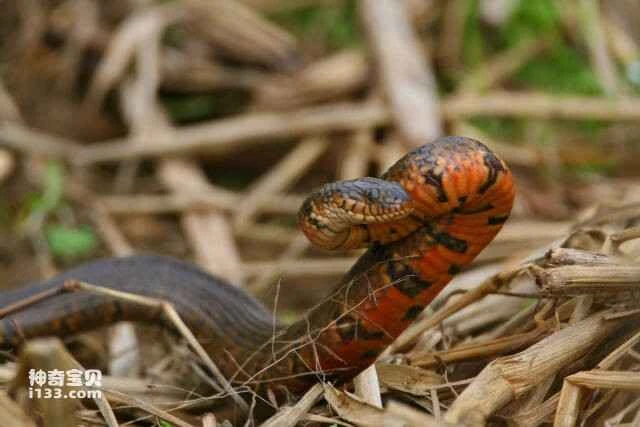
8. Red-banded Chinese snake
The Red-banded Chinese Snake (scientific name: *Sinonatrix annularis*) is a mildly venomous snake (not lethal to humans), belonging to the genus *Sinonatrix* in the family Colubridae. It is widely distributed in Shanghai, Jiangsu, Zhejiang, Anhui, Fujian, Taiwan, Jiangxi, Hubei, Hunan, Guangdong, Hainan, Guangxi, and Sichuan in China, and is one of the species endemic to China. They are commonly found in and around rice paddies, ponds, streams, and other bodies of water in East and South China, with a vertical distribution ranging from 100 to below 1000 meters in altitude. This snake has multiple rings all over its body, with orange-red or orange-yellow between the rings on the ventral side. The anterior end of the internasal scales is very narrow, and the nostrils are located near the dorsal side, usually with only one upper labial scale entering the orbit. The type locality of this species is Ningbo, Zhejiang. In conclusion, the Red-banded Chinese Snake, as a very special snake species, although mildly venomous, still requires sufficient attention and protection.

9. Mountain King Snake
The mountain kingsnake (scientific name: *Lampropeltis pyomelana*) is a snake that grows to about 100 centimeters in length and prefers to hide under fallen leaves and fallen trees near water. They are mainly distributed from southern Arizona in the United States to northern Mexico, inhabiting mountain coniferous forests and shrublands below 2700 meters in altitude. This snake has a white snout, a predominantly red body with white or yellowish-white markings, and black rings on its back. In short, as a mountain snake, the mountain kingsnake's unique colors and markings have made it a subject of much attention and affection.
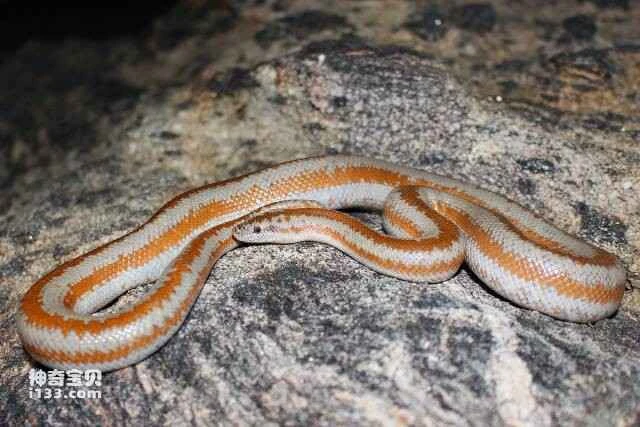
10. Mexican Rose Python
The Mexican rose python is a robust python with a narrow head and a thick, blunt tail. Its body is light gray or pale yellow, covered with broad, dark brown stripes from head to tail. These stripes may be very distinct or somewhat blurred. Mexican rose pythons are mainly distributed in northwestern Mexico, are adept climbers, and are commonly found in scrubland and semi-desert areas. They feed on small birds and mammals, making them a highly predatory snake. In short, the Mexican rose python, as a large and brightly colored python, possesses significant ornamental and ecological value.
If you encounter a venomous snake, the first thing to do is remain calm and not panic. Here are some tips for dealing with venomous snakes:
1. Stay away from venomous snakes as much as possible: If you spot a venomous snake, keep your distance and stay away from it to ensure your safety.
2. Avoid harassing or attacking venomous snakes: Venomous snakes may attack when they feel threatened. Therefore, do not attempt to harass or attack venomous snakes.
3. Do not attempt to catch or handle venomous snakes: Handling venomous snakes is an extremely dangerous activity, and can even be fatal. Therefore, do not attempt to catch or handle venomous snakes.
4. Slowly back away: If you spot a venomous snake, slowly back away and ensure your safety.
If bitten by a venomous snake, seek medical attention immediately. While waiting for rescue, the following first aid measures can be taken:
1. Do not move the injured area to minimize blood circulation and prevent the spread of venom.
2. If possible, use a compression bandage to loosen the blood vessels above the wound.
3. The activity will accelerate the spread of the venom, so you need to stay quiet and go to the hospital as soon as possible.